





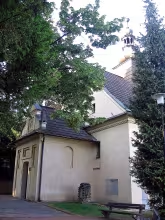
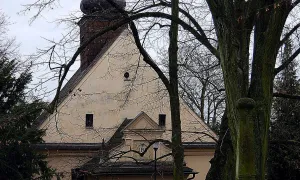
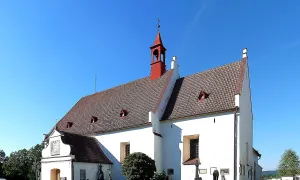
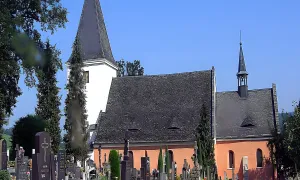
The Church of St. Philip and James in Tábor is a single-nave, originally Gothic church built in the 14th century. It has been recognized as a significant cultural monument since 1958. Located outside the historic center near the former Kotnov Castle, it features three Baroque altars from the early 18th century and retains tombstones dating back to the mid-16th century. Its historical significance is enhanced by its location on a sloping site with an adjacent park that once served as a cemetery.
The origins of this monument trace back to the 14th century, during a period marked by religious upheaval in Bohemia leading up to the Hussite Wars. The first documented mention of the church dates to 1388 when Ondřej z Ústí established two altars within what was then a chapel. This structure faced destruction during the Hussite Wars and later underwent reconstruction, although it was eventually burned by Prussian forces in 1744. A significant transformation occurred with its Baroque reconstruction in 1746 under Dean Pavel Klášterský z Rosengartenu.
Architecturally, the church began as a Gothic chapel but evolved through various phases. After being destroyed during the Hussite Wars and later burned by Prussian troops, it was significantly reconstructed in Baroque style in 1746. The current form of the church resulted from restoration efforts between 1973 and 1990, which preserved its historical essence while adapting it for modern use.
Ownership and administration of the Church of St. Philip and James have seen notable changes over time. Initially part of Tábor's ecclesiastical holdings, the church was transferred to state ownership in 1973. Since 1997, it has been leased to the Old Catholic Church by the city of Tábor, marking a new chapter in its history.
Key events associated with this monument include its Baroque reconstruction and its role as a site for significant burials. Notable figures such as Josef Němec, Božena Němcová's husband, are buried nearby. Additionally, the church and its park house a communal grave for World War I soldiers, adding to its historical depth.
Today, the Church of St. Philip and James is accessible to visitors and serves as an active place of worship under the Old Catholic Church. Its rich history, architectural evolution, and cultural significance make it a compelling site worth visiting. The church not only offers insights into Tábor's past but also stands as a testament to resilience through centuries of change. Visitors are invited to explore this historical monument and appreciate its enduring legacy in the heart of Tábor.
Historical milestones
- 1388
- Ondřej z Ústí established two altars in the chapel.
- 1744
- The church was burned by Prussian forces.
- 1746
- Baroque reconstruction of the church initiated by Dean Pavel Klášterský z Rosengartenu.
Architectural development
Originally built as a Gothic chapel in the 14th century, the structure was destroyed during the Hussite Wars and later rebuilt. In 1744, it was burned by Prussian troops but underwent significant Baroque reconstruction in 1746 under Dean Pavel Klášterský z Rosengartenu's direction. The church has been restored to its current form between 1973 and 1990.
Historical events
- 1388
- Ondřej z Ústí established two altars in the chapel.
- 1746
- The church was Baroquely reconstructed after being destroyed by Prussian forces in 1744.
- 1997
- The Old Catholic Church began using the church for services, starting with a service on July 6th.
Owners
The church was initially part of Tábor's ecclesiastical holdings, later transferred to state ownership in 1973, and since 1997 has been leased to the Old Catholic Church by the city of Tábor.
Points of interest
- The Church of St. Philip and James is located near the site of the former Kotnov Castle, hinting at a historical connection between these two significant landmarks in Tábor.
- During its tumultuous history, the church was burned by Prussian forces in 1744, an event that underscores the strategic importance of Tábor during military conflicts involving Prussia.
- The church's Baroque reconstruction in 1746 was overseen by Dean Pavel Klášterský z Rosengartenu, a notable figure whose influence is still evident in the architectural style and design of the building today.
Guide
Show guide text
Welcome to the Church of St. Philip and James in Tábor, a place where history whispers through its walls and every stone tells a story. As you stand here, take a moment to breathe in the atmosphere of this single-nave church that has witnessed centuries unfold. Its Gothic origins are subtly hinted at by the architectural lines that frame your view, while the Baroque altars from the early 18th century invite closer inspection with their intricate details.
This sacred site dates back to the 14th century and was established as a significant cultural monument in 1958. The church's history is richly woven with tales of devotion and resilience. In 1388, Ondřej z Ústí laid the foundation for its spiritual journey by establishing two altars within its chapel. These early efforts set the stage for what would become a beacon of faith and artistry in Tábor.
As you wander around, notice how the church sits gracefully on a sloping site, with an adjacent park that once echoed with the footsteps of those who came before us. This landscape not only enhances the church’s beauty but also connects it to the nearby Kotnov Castle—a historical companion that adds depth to your exploration.
The year 1744 marked a turbulent chapter in the church's history when Prussian forces set it ablaze, highlighting its strategic importance during times of conflict. Yet, like a phoenix rising from ashes, the church was reborn through the vision of Dean Pavel Klášterský z Rosengartenu. In 1746, he initiated a Baroque reconstruction that would restore and redefine this sacred space.
As you stand here today, take a moment to appreciate the tombstones dating back to the mid-16th century, silent sentinels bearing witness to lives lived in devotion and dedication. These stones are not just markers of memory but also reminders of the enduring human spirit.
There's an air of mystery surrounding this church, particularly its connection to Kotnov Castle—a nearby landmark that hints at a shared history yet to be fully uncovered. This enigmatic link invites you to ponder the stories untold and the secrets held within these ancient walls.
As your visit draws to a close, we invite you to linger in the presence of this remarkable site. Take time to explore every corner, feel the weight of history, and let your imagination wander through the centuries that have shaped St. Philip and James Church. Thank you for joining us on this journey; may it inspire you to discover more about Tábor's rich tapestry of culture and heritage.
Tips for visitors
The best time to visit the Church of St. Philip and James is during late spring or early autumn when the weather is pleasant, and the surrounding park offers a beautiful setting for exploration. Visiting outside peak tourist seasons can also provide a more serene experience. The church's location near Kotnov Castle adds historical context that enhances your visit.
Parking and transportation options are convenient as the area is accessible both by car and public transport. There are parking facilities nearby, but it’s advisable to check for availability in advance. Public transport routes may vary, so checking current schedules online before your trip will ensure a smooth journey. The church's proximity to Tábor's historic center makes it easily reachable from various points.
When visiting the Church of St. Philip and James, consider bringing comfortable walking shoes as you'll likely explore both the church grounds and its park. A camera is recommended for capturing the stunning architecture and scenic views, especially during golden hour when the light enhances the historical ambiance. Additionally, carrying a water bottle and some snacks can make your visit more enjoyable.
For photography enthusiasts, the best spots include the exterior of the church where you can capture its Gothic features against the backdrop of the Lužnice River valley. The park offers picturesque views that are ideal for landscape shots, particularly during sunrise or sunset when the light is soft and warm. Exploring different angles around the church will help in capturing unique perspectives.
Nearby attractions within a 30-minute drive include Kotnov Castle, which provides insight into medieval architecture and history. Its location on a steep slope offers panoramic views of the surrounding area. For families with children, visiting these sites can be both educational and entertaining, as they offer various activities and stories about Tábor's rich past.
Businesses nearby
Do you run a restaurant, accommodation, shop, museum, rental, wellness or other visitor service near this monument? Show yourself directly to the people heading to it — this is how they will see you in the app and on the web:
Nearby
The church and its park are located outside Tábor's historic center near the former Kotnov Castle. The area features a steep slope descending to the Lužnice River, with residential buildings on the southern side.
Accommodation nearby
Themed route
Thematic Walking Tour: Tábor's Historic and Natural Charm
1. Kostel svatého Filipa a Jakuba (Church of Saints Philip and James) - *Type:* Religious/Sacred Site - *Why Visit:* Begin your journey at this stunning Baroque church, renowned for its architectural beauty and serene atmosphere. The church's location offers panoramic views of the surrounding landscape, setting the tone for an exploration of Tábor’s rich cultural heritage.
2. Park U Kostela (Church Park) - *Type:* Natural/Recreational Area - *Why Visit:* Stroll through the lush park adjacent to the church, where nature and tranquility blend seamlessly with historical significance. This area provides a peaceful retreat for reflection and relaxation after visiting the church.
3. Kotnov Castle Ruins - *Type:* Historical Site - *Why Visit:* Venture towards the remnants of Kotnov Castle, located near the church. Although only ruins remain, they offer a glimpse into Tábor’s medieval past and provide an excellent vantage point to appreciate the steep slopes leading down to the Lužnice River.
4. Southern Residential Area - *Type:* Cultural/Architectural - *Why Visit:* Explore the residential buildings on the southern side of the slope, which showcase a blend of traditional and modern architecture. These homes reflect the local lifestyle and provide insight into the community’s connection to its historical roots.
5. Lužnice River Viewpoint - *Type:* Scenic Spot - *Why Visit:* Conclude your tour with a visit to a viewpoint overlooking the Lužnice River at the base of the slope. This spot offers breathtaking views and serves as a perfect place to reflect on the natural beauty and historical significance you've encountered throughout your journey.
This thematic walking tour encapsulates Tábor’s unique blend of history, nature, and culture, offering an enriching experience for visitors interested in exploring these elements within a compact area.
Seasonal recommendations
Jaro: Návštěva Kostela svatého Filipa a Jakuba v jarním období nabízí jedinečný pohled na oživující se přírodu kolem, kdy kvetoucí zahrady a stromy začínají pronikat do zeleného lesku. Slunečné dny jsou ideálním časem pro prozkoumání historických interiérů kostela s jasným osvětlením, které zdůrazňuje architektonické detaily a umělecká díla. Navštěvníci mohou očekávat mírné davové zatížení, protože se lidé vracejí ven po zimním uzavření. Doporučuje se nosit komfortní boty a lehké oblečení, protože teploty mohou být proměnlivé. Nejlepší čas na návštěvu je v předpoledních hodinách, kdy je slunce nejteplejší a interiér kostela se plně osvětluje.
Léto: Létě Kostel svatého Filipa a Jakuba nabízí nádherný pohled na zelenou krajinu, kdy je okolní příroda v plné síle. Slunečný den osvětluje kostelní interiér, což umožňuje pochopit jeho historické detaily ve světle nejlepšího ročního období. Léto je však také hlavní letní sezónou pro turisty, což znamená vyšší davové zatížení a potenciální dlouhé fronty při vstupu. Navštěvníci by měli plánovat návštěvu brzy ráno nebo později večer, aby se vyhnuli horku a davům. Nosit lehké oblečení, sluneční brýle a dostatek pitného činidla je klíčové pro zajištění pohodlí během návštěvy.
Podzim: Podzim nabízí Kostelu svatého Filipa a Jakuba atmosféru plnou tichosti a poklidu, když se listy stromů proměňují v žhavé barvy. Slunečné dny tohoto období umožňují krásné osvětlení kostela, které zdůrazňuje jeho historickou architekturu a umělecká díla. Navštěvníci mohou očekávat méně davu než v letním období, což znamená pohodlnější prozkoumání památky. Je vhodné nosit vrstvené oblečení kvůli chladnějším večerům a možnému deštivému počasí. Nejlepší čas na návštěvu je v předpoledních hodinách, kdy je slunce nejteplejší a atmosféra je v podstatě klidná.
Zima: Zimní návštěva Kostela svatého Filipa a Jakuba nabízí jedinečnou atmosféru s ledovými vzory na okolních stromech a možností prohlédnout si kostel v klidu, protože mnoho turistů upřednostňuje teplejší období. Slunečné dny jsou ideálním časem pro návštěvu, kdy je osvětlení dostatečně jasným, aby se zdůraznilo historické prostředí kostela. Navštěvníci by měli očekávat kratší otevírací dobu a být připraveni na chladné teploty. Nosit teplé oblečení, včetně kožených bot nebo deštníku pro sněhové podmínky, je klíčové. Nejlepší čas na návštěvu je v poledne, kdy slunce osvětluje kostel a atmosféra je mírně teplejší.
Visualizations and artistic views

Vizualizace jsou generovány umělou inteligencí a slouží jako inspirace.


Tips from visitors
No tips yet. Be the first!
Log in and add your tip.
Reviews and comments