





The Church of Saint Kunhuta in Čejkovice is a Roman Catholic parish church located in the Hodonín District within the Jihomoravský Region of the Czech Republic. This historical monument holds cultural heritage status and serves as the parish church for Čejkovice. Its significance lies not only in its religious function but also in its rich history marked by several reconstructions due to fires and other events, reflecting resilience and evolving architectural styles over centuries.
The origins of the Church of Saint Kunhuta trace back to the 13th century when it was likely founded by German knights. During this period, Bohemia was part of the Holy Roman Empire, with significant Germanic cultural influence evident in the church's early construction. The involvement of these knights suggests a blend of military and religious motivations typical of medieval Europe, where churches often served both spiritual and strategic purposes.
Throughout its history, the church has undergone numerous transformations. In 1673, Jesuits undertook repairs to restore it after years of neglect or damage. However, disaster struck in 1692 when a fire consumed the church along with much of Čejkovice. Despite this setback, a new church was quickly erected but met a similar fate five years later during a Hungarian invasion. These events highlight the turbulent history of the region and the community's determination to rebuild.
A significant turning point came in 1783 when Emperor Joseph II purchased Čejkovice. His acquisition marked the beginning of another phase of construction, leading to the establishment of a new church structure. This period saw gradual enhancements, with the church finally receiving its vault and tower between 1890 and 1892. During this time, architectural modifications included reinforcing the walls with buttresses, installing a new ceiling, and altering the interior's architectural division, reflecting both functional needs and aesthetic considerations.
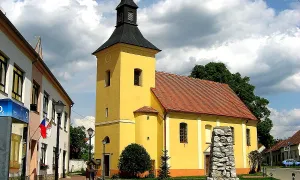
The architecture of the Church of Saint Kunhuta is characterized by its single-nave hall design, culminating in a semi-circular end, complemented by an attached cylindrical tower. The smooth facades are punctuated with windows featuring semi-circular arches, contributing to its distinctive appearance. These elements illustrate the church's architectural evolution from its medieval origins through subsequent reconstructions and enhancements.
Ownership and administration of the church have seen notable changes over time. Initially under the influence of German knights, it later came into the hands of Jesuits for repairs in the 17th century. The acquisition by Emperor Joseph II marked a significant administrative shift, leading to further development and modernization efforts that shaped its current form.
Key events in the church's history include the multiple fires that necessitated reconstruction and the wartime requisitioning of its bells during World War II. These incidents underscore the challenges faced by the community and their resilience in preserving this cultural landmark. The replacement of the bells post-war symbolizes a return to normalcy and continuity for the parish.
Today, the Church of Saint Kunhuta stands as a testament to the enduring spirit of Čejkovice's inhabitants. It remains accessible to visitors who wish to explore its historical significance and architectural beauty. As a cultural heritage site, it offers insights into the region's past while continuing to serve its religious community. The church is not only a place of worship but also a symbol of resilience and adaptation through centuries of change.
Visiting the Church of Saint Kunhuta provides an opportunity to connect with the rich tapestry of history woven by generations before us. Its story of destruction, reconstruction, and perseverance invites reflection on the broader human experience of overcoming adversity. For those interested in history, architecture, or simply seeking a serene place of contemplation, this church is undoubtedly worth exploring.
Historical milestones
- 1673
- The church was repaired by Jesuits.
- 1692
- The church burned down along with most of Čejkovice.
- 1783
- Emperor Joseph II purchased Čejkovice, leading to the construction of a new church.
- 1891
- The church received its vault and tower.
Architectural development
The church's architectural development includes several phases: initial construction by German knights in the 13th century, Jesuit repairs in 1673, reconstruction after fires in 1692 and again five years later, and significant additions including a vault and tower between 1890 and 1892. The walls were reinforced with buttresses, a new ceiling was installed, and the interior's architectural division was modified.
Historical events
The church was likely founded by German knights in the 13th century.
In 1673, Jesuits repaired the church, but it burned down in 1692 along with most of the town. A new church was quickly built but burned again five years later during a Hungarian invasion.
After Emperor Joseph II purchased Čejkovice in 1783, construction began on a new church, which did not receive its vault or tower until between 1890 and 1892.
Points of interest
- The Church of Saint Kunhuta was originally founded by German knights in the 13th century, highlighting a unique blend of military and religious influences during its early construction, reflective of medieval European practices.
- In 1692, a devastating fire destroyed the church along with much of Čejkovice. Remarkably, despite this disaster, the community rebuilt it quickly, only for it to be destroyed again five years later by a Hungarian invasion, showcasing their resilience and determination.
Guide
Show guide text
Welcome to Čejkovice, where we stand before the historical monument of Church of Saint Kunigunde. This church is more than just an architectural masterpiece; it's a living document full of stories and transformations. As you look at it, you might think it stands quietly, but its history resonates with deep waves of time.
The Church of Saint Kunigunde has roots reaching back to the 13th century when it was founded by German knights. This original church served not only as a spiritual center but also as a testament to the connection between military and religious forces in medieval Europe. In 1673, Jesuits restored it, adding another layer to its history.
However, the church did not escape the trials of time. A great fire in 1692 destroyed Čejkovice along with the church. This tragic incident led to significant reconstruction, as in 1783 Emperor Joseph II purchased Čejkovice and initiated the construction of a new church. Now you can notice its simple courtyard structure with a semi-circular end, reflecting its constant evolution.
In 1891, the church received its vault and tower – details that still contribute to its magnificent appearance today. Although the architects remain unknown, their work is visible in the structure and significance of the church.
This church has witnessed many events and personalities, even though specific historical figures remain unknown. However, its presence in Čejkovice itself stands as a testament to the resilience and importance of the community.
One interesting aspect you might notice is its origin as a spiritual center founded by German knights. This fact reflects the rich history of the region and its ties to broader European events.
Take a look around, let's explore the façade and experience the atmosphere of this place. Every stone has a story waiting to be told.
Thank you for visiting Church of Saint Kunigunde in Čejkovice. I hope you appreciated its history and beauty. If you're interested in exploring more about local cultural heritage, don't hesitate to dive into other stories that this area offers. Godspeed and enjoy your further discoveries!
Tips for visitors
The best time to visit the Church of Saint Kunhuta in Čejkovice is during late spring or early autumn. During these months, the weather is typically mild, making it pleasant for walking around the church and its surroundings. Additionally, visiting outside of peak tourist seasons can offer a more serene experience, allowing you to appreciate the architectural details without large crowds.
Parking at Čejkovice is generally convenient, with several parking areas available near the village center where public transport options are accessible. For those preferring public transportation, local buses serve the area, and it's advisable to check current schedules online for the most accurate information. This can help ensure a smooth journey to the church without any last-minute surprises.
When planning your visit, consider bringing comfortable walking shoes as you may want to explore the village or nearby areas on foot. A camera is also recommended to capture the stunning architecture of the Church of Saint Kunhuta and its picturesque surroundings. Additionally, carrying a light jacket can be useful, especially if visiting in the early morning or late afternoon when temperatures might drop.
Photography enthusiasts will find several spots around the church ideal for capturing its beauty, particularly during golden hour—shortly after sunrise or before sunset—when the lighting is soft and warm. The façade of the church looks stunning against the backdrop of a setting sun, making it an excellent time to take photos.
For those interested in exploring nearby attractions within 30 minutes from Čejkovice, consider visiting other historical sites or natural landscapes in the Hodonín District. These can provide additional context and enrich your experience of the region's cultural heritage.
Businesses nearby
Do you run a restaurant, accommodation, shop, museum, rental, wellness or other visitor service near this monument? Show yourself directly to the people heading to it — this is how they will see you in the app and on the web:
Accommodation nearby
Themed route
Thematic Walking Tour: Čejkovice and the Church of Saint Kunhuta
1. Church of Saint Kunhuta (Čejkovice) - Church Begin your journey at the heart of Čejkovice with a visit to the *Church of Saint Kunhuta*. This church stands as a testament to the region's rich history and architectural beauty, offering visitors a glimpse into its storied past. Its serene atmosphere provides an excellent starting point for exploring the cultural heritage of this charming village.
2. Čejkovice Village Square - Historic Site Just outside the church, stroll through the *Čejkovice Village Square*. This central area is steeped in history and serves as a communal gathering place that reflects the traditional lifestyle of Jihomoravský kraj. The square offers picturesque views and an opportunity to appreciate the village's rustic charm.
3. Local Farmsteads - Cultural Experience A short walk from the village center, explore nearby *local farmsteads*. These farms provide insight into the agricultural practices that have sustained the community for generations. Visitors can learn about traditional farming techniques and perhaps even sample local produce, offering a taste of rural life in Čejkovice.
4. Čejkovice Community Center - Cultural Hub Conclude your tour at the *Čejkovice Community Center*. This venue is often bustling with activities that showcase local art, music, and crafts. It serves as a cultural hub where visitors can engage with the community's vibrant traditions and perhaps participate in workshops or events.
This thematic walking tour offers an enriching experience through Čejkovice, highlighting its historical and cultural significance while focusing on the unique charm of this picturesque village.
Seasonal recommendations
Spring: Visiting the Church of Saint Kunhuta in Čejkovice during spring offers a unique experience as nature awakens around this historic site. The vibrant greens and fresh blooms create a picturesque backdrop, enhancing the church's architectural beauty. This season is characterized by mild temperatures and longer daylight hours, making it ideal for leisurely exploration. Visitors should be prepared for occasional rain showers; thus, carrying an umbrella or wearing waterproof clothing can enhance comfort. While spring sees fewer tourists than summer, early mornings are particularly serene, offering a tranquil atmosphere perfect for appreciating the church's details without crowds.
Summer: Summer in Čejkovice is marked by warm weather and vibrant sunshine that beautifully illuminates the Church of Saint Kunhuta, highlighting its intricate stonework. This season attracts more visitors due to pleasant temperatures and longer days, making it an ideal time for families and tourists alike. To avoid crowds, especially during peak hours in the afternoon, consider visiting early in the morning or later in the evening. Comfortable walking shoes and light clothing are recommended, along with sun protection such as hats and sunscreen, to ensure a comfortable visit under the bright summer skies.
Autumn: The autumn season brings a magical transformation to the Church of Saint Kunhuta with its warm hues of reds, oranges, and yellows enveloping the surrounding landscape. This period offers a unique atmospheric charm as the cooler temperatures create crisp air ideal for walking around the church grounds. As leaves begin to fall, the historical site takes on an enchanting appearance, perfect for photography enthusiasts. Visitors should dress in layers to accommodate fluctuating temperatures throughout the day and consider bringing a light jacket or scarf for added comfort during their visit.
Winter: Winter at the Church of Saint Kunhuta provides a serene and peaceful experience as snow blankets the landscape, creating a picturesque setting that enhances the church's historic charm. The cooler months often result in shorter opening hours and potentially limited access to certain areas due to weather conditions. Visitors are advised to dress warmly in layers, including thermal wear and waterproof outer garments, to stay comfortable during their visit. Early morning visits can offer a quiet atmosphere before any potential snowfall, allowing for an intimate exploration of this historic site amidst the tranquil winter scenery.
Visualizations and artistic views

Vizualizace jsou generovány umělou inteligencí a slouží jako inspirace.


Tips from visitors
No tips yet. Be the first!
Log in and add your tip.


Reviews and comments