






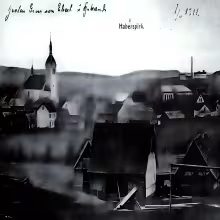
The Church of Saint Anne in Habartov was a notable historical monument showcasing early 20th-century architectural innovation and community spirit. Situated in the town of Habartov within the Karlovarský kraj region, it served its parishioners from its consecration on July 26, 1906, until its demolition on December 19, 1951. Its significance lies not only in its architectural style but also in its role as a community center during rapid industrial growth and urbanization.
The Church of Saint Anne replaced an inadequate baroque chapel built in 1766, which had become structurally unsound for Habartov's growing population. Local priest Johann Kvasnička initiated the construction after arriving in 1902 by founding a society dedicated to this purpose. Fundraising efforts were successful, allowing the cornerstone to be laid on May 7, 1905. Designed by Matěj Blecha and overseen by Emil Lifka, the church was completed swiftly, with services beginning just months later.
Architecturally, the Church of Saint Anne featured a pseudoslosh style that incorporated modern influences alongside Romanesque and Secessionist elements. Its design included an oblong ground plan with a semi-circular apse at one end and an adjoining sacristy on another side. A prominent high spire topped by a lantern added to its distinctive silhouette, marking it as a significant landmark in the town.
Throughout its existence, the church underwent several changes, particularly concerning its musical instruments. Initially equipped with organ pipes from a 1854 instrument relocated from Olovice, it later acquired new organs crafted by Jindřich Schiffner in 1908. These were eventually moved to Archlebov before the church's demolition.
The Church of Saint Anne met an untimely end due to regional mining expansion. The Libík surface mine encroached upon its grounds, leading local mining authorities to demand its demolition as early as 1947. Despite discrepancies in historical records regarding the exact timing and circumstances of its destruction, it is confirmed that the church was demolished on December 19, 1951.
Today, the site where the Church of Saint Anne once stood has been transformed through mining activities and subsequent land reclamation efforts. It now forms part of the western slopes of Lake Medard, reflecting both the industrial past and ecological restoration in the area. While the physical structure no longer exists, its historical significance endures as a reminder of Habartov's rich cultural heritage.
Visitors interested in Habartov's history can explore surrounding areas that reflect the town's evolution from an industrially driven community to one focused on environmental recovery and preservation. The story of the Church of Saint Anne serves as a poignant narrative about adaptation, loss, and renewal, inviting reflection on how communities navigate change over time.
Historical milestones
- 1766
- Výstavba barokní kaple nahrazené kostelem svaté Anny.
- 1902
- Příchod faráře Johanna Kvasničky do Habartova.
- 1905
- Založení společnosti pro stavbu kostela svaté Anny.
- 1905
- Vložení základního kamene kostela svaté Anny.
- 1906
- Posvěcení a otevření kostela svaté Anny pro služby.
- 1951
- Demolice kostela svaté Anny dne 19. prosince.
Architectural development
Constructed between 1905 and 1906, the Church of Saint Anne was designed in a pseudoslosh style with modern influences. It featured Romanesque and Secessionist elements, including a high spire topped by a lantern. The church had a semi-circular apse and an adjoining sacristy.
Historical events
The last mass in the old chapel was held on March 9, 1905, before its demolition.
The cornerstone of the new church was laid on May 7, 1905, and it opened for services by December 10, 1951.
Demolition of the church occurred on December 19, 1951.
Points of interest
- The Church of Saint Anne was initially built to replace a baroque chapel from 1766 that had become structurally unsound due to the town's population growth. This highlights how architectural needs evolved with Habartov’s expanding community.
- Local priest Johann Kvasnička played a pivotal role in the church's construction by founding a society dedicated to raising funds for its building, showcasing early 20th-century community mobilization and civic engagement.
Guide
Show guide text
Welcome to Habartov, where history whispers through the streets and echoes in the spaces left behind. You stand before a site that once housed the Church of Saint Anne—a remarkable structure that served as both spiritual haven and architectural marvel for its community.
Imagine this place back in 1766: a quaint baroque chapel stood here, its walls echoing with prayers and hymns. As Habartov grew, so did the need for a larger space to accommodate its expanding population. This necessity led to the birth of the Church of Saint Anne, conceived as a grander replacement. By 1902, local priest Johann Kvasnička arrived in town, becoming a pivotal figure in this transformation. Recognizing the chapel's limitations, he spearheaded fundraising efforts that culminated in the laying of the cornerstone for the new church in 1905.
The Church of Saint Anne was an architectural tapestry woven with modern, Romanesque, and Secessionist elements—a pseudoslosh style that reflected both tradition and innovation. As you stand here now, envision its grandeur: a structure designed by architects Matěj Blecha and Emil Lifka, whose vision brought this eclectic blend of styles to life. Though the church no longer stands, having been demolished in 1951 due to mining activities, its legacy endures through stories and memories.
In 1906, just a year after construction began, the church was consecrated and opened for services. It became more than a place of worship; it was a community hub where people gathered, celebrated, and found solace. The dedication of Johann Kvasnička and the townspeople in its creation is a testament to their resilience and faith.
Now, let your mind wander to one of the church's intriguing aspects: its ability to evolve with Habartov’s needs. This adaptability was crucial as it transitioned from a baroque chapel to a modern ecclesiastical edifice—a reflection of both changing architectural tastes and the town's growth.
As we conclude this journey through time, take a moment to reflect on the stories etched into this site. Though the physical structure is gone, its spirit lingers in the air around you. We invite you to explore further, to delve deeper into Habartov’s rich history, and perhaps discover more hidden gems that tell tales of resilience, faith, and community.
Thank you for joining us on this auditory exploration. May your curiosity continue to guide you through the fascinating narratives of the past. Farewell, until we meet again in another chapter of history.
Businesses nearby
Do you run a restaurant, accommodation, shop, museum, rental, wellness or other visitor service near this monument? Show yourself directly to the people heading to it — this is how they will see you in the app and on the web:
Accommodation nearby
Trips and activities nearby
Guided tours, tickets and activities nearby from GetYourGuide
Search tours and activities →Themed route
Thematic Vltour: Exploring Habartov's Heritage
1. Kostel svaté Anny (Church of Saint Anne) *Type:* Historical Church *Why Visit:* This stunning Baroque church, located in the heart of Habartov, is a testament to the town’s rich history and architectural beauty. Its intricate design and serene atmosphere make it an ideal starting point for exploring the cultural heritage of this region.
2. Habartov Town Square *Type:* Historical Site *Why Visit:* Just a short walk from Kostel svaté Anny, the town square is surrounded by charming historical buildings that reflect Habartov’s past as an industrial hub. It offers a glimpse into the daily life of its residents and serves as a perfect spot to appreciate the local architecture.
3. Habartov Museum *Type:* Cultural Institution *Why Visit:* Located near the town square, this museum provides insights into the history and development of Habartov, showcasing artifacts and exhibits that highlight the region’s industrial heritage and cultural evolution. It's a must-visit for anyone interested in understanding the local narrative.
4. Local Artisan Shops *Type:* Shopping Experience *Why Visit:* A short stroll from the museum will lead you to quaint artisan shops where you can find unique, locally crafted items. These shops offer a taste of Habartov’s vibrant community spirit and provide an opportunity to support local artisans.
5. Habartov Park *Type:* Public Park *Why Visit:* Conclude your tour with a relaxing visit to Habartov Park, located near the town center. This green oasis offers beautiful landscapes and peaceful walking paths, making it an ideal spot for reflection after exploring the historical and cultural sites of the town.
This thematic vltour provides a comprehensive exploration of Habartov’s key attractions, offering insights into its history, culture, and community life.
Seasonal recommendations
Jaro: Návštěva kostela svaté Anny v Habartově v jarním období nabízí jedinečný zážitek, kdy se příroda probouzí a okolní krajinu oplodňuje různorodá kvetoucí vegetace. Slunečné ráno může být ideálním časem pro návštěvu, protože teploty jsou příjemné a mírné. I když kostel již není stojící strukturou, jeho zbořené zbytky poskytují půdu pro pochopení dějin a architektury. V této sezóně je vhodné přijít s lehkým oblečením, ale mít také něco teplejšího na ruce kvůli možným chladným vánicím. Navštěvující se mohou těšit na mírné davy a příjemné počasí, které ztělesňuje jarní obnovu.
Léto: Léto je nejlepší čas pro návštěvu kostela svaté Anny v Habartově kvůli dlouhým dnům a teplému slunečnému počasí, které umožňuje plně si užít okolní krajinu. V hlavní letní sezóně se může zvýšit návštěvnost, takže je vhodné přijít dřívější v den nebo později večer, aby se vyhnuli prudkým slunečným paprskům a davu. Tento čas roka nabízí ideální podmínky pro fotografování zbytků kostela s vynikajícím osvětlením. Navštěvující by měli být připraveni na teplé počasí, nosit krátké oblečení a sluneční brýle, stejně jako nesat s sebou dostatek pitné vody.
Podzim: Podzim nabízí melancholickou atmosféru kolem zbořených ruin kostela svaté Anny, když listy padají a obalují krajinu barevnými pláštěmi. Slunečné podzimní dny jsou ideálním časem pro návštěvu, protože teploty zůstávají příjemně mírné a je méně pravděpodobné, že se setkáte s velkými davami. Tato sezóna nabízí jedinečné osvětlení pro fotografování, kdy slunce svítí na pozvolna klesajícím oblakům a barevných listech. Navštěvující by měli připravit oblečení podle teploty, možná s něčím teplejším pro chladnější odpoledne nebo větrné ráno.
Zima: Zimní návštěva kostela svaté Anny nabízí zcela jinou atmosféru, kdy je krajinu pokryt sněhem a klidný vzduch dodává mírný pocit tajemství. Zimní slunečné dny jsou obvykle krátké a teplé oblečení je nezbytné, zejména v raných ránech a pozdních večerech, kdy se může být chladnější. Otevírací doba památky by mohla být kratší kvůli zimním podmínkám, takže je důležité kontrolovat aktuální informace před návštěvou. Navzdory chladným teplotám se v této sezóně může setkat méně lidí, což umožňuje klidné procházky a reflektivní okamžiky mezi zbytky historické struktury.
Visualizations and artistic views

Vizualizace jsou generovány umělou inteligencí a slouží jako inspirace.
Tips from visitors
No tips yet. Be the first!
Log in and add your tip.
Location on the map



Příběhy a pověsti
Legendy, pověsti a příběhy spjaté s touto památkou
Reviews and comments