





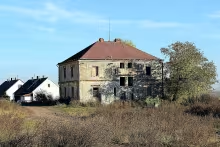
The Budov complex is a historical site located in the village of Budov near Verušičky, within the Karlovy Vary District. This monument includes remnants of an old castle, a dilapidated courtyard building, and a newer castle structure. The site is significant for its rich history that reflects various architectural styles, such as Renaissance and Baroque, marking it as a testament to the region's evolving cultural landscape.
The origins of Budov trace back to the late 14th century when the first noble residence likely emerged. Although specific details about its initial construction are scarce, historical records from 1390 mention the village in association with Lva z Budova. Over time, ownership passed through notable families such as the Budovců and Údrčtí, reflecting the region's dynamic feudal history. By the 16th century, significant architectural changes began under noble patrons like Ladislav Sekerka and Baltazar Ladislav Sekerka, who contributed to its development.
Architecturally, Budov showcases a blend of styles that evolved over centuries. The original courtyard had an irregular layout with two wings; the southern side featured a long wing while several buildings stood on the northern side. In the 19th century, further transformations included constructing a new castle and chapel on the eastern and western sides, respectively. The old castle, located in the southwest corner, was reinforced with three buttresses due to structural issues, indicating adaptive architectural responses.
Ownership of Budov changed hands multiple times, reflecting its strategic importance and economic value. Notable owners included Bernart Cukr z Tamfeldu, who briefly owned it before selling to Baltazar Sekerka ze Sedčic in 1592. The property later passed through the hands of Petr Jáchym Campanus z Rösselfeldu, Vojtěch Putz z Breitenbachu, and František Antonín Nostic, among others. Each transition marked shifts in fortune and influence within the region.
Key events at Budov include its damage during the Thirty Years' War in 1631, followed by repairs completed by 1647. These occurrences highlight the site's resilience amidst regional conflicts that shaped Central Europe during this tumultuous period. The involvement of figures like Felix Sekerka ze Sedčic further underscores the personal histories intertwined with Budov’s legacy.
Today, the Budov complex stands as a historical monument within the eastern part of the village, surrounded by typical rural landscapes. While much of its original grandeur has faded, the remnants offer visitors a glimpse into the past and an opportunity to explore architectural evolution from medieval to Baroque styles. The site's accessibility allows for exploration of its rich history, making it a worthwhile destination for those interested in Bohemian heritage.
Budov invites visitors to step back in time and appreciate the layers of history embedded within its walls. Its enduring presence serves as a reminder of the region’s historical narrative, offering insights into the lives and legacies of those who once walked its grounds.
Historical milestones
- end of the 14th century
- The establishment of the first noble residence in Budov.
- 1390
- First mention of the village in connection with Lév z Budova.
- 16.0
- Beginning of architectural changes under nobles such as Ladislav Sekerka.
- 1592
- Baltazar Sekerka ze Sedčic acquired the estate.
- 1631
- Damage during the Thirty Years' War.
- 1647
- Completion of repairs after war damages.
Architectural development
The original courtyard had an irregular layout with two wings. The southern side featured a long wing while several buildings stood on the northern side. In the 19th century, a new castle and chapel were constructed on the eastern and western sides respectively. The old castle, located in the southwest corner, was reinforced with three buttresses due to static issues.
Historical events
The first documented mention of the village dates back to 1390, associated with Lva z Budova.
In 1530, Jan Čichalovec sold a mill under Budov to Jindřich z Údrče.
During the Thirty Years' War in 1631, the castle was damaged but repaired by 1647.
Owners
Ladislav Sekerka (16th century)
Baltazar Ladislav Sekerka (late 16th to early 17th century)
Bernart Cukr z Tamfeldu (1589)
Baltazar Sekerka ze Sedčic (1592)
Petr Jáchym Campanus z Rösselfeldu (1698)
Vojtěch Putz z Breitenbachu (1725-1726)
František Antonín Nostic (1774)
Jan Antonín Hladík (1838)
Points of interest
- The Budov complex's architectural evolution reflects a rare blend of styles, showcasing how Renaissance and Baroque elements were adapted to suit the needs and tastes of different noble patrons over centuries. This makes it an intriguing study for those interested in architectural history.
Guide
Show guide text
Welcome to the enchanting Budov complex in Verušičky, a captivating blend of history and architecture nestled within the serene landscapes of Karlovy Vary District. As you stand before this remarkable site, take a moment to soak in its unique presence—a fusion of old-world charm and stories etched into every stone.
Imagine stepping back to the late 14th century when this area first saw the rise of a noble residence. The Budov complex began as a modest castle, evolving over centuries under the influence of various patrons. Its origins are intertwined with the village's mention in 1390, linked to Lév z Budova, marking the beginning of its storied past.
As you gaze upon the remnants of this historical site, notice how time has sculpted it into what we see today—a mix of dilapidated structures and newer additions. The architectural journey here is a testament to resilience and adaptation. Initially born from necessity in medieval times, the complex underwent significant transformations during the Renaissance and Baroque periods, reflecting the tastes and needs of its noble owners.
Let's delve deeper into this fascinating evolution. During the 16th century, Ladislav Sekerka initiated architectural changes that began to shape the site’s unique character. Later, in 1592, Baltazar Sekerka ze Sedčic acquired the estate, further influencing its development. However, it was not without challenges; the Thirty Years' War in 1631 left its mark, damaging the complex significantly. Yet, by 1647, restoration efforts had breathed new life into these walls.
As you walk around, take a moment to appreciate the architectural nuances that tell tales of adaptation and survival. While specific architects remain unnamed, their work is evident in how Renaissance and Baroque elements are seamlessly integrated into this historic site. It's a rare opportunity to witness such an organic blend of styles, making Budov complex an intriguing subject for those passionate about architectural history.
Among the many stories embedded within these walls, the Sekerka family stands out prominently. Their legacy is woven through the fabric of this place, with figures like Ladislav and Felix Sekerka ze Sedčic playing pivotal roles in its historical tapestry. Their influence helped shape not just the physical structure but also the cultural significance of Budov.
Now, let your imagination wander to uncover a bit of mystery: How did these noble families envision their legacy through stone and mortar? What stories unfolded within these walls that have since faded into history?
As you conclude your visit here at the Budov complex, we invite you to linger in this space where time seems to pause. Let the whispers of history guide your thoughts as you explore further or simply enjoy the tranquility surrounding you. Thank you for joining us on this journey through time and architecture. We hope it has inspired a deeper appreciation for the enduring stories that places like Budov hold.
Tips for visitors
The best time to visit the Budov complex is during late spring or early autumn when the weather is mild, and the surrounding landscapes are particularly beautiful. During these seasons, you can enjoy pleasant temperatures that make exploring the ruins more comfortable, while also avoiding the peak tourist crowds typical of summer months.
Parking and transportation options for reaching the Budov complex include driving your own vehicle to a nearby parking area or using public transport. The site is accessible by road, making it convenient for those traveling by car. For visitors preferring public transit, local buses can be used; however, it's advisable to check current routes and schedules in advance to ensure seamless travel.
When visiting the Budov complex, consider bringing comfortable walking shoes as there may be uneven terrain around the ruins. A hat and sunscreen are recommended for protection against the sun, especially during warmer months. Additionally, carrying a water bottle is essential to stay hydrated throughout your visit.
For photography enthusiasts, the best spots at the Budov complex include areas where you can capture panoramic views of the surrounding rural landscape. Early morning or late afternoon light often provides ideal conditions for photographing the ruins with soft shadows and warm tones. Be mindful of other visitors when setting up shots to ensure everyone has a pleasant experience.
In terms of nearby attractions within 30 minutes, consider exploring the village of Verušičky itself, which offers charming rural scenery and local culture. The proximity to Karlovy Vary also allows for an opportunity to visit this popular spa town known for its thermal springs and historic architecture.
Businesses nearby
Do you run a restaurant, accommodation, shop, museum, rental, wellness or other visitor service near this monument? Show yourself directly to the people heading to it — this is how they will see you in the app and on the web:
Nearby
The Budov complex is situated in the eastern part of the village, surrounded by typical rural landscapes. The area features remnants of historical architecture and offers a glimpse into the region's past.
Accommodation nearby
Trips and activities nearby
Guided tours, tickets and activities nearby from GetYourGuide
Search tours and activities →Themed route
Thematic Walking Tour: The Budov Complex and Surroundings
1. Budov Castle (Zámek) - *Type:* Historical Building - *Why Visit:* Begin your journey at the heart of Verušičky with the majestic Budov Castle, a quintessential example of rural architecture that offers a window into the region's historical past. Explore its grand halls and learn about the stories embedded within its walls.
2. Budov Village Square - *Type:* Public Space - *Why Visit:* A short walk from the castle leads you to the charming village square, surrounded by traditional cottages that reflect the architectural heritage of Verušičky. This area serves as a perfect spot for relaxation and reflection on the village's rural charm.
3. Historical Farmsteads - *Type:* Rural Architecture - *Why Visit:* Venture into the surrounding countryside to discover remnants of historical farmsteads that dot the landscape around Budov Castle. These structures offer insight into traditional farming practices and rural life in this part of Karlovarský kraj.
4. Rural Landscape Walk - *Type:* Scenic Route - *Why Visit:* Embark on a leisurely stroll through the typical rural landscapes that envelop the Budov complex. This walk allows you to appreciate the natural beauty and tranquility of the area, providing a serene backdrop to your exploration.
5. Budov Castle Gardens - *Type:* Garden - *Why Visit:* Conclude your tour in the beautifully maintained gardens adjacent to Budov Castle. The gardens are a testament to historical landscaping techniques and offer a peaceful retreat with views of the surrounding countryside, perfect for capturing memories of your visit.
This thematic route offers a comprehensive exploration of the Budov complex and its immediate surroundings, highlighting the rich history and natural beauty of Verušičky.
Seasonal recommendations
Spring: Visiting Verušičky Castle ruins during spring offers a unique experience as the landscape awakens with vibrant colors and fresh blooms. The gentle warmth of the season brings out the lush greenery, making it an ideal time for nature enthusiasts to explore the surrounding flora. The soft morning light enhances the beauty of the ruins, casting long shadows that add depth to their historical charm. Visitors should be prepared for occasional rain showers, so packing a waterproof jacket is advisable. Early mornings are recommended to avoid larger crowds and enjoy the tranquil atmosphere.
Summer: Summer at Verušičky Castle provides an opportunity to bask in the full glory of its natural surroundings under clear blue skies. The long daylight hours allow ample time to explore both the ruins and the surrounding parkland, which is alive with the sounds of birds and rustling leaves. While this season attracts more visitors due to pleasant weather, arriving early can help avoid peak tourist times. Comfortable walking shoes and light clothing are recommended for navigating the terrain, and carrying water is essential to stay hydrated in the summer heat.
Autumn: Autumn transforms Verušičky Castle into a picturesque scene with its rich palette of reds, oranges, and yellows. The cooler temperatures make it an ideal time for leisurely walks through the castle grounds as fallen leaves create a crunchy carpet underfoot. The soft afternoon light during this season enhances the atmospheric charm of the ruins, providing perfect conditions for photography enthusiasts. Visitors should dress in layers to accommodate fluctuating temperatures throughout the day and consider bringing a hat or umbrella for unexpected rain.
Winter: Winter at Verušičky Castle offers a serene and mystical experience as snow blankets the ruins, adding an ethereal quality to their already haunting beauty. The shorter days mean that visits are best planned during daylight hours, with early morning excursions recommended to maximize time in the castle grounds before closing. Visitors should dress warmly in layers, including thermal wear and waterproof boots, to stay comfortable in the cold weather. While some paths may be less accessible due to snow, the quiet atmosphere provides a unique opportunity for reflection amidst the winter landscape.
Visualizations and artistic views


Vizualizace jsou generovány umělou inteligencí a slouží jako inspirace.


Tips from visitors
No tips yet. Be the first!
Log in and add your tip.




Reviews and comments