






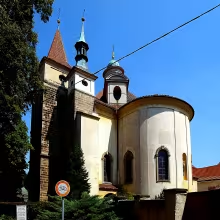
The Church of the Holy Trinity in Slaný is an impressive Baroque structure originally built as a Protestant church between 1581 and 1602. Located within a park on Hlaváčkové Square, it forms part of a cemetery complex that includes a former Franciscan monastery now occupied by the Order of Barefoot Carmelites. This site stands north of Slaný’s city center and is recognized as a cultural heritage site due to its historical significance.
Constructed during a period of religious upheaval in Bohemia, the church was initially built on a site known as Golgata, which served as an execution ground. The construction began under the guidance of Mistr Volf and Vlach J. Maceta, reflecting the Protestant influence prevalent at that time. However, its history took dramatic turns over the centuries. In 1623, during the Thirty Years' War, troops devastated the church, marking a significant event in its early history.
The architectural evolution of the church is notable. Between 1655 and 1662, a Franciscan monastery was added to the complex, transforming it into a Catholic institution. This period also saw the construction of the Loreto Chapel within the church, initiated by Bernard Ignác hrabě Bořita z Martinic in 1657. The chapel became central to the church's structure, housing part of its founder’s heart beneath it. A fire in 1665 caused a tower to collapse and damaged the Loreto Chapel, leading to significant reconstruction efforts. During this time, Italian architect Domenico Orsi likely contributed to expanding the nave, integrating unique organ pipes from 1776 into the main altar.
Ownership and administration of the church have seen dramatic changes over the centuries. Initially Protestant, it became Franciscan until 1662 before transitioning to the Order of Barefoot Carmelites in 1995. The monastery narrowly avoided closure during Joseph II's reforms in 1782 due to Karel Clam-Martinic’s intervention. After being closed forcibly in 1950, the complex served various purposes until it was returned to religious use in 1992.
Today, the Church of the Holy Trinity stands as a testament to its rich and varied history. Visitors can explore its Baroque architecture, including the unique integration of organ pipes into the main altar, and reflect on its historical transformations from a Protestant church to a Catholic monastery. The site’s cultural heritage status underscores its importance in Slaný's history, making it a compelling destination for those interested in religious and architectural history. Its enduring legacy invites exploration and appreciation by all who visit.
Historical milestones
- 1581–1602
- Construction of the original Protestant church.
- 1655–1662
- Addition of the Franciscan monastery.
- 1665
- Fire causing damage to the church and Loreto Chapel.
- 1782
- Attempted closure of the monastery during Joseph II's reforms, which was prevented.
Architectural development
Initially constructed as a Protestant church, it underwent significant changes when a Franciscan monastery was added between 1655 and 1662. After a fire in 1665, the nave was expanded, incorporating designs likely by Italian architect Domenico Orsi. The interior features unique organ pipes from 1776 integrated into the main altar.
Historical events
In 1623, during the Thirty Years' War, the church was devastated by troops.
A fire in 1665 caused a tower to collapse and damaged the Loreto Chapel within the church.
The monastery was saved from closure during Joseph II's reforms in 1782 due to Karel Clam-Martinic's intervention.
Owners
Originally Protestant; became Franciscan from 1655 to 1662; transferred to the Order of Barefoot Carmelites in 1995.
Points of interest
- The Church of the Holy Trinity was originally built on a site known as Golgata, which served as an execution ground before its construction began in 1581. This historical detail adds a layer of somber history to the church's origins.
- A dramatic event occurred during the Thirty Years' War when troops devastated the church in 1623, marking one of the early significant upheavals in its history and reflecting the turbulent religious conflicts of the time.
Guide
Show guide text
Welcome to the Church of the Holy Trinity in Slaný, a remarkable testament to history and architecture nestled within a serene park on Hlaváčkové Square. As you stand here, take a moment to absorb your surroundings: the elegant baroque structure rises before you, its façade whispering tales from centuries past. This church is not just a building; it's a living chronicle of faith, resilience, and transformation.
The story of this sacred site begins in 1581 when construction commenced on what was originally intended as a Protestant church—a reflection of the religious shifts occurring across Europe at that time. By 1602, the initial structure stood completed, embodying both spiritual aspirations and architectural ambition. However, its journey through history is marked by significant transformations. Fast forward to between 1655 and 1662, when a Franciscan monastery was added to this complex, further enriching its historical tapestry.
As you gaze upon the church, notice how it harmoniously blends with its surroundings. The architecture speaks volumes of its baroque influence, crafted by hands such as Mistr Volf, Vlach J. Maceta, and possibly Domenico Orsi. Though specific details of their designs are lost to time, the essence of their vision lingers in the church's enduring presence.
This place has been touched by notable historical figures—Bernard Ignác hrabě Bořita z Martinic and Karel Clam-Martinic, whose lives intertwined with its fate. Their stories add layers of intrigue to an already captivating narrative.
The site itself holds a somber past; it was once known as Golgata, serving as an execution ground before the church's construction began in 1581. This poignant detail adds depth to your understanding of this sacred space and its evolution from a place of judgment to one of redemption and peace.
In 1665, tragedy struck when fire ravaged both the church and the Loreto Chapel, leaving scars that would shape future renovations. Yet, resilience prevailed, as evidenced by the thwarted closure attempt in 1782 during Joseph II's reforms—a testament to the community's dedication to preserving this spiritual haven.
Now, let your curiosity lead you further into exploring the surrounding cemetery complex, where echoes of history continue to resonate. As you wander, imagine the lives that have passed through here and the stories they left behind.
Thank you for joining us on this journey through time at the Church of the Holy Trinity in Slaný. We hope it has inspired you to delve deeper into its rich history and perhaps return to uncover more hidden tales. Until next time, may your explorations be as enlightening as they are enchanting.
Tips for visitors
The best time to visit the Church of the Holy Trinity in Slaný is during late spring or early autumn, when the weather is pleasant for walking around the park surrounding the church. These seasons offer comfortable temperatures and vibrant natural scenery, enhancing your experience as you explore both the church and its serene park setting.
Parking and transportation to the church are convenient options. The area can be accessed by car, with parking available nearby, though it's advisable to check for any restrictions or fees in advance. Public transport is also a viable option; visitors should verify current routes and schedules using an online search tool to ensure smooth travel from Slaný’s city center to the church.
When visiting the Church of the Holy Trinity, consider bringing comfortable walking shoes as you'll likely explore the park area around the church. Additionally, carrying a camera or smartphone for photography is recommended. If planning a longer visit, packing water and snacks can be helpful, especially if exploring nearby attractions after your church visit.
For photography enthusiasts, the best spots to capture the Church of the Holy Trinity are from within its surrounding park, particularly during the golden hours of early morning or late afternoon when natural light is soft and warm. The contrast between the baroque architecture and lush greenery can create stunning images.
Nearby attractions within a 30-minute drive include other cultural sites in Středočeský kraj that offer historical insights into the region. Exploring these additional locations can provide a broader understanding of local heritage, complementing your visit to the church.
Businesses nearby
Do you run a restaurant, accommodation, shop, museum, rental, wellness or other visitor service near this monument? Show yourself directly to the people heading to it — this is how they will see you in the app and on the web:
Nearby
The church and monastery complex is located north of Slaný’s city center, surrounded by a park. The area is designated as a cultural heritage site.
Accommodation nearby
Trips and activities nearby
Guided tours, tickets and activities nearby from GetYourGuide
Search tours and activities →Themed route
Thematic Walking Tour: Church of the Holy Trinity and Surroundings
1. Kostel Nejsvětější Trojice (Church of the Holy Trinity) Type: Historical Religious Site Begin your journey at the heart of this cultural heritage site, the Kostel Nejsvětější Trojice, a stunning example of Baroque architecture. This church is renowned for its intricate design and historical significance in Slaný's religious history. Explore its beautiful interiors and learn about its role as a spiritual center for the community.
2. Monastery Complex Type: Historical Religious Site Adjacent to the church, the monastery complex offers a glimpse into monastic life through centuries. The serene surroundings provide an ideal setting for reflection and appreciation of the architectural harmony between the church and the monastery buildings. Discover how these structures have supported religious activities in the region.
3. Surrounding Park Area Type: Cultural Heritage Site Stroll through the park that envelops the church and monastery complex, offering a peaceful retreat with lush greenery and well-maintained pathways. This area is not only a visual delight but also an important part of the site's cultural heritage, reflecting historical landscaping practices. Enjoy the tranquility while soaking in the rich history surrounding you.
4. Nádvoří (Courtyard) Type: Historical Site Venture into the courtyard of the monastery complex, where you can appreciate the architectural details and spatial layout that have stood the test of time. This space often serves as a venue for cultural events and gatherings, linking past traditions with present-day community life.
5. Věž (Bell Tower) Type: Architectural Feature Conclude your tour by ascending the bell tower, if accessible, to enjoy panoramic views of Slaný and its surroundings. The vantage point offers a unique perspective on the church's architecture and its integration with the natural landscape, providing both aesthetic pleasure and historical insight.
This thematic walking tour allows you to immerse yourself in the rich cultural and architectural heritage of the Kostel Nejsvětější Trojice and its environs.
Seasonal recommendations
Spring: Visiting the Church of the Holy Trinity during spring offers a unique experience as nature awakens around this historic site. The blooming flowers and fresh greenery provide a picturesque backdrop, enhancing the church's architectural beauty with vibrant colors. As daylight extends, the soft morning light beautifully illuminates the intricate details of the structure. Visitors might encounter slightly larger crowds due to the pleasant weather but can enjoy a tranquil atmosphere by arriving early in the day. Wearing comfortable walking shoes and layers is advisable, as temperatures can vary.
Summer: Summer at the Church of the Holy Trinity is characterized by long days and warm evenings, making it ideal for extended exploration. The lush surroundings are particularly inviting during this season, with vibrant greenery complementing the church's historic charm. This period often sees increased visitor numbers, especially on weekends, so planning an early visit can help avoid crowds. Comfortable clothing suitable for warmer weather is recommended, along with staying hydrated and using sunscreen to protect against sun exposure.
Autumn: Autumn brings a stunning transformation to the Church of the Holy Trinity as the surrounding landscape turns into shades of amber and gold. The softer light during this season casts a warm glow on the church's facade, creating an enchanting atmosphere perfect for photography enthusiasts. While visitor numbers may decrease compared to summer, it remains a popular time due to the beautiful foliage. Layered clothing is advisable to accommodate fluctuating temperatures, and carrying an umbrella or raincoat can be wise given autumn’s unpredictable weather.
Winter: Winter at the Church of the Holy Trinity offers a serene and magical experience as snow blankets the area, adding a quiet charm to this historic site. The church may appear more isolated in its winter setting, providing a peaceful atmosphere for reflection. However, visitors should note that opening hours might be shorter due to the season, so checking in advance is recommended. Wearing warm clothing, including hats and gloves, is essential, along with sturdy footwear to navigate potentially icy paths safely.
Visualizations and artistic views

Vizualizace jsou generovány umělou inteligencí a slouží jako inspirace.

Atmosphere of the place
Atmospheric visualization of the setting and era
Tips from visitors
No tips yet. Be the first!
Log in and add your tip.



Reviews and comments