



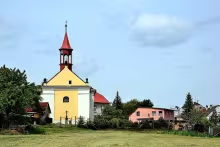
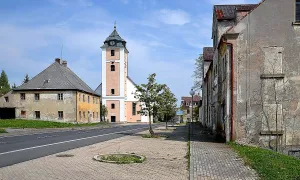
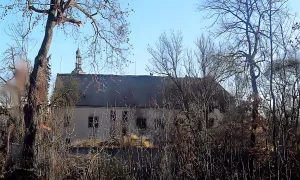
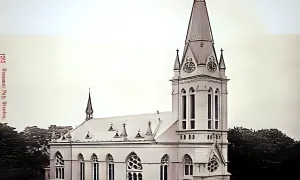
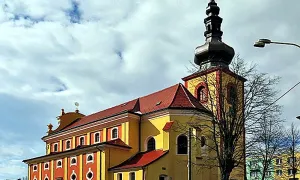
The Church of the Most Holy Trinity in Místo is a Roman Catholic filial church dedicated to the Most Holy Trinity. Constructed between 1691 and 1692 on the southeastern edge of the village, it replaced an earlier wooden chapel with a Baroque structure. The church became significant as a parish church in 1853 after serving as a filiální church to St. Peter and Paul Church in Prunéřov. Recognized for its cultural significance, it has been protected since 1963.
The original church on the village square was demolished and replaced by a wooden chapel, which was then succeeded by the Baroque church built between 1691-1692. During this period, Bohemia was part of the Habsburg Monarchy, and the Baroque style reflected the Counter-Reformation's influence on religious architecture in Europe, emphasizing grandeur and emotional intensity.
The Church of the Most Holy Trinity features a single-nave structure with a rectangular floor plan and a right-angled presbytery. Both the presbytery and western façade end with gables, while the presbytery also has a bell tower extending from it. A sacristy is attached to the south side of the presbytery, vaulted in cloister style with lunettes. The facades are articulated by pilasters, and the interior is lit by semi-circular windows.
The church's main columned altar from the mid-18th century is adorned with sculptures by Jakub Eberle around 1760. Two additional altars dedicated to St. John and Our Lady were installed at the end of the 18th century. These elements contribute to the church’s rich artistic heritage, reflecting the Baroque style's emphasis on detailed ornamentation.
Near the church stands a Baroque column of the Most Holy Trinity from 1724, originally located in the village square. Several small monuments from villages destroyed by coal mining in the Nástup pit have been relocated to Místo and placed around the church, including two stone crosses, one of which is protected as a cultural monument.
Today, the Church of the Most Holy Trinity remains an important cultural site, open for visitors who wish to explore its architectural beauty and historical significance. Its status as a protected monument ensures that it continues to be preserved for future generations. The church offers a glimpse into the rich religious and cultural history of the region, making it a worthwhile destination for those interested in Baroque architecture and Czech heritage.
Architectural development
The church features a single-nave structure with a rectangular floor plan and a right-angled presbytery. Both the presbytery and western façade end with gables, while the presbytery also has a bell tower extending from it. A sacristy is attached to the south side of the presbytery, vaulted in cloister style with lunettes. The facades are articulated by pilasters, and the interior is lit by semi-circular windows.
Historical events
The original church on the village square was demolished and replaced by a wooden chapel, which was then succeeded by the Baroque church built between 1691-1692.
In 1853, it became a parish church after previously being a filial church to St. Peter and Paul Church in Prunéřov.
Points of interest
– The Church of the Most Holy Trinity was originally built to replace a wooden chapel that had been located on the village square, reflecting a common practice in Baroque architecture where older structures were often replaced with more grandiose designs.
– A notable feature near the church is the relocation of monuments from villages destroyed by coal mining activities at Nástup pit. Among these relocated artifacts are two stone crosses, one of which holds protected status as a cultural monument, symbolizing the region's industrial history and its impact on local communities.
Guide
Show guide text
Welcome to the Church of the Most Holy Trinity in Místo, a remarkable testament to Baroque architecture nestled on the southeastern edge of this charming village. As you stand here, take a moment to soak in the serene atmosphere surrounding this historic edifice. The church's façade, though simple, exudes an understated elegance that draws visitors into its rich history.
The Church of the Most Holy Trinity was constructed between 1691 and 1692, replacing an older wooden chapel previously situated on the village square. This transition from wood to stone is a reflection of the Baroque era's penchant for grandeur and permanence—a time when communities sought to express their faith through more enduring structures.
As you look around, notice how the church harmoniously blends with its surroundings, standing as a symbol of continuity in this historic locale. Although the architects remain unknown, their vision has left an indelible mark on Místo, crafting a space that has served spiritual needs for centuries.
In 1853, this church transitioned from being a filial church to St. Peter and Paul Church in Prunéřov to becoming its own parish church—a significant milestone that underscores its importance within the community.
Nearby, you'll find an intriguing feature: the site of the original wooden chapel it replaced. This speaks volumes about the evolution of sacred spaces in this region—how they adapt over time while retaining their spiritual significance.
As we conclude our brief journey through history and architecture here at Místo, I invite you to explore further, perhaps wandering around the village or visiting nearby landmarks that echo this rich past. Thank you for joining me on this auditory exploration of the Church of the Most Holy Trinity. Enjoy your continued discovery!
Businesses nearby
Do you run a restaurant, accommodation, shop, museum, rental, wellness or other visitor service near this monument? Show yourself directly to the people heading to it — this is how they will see you in the app and on the web:
Nearby
Near the church stands a Baroque column of the Most Holy Trinity from 1724, originally located in the village square. Several small monuments from villages destroyed by coal mining in the Nástup pit have been relocated to Místo and placed around the church, including two stone crosses, one of which is protected as a cultural monument.
Accommodation nearby
Themed route
Thematic Walking Tour: Místo, Ústecký kraj
1. Kostel Nejsvětější Trojice (Church of the Most Holy Trinity) *Type:* Religious Site *Why Visit:* Begin your journey at this stunning Baroque church, a centerpiece of Místo's cultural and spiritual life. The church is renowned for its architectural beauty and historical significance in the region. Take time to explore its interior, which houses exquisite altarpieces and religious artifacts that reflect centuries of devotion.
2. Baroque Column of the Most Holy Trinity (Barokní sloup Nejsvětější Trojice) *Type:* Historical Monument *Why Visit:* Located just outside the church, this 1724 column is a remarkable example of Baroque artistry and craftsmanship. Originally situated in the village square, it was moved to its current location to preserve its historical value. The intricate carvings depict scenes from Christian theology, offering insight into the religious fervor of the time.
3. Stone Crosses (Kámen křížů) *Type:* Cultural Monuments *Why Visit:* Surrounding the church are several stone crosses that have been relocated from villages affected by coal mining in the Nástup pit. These crosses, including one protected as a cultural monument, serve as poignant reminders of the region's industrial past and its impact on local communities. Each cross tells a story of resilience and memory, making them significant historical markers.
4. Relocated Monuments from Destroyed Villages (Přemístěné památky z zaniklých vesnic) *Type:* Historical Artifacts *Why Visit:* Explore the various small monuments that have been carefully placed around the church area. These artifacts were moved to Místo to preserve their historical value after the destruction of nearby villages due to mining activities. They offer a unique glimpse into the lives and traditions of those communities, providing context to the broader narrative of industrialization in the region.
This tour offers a deep dive into the rich history and cultural heritage of Místo, focusing on its religious landmarks and the stories they tell about resilience and transformation over time.
Seasonal recommendations
Jaro: A visit to the Church of the Most Holy Trinity in spring offers a unique view of the church when it is surrounded by beautifully lit green vegetation and blooming shrubs. The atmosphere is calm and friendly, allowing for relaxed exploration of the monument without concerns about overcrowding. Due to mild temperatures, it's advisable to dress in comfortable clothes and possibly bring an umbrella as well, since spring weather can be unpredictable. The best time to visit is in the afternoon when the sun illuminates the interior of the church and enhances its beauty.
Summer: Summer brings a lively atmosphere around the Church of the Most Holy Trojice with full blooms and sunny lighting that highlights architectural details. This period is popular among visitors, so larger crowds are expected, especially during peak summer season. It's recommended to come early in the morning or later in the evening to avoid peak visiting times and hot midday hours. Wear light clothing, carry a water bottle, and sunglasses to enjoy your visit without discomfort.
Autumn: In autumn, the Church of the Most Holy Trinity is surrounded by colorful leaves and the scent of ripe crops, adding melancholic beauty to its historic setting. The atmosphere is quieter than during summer, with fewer visitors and mild temperatures ideal for long walks around the monument. Dress in layered clothing to be prepared for weather changes throughout the day, and don't forget your camera to capture this unique autumnal beauty.
Winter: A winter visit to the Church of the Most Holy Trinity offers a peaceful and serene experience when the church is lit by weak sunlight or artificial lights. Snowy blankets can add a romantic touch to the surroundings but may also limit opening hours due to weather conditions. It's important to dress warmly and wear quality shoes for comfortable walking on potentially icy surfaces. The best time to visit is early in the morning, allowing you to enjoy the tranquil environment before the first groups of tourists arrive.
Visualizations and artistic views

Vizualizace jsou generovány umělou inteligencí a slouží jako inspirace.


Tips from visitors
No tips yet. Be the first!
Log in and add your tip.
Location on the map


Příběhy a pověsti
Legendy, pověsti a příběhy spjaté s touto památkou
Reviews and comments