






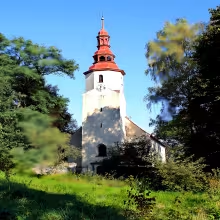
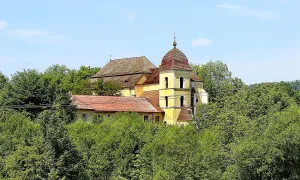
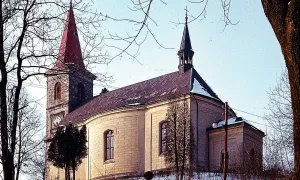
The Church of the Assumption of the Virgin Mary in Nová Ves is a Roman Catholic church centrally located in the village, near Chrastava, along a road by its cemetery. Originally built between 1616 and 1617 as an Evangelical place of worship, it later became a Roman Catholic church due to re-Catholicization efforts. This change reflects broader religious shifts in Bohemia during the early 17th century, especially amid tensions leading up to the Thirty Years' War. The church is notable for its historical significance, architectural evolution, and cultural heritage, having been protected as a cultural monument since 1966.
The origins of this church are rooted in the religious dynamics of Bohemia during the early 17th century. Constructed between 1616 and 1617 by Countess Kateřina z Redernu, née Šliková, it initially served as an Evangelical church. This period saw significant Protestant influence across Europe, including Bohemia. However, subsequent re-Catholicization efforts led to its conversion into a Roman Catholic church, reflecting broader European conflicts and religious realignments of that era.
Architecturally, the Church of the Assumption of the Virgin Mary showcases features from different periods. Initially built in the early 17th century, it underwent significant modifications over time. In 1680, a sacristy was added to the polygonal presbytery on its southern side. The church's octagonal tower, dating back to 1617, was later modified in 1697. Architectural changes by B.(R.) Ullrich in 1782 further shaped its current form. The building is characterized by its oblong structure with a smooth facade and polycarbonate windows. Notably, two of these windows feature painted targets and coats of arms from 1618 belonging to the Redern family.
Ownership and administration of the church have seen significant changes over time. Initially funded by Countess Kateřina z Redernu, it transitioned into a Roman Catholic parish following re-Catholicization efforts. The church's history is marked by these shifts in religious affiliation and administrative control, reflecting broader historical trends in the region.
Several key events and curiosities highlight the church's rich history. Among its notable features are three bells cast in Žitava in 1619, which have survived to this day. Additionally, the church houses a baroque altar with sculptures of St. James and St. Anne from 1727, alongside other religious artifacts such as a rococo side altar dedicated to St. Anne, featuring sculptures of St. Peter and St. Paul, dating back to around 1769. A wooden pulpit from 1769 stands in the church, along with a baroque statue of St. John the Evangelist likely from around 1730. The church also contains a Renaissance stone baptismal font from around 1617, adorned with the coat of arms of David Heina z Löwenthalu and a wooden lid dated to 1755.
Today, the Church of the Assumption of the Virgin Mary remains an accessible site for visitors interested in its historical and architectural significance. Its preservation as a cultural monument ensures that it continues to be a focal point for understanding the religious and cultural history of the region. The church's blend of architectural styles and rich collection of artifacts make it a compelling destination for those exploring the heritage of Nová Ves and the broader Liberec Region.
The Church of the Assumption of the Virgin Mary stands as a testament to the complex interplay of religion, culture, and architecture in Bohemia during the early modern period. Its enduring presence invites visitors to explore its historical layers and appreciate its significance within the cultural tapestry of Czechia.
Historical milestones
- 1616
- Construction began as an Evangelical church.
- 1617
- Completion of the initial construction phase.
- 1680
- Addition of a sacristy and other modifications.
- 1782
- Architectural changes by B.(R.) Ullrich.
Architectural development
The church was originally built in the early 17th century with subsequent modifications. In 1680, it underwent renovations that included the addition of a sacristy. Further architectural changes were made by B.(R.) Ullrich in 1782 to achieve its current form.
Historical events
Construction of the church as an Evangelical place of worship between 1616 and 1617.
Re-Catholicization leading to its conversion into a Roman Catholic church.
Owners
The church was initially funded by the widow Countess Kateřina z Redernu, née Šliková. It later became a Roman Catholic parish following re-Catholicization.
Points of interest
- The Church of the Assumption of the Virgin Mary originally served as an Evangelical church before transitioning to a Roman Catholic place of worship due to re-Catholicization efforts in the early 17th century, reflecting the religious tensions in Bohemia leading up to the Thirty Years' War.
- Among its historical artifacts are three bells cast in Žitava in 1619, which have remarkably survived to this day, providing a tangible link to the church's early history and craftsmanship of that era.
Guide
Show guide text
Welcome to the Church of the Assumption of the Virgin Mary in Nová Ves, a place where history and spirituality intertwine amidst the serene backdrop of this picturesque village. As you stand here, imagine yourself enveloped by the gentle embrace of time, with the church's humble presence on the cemetery grounds whispering tales from centuries past.
This sacred site began its journey as an Evangelical church in 1616, a period marked by religious fervor and transformation across Bohemia. The initial construction phase concluded just a year later, in 1617, offering sanctuary to those seeking solace within its walls during turbulent times. However, the winds of change swept through Nová Ves, leading to a significant transition as re-Catholicization efforts took hold in the early 17th century. This shift transformed the church into a Roman Catholic place of worship, reflecting the broader religious tensions that would eventually culminate in the Thirty Years' War.
As you gaze upon the structure before you, take note of its architectural evolution. The polygonal presbytery and the sacristy added in 1680 stand as testaments to the church's enduring legacy. These elements not only enhance its aesthetic appeal but also speak volumes about the historical modifications that have shaped this sacred space over time.
The church's history is further enriched by notable figures such as Kateřina z Redernu and the Šlikové, whose stories are woven into the very fabric of Nová Ves. Their influence and contributions to the community add layers of depth to your exploration, inviting you to ponder their impact on this cherished landmark.
One intriguing aspect that captures the imagination is the church's original role as an Evangelical sanctuary before its conversion to Catholicism. This transformation highlights the dynamic religious landscape of Bohemia during a pivotal era in history, offering a fascinating glimpse into the complexities and challenges faced by communities like Nová Ves.
As you continue your journey through this historic site, allow yourself to be drawn deeper into its narrative. Explore every corner with curiosity, from the exterior's understated elegance to the interior's quiet dignity, each element contributing to the church's storied past.
We invite you to delve further into the mysteries and stories that Nová Ves has to offer. May your visit here inspire a sense of wonder and connection, leaving you enriched by the layers of history that surround you. Thank you for joining us on this enlightening journey through time.
Tips for visitors
The best time to visit the Church of the Assumption of the Virgin Mary in Nová Ves is during late spring or early autumn. During these seasons, the natural landscapes surrounding the church are particularly vibrant and picturesque, offering a serene backdrop for your visit. Additionally, visiting outside peak tourist season can provide a more peaceful experience with fewer crowds.
Parking near the church might be limited as it's located in a village center surrounded by residential areas. It is advisable to check local signage upon arrival or consider using public transportation if available. The area is accessible via road from Chrastava, and you may find some parking spots along the roadsides. Always verify current transport options through an online search for the most accurate information.
When visiting the church, it's a good idea to bring comfortable walking shoes as you might want to explore the cemetery or nearby natural landscapes. Additionally, carrying a camera is recommended since there are several picturesque spots around the church where lighting can be ideal during early morning or late afternoon hours. A light jacket may also be useful given the variable weather in the region.
For photography enthusiasts, capturing images of the church from different angles along the road can yield stunning results, especially when the sun is low in the sky. The cemetery offers a tranquil setting for more contemplative shots. Families with children should note that while there are no specific attractions within walking distance, the natural surroundings provide ample space for exploration and play.
Within a 30-minute drive from Nová Ves, visitors can explore Chrastava, which offers additional historical sites and cultural experiences. The area is known for its scenic beauty, making it perfect for short hikes or leisurely walks. Families with children might enjoy the open spaces and natural settings that allow for outdoor activities.
Businesses nearby
Do you run a restaurant, accommodation, shop, museum, rental, wellness or other visitor service near this monument? Show yourself directly to the people heading to it — this is how they will see you in the app and on the web:
Nearby
Located near Chrastava, the church is surrounded by a cemetery and lies along a road. The area features natural landscapes typical of the Liberec Region in Czechia.
Accommodation nearby
Trips and activities nearby
Guided tours, tickets and activities nearby from GetYourGuide
Search tours and activities →Themed route
Tematická výletní trasa: Kostel Nanebevzetí Panny Marie (Nová Ves)
1. Kostel Nanebevzetí Panny Marie - *Typ:* Historická památka, náboženské místo - *Proč stojí za návštěvu:* Tento kostel je architektonickým důkazem bohaté historie a kultury obce Nová Ves. Jeho krásné gotické prvky a vnitřní dekorace nabízejí pohled na minulost regionu, což ho činí nezbytnou návštěvní pro každého zájemce o historii a architekturu.
2. Hřbitov u kostela - *Typ:* Historický hřbitov - *Proč stojí za návštěvu:* Hřbitov, který obklopuje kostel, je klíčovou součástí kulturního a historického prostředí. Zajímavé epitafie a starobylé hrobky poskytují vhled do minulosti místních obyvatel a jejich tradic, činíc toto místo klíčovým pro pochopení historických kontextů regionu.
3. Dálnice vedoucí k kostelu - *Typ:* Historická cesta - *Proč stojí za návštěvu:* Cesta vedoucí k kostelu nabízí pohled na přírodní krajinu typickou pro Liberecký kraj. Procházka po této dálnici umožňuje uživatelům ocenit klidnou a idylickou atmosféru oblasti, což je ideální příležitost pro relaxaci a únik od městského života.
4. Chrastava - *Typ:* Místní centrum - *Proč stojí za návštěvu:* Krátce od kostela se nachází Chrastava, malé město s bohatou historií a kulturou. Prozkoumání tohoto místa nabízí příležitost prohlédnout si místní architekturu a možná navštívit některé z kulturních akcí, které se zde pravidelně konají.
5. Nádvoří kostela - *Typ:* Historický areál - *Proč stojí za návštěvu:* Nádvoří u kostela je místo, kde můžete odpočinout a ocenit klidnou atmosféru. Je to také ideální místo pro fotografie s pozadím historických staveb, což vám umožní si vzpomenout na návštěvu nejen skrze paměť, ale i skrze vizuální záznamy.
Tato trasa nabízí komplexní pohled na kulturní a historické aspekty oblasti kolem Kostela Nanebevzetí Panny Marie v Nové Vsi.
Seasonal recommendations
Spring: The spring season at the Church of the Assumption of the Virgin Mary in Nová Ves brings a refreshing transformation as nature begins to awaken. The surrounding landscape is adorned with vibrant wildflowers and budding trees, creating a picturesque setting that enhances the church's historic charm. This time of year offers a serene atmosphere, ideal for appreciating the architecture without the crowds found during peak tourist seasons. Visitors should dress in layers to accommodate fluctuating temperatures typical of spring weather. Early mornings or late afternoons are recommended for visits when lighting is softer and more flattering, providing an enchanting backdrop for photography.
Summer: Summer at the Church of the Assumption of the Virgin Mary offers long days filled with warm sunlight that beautifully illuminates its historic façade. The lush greenery around the church reaches its peak during this season, creating a vibrant and lively atmosphere perfect for outdoor exploration. This is also the busiest time of year, so it's advisable to arrive early in the morning or later in the afternoon to avoid larger crowds. Wearing comfortable walking shoes and light clothing will enhance your experience as you explore both the church and its surroundings.
Autumn: Autumn transforms the Church of the Assumption of the Virgin Mary into a stunning canvas of warm colors, with leaves turning shades of red, orange, and gold. The crisp air and gentle breezes make it an ideal time to visit, providing a tranquil setting that contrasts with the vibrant fall foliage. This season sees fewer visitors compared to summer, allowing for a more relaxed exploration of the church's architecture and history. Visitors should dress in layers to stay comfortable as temperatures can vary throughout the day.
Winter: The winter months envelop the Church of the Assumption of the Virgin Mary in a serene blanket of snow, offering a unique and enchanting perspective on its historic beauty. The quiet atmosphere is perfect for those seeking solitude or a reflective visit during this quieter time of year. However, shorter days mean that visits should be planned earlier to make the most of daylight hours. Dress warmly with layers and consider bringing gloves and a hat to stay comfortable while exploring. Keep in mind that some services may have altered schedules due to the season.
Visualizations and artistic views

Vizualizace jsou generovány umělou inteligencí a slouží jako inspirace.


Atmosphere of the place
Atmospheric visualization of the setting and era
Tips from visitors
No tips yet. Be the first!
Log in and add your tip.


Reviews and comments