





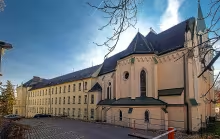
The Voršilka Convent in Liberec is a significant historical site located at Klášterní Street in the Kristiánov district. Constructed between 1894 and 1898 by architect Adolf Bürger, it showcases a new Gothic architectural style typical of the late 19th century. Initially serving as a convent for the Ursuline sisters, the complex included a church, school, and residential facilities. Today, it functions as a polyclinic, while its former chapel is used by the Orthodox Church since 1996. This site is notable not only for its architectural style but also for its rich history of social and educational service.
The construction of the Voršilka Convent occurred during a period of significant industrial growth and population increase in Bohemia. The late 19th century saw an increased demand for educational and social services, leading to the establishment of institutions like this convent. Designed by Adolf Bürger, the complex features a new Gothic architectural style with a three-winged layout. Construction began with the church between 1894 and 1896, followed by the convent and school buildings from 1897 to 1898. The facility was equipped with central heating and plumbing, making it one of the most modern facilities of its time.
The Ursuline sisters founded the convent in 1898, responding to the growing need for educational and social services in Liberec. However, dramatic changes occurred in the 20th century. In 1945, following World War II, the state nationalized the convent. The communist coup of 1950 led to the expulsion of the nuns, who were subsequently forced into industrial labor. After the Velvet Revolution, the convent was returned to the Ursuline order in 1990. Due to financial constraints and the need for extensive reconstruction, the sisters sold the property but agreed to maintain its health services.
Several key events mark the history of the Voršilka Convent. In 1906, Emperor Franz Joseph I visited during his trip to Liberec, highlighting its significance at the time. After nationalization, it served as a polyclinic until after the Velvet Revolution. Since 1996, the former chapel has been used by the Orthodox Church, reflecting the site's continued religious and community importance.
Today, the Voršilka Convent is primarily a health facility, with its historical architecture preserved amidst urban development in the Kristiánov district of Liberec. The complex remains surrounded by parks and other late 19th-century buildings, offering visitors a glimpse into its storied past. Its transformation from a religious institution to a modern polyclinic underscores its adaptability and enduring relevance.
Visiting the Voršilka Convent offers an opportunity to explore a site rich in history and architectural beauty. It stands as a testament to the social and educational advancements of its time, while continuing to serve the community today. This monument invites visitors to appreciate its historical significance and architectural elegance, making it a worthwhile destination for those interested in Czech heritage.
Historical milestones
- 1906
- Emperor Franz Joseph I visited the convent.
- 1945
- The convent was nationalized by the state.
- 1950
- Nuns were expelled from the convent following a communist coup.
- 1996
- The former chapel began serving the Orthodox Church.
Architectural development
Designed by Adolf Bürger, the complex features a new Gothic architectural style with a three-winged layout. The construction began with the church (1894-1896) followed by the convent and school buildings (1897-1898). It was equipped with central heating and plumbing for its time.
Historical events
In 1906, Emperor Franz Joseph I visited the convent during his trip to Liberec.
The convent was nationalized and the nuns expelled in 1950 following the communist coup.
Owners
Founded by the Ursuline sisters in 1898; nationalized in 1945; returned to the Ursuline order in 1990 but sold due to financial constraints. Currently owned by a private entity managing the polyclinic.
Points of interest
- The Voršilka Convent was one of the most modern facilities in its time due to its central heating and plumbing systems, which were advanced features during the late 19th century.
- After World War II, the convent's Ursuline sisters were expelled by the communist regime and forced into industrial labor, reflecting the dramatic social changes of that era.
- In a surprising twist of history, the former chapel within the Voršilka Convent complex has been used by the Orthodox Church since 1996, showcasing its continued religious significance despite changing times.
Guide
Show guide text
Welcome to the historic Voršilka Convent in Liberec, a remarkable site nestled in the Kristiánov district at Klášterní Street. As you stand here, take a moment to soak in the architectural beauty surrounding you. The convent's distinctive new Gothic style is immediately apparent, with its intricate designs and elegant lines that speak of an era long past.
Let's delve into the history of this fascinating place. Constructed between 1894 and 1898 by architect Adolf Bürger, the Voršilka Convent was built as a modern facility for the Ursuline sisters. It served multiple purposes, including a church, school, and residential quarters. What makes it particularly noteworthy is its advanced central heating and plumbing systems, which were considered cutting-edge in the late 19th century.
As you explore further, notice how these architectural elements blend seamlessly with the surrounding environment. The attention to detail in the design reflects both functionality and aesthetic appeal—a testament to Adolf Bürger's vision. While standing here, imagine the bustling life that once filled this space, from the sisters' daily routines to their educational endeavors.
The convent holds many intriguing stories within its walls. In 1906, it was graced by a visit from Emperor Franz Joseph I, marking an important moment in its history. However, the 20th century brought significant changes. By 1945, following World War II, the state nationalized the convent, and in 1950, after a communist coup, the nuns were expelled, marking a dramatic shift in its use.
Fast forward to 1996, when the former chapel began serving as part of the Orthodox Church—a transformation that reflects both resilience and adaptability. These layers of history are palpable here, each era leaving its mark on this storied site.
Before you move on, take a moment to appreciate the convent's ability to evolve while retaining its historical essence. It stands not only as a monument to architectural ingenuity but also as a witness to the many lives and events that have unfolded within its walls.
I invite you now to continue your exploration of this remarkable place. There is much more to discover, each corner offering new insights into its rich past. Thank you for joining me on this journey through history at the Voršilka Convent in Liberec. Enjoy your visit!
Tips for visitors
The best time to visit the Voršilka Convent is during late spring or early autumn when the weather is mild, and the surrounding parks are lush with greenery. These seasons offer pleasant temperatures for exploring both indoors and outdoors without the summer crowds. Additionally, visiting in these months allows you to enjoy the natural light that beautifully illuminates the convent's architectural details.
Parking near the Voršilka Convent can be limited due to its urban location. However, there are several parking areas within a short walking distance. Public transportation is also convenient; you can reach the convent using buses or trams available in Liberec. For the most current routes and schedules, it's best to check an online transport planner.
When visiting the Voršilka Convent, consider bringing comfortable walking shoes as there are several areas to explore both within the convent grounds and nearby parks. A camera is recommended for capturing the architectural beauty of the building, especially around midday when natural light enhances its intricate details. Don't forget a water bottle and perhaps a hat or sunscreen if you're visiting during warmer months.
Photography enthusiasts will find several spots around the Voršilka Convent ideal for capturing stunning images. The main entrance offers a grand view of the facade, especially in the soft morning light. Inside, the chapel provides an opportunity to photograph its ornate interior. For outdoor shots, the surrounding parks offer picturesque landscapes that complement the convent's historical setting.
For those interested in exploring nearby attractions within 30 minutes, consider visiting other historical buildings typical of late 19th-century architecture found in Liberec. The city offers a variety of cultural sites and museums that provide insight into its rich history. Families with children might enjoy the parks around the convent for leisurely walks or picnics.
Businesses nearby
Do you run a restaurant, accommodation, shop, museum, rental, wellness or other visitor service near this monument? Show yourself directly to the people heading to it — this is how they will see you in the app and on the web:
Nearby
Located in the Kristiánov district of Liberec, the convent is surrounded by urban development. The area features parks and other historical buildings typical of late 19th-century architecture.
Accommodation nearby
Trips and activities nearby
Guided tours, tickets and activities nearby from GetYourGuide
Search tours and activities →Themed route
Tematická výletní trasa: Klášter voršilek v Liberci
1. Klášter voršilek v Liberci (klášter) *Typ:* Historický klášterní komplex *Proč stojí za návštěvu:* Tento klášter, nacházející se ve čtvrti Kristiánov v Liberci, je krásným příkladem historie a architektury. Původně založený jako duchovní útočiště pro voršilky, nabízí návštěvníkům pohled na bohatou historii regionu a krásné interiéry s gotickými prvky.
2. Parky v okolí kláštera *Typ:* Městské zelené prostory *Proč stojí za návštěvu:* Parky kolem kláštera představují místo odpočinku a krásnou příležitost pro relaxaci. Jsou ideální pro procházky, pikniky nebo jednoduché uvolnění v přírodě uprostřed města. Tyto zelené oázy dodávají klid a harmonii do urbanizovaného prostředí.
3. Historické budovy ve čtvrti Kristiánov *Typ:* Architektonické památky *Proč stojí za návštěvu:* Ve čtvrti Kristiánov se nachází několik historických budov z pozdního 19. století, které představují typickou architekturu té doby. Tyto budovy jsou svědectvím místního dědictví a nabízejí návštěvníkům pohled na historický vývoj Liberce.
Tato trasa kombinuje historii, architekturu a přírodu, což ji činí ideálním zážitkem pro každého, kdo navštěvuje klášter voršilek v Liberci.
Seasonal recommendations
Spring: Visiting the Voršilky Monastery during spring offers a unique experience as nature awakens with vibrant colors and fresh blooms. The monastery grounds are bathed in soft, warm light that enhances the historical architecture, creating an ethereal atmosphere ideal for photography. This period is less crowded compared to summer, allowing visitors to enjoy the tranquility of the site without long waits. It's advisable to wear layers as temperatures can vary throughout the day; a comfortable pair of walking shoes is recommended due to potential muddy paths from spring rains.
Summer: Summer at the Voršilky Monastery coincides with its peak tourist season, characterized by longer daylight hours that illuminate the monastery in golden hues, perfect for exploring every nook and cranny. The lush greenery surrounding the site provides a picturesque backdrop, while local flora is in full bloom. To avoid crowds, it's best to arrive early in the morning or later in the afternoon. Wearing light, breathable clothing and comfortable footwear is essential, as well as carrying water to stay hydrated during your visit.
Autumn: Autumn transforms the Voršilky Monastery into a stunning tapestry of reds, oranges, and yellows, offering a breathtaking view that enhances its historical charm. The cooler temperatures make for pleasant walking conditions around the monastery grounds, with fewer visitors compared to summer months. This is an ideal time for those who appreciate a quieter visit and enjoy capturing nature's seasonal beauty through photography or painting. Wearing layers will help adapt to changing weather, and sturdy shoes are recommended due to possible wet leaves on pathways.
Winter: The winter season envelops the Voršilky Monastery in a serene blanket of snow, casting a magical atmosphere over its historic structures. While some areas might be less accessible due to snowfall, the contrast between the white landscape and the monastery’s architecture creates stunning visual effects. Visitors should be prepared for shorter opening hours and potentially closed sections, so checking ahead is advisable. Dressing warmly in layers, including hats, gloves, and waterproof boots, will ensure comfort during your visit, while arriving early can help avoid any weather-related delays.
Visualizations and artistic views


Vizualizace jsou generovány umělou inteligencí a slouží jako inspirace.

Tips from visitors
No tips yet. Be the first!
Log in and add your tip.



Reviews and comments