




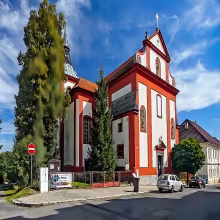
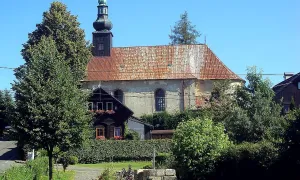
The Church of Saint Bartholomew and Our Lady of Montserrat is a significant Roman Catholic parish church in Doksy, near Máchovo Lake. Designated as a cultural monument since 1965, it reflects its historical and cultural importance. Originally built around 1638 on the site of an older wooden chapel, it has undergone numerous expansions and renovations over the centuries to include valuable decorations and interior fittings.
The church's origins trace back to the late 17th century when Bernard Canevalle, a renowned northern Italian architect, designed its initial Baroque structure. Although Canevalle died during construction in Bělá, his influence is evident throughout the building. The church features a single-nave design with a five-sided presbytery, an oblong sacristy on the southern side, and an oratory. Its façade is characterized by high Baroque style, segmented by pilasters.
Significant architectural developments occurred over time. In 1748, a chapel dedicated to Saint Barbara was added to the south, followed by a northern chapel honoring the Holy Cross in 1754. The church's tower height was increased in 1832, enhancing its grandeur. These additions reflect the evolving needs and artistic tastes of the community it served.
The interior is adorned with several Baroque sculptures, including figures of the Virgin Mary, Saint Bartholomew, and John the Baptist. The main altar, dating from between 1670 and 1680, features a copy of the revered Black Madonna, originally venerated by Spanish Montserratine Benedictines. This sculpture, known as the "Black Madonna," holds significant religious importance and was brought to Doksy in 1786 after the dissolution of a nearby monastery.
The church also houses an image of Saint Bartholomew painted by Jan Hickel in 1725, along with sculptures of Saints Peter and Paul. The chapel dedicated to Saint Barbara contains an altar for her and her fourteen helpers, while the Holy Cross Chapel features valuable paintings and restored organs originally crafted in 1627 and later moved from Bezděz in 1736.
During World War I, all five bells housed in the church's tower were melted down for war efforts, marking a poignant moment in its history. Despite these losses, the church has retained much of its historical integrity and continues to serve as an active place of worship.
Today, the Church of Saint Bartholomew remains accessible to visitors, offering a glimpse into the rich cultural tapestry of the region. Its blend of architectural beauty, historical significance, and religious heritage makes it a worthwhile destination for those interested in exploring Czech history and Baroque artistry. Visitors are invited to experience this remarkable monument and appreciate its enduring legacy within the picturesque landscapes surrounding Máchovo Lake.
Historical milestones
- 1638
- Construction of the original wooden chapel began.
- 1748
- A southern chapel dedicated to Saint Barbara was added.
- 1754
- A northern chapel dedicated to the Holy Cross was constructed.
Architectural development
The church, initially designed by Bernard Canevalle in a Baroque style, saw significant architectural developments over time. In the late 17th century, it received its main altar and other baroque sculptures. The tower height was increased in 1832, and additional chapels were added in the mid-18th century.
Historical events
- 1638
- Construction of the original wooden chapel began.
- 1748
- A southern chapel dedicated to Saint Barbara was added.
- 1754
- A northern chapel dedicated to the Holy Cross was constructed.
Points of interest
– The Church of Saint Bartholomew was originally built on the site of an older wooden chapel, highlighting a common practice in medieval Europe where new stone structures often replaced less durable wooden ones as communities grew and developed.
– Bernard Canevalle, the architect who designed the church's initial Baroque structure, died during its construction in Bělá. Despite his untimely death, his architectural vision significantly influenced the final design of the church, demonstrating how an architect’s ideas can transcend their own lifetime.
Guide
Show guide text
Welcome to the Church of Saint Bartholomew and Our Lady of Montserrat in Doksy, a remarkable testament to faith and history nestled near Máchovo Lake. As you stand before this Roman Catholic parish church, take a moment to absorb its serene presence—a single-nave structure with a five-sided presbytery that speaks volumes about the architectural ingenuity of its time.
The story of this sacred site begins in 1638 when the foundations of what was originally a wooden chapel were laid. This humble beginning marked the start of a journey through centuries, reflecting a common medieval European practice where communities transitioned from wood to stone as they grew and developed. Over the years, the church underwent several expansions and renovations, each layer adding to its rich tapestry of history.
As you gaze at the church's architecture, notice how it seamlessly blends functionality with spiritual symbolism. The single-nave design leads your eyes towards the five-sided presbytery, a feature that not only enhances the acoustics within but also creates an intimate space for reflection and prayer. Adjacent to this are the sacristy and oratory—each a silent witness to countless moments of devotion.
The church's evolution is marked by significant additions in 1748 and 1754, when chapels dedicated to Saint Barbara and the Holy Cross were constructed on its southern and northern sides, respectively. These expansions not only increased the church’s capacity but also enriched its spiritual offerings, providing spaces for specific devotions and community gatherings.
Bernard Canevalle, the architect behind this enduring structure, played a pivotal role in shaping its destiny. While much about him remains shrouded in mystery, his vision for the church has left an indelible mark on Doksy’s landscape, marrying form with function in a way that continues to captivate visitors.
One intriguing aspect of this site is its origin story—the transition from a wooden chapel to the stone edifice you see today. This transformation underscores a broader narrative of resilience and adaptation, reflecting how faith communities have historically navigated changes while preserving their spiritual heritage.
As we conclude our journey around the Church of Saint Bartholomew and Our Lady of Montserrat, I invite you to linger for a moment longer, soaking in its tranquil ambiance. Let this space inspire reflection on your own journey through life’s complexities. Should curiosity beckon, explore further into Doksy's rich tapestry of history and natural beauty that surrounds this sacred site.
Thank you for joining me today. May the peace and inspiration found here accompany you as you continue to discover the wonders of our world.
Businesses nearby
Do you run a restaurant, accommodation, shop, museum, rental, wellness or other visitor service near this monument? Show yourself directly to the people heading to it — this is how they will see you in the app and on the web:
Nearby
Located near Máchovo Lake in Doksy, the church is surrounded by picturesque landscapes and other historical sites within a 5 km radius.
Accommodation nearby
Themed route
Thematic Tour Itinerary: Church of Saint Bartholomew and Our Lady of Montserrat
1. Church of Saint Bartholomew and Our Lady of Montserrat - *Type:* Historical Religious Site - *Why Visit:* This stunning church, located near Máchovo Lake in Doksy, offers a serene blend of architectural beauty and spiritual history. Its picturesque setting amidst the tranquil landscapes makes it an ideal starting point for exploring the cultural heritage of the region.
2. Máchovo Lake - *Type:* Natural Landscape - *Why Visit:* Just a short walk from the church, Máchovo Lake provides breathtaking views that have inspired poets and artists alike. The lake's serene waters and surrounding greenery offer a perfect spot for relaxation and reflection after visiting the church.
3. Historical Sites within 5 km Radius - *Type:* Cultural Landmarks - *Why Visit:* Within a five-kilometer radius of the church, several historical sites await exploration. These landmarks provide insight into the rich history and cultural tapestry of Doksy, offering visitors a deeper understanding of the area's past.
This itinerary offers a balanced mix of spiritual reflection, natural beauty, and historical discovery, all within the charming surroundings of Doksy.
Seasonal recommendations
Spring: Visiting the Church of Saint Bartholomew and Our Lady of Montserrat in Dolní Dvořiště during spring offers a unique experience as nature begins to awaken. The surrounding landscape is adorned with blooming flowers and fresh greenery, providing a picturesque backdrop for your visit. This season often brings mild temperatures, making it comfortable for walking around the church grounds. However, be mindful of occasional rain showers that can add a charming misty atmosphere but also necessitate carrying an umbrella or waterproof jacket. As spring is a popular time to explore outdoor attractions, consider visiting early in the day to avoid larger crowds and fully enjoy the serene ambiance.
Summer: Summer at the Church of Saint Bartholomew and Our Lady of Montserrat is characterized by long days and warm weather, ideal for exploring the church's architecture under bright sunlight. The lush greenery around the church reaches its peak vibrancy, enhancing the beauty of this historic site. This season also sees an influx of visitors due to the pleasant climate, so it’s advisable to arrive early in the morning or later in the afternoon to avoid crowds and enjoy a more peaceful experience. Lightweight clothing is recommended, along with sun protection such as hats and sunscreen to ensure a comfortable visit.
Autumn: Autumn brings a stunning transformation to the Church of Saint Bartholomew and Our Lady of Montserrat, as the surrounding foliage turns into vibrant shades of red, orange, and yellow. The cooler temperatures make for a pleasant walking experience around the church grounds, which are particularly enchanting during this season. While the weather can be unpredictable with occasional rain or crisp winds, it adds to the atmospheric charm of the visit. It's advisable to wear layered clothing to accommodate changing conditions throughout your visit. This time of year is less crowded compared to summer, offering a quieter and more reflective atmosphere.
Winter: Winter at the Church of Saint Bartholomew and Our Lady of Montserrat offers a serene and contemplative experience as snow may blanket the surrounding landscape, creating a picturesque winter wonderland. The church itself exudes a cozy warmth against the chilly backdrop, making it an ideal spot for those seeking tranquility during this season. Due to shorter daylight hours and potential closures or reduced access on particularly cold days, planning your visit is essential. Dress warmly in layers with insulated outerwear and consider bringing gloves and a hat. Visiting earlier in the day can help you make the most of limited opening times while enjoying the peaceful winter atmosphere.
Visualizations and artistic views

Vizualizace jsou generovány umělou inteligencí a slouží jako inspirace.


Atmosphere of the place
Atmospheric visualization of the setting and era
Tips from visitors
No tips yet. Be the first!
Log in and add your tip.


Reviews and comments