




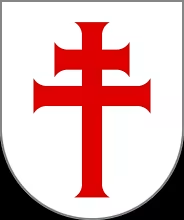
The Nymburk Monastery of the Knights Hospitaller is a historically significant medieval site near Nymburk, Czech Republic. Established in 1294 by the Order of the Knights Hospitaller, it served as both a religious and military institution until its dissolution in 1413. Its strategic location was crucial for protecting Christian pilgrims to Jerusalem during the medieval period.
The origins trace back to 1294 when the Order acquired Rohov near Nymburk. This acquisition aligned with their broader activities, including roles in the Crusades and safeguarding pilgrims. The monastery's establishment occurred under King Wenceslaus II of Bohemia within the Holy Roman Empire, reflecting significant political and religious developments across Europe.
Architecturally, construction began with a church dedicated to St. John the Baptist, alongside an infirmary and other typical facilities for such orders. While specific architectural details are undocumented, it likely followed common medieval monastic designs. The site also included additional properties like an island on the Elbe River and a mill at Zdebudice, indicating extensive holdings.
Ownership remained with the Knights Hospitaller from 1294 until 1413. A notable event in 1401 involved transferring chapel rights at Rohov to Beneš z Valtínova following a fire. This marked a shift in control before the order sold all assets to Nymburk on May 23, 1413, subsequently relocating operations to Prague.
Throughout its history, the monastery witnessed key events shaping its legacy. Its acquisition and management reflect the strategic importance of such sites during medieval times. The chapel rights transfer in 1401 and the final sale to Nymburk in 1413 highlight significant administrative changes leading up to its dissolution.
Today, while physical structures may no longer stand as they once did, the historical significance of the Nymburk Monastery remains a point of interest for visitors. Its story offers insights into medieval religious and military dynamics, making it valuable for history enthusiasts. The legacy of the Knights Hospitaller at this location continues to captivate historians and tourists alike, inviting exploration and reflection on its historical impact.
The Nymburk Monastery stands as a testament to the enduring influence of the Knights Hospitaller during medieval times. Its rich history provides a window into the past, offering valuable lessons about religious orders' roles in shaping European history. Visitors are encouraged to explore this site, where echoes of its storied past continue to resonate.
Historical milestones
- 1294
- The Order of the Knights Hospitaller acquired Rohov near Nymburk.
- 1401
- Rights over the chapel at Rohov were transferred to Beneš z Valtínova after a fire.
- 1413
- The Knights Hospitaller sold their assets in Rohov to the city of Nymburk.
Architectural development
The monastery's construction began in 1294 with a church dedicated to St. John the Baptist, an infirmary, and other facilities typical for such religious orders. The exact architectural style is not detailed, but it likely followed common medieval monastic designs.
Historical events
In 1294, the Order of the Knights Hospitaller acquired the property known as Rohov near Nymburk.
By 1401, following a fire, they transferred their rights over the chapel at Rohov to Beneš z Valtínova.
On May 23, 1413, the Knights Hospitaller sold all their assets in Rohov to the city of Nymburk and relocated to Prague.
Owners
The Knights Hospitaller owned the monastery from 1294 until 1413, after which it was sold to the city of Nymburk.
Points of interest
- The Nymburk Monastery was part of a broader network of properties managed by the Knights Hospitaller, including an island on the Elbe River and a mill at Zdebudice, highlighting their extensive economic interests beyond religious duties.
- In 1401, following a fire, chapel rights at Rohov were transferred to Beneš z Valtínova. This event marked one of the first instances of local nobility gaining control over parts of the monastery's assets before its complete dissolution in 1413.
Guide
Show guide text
Welcome to the historic site of the Nymburk Monastery of the Knights Hospitaller. As you stand here at this significant medieval landmark near Nymburk, imagine yourself stepping back in time to 1294 when this place began its storied journey.
The monastery was established by the Order of the Knights Hospitaller, a religious and military order known for their dedication to protecting Christian pilgrims traveling to Jerusalem. Their presence here, on land acquired near Rohov, marked an important chapter in both local history and the broader narrative of medieval Europe. The strategic location allowed them to exert influence and maintain safety along vital travel routes.
As you look around, take a moment to appreciate the remnants of this once-thriving complex. Though specific architectural details are not well-documented, the essence of its historical significance is palpable in the air. Picture the church dedicated to St. John the Baptist that once stood here, serving as both a spiritual hub and a testament to the order's religious devotion.
The history of this site is marked by pivotal events. In 1401, after a devastating fire, chapel rights at Rohov were transferred to Beneš z Valtínova, indicating shifts in control and influence over time. By 1413, the Knights Hospitaller sold their assets in Rohov to the city of Nymburk, signaling yet another transformation in the site's purpose and ownership.
While specific architects and key historical figures remain unnamed, the monastery's story is woven into a broader tapestry of medieval life. The Knights Hospitaller managed an extensive network of properties, including an island on the Elbe River and a mill at Zdebudice, showcasing their diverse economic interests beyond mere religious duties.
Consider this intriguing aspect: the Nymburk Monastery was part of a larger strategy by the Knights Hospitaller to secure both spiritual and temporal power across regions. This dual role as protectors and landholders highlights the complex interplay between faith and politics during medieval times.
As you conclude your visit, I invite you to explore further into the surrounding area and reflect on the layers of history that have shaped this place. Thank you for joining us on this journey through time at the Nymburk Monastery. Safe travels as you continue discovering the rich tapestry of our shared past.
Tips for visitors
The best time to visit the Nymburk Monastery of the Knights Hospitaller is during late spring or early autumn, when the weather is mild and pleasant for exploring outdoor sites. This period offers a comfortable climate that enhances your experience as you walk through the historical landscapes surrounding the monastery. Additionally, visiting outside peak tourist seasons can provide a more tranquil atmosphere, allowing you to appreciate the serene beauty of the area without large crowds.
Parking and transportation options are available near Nymburk Monastery. You can drive to the site if you prefer traveling by car; however, it's advisable to check for parking availability in advance as spaces may be limited. Public transport is also a viable option, with buses connecting Nymburk to nearby areas. For precise routes and schedules, consult a transportation app or website before your visit.
When visiting the Nymburk Monastery, consider bringing comfortable walking shoes, especially if you plan on exploring the surrounding medieval landscapes and agricultural lands. A hat and sunscreen are recommended for protection against the sun during warmer months. Additionally, carrying a water bottle will help keep you hydrated throughout your visit. If you're interested in learning more about the history of the site, bringing along a guidebook or downloading relevant information onto your phone can enhance your experience.
For photography enthusiasts, capturing the essence of Nymburk Monastery is best done during the golden hours—shortly after sunrise and before sunset—when natural light is soft and warm. The surrounding landscapes provide picturesque backdrops for photos, especially near the Elbe River or in areas that showcase remnants of medieval architecture. Be mindful of any restrictions on photography within certain parts of the site.
Families with children can enjoy a visit to Nymburk Monastery by exploring its historical significance and engaging with interactive exhibits if available. The area's natural surroundings offer opportunities for outdoor activities, such as walking along trails or picnicking in scenic spots. Nearby attractions include the island on the Elbe River and the mill at Zdebudice, both within a 30-minute drive from Nymburk. These sites provide additional educational and recreational experiences suitable for all ages.
Businesses nearby
Do you run a restaurant, accommodation, shop, museum, rental, wellness or other visitor service near this monument? Show yourself directly to the people heading to it — this is how they will see you in the app and on the web:
Nearby
The monastery was located near Nymburk and included properties such as an island on the Elbe River and a mill at Zdebudice. The surrounding area likely featured typical medieval landscapes with agricultural lands.
Accommodation nearby
Themed route
Tematická výletní trasa: Klášter křižovníků (Nymburk)
1. Klášter křižovníků (Nymburk) - Hlavní cíl - Typ: Historická památka - Proč stojí za návštěvu: Klášter křižovníků v Nymburku je klíčovou historickou lokalitou, známou svým architektonicky zajímavým gotickým kostelem a bohatou historií. Navštěvující mohou prozkoumat původní stavby a získat vhled do života křižovníků v českých zemích.
2. Ostrov na řece Labe - Přibližně 1 km od kláštera - Typ: Historické pozemky - Proč stojí za návštěvu: Tento ostrov byl důležitou součástí majetku kláštera a nabízí jedinečný pohled na historii využívání přírodních zdrojů. Je to ideální místo pro relaxaci a prohlédnutí se po krajině, kterou kdysi ovlivňoval klášterní život.
3. Mlýn v Zdebudicích - Přibližně 5 km od kláštera - Typ: Historické průmyslové pozemky - Proč stojí za návštěvu: Mlýn, který byl součástí klášterního majetku, představuje důležitou část ekonomiky z období křižovníků. Navštěvující mohou prozkoumat historii a techniku mlýnů a pochopit jejich roli v životě kláštera.
4. Agrární pozemky kolem Nymburka - Přibližně 3 km od kláštera - Typ: Historické zemědělské oblasti - Proč stojí za návštěvu: Tyto původní zemědělské pozemky poskytují vhled do života a hospodaření v době křižovníků. Jsou to místa, která ilustrují typický prostorový uspořádání a způsob obživy tehdejšího českého venkova.
Tato trasa nabízí komplexní pohled na historii kláštera křižovníků v Nymburku a jeho okolí, přičemž každý bod umožňuje hlubší pochopení života v této oblasti během středověku.
Seasonal recommendations
Spring: Visiting the Knights Hospitaller Monastery in Nymburk during spring offers a unique experience as nature begins to bloom around this historic site. The monastery grounds are adorned with vibrant flowers and lush greenery, creating a picturesque setting that enhances the serene atmosphere of the area. This season is ideal for photography enthusiasts looking to capture the interplay between architecture and nature. With fewer visitors than in summer, it's an excellent time to explore the monastery at a leisurely pace. However, be prepared for unpredictable weather; layers are recommended so you can adjust to changing conditions throughout your visit.
Summer: The Knights Hospitaller Monastery becomes particularly lively in the summer months when the warm climate encourages more visitors to explore its historic halls and gardens. The long daylight hours provide ample time to enjoy guided tours, often available during this peak season. It's advisable to arrive early in the morning or later in the afternoon to avoid larger crowds. Comfortable walking shoes and light clothing are recommended due to the heat, and don’t forget sunscreen for protection against strong sunlight.
Autumn: Autumn at the Knights Hospitaller Monastery offers a tranquil experience with its stunning display of fall colors. The surrounding landscape transforms into shades of orange, red, and gold, creating a breathtaking backdrop for visitors. This season is perfect for those who appreciate a quieter visit without the summer crowds. While temperatures are cooler, it's still pleasant to spend time outdoors; wearing layers will help you stay comfortable as the weather can be variable.
Winter: The monastery takes on a magical quality during winter, with its historic architecture set against a snowy landscape that evokes a sense of timeless beauty. The atmosphere is serene and quiet, offering a peaceful retreat from the bustling holiday season elsewhere. Visitors should dress warmly in layers to enjoy their time comfortably, as temperatures can be quite chilly. Keep in mind that some areas might have shorter opening hours due to winter conditions, so it's wise to check ahead for any changes in schedule.
Tips from visitors
No tips yet. Be the first!
Log in and add your tip.
More monuments – Nymburk
Show all in the municipality

Příběhy a pověsti
Legendy, pověsti a příběhy spjaté s touto památkou
Reviews and comments