






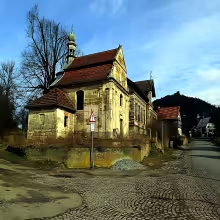
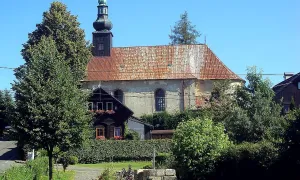
Nestled in Vrchovany village within the Liberec Region lies the Chapel of the Assumption of the Virgin Mary. This sacred building stands as a testament to historical and architectural significance. It serves not only as a spiritual center under the Roman Catholic parish – deanery of Dubá but also as a protected cultural monument of the Czech Republic. Originally established in the 17th century, it was rebuilt or expanded in 1801, reflecting its enduring presence through centuries.
The chapel's origins trace back to the 17th century when Bohemia was part of the Habsburg Monarchy—a period marked by significant religious and political upheavals across Europe. The Thirty Years' War (1618-1648) profoundly impacted the region, influencing both its cultural and architectural landscapes. Although specific details about its initial construction are sparse, it is known that the chapel underwent a significant transformation in 1801 when it was either rebuilt or expanded.
Architecturally, the Chapel of the Assumption of the Virgin Mary showcases elements typical of folk baroque style, particularly evident after modifications made at the beginning of the 19th century. It features a single-nave rectangular structure with a semi-circular presbytery and sacristy on its southern side. The façade is adorned with a pediment updated in this period to reflect local artistic influences. Inside, pilasters divide the chapel's walls, contributing to its elegant yet simple interior design characterized by a flat ceiling.
Throughout its history, the chapel has housed various religious artifacts and artworks. Notably, during the 1980s, it contained a late baroque altar from the second half of the 17th century. This altar is distinguished by its bolt-cord ornamentation and features paintings from the 19th century alongside depictions of Czech patron saints on its walls. Such elements highlight the chapel's role in preserving religious art and tradition over centuries.
Today, the Chapel of the Assumption of the Virgin Mary has transitioned into a modern use while retaining its historical essence. In 2025, it was transformed into an apartment for commercial short-term accommodation, allowing visitors to experience its unique blend of history and contemporary living. This adaptation ensures that the chapel remains accessible and relevant in today's world.
Visiting this monument offers more than just a glimpse into architectural history; it provides insight into the cultural and spiritual life of Vrchovany over centuries. Its preservation as a cultural monument underscores its importance, making it a worthwhile destination for those interested in exploring Czech heritage. Whether drawn by its historical significance or intrigued by its modern adaptation, the Chapel of the Assumption of the Virgin Mary invites you to discover its enduring legacy.
Historical milestones
- 17th century
- Establishment of the Chapel during Habsburg Monarchy.
- 1618
- Thirty Years' War begins, impacting Bohemia's cultural landscape.
- 1648
- End of Thirty Years' War, influencing regional architecture and culture.
- 1801
- Chapel rebuilt or expanded in folk baroque style.
- 1980
- Contains late baroque altar with 19th-century paintings.
- 2025
- Transformed into an apartment for short-term accommodation.
Architectural development
The Chapel underwent significant architectural development, originally existing in the 17th century and later rebuilt or expanded in 1801. Its façade was modified at the beginning of the 19th century to reflect a folk baroque style. The chapel features a single-nave rectangular structure with a semi-circular presbytery and sacristy on the south side, characterized by pilasters dividing its walls.
Historical events
The original chapel existed since the 17th century.
Rebuilt or expanded in 1801.
Points of interest
- The Chapel of the Assumption of the Virgin Mary in Vrchovany underwent a significant transformation in 1801, which is intriguing given its original establishment in the 17th century during a time of religious and political upheaval in Bohemia.
- Despite being rebuilt or expanded in the early 19th century, the chapel retains elements typical of folk baroque style, particularly evident after modifications that reflect local artistic influences—a blend not commonly found in other structures from this period.
Guide
Show guide text
Welcome to the Chapel of the Assumption of the Virgin Mary in Vrchovany! As you stand here at the heart of this charming village in the Liberec Region, take a moment to absorb the serene atmosphere surrounding this sacred building. The chapel, with its historical aura, invites you into a story that spans centuries.
Let's delve into its origins and historical context. Established during the 17th century under the Habsburg Monarchy, the chapel emerged at a time when Bohemia was navigating through religious and political upheaval. This era set the stage for the chapel’s initial construction, providing it with roots deeply embedded in history. As you stand here, imagine the distant echoes of the Thirty Years' War that began in 1618, shaping the cultural landscape of Bohemia. The end of this tumultuous period in 1648 left a lasting impact on regional architecture and culture.
Now, turn your attention to the chapel's architectural evolution. In 1801, it underwent significant transformation, being rebuilt or expanded in a folk baroque style that reflects its resilience and adaptability over time. As you take in its form, notice how this style has influenced the overall aesthetic, giving it a distinctive character. Inside, the late baroque altar from 1980 stands as a testament to artistic continuity, adorned with 19th-century paintings that add layers of history to your experience.
Though specific architects and historical figures associated with the chapel remain unknown, its narrative is enriched by these mysteries. The chapel's ability to endure and transform speaks volumes about the community’s dedication to preserving their spiritual heritage.
Here's a fascinating twist: despite its origins in the 17th century, the chapel was significantly transformed in 1801. This period of change is intriguing, considering it occurred long after the initial establishment during such a turbulent era. It highlights how this sacred site has continuously adapted and thrived through changing times.
As we conclude our visit, consider exploring more of Vrchovany’s offerings or simply linger to appreciate the chapel's tranquil presence. Thank you for joining us on this journey through time. We hope this experience has enriched your understanding and appreciation of this cultural monument. Safe travels as you continue your adventure!
Businesses nearby
Do you run a restaurant, accommodation, shop, museum, rental, wellness or other visitor service near this monument? Show yourself directly to the people heading to it — this is how they will see you in the app and on the web:
Accommodation nearby
Themed route
Tematická výletní trasa: Kaple Nanebevzetí Panny Marie ve Vrchovanech
1. Kaple Nanebevzetí Panny Marie (kaple) Začněte svou návštěvu u samotné kaple, která je nejen architektonickým dílem, ale také klíčovým historickým a kulturním symbolem obce Vrchovany. Tato malá sakrální stavba vyniká svou jednoduchostí a krásnou malebností, která přitahuje návštěvníky z celého regionu.
2. Kostel Nanebevzetí Panny Marie ve Vrchovanech (kaple) Odkudkoliv se nacházíte v obci, je možné navštívit kostel Nanebovzetí Panny Marie, který je součástí místního náboženského a kulturního dědictví. I když je blízký kapli, nabízí jinou atmosféru a historický kontext, což umožňuje hlubší pochopení místní tradice.
3. Obecní úřad Vrchovany (historické místo) Prozkoumejte obecní úřad nebo jeho historický kontext, pokud je možné navštívit archivní prostory či vystavované památky. Tento bod může poskytnout vhled do administrativního a společenského života obce, což doplní návštěvu sakrálních míst.
4. Místní tradiční hostinec (kulturní místo) Po prozkoumání historických a kulturních památek si odpočiňte v místním tradičním hospodě, kde se můžete nejen otočit na pohostinné jídlo, ale také setkat s místními obyvateli a získat další informace o historii a tradicích Vrchovan. Tento bod je ideální pro kulturní propojení s místní komunitou.
Tato trasa nabízí cestovatelům možnost nejen ocenit architektonické i duchovní hodnoty obce, ale také se ponořit do její historie a kultury prostřednictvím interakce s místními institucemi a komunitou.
Seasonal recommendations
Jaro: Kaple Nanebevzetí Panny Marie ve Vrchovanech nabízí v jarním období jedinečný zážitek, kdy se příroda probouzí a okolní lesy začínají kvést. Slunečné dny s mírnými teplotami poskytují ideální podmínky pro procházku kolem kaple a užívání její klidné atmosféry. Navštěvovatelé mohou očekávat nízké úrovně davů, což umožňuje intimnější zážitek. Doporučujeme nosit pohodlné boty a lehký kabát nebo bundu pro ochranu před chladnými větry, které mohou být stále cítit ráno a večer.
Léto: Během letního období se kaple stává oblíbeným místem pro turisty i místní návštěvníky, kteří si užívají teplých dnů a přírodní krásy okolí. Slunečné světlo zdůrazňuje architektonické detaily kaple a vytváří živou atmosféru, která láká návštěvníky k dlouhým procházkám. Kvůli vyššímu počtu turistů je vhodné navštívit kapli dříve v den, aby se předešlo davům a zajištěna byla dostatečná doba na prozkoumání místa. Teplé oblečení, sluneční brýle a ochrana proti UV záření jsou nezbytné.
Podzim: Vrchovanská kaple nabízí v podzimních měsících melancholickou krásu s barevným listím, které obklopuje stromy a zvýrazňuje historickou stavbu. Slunečné dny jsou časté, ale teploty klesají, což může přinést chladnější větry. Tento čas roku je ideální pro ty, kteří hledají klid a pohodlí bez velkých davů, které jsou běžné v letní sezóně. Doporučujeme nosit teplé oblečení, šátek na krk a pevné obuv pro chodbu po listnatém podlaze.
Zima: Zimní návštěva kaple nabízí úplně jiný zážitek s pokrytou sněhem krajinou, která vytváří tichou a klidnou atmosféru. Slunečné dny mohou být krásné, ale teploty jsou obvykle nízké, což znamená kratší otevírací dobu kaple. Navštěvovatelům je doporučeno přijít s teplým oblečením, včetně kožichu nebo peřinové bundy a ochranných bot. Pohodlná noha by měla být zajištěna pro chůzi po sněhovém povrchu. Zimní návštěva je ideální pro ty, kdo hledají klidnou a intimní atmosféru.
Visualizations and artistic views

Vizualizace jsou generovány umělou inteligencí a slouží jako inspirace.

Tips from visitors
No tips yet. Be the first!
Log in and add your tip.


Reviews and comments