






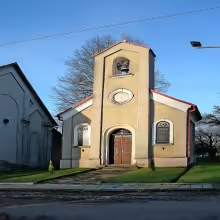
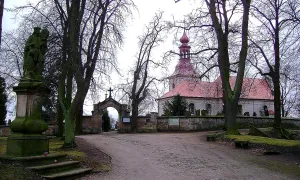
The Chapel of the Assumption of the Virgin Mary, also known as Kaple Matky Páně, is a Roman Catholic chapel located in Záhornice, part of Trnov, within the Královéhradecký region. Constructed between 1866 and 1867 by Václav Novák at his own expense on his property, this modest rural chapel serves as a filial church under the parish of Přepychy. Despite not hosting regular services, it holds historical significance due to its community involvement in construction and maintenance.
The chapel's origins date back to the mid-19th century when Bohemia was part of the Austrian Empire. During this period, significant cultural and political changes were underway, leading up to Czechoslovakia's formation after World War I. Václav Novák initiated the chapel’s construction between 1866 and 1867 on his land, reflecting a modest architectural style typical for small rural chapels of that era. In 1880, when new land registry books were established, Novák donated the chapel to the municipality, marking its transition from private ownership to community stewardship.
Architecturally, the Chapel of the Assumption of the Virgin Mary is characterized by simplicity and functionality, typical of small rural chapels built during that time. While specific architectural details are not extensively documented, it embodies a style prioritizing practicality over grandeur, aligning with the needs and resources of its local community.
Ownership and administration of the chapel have seen notable transitions. Initially owned by Václav Novák, who financed its construction, the chapel was later donated to the municipality in 1880. Over time, it experienced significant events that impacted its structure and function. In 1917, during World War I, the chapel's bell was confiscated due to its potential use for cannon production. However, by late 1918, the bell was recovered after being hidden in sand to prevent confiscation. The German authorities re-secularized the chapel in 1942, reflecting broader political changes of that era. In 1954, local citizens funded a new bell, underscoring ongoing community involvement in its upkeep.
Key events and curiosities surrounding the chapel highlight its resilience and the dedication of its community. The confiscation and subsequent recovery of the bell during World War I is particularly noteworthy, illustrating both the challenges faced by small religious sites during wartime and the resourcefulness of local residents. Additionally, the installation of a new bell in 1954, funded by locals, demonstrates continued communal support.
Today, the Chapel of the Assumption of the Virgin Mary stands as a testament to the enduring spirit of its community. While it does not host regular services, its historical significance and stories of resilience make it an intriguing site for visitors interested in local history and cultural heritage. Surrounded by the rural landscapes typical of the Královéhradecký region, the chapel offers a glimpse into the past and invites exploration.
The Chapel of the Assumption of the Virgin Mary is not just a place of worship but a symbol of community resilience and historical continuity. Its story reflects broader themes of cultural identity and local solidarity, making it a worthwhile visit for those interested in exploring the rich tapestry of Czech history.
Historical milestones
- 1866
- Construction of the chapel began.
- 1867
- Construction of the chapel completed.
- 1880
- The chapel was donated to the municipality.
- 1917
- The bell was confiscated for potential use in cannon production.
- 1918
- The bell was recovered and returned to the chapel.
- 1942
- The chapel was re-secularized by German authorities.
- 1954
- A new bell was installed with funds from local ci
Architectural development
Constructed between 1866 and 1867, the Chapel of the Assumption of the Virgin Mary reflects a modest architectural style typical for small rural chapels of that era. The chapel has undergone several significant events affecting its structure, particularly concerning its bell.
Historical events
In 1917, during World War I, the chapel's bell was confiscated due to its potential use for cannon production but was rediscovered and recovered by late 1918.
The German authorities re-secularized the chapel in 1942.
A new bell was installed in 1954, funded by local citizens.
Owners
Initially owned by Václav Novák who built it between 1866-1867, the chapel was donated to the municipality in 1880 when new land registry books were established.
Points of interest
- The chapel's bell was confiscated during World War I for potential use in cannon production but was ingeniously hidden in sand by locals to prevent its loss. - In 1942, the German authorities re-secularized the chapel, reflecting broader political changes and tensions of that era. - Despite not hosting regular services, the chapel has been maintained through community efforts, including local citizens funding a new bell in 1954. - The chapel transitioned from private ownership to community stewardship when Václav Novák donated it to the municipality in 1880.
Guide
Show guide text
Welcome to the Kaple Nanebevzetí Panny Marie, also known as Kaple Matky Páně, nestled in the charming village of Trnov. As you stand here, take a moment to appreciate this serene Roman Catholic chapel set against the gentle backdrop of Záhornice. Its modest yet elegant presence speaks volumes about the community's devotion and history.
Let's delve into its origins. The chapel was constructed between 1866 and 1867 by Václav Novák at his own expense on his property. This act of faith and generosity was not just a personal endeavor but a significant contribution to the local religious landscape, serving as a filial church under the parish of Přepychy.
As you look around, notice the chapel's simple yet harmonious design. While specific architectural details aren't documented here, take in its overall structure and how it blends seamlessly with the surrounding environment. The craftsmanship reflects the era’s style, characterized by understated elegance.
Václav Novák is a key figure tied to this place. His vision brought this chapel to life, leaving an indelible mark on the community. Over the years, the chapel has witnessed pivotal moments that echo broader historical narratives. In 1880, it was generously donated to the municipality, ensuring its preservation and continued use for generations.
One of the most intriguing episodes in its history occurred during World War I. The chapel's bell was confiscated by authorities who intended to melt it down for cannon production. Ingeniously, local villagers hid the bell in sand to prevent its loss, a testament to their resourcefulness and attachment to this sacred site. By 1918, the bell had been recovered and returned, ready once again to call the faithful.
The chapel's story continued into the turbulent times of World War II. In 1942, German authorities re-secularized it, reflecting the broader political changes and tensions of that era. This act was part of a larger pattern affecting many religious sites across Europe during this period.
As you explore further, let these stories inspire you to reflect on the resilience and spirit of those who have cherished this chapel through time. Each stone here carries whispers of history, inviting you to connect with the past in your own way.
We invite you to continue exploring Trnov and its surroundings, discovering more hidden gems like this one. Thank you for joining us on this journey into history. Safe travels as you uncover more stories waiting to be told.
Tips for visitors
The best time to visit the Chapel of the Assumption of the Virgin Mary is during late spring or early autumn when the weather is mild, making it ideal for exploring the surrounding rural landscapes. These seasons offer pleasant temperatures and fewer crowds, allowing visitors to appreciate the chapel's serene environment. Additionally, the natural beauty of the Královéhradecký region is at its peak during these times, providing a picturesque backdrop for your visit.
Parking and transportation options are generally convenient for reaching the chapel. There may be parking available nearby, but it is advisable to check in advance or plan to park slightly further away if necessary. The area can also be accessed via local roads, making it possible to reach by car. For those preferring public transport, you should verify current routes and schedules using a transportation search tool to ensure smooth travel.
When visiting the chapel, consider bringing comfortable walking shoes as there may be some walking involved, especially if exploring nearby areas. A camera is recommended for capturing the charming architecture of the chapel and its scenic surroundings. Additionally, carrying a light jacket or sweater can be useful due to variable weather conditions in the region.
Photography enthusiasts will find several spots around the chapel ideal for taking pictures, particularly during the golden hours of early morning or late afternoon when natural lighting is soft and enhances the chapel's features. The rural landscape offers additional opportunities for capturing stunning views with the chapel as a focal point.
Within a 30-minute drive from the chapel, visitors can explore other small chapels or historical sites in the vicinity that contribute to the area’s rich cultural tapestry. These nearby attractions provide an opportunity to delve deeper into local history and enjoy more of what the Královéhradecký region has to offer.
For families with children, visiting this chapel can be a delightful experience. The tranquil setting is perfect for a leisurely stroll, and there are ample opportunities for kids to explore nature in the surrounding countryside. Engaging them with stories about the chapel’s history or encouraging them to spot wildlife could make the visit more interactive and enjoyable.
Businesses nearby
Do you run a restaurant, accommodation, shop, museum, rental, wellness or other visitor service near this monument? Show yourself directly to the people heading to it — this is how they will see you in the app and on the web:
Nearby
Located in Záhornice, part of Trnov, the chapel is surrounded by rural landscapes typical of the Královéhradecký region. Nearby features include local roads and possibly other small chapels or historical sites within a 5 km radius.
Accommodation nearby
Themed route
Tematická výletní trasa: Kaple Nanebevzetí Panny Marie (Trnov)
1. Kaple Nanebevzetí Panny Marie - Typ: Religiózní památka - Proč stojí za návštěvu: Tato kaple je klíčovou kulturní a duchovní pamatkou v obci Trnov. Její historický architektonický styl přitahuje návštěvníky, kteří se zajímají o regionální dědictví a chtějí prožít klidnou atmosféru v rámci venkovského prostředí Královéhradeckého kraje.
2. Místní silnice kolem Záhornice - Typ: Kulturní průchod - Proč stojí za návštěvu: Procházka po místních cestách nabízí pohled na typickou venkovskou krajinu, která charakterizuje oblast Záhornice. Tato trasa umožňuje uživatelům ocenit přírodní krásy a klidný rytmus místního života.
3. Další malé kaple nebo historické místo - Typ: Historická památka - Proč stojí za návštěvu: Pokud existuje další malá kaple či historický objekt v okolí, nabízí zajímavou příležitost prozkoumat místní duchovní a kulturní tradice. Tyto místa jsou často spojena s dlouholetými zvyklostmi a historiemi obyvatelstva, což je důvodem, proč stojí za jejich návštěvu.
Tato trasa nabízí kompaktní pohled na kulturní a duchovní bohatství oblasti Trnov. Navržena tak, aby byla přístupná a zajímavá pro různé typy návštěvníků, od historiků po milovníky venkovských krajinných výhledů.
Seasonal recommendations
Spring: The chapel of the Assumption of the Virgin Mary in Trnov is enveloped in a gentle, verdant embrace during spring. Blossoming flora and vibrant wildflowers create a picturesque setting around the historical site, with soft sunlight filtering through newly leafy branches to illuminate its ancient architecture. This season offers a tranquil atmosphere ideal for contemplation. Visitors should dress comfortably in layers as temperatures can vary; light jackets may be necessary for cooler mornings or evenings. The chapel is less crowded during this time, making it perfect for those seeking a peaceful visit.
Summer: Summer brings the chapel to life with lush greenery and warm sunlight casting dramatic shadows across its historic stones. This is peak tourist season, so visitors are advised to arrive early in the morning to avoid larger crowds and fully appreciate the serene ambiance of the site. Comfortable walking shoes and breathable clothing are recommended due to longer daylight hours and warmer temperatures. The surrounding natural landscape offers plenty of opportunities for leisurely walks or picnics, enhancing the experience of exploring this historical gem.
Autumn: As autumn arrives in Trnov, the chapel is surrounded by a kaleidoscope of reds, oranges, and yellows from the changing leaves, creating a stunning backdrop that enhances its historic charm. The crisp air makes it an ideal time for photography enthusiasts to capture the site's beauty. Visitors should wear warm layers as temperatures begin to drop, and consider bringing a light jacket or sweater for outdoor exploration. This season is less crowded than summer, offering a more intimate experience with fewer tourists.
Winter: Winter transforms the chapel into a serene and almost mystical place, with snow often blanketing its surroundings in a peaceful white cover. The cold weather creates a quiet atmosphere that invites reflection, while shorter daylight hours mean visits are best planned for midday to capture the site's beauty under softer light. Visitors should dress warmly in layers, including hats, gloves, and insulated footwear, as temperatures can be quite low. The chapel may have reduced opening hours during this season, so checking in advance is advisable.
Visualizations and artistic views

Vizualizace jsou generovány umělou inteligencí a slouží jako inspirace.


Tips from visitors
No tips yet. Be the first!
Log in and add your tip.


Reviews and comments