





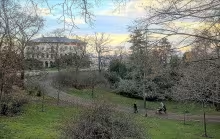
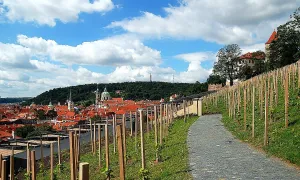
Havlíčkovy sady, also known as Gröbovka or Grébovka, is a historically significant park located in Prague's Vinohrady district. Established between 1871 and 1888 by Moritz Gröbe, the park blends Neo-Renaissance and Neo-Romantic architectural styles. It features notable structures such as the Gröbe villa, pavilion, and vineyard with Viniční altán. Recognized for its cultural importance, Havlíčkovy sady was designated a cultural monument in 1964.
The park's origins trace back to the 13th century when vineyards were first established on its sunny slopes. The development of viniculture in this area is attributed to Charles IV in the 14th century, who introduced French viticultural techniques and grape varieties after his visits to France. Historical records from 1323 mention Albert Štuk purchasing a local vineyard from Vilémov Monastery, marking one of the earliest documented interactions with the land that would become Havlíčkovy sady.
Architecturally, Havlíčkovy sady was initially developed in the late 19th century by Moritz Gröbe. The park's design incorporates elements of Neo-Renaissance and Neo-Romantic styles, reflecting architectural trends of the time. Key structures include the Gröbe villa, a pavilion, and a vineyard with Viniční altán. In the late 19th century, Moritz Gröbe commissioned architect Alois Turka to construct a smaller villa on the site, which later became part of the park's ensemble.
Ownership of Havlíčkovy sady has seen several notable figures over its history. Initially developed by Moritz Gröbe in the late 19th century, the park was under his ownership from 1870 until his death in 1888. Prior to this, Dr. Josef Lumbe held ownership during the mid-19th century and made significant contributions to the area's development by enhancing its gardens and vineyards.
Throughout its history, Havlíčkovy sady has witnessed various events that have shaped its legacy. In 1964, it was officially recognized as a cultural monument due to its historical and architectural significance. The park also underwent extensive reconstruction from 2001 to 2014, which included restoring greenery and pathways. This earned it the prestigious Patrimonium pro futuro award in 2015 for outstanding preservation efforts.
Today, Havlíčkovy sady stands as a testament to Prague's rich cultural heritage and architectural innovation. The park is situated at an elevation of 200–245 meters, covering 11 hectares, with a historic vineyard that dates back to the 13th century. It offers visitors a glimpse into the past while providing a serene environment for relaxation and exploration. With its blend of historical significance and natural beauty, Havlíčkovy sady is a must-visit destination for anyone interested in Prague's history and landscape.
Havlíčkovy sady continues to captivate visitors with its unique combination of architectural elegance and historical depth. Its preservation efforts ensure that future generations can appreciate this cultural gem. Visitors are invited to explore the park, immerse themselves in its rich history, and enjoy the tranquil beauty it offers amidst the bustling city of Prague.
Historical milestones
- 13th century
- The establishment of vineyards on sunny slopes.
- 1323
- Albert Štuk purchased a vineyard from the Vilémov Monastery.
- 14th century
- Karel IV introduced French viticulture techniques and grape varieties.
- 1871
- The beginning of park development by Moritz Gröbe.
- 1888
- Death of Moritz Gröbe, ending his ownership of the park.
- 1964
- Designation of the park as a cultural monument.
Architectural development
Initially developed in the late 19th century by Moritz Gröbe, Havlíčkovy sady underwent extensive reconstruction from 2001 to 2014. The project included restoring greenery and pathways, culminating in a prestigious award for its preservation efforts.
Historical events
- 1323
- Albert Štuk, a citizen of Prague's Old Town, purchased the vineyard from Vilémov Monastery.
- 1964
- The park was designated as a cultural monument.
Points of interest
- Although originally established as a vineyard in the 13th century, Havlíčkovy sady's first documented owner was Albert Štuk, who purchased it from Vilémov Monastery in 1323.
- The park's architectural transformation began with Moritz Gröbe, but he also commissioned architect Alois Turka to build a smaller villa, which later integrated into the park’s design.
- Dr. Josef Lumbe, who owned Havlíčkovy sady before Moritz Gröbe, is credited with enhancing its gardens and vineyards during his mid-19th century ownership.
Guide
Show guide text
Welcome to Havlíčkovy sady, a delightful oasis nestled in the heart of Prague's Vinohrady district. As you stand here, surrounded by lush greenery and the gentle rustle of leaves, take a moment to absorb the serene atmosphere that envelops this historic park.
The story of Havlíčkovy sady begins in the 13th century when vineyards were first established on these sunlit slopes. By 1323, Albert Štuk had acquired the land from Vilémov Monastery, marking a significant moment in its early history. Fast forward to the 14th century, and you'll find Emperor Karel IV introducing French viticulture techniques and grape varieties, further enriching the area's winemaking heritage.
The park as we see it today began taking shape between 1871 and 1888 under the vision of Moritz Gröbe. He transformed this vineyard into a picturesque garden blending Neo-Renaissance and Neo-Romantic styles. As you stroll along the paths, notice the elegant structures that punctuate the landscape: the grand Gröbe villa, the charming pavilion, and the Viniční altán nestled among the vines.
Alois Turka, an architect commissioned by Moritz Gröbe, played a pivotal role in crafting the park's architectural elegance. His designs contribute to the harmonious blend of nature and man-made beauty that defines Havlíčkovy sady.
The history here is rich with stories, from Albert Štuk’s acquisition to Karel IV’s innovations, all leading up to Gröbe’s transformative vision. The park's journey through time culminated in 1964 when it was declared a cultural monument, preserving its legacy for future generations.
As you explore further, let your curiosity lead the way. Perhaps delve into the mystery of how these vineyards evolved from medieval wine production to this enchanting garden space. Each corner offers a glimpse into the past and an invitation to imagine life in bygone eras.
Before we part ways, I encourage you to continue wandering through Havlíčkovy sady, uncovering its secrets and enjoying its tranquil beauty. Thank you for joining me on this journey through history and nature. Until next time, may your explorations be filled with wonder and discovery.
Tips for visitors
The best time to visit Havlíčkovy sady is during the late spring or early autumn months, from May to September. During these times, the park's lush greenery and blooming flowers create a picturesque setting that enhances your experience. Additionally, the weather is generally pleasant, making it ideal for leisurely walks or picnics. Avoid visiting in winter when some paths may be less accessible due to snow.
Transportation to Havlíčkovy sady can be conveniently managed by both car and public transit. If you're driving, there are several parking options available nearby; however, it's advisable to check for any restrictions or fees. For those using public transport, the park is accessible via tram lines that run through Vinohrady. To ensure a smooth journey, verify current routes and schedules in advance using an online transit planner.
When planning your visit, consider bringing essentials such as comfortable walking shoes, especially if you intend to explore the entire park. A hat or sunscreen can be useful during sunny days, while a light jacket is recommended for cooler mornings or evenings. If you're interested in picnicking, bring along some snacks and drinks, but remember to dispose of waste responsibly to keep the park clean.
For photography enthusiasts, Havlíčkovy sady offers several picturesque spots. The Neo-Renaissance and Neo-Romantic architectural elements provide unique backdrops for your photos. Early morning or late afternoon light is ideal for capturing the park's beauty, as it casts soft shadows and enhances colors. Be mindful of other visitors when taking pictures to ensure everyone enjoys their time in the park.
Nearby attractions within a 30-minute walk include cultural sites such as the National Theatre and the Estates Theatre, both located in Prague's historic center. For nature lovers, Botič stream offers serene spots for relaxation. Exploring these areas can provide a well-rounded experience of Prague’s rich history and natural beauty.
Havlíčkovy sady is family-friendly, with open spaces perfect for children to run around. There are no specific playgrounds within the park, but its vast area allows kids to enjoy various activities safely. Consider bringing a picnic blanket or a ball for an enjoyable outdoor day. Always keep an eye on your belongings and supervise younger children closely.
Businesses nearby
Nearby
Havlíčkovy sady is located near Vršovice and Nusle, with Botič stream flowing through it. The area features other cultural sites and natural landscapes within a five-kilometer radius.
Accommodation nearby
Trips and activities nearby
Guided tours, tickets and activities nearby from GetYourGuide
Search tours and activities →Themed route
Thematic Walking Tour: Havlíčkovy sady and Surroundings
1. Havlíčkovy sady (Park) - Type: Park - Why Visit: Begin your journey at the heart of Vinohrady with Havlíčkovy sady, a beautifully landscaped park that offers serene green spaces perfect for leisurely walks or picnics. The park is rich in history and culture, featuring statues and monuments dedicated to notable Czech figures.
2. Botič Stream - Type: Natural Feature - Why Visit: As you explore Havlíčkovy sady, follow the path along Botič stream that meanders through the park. This charming waterway adds a picturesque element to your walk and provides a tranquil setting for relaxation or photography.
3. Vršovice - Type: Neighborhood - Why Visit: A short stroll from Havlíčkovy sady, Vršovice is known for its vibrant atmosphere and cultural offerings. Explore the local cafes and shops to experience the lively spirit of this neighborhood, which seamlessly blends modernity with tradition.
4. Nusle - Type: Neighborhood - Why Visit: Continue your tour by heading towards Nusle, a district renowned for its artistic flair and historic architecture. The area is home to numerous galleries and studios where you can immerse yourself in the local art scene and enjoy some of Prague's most innovative cultural experiences.
This thematic walking tour offers an enriching experience through green spaces, natural beauty, and vibrant neighborhoods, all within close proximity to Havlíčkovy sady.
Seasonal recommendations
Spring: Havlíčkovy Sady in spring offer a stunning view of blooming trees and lawns adorned with a variety of flowers. The sunlight reveals the vibrant color and shape of each leaf, creating an atmosphere of renewal and hope. The park is lightly visited, making it ideal for a peaceful stroll or relaxation on a bench. Visitors should wear clothing suitable for mild weather and come in the early afternoon when temperatures are most moderate and the park is at its calmest peak.
Summer: In summer, Havlíčkovy Sady transform into a green haven amidst Prague's bustling life, offering a magical atmosphere full of sunshine and smooth paths. Floods of light highlight the park's lushness, creating an ideal environment for family outings or picnics under the shade of ancient trees. Despite its tranquil nature, the park becomes popular among tourists and locals during the summer months, resulting in higher visitor numbers. Visitors should come early in the morning or late afternoon to avoid peak times with large crowds, and wear light clothing suitable for warm temperatures.
Autumn: The natural beauty of Havlíčkovy Sady in autumn offers an experience full of colors and tranquility. Leaves change from vibrant green to a variety of shades of orange, yellow, and red, creating spectacular views ideal for photography. Sunlight illuminates the leaves, enhancing their colorfulness and creating a romantic atmosphere. Visitors can expect a moderate increase in people during summer days, but overall the park remains calm. Emphasis should be on wearing warm clothing and taking advantage of sunny afternoon hours for visits.
Winter: In winter, Havlíčkovy Sady offer a mild refuge with their leafless trees creating elegant patterns on the snow. Sunlight lights up the park, adding a gentle warmth to the cold month. While visitation significantly decreases and the park offers a more peaceful experience, opening hours are typically shorter due to lower temperatures. Visitors should wear warm clothing with wind protection and plan their visit during sunny days when the park is most beautiful.
Visualizations and artistic views

Vizualizace jsou generovány umělou inteligencí a slouží jako inspirace.


Tips from visitors
No tips yet. Be the first!
Log in and add your tip.

Reviews and comments