



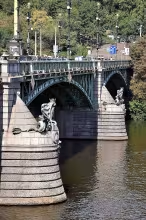
Svatopluk Čech Bridge, known as Čechův most in Czech, is an iconic arch bridge spanning the Vltava River in Prague's Holešovice district. Constructed between 1905 and 1908, it stands out for its Art Nouveau style and historical significance. The bridge connects the districts of Holešovice and Staré Město, making it a vital link within the city.
Named after Czech writer Svatopluk Čech, whose death coincided with the completion of this architectural feat in 1908, the bridge became a symbol of national pride during its opening. Its name was temporarily changed to Mendel Bridge from 1940 to 1945 under Nazi occupation. Architects Jan Koula and Jiří Soukup designed it, with contributions from engineers Václav Trča and František Mencl.
Čechův most is distinguished by its single-span steel arch construction, necessary due to the narrow width of the river at this location. The bridge measures 169 meters in length and 16 meters in width, making it one of Prague's shorter bridges. Its design incorporates a gradient of 2% and varying spans to accommodate the river’s flow.
The Art Nouveau style is evident in its ornate decorations and artistic elements. Originally featuring wooden decking made from Australian jarrah wood, which was replaced with paving for safety reasons after becoming slippery when wet, the bridge underwent several renovations over the years. Notably, it saw major reconstruction between 1971 and 1975, as well as smaller updates in 1953-1956 and 2000-2001.
The bridge is adorned with intricate bronze sculptures created by artists Klusáček, Wurzel, Popp, and Amort. These include four large statues of winged women on glass-enclosed iron lanterns, designed by Antonín Popp, which replaced the original cast iron decorations due to corrosion issues in 1965.
As Prague experienced rapid urban development and cultural flourishing during the early 20th century, Čechův most exemplified the Art Nouveau movement's architectural innovations. It remains a protected technical monument, recognized for its unique style and historical importance within Czechia.
Today, Svatopluk Čech Bridge is accessible to trams, cars, and pedestrians, serving as both functional infrastructure and an artistic landmark. Its blend of utility and beauty makes it a must-visit site in Prague, offering visitors a glimpse into the city's rich architectural heritage. The bridge not only connects districts but also bridges past and present, inviting exploration and appreciation for its historical and cultural significance.
Historical milestones
- 1907
- The laying of the cornerstone by Emperor Franz Joseph I.
- 1965
- Three original lanterns were destroyed due to corrosion.
Architectural development
Čechův most was designed by architect Jan Koula with contributions from engineers Jiří Soukup, Václav Trča, and František Mencl. The bridge features a single-span steel arch construction, necessitated by the narrow width of the river at this location. Its design includes a gradient of 2% and varying spans to accommodate the river's flow. Over the years, it has undergone several renovations, including significant updates in 1939, 1954-1957, and 1971-1974.
Historical events
The construction of Čechův most was completed in 1908, marking the introduction of a significant Art Nouveau structure in Prague.
In 1939, the bridge underwent its first major repair to address maintenance needs.
A comprehensive reconstruction took place between 1971 and 1974, updating the deck and installing new railings and lanterns.
Points of interest
- During its initial construction phase, Čechův most was the longest bridge in Prague at that time, a remarkable feat given its relatively short length of 169 meters today.
- The original cast iron decorations on the bridge were replaced with bronze sculptures due to rapid corrosion issues, showcasing an early example of adaptive restoration practices in architectural history.
Guide
Show guide text
Welcome to Čechův most, a remarkable piece of Prague's architectural history nestled in the heart of Holešovice. As you stand here on this iconic bridge spanning the Vltava River, take a moment to soak in its grandeur and elegance that connect Náměstí Curieových with nábřeží Edvarda Beneše.
Constructed between 1905 and 1908, Čechův most is not only an engineering marvel but also a testament to the Art Nouveau style. It's fascinating to note that this bridge was once the longest in Prague, despite its current length of just 169 meters—a reflection of its historical significance during its time.
The design of Čechův most stands out for its ornate decorations and artistic elements characteristic of secese architecture. As you look around, notice how these details contribute to the bridge's unique aesthetic. The original cast iron decorations have been replaced with bronze sculptures due to corrosion issues, ensuring that this structure continues to captivate onlookers.
Let’s delve a bit into its history. In 1907, Emperor Franz Joseph I laid the cornerstone for Čechův most, marking an important moment in its creation. This event highlights the bridge's significance during that era and its connection to prominent historical figures. Fast forward to 1965, when three original lanterns were destroyed due to corrosion—a reminder of the challenges faced in preserving such a technical monument.
The minds behind this architectural masterpiece include Jan Koula, Ing. Jiří Soukup, Václav Trča, and František Mencl. Their collective vision brought Čechův most into existence, blending functionality with artistic flair.
As you stand here today, take a moment to appreciate the bridge's role not just as a crossing over the river but as a cultural landmark that has witnessed centuries of history unfold. Its story is one of innovation and resilience, standing proudly as the only steel arch bridge from its era in Prague.
I encourage you to explore further and immerse yourself in the atmosphere surrounding Čechův most. As you continue your journey through Prague, remember this bridge as a symbol of artistic expression and historical depth.
Thank you for joining me on this brief exploration of Čechův most. I hope it has enriched your understanding and appreciation of this stunning piece of history. Until next time, enjoy the rest of your visit to beautiful Prague!
Tips for visitors
The best time to visit Čechův most is during the late spring or early fall when the weather is pleasant, allowing for comfortable exploration of both the bridge itself and its surroundings. During these seasons, you can enjoy the vibrant greenery along the Vltava River and avoid the summer crowds. The lighting conditions are also ideal for photography, especially in the morning or late afternoon when the soft light enhances the architectural details of the steel arch bridge.
Parking near Čechův most can be challenging due to its central location in Prague's Holešovice district. Public transportation is highly recommended; you can access the area via metro lines A and C, which stop at Nádraží Holešovice or Mustek stations. From there, a short walk will bring you to the bridge. For those driving, consider parking further away in larger lots and using public transport for the final leg of your journey.
When visiting Čechův most, it's advisable to wear comfortable walking shoes as you'll likely explore both sides of the Vltava River. A light jacket is recommended due to variable weather conditions. For photography enthusiasts, a camera with a zoom lens can be beneficial for capturing distant views and details. Additionally, carrying a small backpack or bag will help keep your hands free while exploring.
Photographers will find Čechův most offers several great spots for capturing the bridge's unique architecture against the backdrop of Prague's skyline. The best light is typically during the golden hours—shortly after sunrise and before sunset. From Nábřeží Edvarda Beneše, you can capture the entire span of the bridge with the cityscape in the background. Another excellent spot is from across the river on Náměstí Curieových, where you can get a symmetrical shot of the arches.
For families visiting Čechův most, nearby attractions within 30 minutes include the Holešovice Market Hall and the Žižkov Television Tower. The market hall offers a variety of shops and dining options, making it perfect for a family outing. For those interested in panoramic views of Prague, the Žižkov Television Tower provides an exciting experience with its observation deck.
Businesses nearby
Nearby
Čechův most is situated in Prague's Holešovice district, near significant landmarks such as Náměstí Curieových and the Vltava River. The area features a blend of historical architecture and modern developments.
Accommodation nearby
Trips and activities nearby
Guided tours, tickets and activities nearby from GetYourGuide
Search tours and activities →Themed route
Thematic Walking Tour: Čechův most and Surroundings
1. Čechův most (Bridge) - *Type:* Historical Bridge - *Why Visit:* This iconic bridge, designed by architect Josef Fanta, is a masterpiece of Art Nouveau architecture in Prague. It connects the districts of Holešovice and Karlín over the Vltava River, offering stunning views of the cityscape and the river itself.
2. Náměstí Curieových (Curie Square) - *Type:* Public Square - *Why Visit:* Located just a short walk from Čechův most, this square is named after Marie and Pierre Curie. It serves as a vibrant meeting point surrounded by modern architecture and green spaces, reflecting the dynamic blend of history and contemporary life in Prague.
3. Vltava River Promenade - *Type:* Scenic Walkway - *Why Visit:* Following the path along the Vltava River from Čechův most towards Náměstí Curieových, visitors can enjoy picturesque views of the river and surrounding architecture. This promenade is perfect for a leisurely stroll or a moment to relax by the water.
4. Karlín District - *Type:* Urban Area - *Why Visit:* Just across Čechův most from Holešovice, Karlín offers a unique mix of historical and modern elements. Explore its charming streets and enjoy the lively atmosphere that characterizes this trendy part of Prague.
This tour provides an immersive experience into the architectural beauty and urban vibrancy of Prague's Holešovice district, centered around Čechův most and its immediate surroundings.
Seasonal recommendations
Spring: Visiting Čechův most during spring offers a unique experience as the city of Prague awakens with vibrant colors and fresh energy. The surrounding nature is in full bloom, providing picturesque views that enhance the historic charm of the bridge. As daylight extends into the evening, the natural light beautifully illuminates the architecture without artificial lighting. This season typically sees fewer tourists compared to summer, making it an ideal time for a leisurely stroll. Visitors are advised to wear comfortable layers as temperatures can vary, and early mornings or late afternoons may be cooler.
Summer: Summer is the peak tourist season in Prague, with Čechův most bustling with visitors enjoying the warm weather. The long daylight hours allow for extended sightseeing opportunities, while the bridge itself becomes a lively hub of activity. To avoid crowds, it's best to visit early in the morning or later in the evening when the sun is not at its peak. Light and breathable clothing is recommended due to higher temperatures, along with sunscreen and a hat for protection against the sun.
Autumn: Autumn brings a magical atmosphere to Čechův most as the leaves change color, creating a stunning backdrop for photography enthusiasts. The cooler weather makes it comfortable for walking and exploring without the summer crowds. During this season, Prague often experiences shorter days, so planning your visit during daylight hours is advisable. Layered clothing will help adapt to varying temperatures throughout the day.
Winter: Winter transforms Čechův most into a picturesque scene with snow-covered surroundings that highlight its historic architecture. The atmosphere is serene and festive, especially as holiday lights begin to adorn the cityscape. However, visitors should be prepared for shorter opening hours at attractions due to winter conditions. Wearing warm clothing, including coats, hats, gloves, and sturdy boots, is essential for comfort during this chilly season. Additionally, checking weather forecasts can help plan your visit more effectively.
Visualizations and artistic views


Vizualizace jsou generovány umělou inteligencí a slouží jako inspirace.

Tips from visitors
No tips yet. Be the first!
Log in and add your tip.

Reviews and comments