





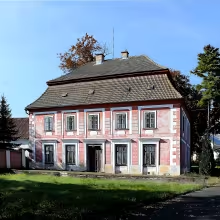
Zámek Kostrčany is a cultural monument located in the village of Kostrčany near Valče in the Karlovy Vary District. This Baroque castle, protected since 2001, has a rich history dating back to the late medieval period. Initially mentioned as a manorial estate in 1387, it evolved through various ownerships and architectural styles, culminating in its transformation into a Baroque structure in the 18th century. Despite its historical significance, the castle is not open to the public.
The early history of Kostrčany's manorial estates remains somewhat obscure. The first documented mention dates back to 1387 as a farmstead, which might have included a noble residence. By the late medieval period, there were at least two such residences in the village, though it is unclear if they correspond to the Gothic and Renaissance fortifications noted in the sixteenth and seventeenth centuries. It is assumed that an older manor existed possibly outside the village.
In 1521, Asman Štampach ze Štampachu acquired Kostrčany for 200 Czech groschen from Václav Valečského z Doupova. Shortly thereafter, he expanded his holdings by purchasing additional lands and properties in the area. By 1571, Arnošt Hasištejnský z Lobkovic owned the estate, but it was sold to Vít z Hartenberka just two years later. The castle's fortunes changed dramatically during the Bohemian Revolt of 1618-1620 when Vít z Hartenberka lost his holdings due to his involvement in the uprising. In 1623, Jan Hegner z Rösselfeldu purchased the estate after it was confiscated.
The original Renaissance manor house no longer exists; it was replaced by a Baroque castle in the eighteenth century. The current structure is a single-story building with a mansard roof, typical of Baroque architecture. It features an oblong plan measuring 18 by 11 meters and retains one vaulted room on the ground floor. The eastern and northern facades are adorned with flat pilasters and banding, while the windows in the lower level have cornice lintels.
Over time, Kostrčany changed hands several times. In the eighteenth century, František Karel Clary-Aldringen acquired the indebted estate from Karl Maxmilián Lamotte von Frintrop. The estate was later owned by Adam František Hartig and subsequently passed through various owners, including Ludvík Hartig, Antonín Josef Clement, and Karl von Nikelsberg. By 1793, Ignáci Schreitter had purchased the estate, followed by a succession of private owners until it was nationalized after World War II.
Today, Zámek Kostrčany stands on the edge of an agricultural estate near Valče. Although not open to the public, its historical significance and architectural features make it a point of interest for those exploring the region. Accessible via cycling route number 2152 from Blatna through Lubenec to Valče, the castle offers a glimpse into the past and invites visitors to appreciate its storied history.
Zámek Kostrčany is not just an architectural relic but a testament to the dynamic history of Bohemia. Its transformation from a medieval manor to a Baroque castle reflects broader historical shifts in ownership and style. For those interested in exploring the rich tapestry of Czech heritage, a visit to this site offers valuable insights into the region's past.
Historical milestones
- 1521
- Asman Štampach acquired Kostrčany for 200 Czech groschen.
- 1623
- Jan Hegner z Rösselfeldu purchased the estate after it was confiscated.
Architectural development
Kostrčany's architectural evolution began with a manorial estate at the turn of the 13th and 14th centuries. By the 16th century, it was documented as a fortified manor house. The original Renaissance structure was replaced by a Baroque castle in the 18th century, reflecting changes in architectural style and ownership.
Historical events
In 1521, Asman Štampach acquired the estate for 200 Czech groschen.
The castle was confiscated in 1620 due to involvement in the Bohemian Revolt and sold to Jan Hegner z Rösselfeldu in 1623.
Owners
Asman Štampach ze Štampachu (1521)
Arnošt Hasištejnský z Lobkovic (1571)
Vít z Hartenberka (1573)
Jan Hegner z Rösselfeldu (1623)
Points of interest
- Although Zámek Kostrčany is known for its Baroque architecture, the original Renaissance manor house that preceded it has completely vanished, leaving only historical records and architectural remnants to hint at its past existence.
- The castle's ownership history includes a dramatic shift during the Bohemian Revolt of 1618-1620, when Vít z Hartenberka lost his holdings due to his participation in the uprising, illustrating how political turmoil could directly impact personal fortunes and property rights in early modern Europe.
Guide
Show guide text
Welcome to the enchanting Zámek Kostrčany, nestled in the picturesque village of Kostrčany near Valče in Karlovarský kraj. As you stand before this historic site, imagine yourself stepping back through time into a story rich with medieval intrigue and architectural evolution.
The origins of Zámek Kostrčany trace back to 1387 when it was first mentioned as a manorial estate. Throughout its history, the castle has been shaped by various owners and styles, evolving from its initial form to become a Baroque masterpiece in the 18th century. The story begins with Asman Štampach acquiring Kostrčany for 200 Czech groschen in 1521, marking the start of an era that would see the estate transform dramatically.
As you gaze upon the castle's grandeur today, take a moment to appreciate its architectural journey. Although the original Renaissance manor house has vanished, leaving only whispers of its existence through historical records and remnants, the current Baroque structure stands as a testament to its rich past. Notice how the architecture speaks volumes of its transformation over centuries.
This site is steeped in history with notable figures who have left their mark on Zámek Kostrčany. Asman Štampach ze Štampachu was one of the early owners, followed by influential personalities like Václav Valečský z Doupova and Arnošt Hasištejnský z Lobkovic. In 1623, Jan Hegner z Rösselfeldu acquired the estate after it had been confiscated, adding another layer to its storied past.
One of the intriguing aspects of Zámek Kostrčany is its mysterious evolution from a Renaissance manor house into the Baroque castle you see today. The complete disappearance of the original structure adds an air of mystery and invites speculation about what once stood here. This transformation reflects not just architectural changes but also shifts in ownership and historical context.
As we conclude this brief journey through time, I invite you to explore Zámek Kostrčany further, allowing yourself to be immersed in its history and beauty. Each stone and pathway holds stories waiting to be discovered. Thank you for joining me on this exploration of a site where the past is ever-present, inviting curiosity and admiration.
Businesses nearby
Do you run a restaurant, accommodation, shop, museum, rental, wellness or other visitor service near this monument? Show yourself directly to the people heading to it — this is how they will see you in the app and on the web:
Nearby
Zámek Kostrčany is situated on the edge of an agricultural estate near Valče. The area is accessible via a road that forms part of cycling route number 2152, connecting Blatna to Lubenec and Valče.
Accommodation nearby
Trips and activities nearby
Guided tours, tickets and activities nearby from GetYourGuide
Search tours and activities →Themed route
Tematická výletní trasa zámek Kostrčany
1. Zámek Kostrčany (zámek) *Proč stojí za návštěvu:* Zámek Kostrčany je architektonickou perli na okraji obce, nabízející pohled do historie a kultury regionu. Jeho elegantní stavba a krásný park jsou ideálním místem pro pochopení historického významu této lokality.
2. Park u zámku Kostrčany (park) *Proč stojí za návštěvu:* Park kolem zámku je krásnou příležitostí pro relaxaci a procházky v přírodě, nabízející klidné chodníky mezi barevnými květinami a starobylými stromy. Je to dokonalé místo k odpočinku po prozkoumání zámku.
3. Cesta číslo 2152 (cycling route) *Proč stojí za návštěvu:* Tato cyklotrasa spojuje Kostrčany s dalšími zajímavými místy v okolí, jako jsou Blatna a Lubenec. Nabízí příležitost prozkoumat region na kole nebo po chůzi, což je ideální způsob, jak si užít venkovní krajiny a místní atmosféru.
Tato trasa nabízí kombinaci historických, kulturních a přírodních atrakcí v okolí Zámku Kostrčany, což ji činí ideální pro celodenní výlet.
Seasonal recommendations
Jaro: Návštěva zámku Kostrčany v jarním období nabízí jedinečný pohled na rozkvétající přírodu, kdy se parky a zahrady plní živoucími barvami kvetoucích keřů a stromů. Slunečné dny poskytují ideální podmínky pro prozkoumání historických interiérů, když je světlo přirozené a roztomilé zvuky ptáků dodávají atmosféře mírný nádech. Návštěvníci by měli využít tohoto období pro navštívění, protože se předpokládá menší počet lidí ve srovnání s letním obdobím. Doporučuje se nosit pohodlné boty a oblečení vhodné pro mírnou teplotu, stejně jako klobouk nebo sluneční brýle pro ochranu před sluncem.
Léto: Létě je zámek Kostrčany v plném rozkvětu s dlouhými dny světla a teplým letním vzduchem, což nabízí ideální podmínky pro prozkoumání jeho historických interiérů a venkovních oblastí. V hlavní letní sezóně je místo populární mezi návštěvníky, takže doporučuje se navštívit brzy v den nebo v neděli, kdy jsou davy méně četné. Nosit lehké oblečení a vícevrstvé kožené přehrávače je klíčové pro úlevu od slunečního záření, a nezapomeň na dostatek pitnou vodu, aby se zabránilo dehydrataci.
Podzim: V podzimu nabízí zámek Kostrčany pohledy plné jemných barev přecházejících listů a atmosféru klidu, která je ideální pro návštěvu. Slunečné dny jsou stále teplé, ale večer se může rychle ochladit, takže plánování výletu s ohledem na změnící se počasí je klíčové. Toto období přináší mírnější davy návštěvníků a krásné podmínky pro fotografování, zejména v adventním čase, kdy jsou zahrady osvětleny nebo dekorovány. Nosit vícevrstvé oblečení je doporučeno pro přizpůsobení se teplotním změnám během dne.
Zima: Zimní návštěva zámku Kostrčany nabízí jedinečné pohledy na historickou architekturu pod pokrytím sněhu, což dodává místo romantický a klidný charakter. Otevírací doba může být kratší kvůli zimním podmínkám, takže je důležité si ověřit aktuální časy před návštěvou. Teplé oblečení a ochranné boty jsou nezbytné pro pohodlí během chladných dnů, zatímco sluneční brýle mohou pomoci při silnému světlu na sněhovém povrchu. I když je to období s menším počtem návštěvníků, nezapomeň si vyzvednout mapy a informace o zámku před odjezdem, protože méně lidí navštěvuje během těchto chladných měsíců.
Visualizations and artistic views

Vizualizace jsou generovány umělou inteligencí a slouží jako inspirace.


Tips from visitors
No tips yet. Be the first!
Log in and add your tip.




Reviews and comments