





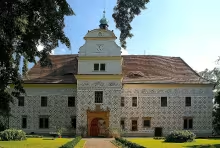
Doudleby nad Orlicí is a Renaissance castle in the Czech Republic, renowned for its unique sgrafito decoration on both exterior and interior walls. This feature distinguishes it as an exceptional example of Renaissance artistry in the region. The castle's historical importance is enhanced by its continuous ownership by the Bubnů family, except during the communist regime when it was nationalized.
The origins of Doudleby nad Orlicí date back to 1562 when Mikuláš z Bubna and na Přestavlcích acquired the estate. Initially a hunting lodge and summer residence, construction began in 1588 under Mikuláš's direction, completing by 1590. Significant Baroque renovations occurred during the early 17th century, particularly around 1630 and again between 1670-90. These changes included adding arcades and an entrance portal, reflecting evolving architectural tastes.
Architecturally, Doudleby nad Orlicí began as a simple hunting lodge with Renaissance features. The design includes a single-story building forming a closed four-winged layout around a courtyard. Its entrance is marked by a late Renaissance portal in an off-center risalit, complemented by similar but smaller structures on the opposite side. Baroque renovations introduced significant changes, such as toskánovými sloupy nesená renesanční arkáda and distinctive sgrafito decoration rediscovered during a demolition survey in the 1950s. This discovery was crucial in saving the castle from destruction.
Ownership of Doudleby nad Orlicí has seen dramatic shifts over centuries. After Mikuláš z Bubna, it remained with the Bubnů family until financial difficulties forced them to sell their estate to Veriand hrabě Windischgrätz in 1809. The castle was nationalized in 1948 but later restituted to Adam Bubn-Litic and Eleonora Dujková following the Velvet Revolution. Today, it is owned by Barbora Tomášková, a descendant of Eleonora Dujková.
Throughout its history, Doudleby nad Orlicí has witnessed significant events, especially during renovation periods and ownership changes. The castle's sgrafito decoration was pivotal in preventing its demolition in the 1950s, highlighting its cultural and historical value. Additionally, it has served as a filming location for several movies, including "Bathory" (2008), "Stáří není pro sraby" (2022), and "Krakonošovo tajemství" (2022).
Today, Doudleby nad Orlicí stands as a testament to the architectural and cultural heritage of the Renaissance period in Bohemia. Visitors can explore its richly decorated interiors, including rooms with early Baroque stucco work and preserved fireplaces from 1690. The castle's unique sgrafito decoration remains one of its most striking features, offering insight into past artistic endeavors.
Doudleby nad Orlicí is not only a remarkable piece of architectural history but also a symbol of resilience through changing political landscapes. Its preservation allows contemporary audiences to appreciate the intricate artistry and historical narratives embedded within its walls. Visitors are invited to explore this captivating site, where the echoes of history blend seamlessly with the beauty of Renaissance craftsmanship.
Historical milestones
- 1588
- Construction of the castle began.
- 1590
- Completion of the initial construction phase.
- 1630
- Baroque renovations including arcades and entrance portal.
- 1670
- Further baroque modifications by František Adam z Bubna.
Architectural development
The castle was initially constructed as a simple hunting lodge with Renaissance features. It underwent significant baroque renovations, including the addition of arcades and an entrance portal around 1630 under Jindřich Jan z Bubna, and further modifications in the late 17th century by František Adam z Bubna. The original sgrafito decoration was rediscovered during a demolition survey in the 1950s.
Historical events
Built between 1588-1590 as a hunting lodge.
Baroque renovations in early 17th century, notably around 1630 and 1670-90.
Nationalized in 1948, later saved from demolition due to its sgrafito decoration.
Owners
Mikuláš z Bubna a na Přestavlcích (1562)
Bubnové family (until 1809)
Veriand hrabě Windischgrätz (from 1809)
Nationalized in 1948
Restituted to Adam Bubn-Litic and Eleonora Dujková after the Velvet Revolution
Currently owned by Barbora Tomášková
Points of interest
- The castle's sgrafito decoration was nearly lost to history but was rediscovered during a demolition survey in the 1950s, which played a crucial role in saving Doudleby nad Orlicí from destruction. - Despite its continuous ownership by the Bubnů family for centuries, the castle was briefly nationalized during the communist regime before being returned to private hands after the Velvet Revolution.
Guide
Show guide text
Welcome to the enchanting Zámek Doudleby nad Orlicí, a jewel nestled in the heart of Doudleby nad Orlicí, Královéhradecký kraj. As you stand here, enveloped by the serene landscape, take a moment to absorb the grandeur before you—a testament to architectural brilliance and historical depth.
The story of this magnificent castle begins at the close of the 16th century. Between 1588 and 1590, Mikuláš z Bubna commissioned its construction as both a hunting lodge and summer residence. The vision was clear: to create an abode that not only served practical purposes but also stood as a symbol of prestige and artistry.
As you gaze upon the castle's façade, your eyes are immediately drawn to the exquisite sgrafito decoration—a hallmark of this Renaissance masterpiece. This intricate plasterwork, covering both exterior and interior walls, is a visual symphony crafted by master artists from northern Italy. The delicate interplay of colors and patterns tells tales of its creators' skill and imagination.
Let's delve deeper into the castle’s evolution. By 1630, Doudleby nad Orlicí had embraced Baroque influences, with significant renovations that introduced elegant arcades and a grand entrance portal. These modifications continued under František Adam z Bubna in 1670, further enhancing its architectural splendor.
The history of this castle is deeply intertwined with the legacy of the Bubnů family, who have been its custodians for centuries. Among them stand prominent figures like Mikuláš z Bubna and his successors, Jindřich Jan z Bubna and František Adam z Bubna. Their influence shaped not only the castle's physical form but also its cultural significance.
Now, allow yourself to be captivated by a fascinating twist in this tale: during a demolition survey in the 1950s, the nearly lost sgrafito decoration was rediscovered. This pivotal moment saved Doudleby nad Orlicí from destruction and restored it as an invaluable piece of heritage—a phoenix rising from the ashes.
As we conclude our journey through Zámek Doudleby nad Orlicí, I invite you to explore further and let your imagination wander through its storied halls. Every corner holds a whisper of history waiting to be uncovered. Thank you for joining me on this exploration, and may your visit leave you with lasting memories and inspiration.
Until next time, farewell from the enchanting Zámek Doudleby nad Orlicí.
Tips for visitors
The best time to visit the Renaissance castle of Doudleby nad Orlicí is during late spring or early autumn, when the weather is pleasant for exploring both the interior sgrafito decorations and the surrounding landscapes. These seasons offer comfortable temperatures and fewer crowds, allowing visitors to fully appreciate the unique architecture and natural beauty without the summer rush or winter chill.
Parking at Doudleby nad Orlicí can be accommodated in designated areas near the castle grounds. For those preferring public transport, it is accessible by bus from nearby towns; however, specific routes should be checked prior to your visit for the most current information. The combination of parking and public transportation options makes visiting this historical site convenient.
When planning a visit to Doudleby nad Orlicí, it's advisable to bring comfortable walking shoes as there are several areas within the castle grounds that may require some walking. Additionally, considering the extensive sgrafito decoration both inside and outside, bringing a camera or smartphone with a good camera can help capture these intricate details. Don't forget your water bottle and perhaps a light jacket, as indoor temperatures can vary.
Photography enthusiasts will find several spots within Doudleby nad Orlicí ideal for capturing the castle's stunning sgrafito work, especially during the golden hours of early morning or late afternoon when natural lighting enhances these details. The exterior walls facing east and west are particularly photogenic at these times. For families with children, the surrounding landscapes offer a great opportunity for outdoor activities like picnicking and exploring nature trails.
Within a 30-minute drive from Doudleby nad Orlicí, visitors can explore other historical sites that complement their experience of this Renaissance castle. The natural features typical of the Královéhradecký region provide picturesque settings for day trips or extended exploration. These nearby attractions offer additional insights into the cultural and natural heritage of the area.
Businesses nearby
Do you run a restaurant, accommodation, shop, museum, rental, wellness or other visitor service near this monument? Show yourself directly to the people heading to it — this is how they will see you in the app and on the web:
Nearby
Doudleby nad Orlicí is surrounded by picturesque landscapes typical of the Královéhradecký region, with natural features and other historical sites within a 5 km radius.
Accommodation nearby
Themed route
Tematická výletní trasa zámek Doudleby nad Orlicí
1. Zámek Doudleby nad Orlicí (zámek) Začněte svou cestu u samotného zámku, který je nejvýraznější památkou obce Doudleby nad Orlicí. Tento barokní komplex s bohatou historií nabízí nádherné interie a vynikající panoramatické vyhlídky na okolní krajinu Královéhradeckého regionu. Je to skvělý místní bod pro pochopení historického a kulturního dědictví oblasti.
2. Kostel svatého Jiří (kostel) Přibližně 1 km od zámku najdete kostel svatého Jiří, který je významnou náboženskou a historickou památkou. Jeho gotická architektura a interiér s bohatými freskami nabízejí pohled na duchovní život obce a jejího okolí v minulosti. Navštívte tento kostel pro hlubší pochopení historie a kultury místní komunity.
3. Staré nádvoří zámku (nádvoří) Po návštěvě kostela se vraťte na původní místo, abyste prozkoumali staré nádvoří zámku Doudleby nad Orlicí. Toto místo je ideální pro relaxaci a pozorování venkovského života v klidném prostředí. Je to také skvělý místní bod, kde si můžete užít přírodních zvuků a pohledů na okolní krajinu.
4. Park u zámku (park) Konečnou částí vaší trasy je procházka v parku u zámku, který nabízí krásné chodníky mezi stromy a možnost si užít klidného okamžiku na venkově. Park je ideální pro relaxaci po návštěvě historických míst a poskytuje příležitost k pozorování divoké flóry a fauny oblasti.
Tato trasa nabídne kombinaci historie, kultury a přírody v krásném prostředí Doudleby nad Orlicí.
Seasonal recommendations
Spring: As the snow melts and nature awakens, visiting Zámek Doudleby nad Orlicí during spring offers a unique experience with blooming gardens and vibrant greenery surrounding the castle. The fresh blossoms create an enchanting atmosphere that enhances the historical charm of the site. Spring is generally less crowded than summer, providing a more serene visit. Visitors are advised to wear layers due to fluctuating temperatures and check for any special opening hours as some areas may still be recovering from winter.
Summer: Summer at Zámek Doudleby nad Orlicí is ideal for those who enjoy exploring in warm weather with extended daylight hours, allowing ample time to wander through the castle grounds. The lush landscapes are particularly striking during this season, and various outdoor activities can be enjoyed under the clear skies. However, summer also brings larger crowds, so arriving early in the day is recommended to avoid long lines at popular attractions. Comfortable walking shoes and light clothing are advisable due to the heat.
Autumn: Autumn transforms Zámek Doudleby nad Orlicí into a picturesque setting with its fiery foliage, offering a magical backdrop for visitors. The cooler temperatures make it an ideal time for leisurely exploration without the summer crowds. As daylight hours shorten, planning your visit during mid-morning to early afternoon ensures you can enjoy all the site has to offer. Layered clothing is recommended to accommodate changing weather conditions throughout the day.
Winter: Visiting Zámek Doudleby nad Orlicí in winter provides a unique charm with snow-covered landscapes and a quieter atmosphere, as fewer tourists venture out during this time. The castle's architecture takes on an ethereal quality against the stark white backdrop of the surrounding area. However, some parts of the site may have restricted access due to weather conditions or shorter opening hours. Wearing warm clothing and checking ahead for any seasonal closures are essential tips for a comfortable visit in winter.
Visualizations and artistic views

Vizualizace jsou generovány umělou inteligencí a slouží jako inspirace.


Tips from visitors
No tips yet. Be the first!
Log in and add your tip.



Reviews and comments