






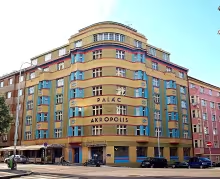
The Palác Akropolis is a modern, monumental building in Prague's Žižkov district, featuring apartments, spacious flats, a café on the ground floor, and a theatre hall in the basement. Constructed in 1927, it was initially intended as a luxury residential building, but it also housed a theatre, which was later converted into a cinema. This unique blend of residential and cultural spaces makes the Palác Akropolis a notable landmark in Prague's history.
The Palác Akropolis was designed by architect Rudolf V. Svoboda and constructed in 1927. The building's design reflects the city's desire for modernity and innovation in the 1920s and 1930s. The building's architecture and artistic form are characterized by modern materials and cutting-edge techniques. The theatre hall was designed as a modern and innovative space, featuring a unique design and advanced technology.
The building has undergone several transformations over the years, including a period of decline and abandonment. The theatre was converted into a cinema in the 1940s, and the building was sold to Krematorium in the 1930s. The building was managed by various individuals, including Prokop Laitrich, Karel Želenský, and Jiří Koldovský. Today, the Palác Akropolis is a thriving cultural center, hosting various performances and events.
The Palác Akropolis is a significant cultural institution in Prague, with a rich history and a unique blend of residential and cultural spaces. Its theatre hall, which was originally opened in 1928 with a performance of Mahen's play Ulička odvahy, has been restored and now hosts a variety of performances and events. The building's café and bars offer a cozy atmosphere, and the surrounding area is filled with other cultural institutions and residential buildings.
The Palác Akropolis is worth visiting for its unique history, architecture, and cultural significance. Visitors can explore the theatre hall, café, and bars, and attend one of the many performances and events that take place here. The building's restoration and current use as a cultural center make it a must-see destination for anyone interested in Prague's history and culture.
Historical milestones
- 1927
- Construction of the building began
- 1928
- The theatre hall was opened with a performance of Mahen's play Ulička odvahy
- 1930
- The building was sold to Krematorium
- 1940
- The theatre was converted into a cinema
Architectural development
The building was constructed in 1927 using modern materials and techniques. It was designed to be a luxury residential building with a theatre hall in the basement. The building has undergone several transformations over the years, including a period of decline and abandonment. In the 1940s, the theatre was converted into a cinema.
Historical events
The building was constructed in 1927
The theatre hall was opened in 1928 with a performance of Mahen's play Ulička odvahy
The building was sold to Krematorium in the 1930s
The theatre was converted into a cinema in the 1940s
Owners
The building was initially owned by Rudolf V. Svoboda, then it was sold to Krematorium, which later changed its name to Spolek přátel žehu. The building was also managed by various individuals, including Prokop Laitrich, Karel Želenský, and Jiří Koldovský.
Points of interest
– The Palác Akropolis was initially intended as a luxury residential building, but it also housed a theatre, which was later converted into a cinema, making it a unique blend of residential and cultural spaces.
– The theatre hall was designed as a modern and innovative space, featuring a unique design and advanced technology, and was originally opened in 1928 with a performance of Mahen's play Ulička odvahy.
– The building was managed by various individuals, including Prokop Laitrich, Karel Želenský, and Jiří Koldovský, and was sold to Krematorium in the 1930s.
Guide
Show guide text
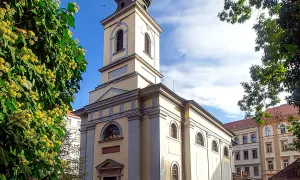
Welcome! You are standing before the Akropolis Palace, a monumental modern building complex in Prague's Žižkov district. Right now, you're looking at its corner where two buildings meet. Take note of the architectural details designed by Rudolf V. Svoboda and realized in 1927. The Akropolis Palace was originally intended as a luxurious residential complex, but it also housed a theater that was later converted into a cinema.
Let's step back in time a bit and realize that the Akropolis Palace has a rich history. In 1928, the premiere of Alois Jirásek's play Ulička odvahy took place in its theater hall. A year later, the complex was sold to the Krematorium company, and by 1940, the theater hall had been converted into a cinema. Thus, the Akropolis Palace is a unique example of combining residential and cultural space.
Notice the facade of the building where you can see that architect Rudolf V. Svoboda used modern elements that were very innovative at the time. The Akropolis Palace is a symbol of Prague, which rapidly changed and developed in the 20th century. It's a place where art, culture, and everyday life meet.
Now focus on how the Akropolis Palace functioned as a cultural center. It was a venue for various cultural events, theatrical performances, and film premieres. The Akropolis Palace is also a symbol of how Prague has changed over time and become the city known worldwide today.
So if you haven't yet visited the Akropolis Palace, it's time to take a look and explore its beautiful architecture and rich history. It's a place that will fascinate you and make you a true expert on Prague. We bid farewell to the Akropolis Palace, but we hope to see you again soon.
Tips for visitors
The best time to visit the Palác Akropolis is during the spring and summer months when the weather is pleasant and the surrounding park is in full bloom.
The Palác Akropolis is easily accessible by public transportation. You can take a bus or tram to the nearby stops and then walk to the palace.
It's a good idea to bring a camera to capture the stunning architecture and beautiful views of the city from the palace's rooftop.
If you're visiting with children, the Palác Akropolis has a children's play area and a theatre hall that hosts various performances and events.
The Palác Akropolis is surrounded by other cultural institutions, including the Žižkov Television Tower and the National Museum.
Businesses nearby
Nearby
The Palác Akropolis is located in the Žižkov district of Prague, surrounded by other residential buildings and cultural institutions.
Accommodation nearby
Trips and activities nearby
Guided tours, tickets and activities nearby from GetYourGuide
Search tours and activities →Themed route
Žižkov Television Tower The Žižkov Television Tower is a 216-meter-high observation tower that offers views of the city. It's worth visiting for its unique architecture and panoramic view of Prague.
Žižkov Cemetery Žižkov Cemetery is one of the largest cemeteries in Prague, offering peaceful walks and interesting tombs. It's worth visiting for its history and artistic monuments.
Akropolis Palace Akropolis Palace is a modern complex with a cinema, restaurants, and retail spaces. It's worth visiting for its modern architecture and wide range of services.
Žižkov Square Žižkov Square is a small square in the heart of Žižkov that offers peaceful walks and views of the surroundings. It's worth visiting for its tranquil atmosphere and proximity to other interesting places.
Seasonal recommendations
Jaro
Spring is the ideal time to visit Palác Akropolis. The atmosphere is full of life and energy, as if the building were waking up from its winter slumber. The lighting is soft and warm, like the sun awakening in the hearts of visitors. Practical tips: Visit Palác Akropolis in March or April when crowds are smaller than during the main summer season. We recommend bringing an umbrella, as it can still rain in these months. The best time to visit is in the morning hours when there are fewer people and you can explore the site in peace.
Summer
Summer is the peak season for visitors to Palác Akropolis. Prague is full of life and energy, and so is Palác Akropolis bustling with tourists. The lighting is bright and vibrant, as if the sun were shining directly into the heart of the building. Practical tips: Visit Palác Akropolis in July or August but arrive early, as crowds are enormous. We recommend bringing sunscreen and water, as summer weather can be very hot. The best time to visit is in the morning hours when there are still fewer people.
Autumn
Autumn is a beautiful season to visit Palác Akropolis. The atmosphere is calm and soothing, as if nature were preparing for winter. The lighting is soft and warm, like the sun meeting cold winds. Practical tips: Visit Palác Akropolis in September or October when crowds are smaller than during the main summer season. We recommend bringing an umbrella, as it can still rain in these months. The best time to visit is in the afternoon hours when there are fewer people and you can explore the site in peace.
Winter
Winter is a calm and soothing season to visit Palác Akropolis. The atmosphere is quiet and serene, as if the building were resting in its winter slumber. The lighting is soft and warm, like the sun shining through snow-covered cliffs. Practical tips: Visit Palác Akropolis in December or January but remember to bring warm clothing, as it can be quite cold in Prague. We recommend bringing a scarf or sunglasses for snow protection, as snow-covered streets can be hazardous. The best time to visit is in the afternoon hours when operating hours are shorter and you can explore the site in peace.
Visualizations and artistic views

Vizualizace jsou generovány umělou inteligencí a slouží jako inspirace.


Tips from visitors
No tips yet. Be the first!
Log in and add your tip.
Location on the map

Příběhy a pověsti
Legendy, pověsti a příběhy spjaté s touto památkou
Reviews and comments