





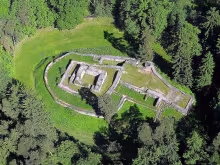
Kozí hrádek, known as 'Little Goat Castle' in English, is a medieval Gothic ruin near Sezimovo Ústí in the South Bohemian Region of the Czech Republic. This historical site is significant due to its association with Jan Hus, a key figure in church reform during the early 15th century. The castle stands on a rocky promontory above the stream Kozský potok and is recognized as a national cultural monument for its connection to Hus's life.
The origins of Kozí hrádek trace back to the 14th century, with its first documented mention in 1377 when it was held by Vlček of Kozí. Ownership passed through several noble families, including the Lords of Hardegg and Jindřich I of Hradec, before being acquired by Vilém of Újezd in 1406. This marked the beginning of the Kozský family's association with the castle.
Architecturally, Kozí hrádek was a donjon-type castle featuring a rectangular stone residential tower at its core. The structure included inner and outer defensive walls, an earthen rampart topped by a wooden palisade, and a deep water moat up to 20 meters wide. Access to the castle was via a wooden bridge leading to a drawbridge at the gate tower.
The most notable period in Kozí hrádek's history occurred between 1412 and 1414 when it served as a refuge for Jan Hus. During his stay, Hus continued his reformist preaching and authored several important theological works, including De ecclesia (On the Church). The castle's significance was further underscored by its destruction in 1438 during the Hussite Wars, likely due to fire set by King Albert II of Habsburg's troops.
Following its abandonment after the wars, Kozí hrádek became a source of building materials for local villagers. Systematic archaeological efforts began in 1886 and continued into the early 20th century, revealing over 250 artifacts now housed at the Hussite Museum in Tábor. The site has been conserved since 1929 and is currently owned by Sezimovo Ústí.
Today, Kozí hrádek stands as a testament to its turbulent past and its role in religious reform history. Visitors can explore the ruins via marked tourist trails or cycle path 1026, gaining insight into the life of Jan Hus and the broader context of Bohemian religious upheaval. The site's historical significance and well-preserved state make it a compelling destination for those interested in medieval architecture and church history.
Historical milestones
- 1412
- Jan Hus stayed at Kozí hrádek in autumn.
- 1413
- Jan Hus continued his stay until spring 1414, working on significant writings.
- 1438
- The castle likely burned down during a military campaign.
Architectural development
Kozí hrádek was originally surrounded by a moat with a palisade, featuring a two-part structure divided by a substantial stone wall. The main entrance led through an earthen rampart to the keep, which was accessible via a wooden bridge. Over time, the castle served as a source of building materials and gradually fell into ruin.
Historical events
Jan Hus stayed at Kozí hrádek in the autumn of 1412 and from spring 1413 to spring 1414, where he preached and worked on his writings.
The castle likely burned down during a military campaign by Albrecht II Habsburg in 1438.
Owners
The first recorded owner of Kozí hrádek was Vlček z Kozího in 1377, followed by Jan z Hardeka from 1391, Jindřich z Hradce from 1406, and then Vilém z Újezda. The castle later became associated with Jan Hus.
Points of interest
- Despite its name meaning 'Little Goat Castle,' there is no historical evidence to suggest that goats were ever a significant part of life or symbolism at Kozí hrádek. The name likely derives from the rocky promontory it stands on, which resembles a goat's head.
- An intriguing legend suggests that Jan Hus used secret tunnels within Kozí hrádek to escape during his time there. While no physical evidence of such tunnels has been found, this story adds an element of mystery and intrigue to his stay at the castle.
Guide
Show guide text
Welcome to the historic site of Kozí hrádek, or as it is known in German, Ziegenburg. As you stand here amidst the serene landscape near Sezimovo Ústí in the Tábor District, imagine yourself surrounded by the remnants of a once-majestic Gothic castle perched on an island within the Kozský potok river. With its elevation at approximately 405 meters, this well-preserved ruin offers not only breathtaking views but also a deep dive into history.
Kozí hrádek was more than just a stronghold; it played a pivotal role in the life of Jan Hus, a key figure in church reform during the early 15th century. In autumn 1412, this castle welcomed Jan Hus, marking the beginning of his significant stay that continued until spring 1414. During this time, he worked on writings that would leave an indelible mark on religious history.
As you explore, take a moment to appreciate the architectural remnants that whisper tales of their former glory. The site's strategic location and its fortifications speak volumes about its historical importance. Although specific details about the architects remain unknown, the castle's design reflects typical Gothic influences, characterized by robust structures meant to withstand sieges and time.
Among the key figures associated with Kozí hrádek is none other than Jan Hus himself. His presence here underscores the site’s significance during a turbulent period in European history. It was at this very location that Hus found refuge and inspiration, contributing profoundly to religious discourse and reform.
An intriguing aspect of Kozí hrádek's story lies in its name. Despite translating to 'Little Goat Castle,' there is no historical evidence suggesting goats played any role here. The name likely stems from the rocky promontory resembling a goat’s head—a fascinating tidbit that adds a layer of mystery to this historic site.
As you continue your exploration, let the atmosphere envelop you and ponder the lives intertwined with this place's history. Kozí hrádek invites you not only to witness its physical remnants but also to engage with the stories and legacies left behind by those who once walked these grounds.
We encourage you to delve deeper into the rich tapestry of history that surrounds this site. Take your time to absorb the surroundings, imagine the past, and reflect on the impact of figures like Jan Hus. Thank you for joining us at Kozí hrádek, where every stone tells a story. Enjoy your journey through history!
Tips for visitors
The best time to visit Kozí hrádek is during late spring or early autumn when the weather is mild, and the surrounding landscape of the Kozský potok river is particularly picturesque. During these seasons, you can enjoy pleasant temperatures for exploring both the ruins and the nearby nature trails without the crowds that often come in peak summer months.
Parking and transportation to Kozí hrádek are convenient. There are parking options available near Sezimovo Ústí, from where marked tourist trails lead directly to the site. Alternatively, you can reach the area via cycle path 1026 or use public transport; for specific routes and schedules, it's best to check a local transportation website or app.
When visiting Kozí hrádek, bring comfortable walking shoes as there are some uneven paths leading to the ruins. A hat, sunscreen, and water are also recommended due to the outdoor nature of the site. Additionally, consider bringing binoculars for bird watching along the riverbank and a camera or smartphone for capturing the scenic views.
For photography enthusiasts, early morning or late afternoon offers the best light conditions at Kozí hrádek, casting dramatic shadows across the ruins and enhancing the natural beauty of the landscape. The viewpoint from the opposite bank of the Kozský potok provides an excellent perspective for wide-angle shots of the castle ruins.
Nearby attractions within a 30-minute drive include Měšice village, which offers charming local architecture and a glimpse into rural Czech life. Additionally, you can explore Jezero, a nearby lake that is perfect for a leisurely walk or picnic. These sites complement your visit to Kozí hrádek with cultural and natural experiences.
Businesses nearby
Do you run a restaurant, accommodation, shop, museum, rental, wellness or other visitor service near this monument? Show yourself directly to the people heading to it — this is how they will see you in the app and on the web:
Nearby
The site is accessible via marked tourist trails from Sezimovo Ústí to Jezero or by cycle path 1026. The surrounding landscape includes the Kozský potok river and nearby Měšice village.
Accommodation nearby
Themed route
Thematic Walking Tour: Discovering the Ruins of Kozí Hrádek and its Surroundings
1. Sezimovo Ústí - *Type:* Town Center - *Why Visit:* Begin your journey in Sezimovo Ústí, a charming town known for its rich history and cultural heritage. It's the perfect starting point to explore the region’s historical significance before heading towards Kozí Hrádek.
2. Kozský Potok River - *Type:* Natural Feature - *Why Visit:* Follow the marked tourist trails that meander alongside the serene Kozský potok river. This picturesque route offers a peaceful walk through lush landscapes, providing an ideal setting to appreciate nature and prepare for exploring the ancient ruins.
3. Kozí Hrádek - *Type:* Historical Ruin - *Why Visit:* The main highlight of this tour is Kozí Hrádek, a captivating medieval castle ruin perched on a hilltop. Its strategic location offers breathtaking views and insights into its historical role as a defensive stronghold in the region.
4. Měšice Village - *Type:* Nearby Settlement - *Why Visit:* After exploring Kozí Hrádek, visit Měšice village to experience local culture and history. This quaint village provides an authentic glimpse of life in the Jihočeský kraj region and complements your exploration of historical sites.
5. Jezero - *Type:* Destination Point - *Why Visit:* Conclude your tour at Jezero, a scenic destination accessible via marked trails from Sezimovo Ústí. This area offers beautiful landscapes and is an excellent spot for relaxation after a day of exploration.
This thematic walking tour combines historical intrigue with natural beauty, offering a comprehensive experience of the Kozí Hrádek region.
Seasonal recommendations
Spring: Visiting Kozí Hrádek during spring offers a unique opportunity to experience the rebirth of nature as wildflowers begin to bloom around the ruins, creating a picturesque backdrop. The gentle warmth and longer daylight hours make it an ideal time for exploration without the summer crowds. However, be prepared for occasional showers that can add a fresh scent to the air but might also lead to muddy paths. Wearing comfortable walking shoes and layers is advisable, as temperatures can vary throughout the day.
Summer: Summer at Kozí Hrádek is marked by lush greenery and vibrant colors, with the castle ruins set against a backdrop of thriving flora. This period sees peak visitor numbers, so arriving early in the morning or later in the afternoon can help avoid crowds. The longer days provide ample time for exploration, but it's important to stay hydrated and wear sun protection due to the stronger sunlight. Light, breathable clothing is recommended to keep cool during your visit.
Autumn: Autumn brings a stunning transformation to Kozí Hrádek as the foliage turns into shades of orange, red, and gold, offering breathtaking views that are particularly popular among photographers. The cooler temperatures make for comfortable wandering through the ruins without the summer heat. However, it's wise to check the weather forecast, as autumn can be unpredictable with sudden rain showers. Wearing waterproof layers and sturdy shoes is advisable, along with bringing a camera to capture the seasonal beauty.
Winter: Winter at Kozí Hrádek offers a serene and atmospheric experience, with snow-covered ruins creating a mystical landscape that's especially enchanting during sunrise or sunset. The shorter days mean planning your visit carefully to make the most of the daylight hours, and it's important to note that some paths may be less accessible due to snow or ice. Dress warmly in layers, wear waterproof boots, and consider bringing gloves and a hat for comfort as you explore the historic site during this tranquil season.
Visualizations and artistic views

Vizualizace jsou generovány umělou inteligencí a slouží jako inspirace.


Tips from visitors
No tips yet. Be the first!
Log in and add your tip.


Reviews and comments