





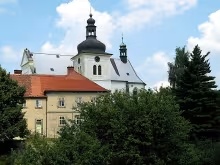
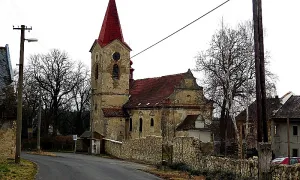
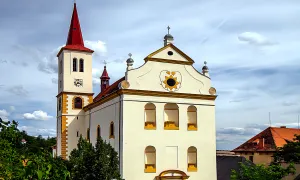
The Church of the Three Kings in Libouchec is a notable historical monument situated on a gentle hill overlooking the main road through Libouchec, within an extensive cemetery. This late Gothic sacred building has been protected as a cultural monument of the Czech Republic due to its rich history and architectural transformations over centuries. Originally constructed in the late Gothic style, it underwent significant changes during the Renaissance and Baroque periods, reflecting shifts in ownership and religious affiliations.
The first documented mention of the church dates back to 1357 when Beneš z Vartenberka appointed a new parish priest, indicating its early significance within the community. Over time, the church experienced various transformations, notably during the Renaissance period in 1569 following a change in property ownership. This period marked a shift towards Lutheran practices under the lords from Bynov, who were of Saxon origin. However, after the Thirty Years' War and changes in land ownership, the church returned to Catholic hands due to the enforcement of the Renewed Constitution.
Architecturally, the Church of the Three Kings began as a late Gothic structure but was later transformed into Renaissance style in 1569. A significant Baroque renovation followed a tragic accident in 1699 when part of the ceiling collapsed. This period saw modifications to the nave, presbytery, and tower, including the addition of a gate and staircase. The church houses a baptismal font and pulpit from the abandoned Bynov castle, adding to its historical intrigue.
Ownership of the church has seen dramatic changes over the centuries. Initially associated with Beneš z Vartenberka, it later became Lutheran under the lords from Bynov. Following the Thirty Years' War, it returned to Catholic hands due to changes in land ownership and the enforcement of the Renewed Constitution. These shifts reflect broader historical and religious dynamics within the region.
Key events in the church's history include its Renaissance transformation in 1569 and the Baroque reconstruction after the ceiling collapse in 1699. In 1723, a varhanní pozitiv by Christoph Standfuss was acquired, adding to the church's musical heritage. However, in 1935, the original Feller organs were replaced with less acclaimed ones from Rieger of Krnov.
Today, the Church of the Three Kings stands as a testament to its rich historical and architectural legacy. It remains accessible to visitors who are interested in exploring its unique blend of Gothic, Renaissance, and Baroque elements. The church's significance is further enhanced by its location on a gentle hill overlooking Libouchec, offering a serene environment for reflection. Its preservation as a cultural monument underscores its importance within the Czech Republic's heritage, making it a worthwhile destination for those interested in history and architecture.
Historical milestones
- 1357
- First documented mention with Beneš z Vartenberka appointing a new parish priest.
- 1569
- Renaissance transformation following a change in property ownership.
- 1699
- Baroque reconstruction after the collapse of part of the ceiling.
Architectural development
The church began as a late Gothic structure and was later transformed into Renaissance style in 1569. A significant Baroque renovation followed a tragedy in 1699 when a section of the roof collapsed. This period saw modifications to the nave, presbytery, and tower, including the addition of a gate and staircase.
Historical events
First documented mention in 1357 when Beneš z Vartenberka appointed a new parish priest.
Renaissance transformation in 1569 following a change in property ownership.
Baroque reconstruction after a tragic accident in 1699, where part of the ceiling collapsed.
Owners
The church was initially associated with Beneš z Vartenberka in 1357. It later became Lutheran under the ownership of the lords from Bynov, who were from Saxony. Following the Thirty Years' War, it returned to Catholic hands due to changes in land ownership and the enforcement of the Renewed Constitution.
Points of interest
– The Church of the Three Kings features a baptismal font and pulpit originally from the now-abandoned Bynov castle, linking it to the region's noble history. – In 1723, the church acquired a varhanní pozitiv by Christoph Standfuss, adding an intriguing musical dimension to its historical narrative. – The original Feller organs installed in the church were replaced with ones from Rieger of Krnov in 1935, reflecting changes in musical tastes and technology over time.
Guide
Show guide text
Welcome to the Church of the Three Kings in Libouchec, a remarkable testament to architectural evolution and cultural heritage nestled on a gentle hill overlooking the main road through this charming locality. As you stand here, take a moment to absorb the serene atmosphere and the way this sacred building harmoniously blends with its surroundings, including an extensive cemetery that adds to its historic aura.
The story of this church begins in 1357 when it was first documented, marking a significant chapter in the region's religious history. Beneš z Vartenberka, a notable historical figure, appointed a new parish priest at this time, signifying the church’s importance as a spiritual center. Over the centuries, the Church of the Three Kings has witnessed transformations that reflect broader architectural and cultural shifts. In 1569, during the Renaissance period, it underwent significant changes following a change in property ownership, which introduced new stylistic elements to its structure.
By 1699, another chapter unfolded as part of the church's ceiling collapsed, leading to Baroque reconstruction efforts. These periods of transformation have left their mark on the building, offering you glimpses into the past through its architectural details. As you explore, notice how these historical layers contribute to the unique character of this sacred site.
The Church of the Three Kings is not just a structure but a vessel carrying stories and connections to notable personalities from history. Beneš z Vartenberka's involvement in its early days links it directly to the region’s noble past. Moreover, the church holds treasures like the baptismal font and pulpit originally from Bynov castle, which was abandoned over time. These artifacts serve as tangible links to the area's aristocratic heritage.
In 1723, the church acquired a varhanní pozitiv crafted by Christoph Standfuss, adding an intriguing musical dimension to its historical narrative. This addition not only enriched the church’s cultural offerings but also connected it with broader artistic movements of the time.
As you continue your visit, let yourself be drawn into the stories and mysteries that this place holds. Each stone, artifact, and architectural nuance has a tale to tell, inviting you to delve deeper into its history and significance.
We invite you to explore further, perhaps wandering through the cemetery or simply sitting for a moment in quiet reflection of the church’s storied past. Thank you for joining us on this journey through time at the Church of the Three Kings. As we conclude our audio guide, may your visit inspire curiosity and appreciation for the rich tapestry of history that surrounds us here in Libouchec. Farewell, and may your explorations be ever rewarding.
Businesses nearby
Do you run a restaurant, accommodation, shop, museum, rental, wellness or other visitor service near this monument? Show yourself directly to the people heading to it — this is how they will see you in the app and on the web:
Nearby
The church is situated on a gentle hill overlooking the main road through Libouchec and is surrounded by an extensive cemetery. The area features natural landscapes typical of the Ústecký region.
Accommodation nearby
Trips and activities nearby
Guided tours, tickets and activities nearby from GetYourGuide
Search tours and activities →Themed route
Tematická Výletní Trasa: Kostel Tří králů (Libouchec)
1. Kostel Tří králů - *Typ:* Historická památka - *Proč stojí za návštěvu:* Kostel Tří králů je ikonickým duchovním a historickým centrem obce Libouchec. Jeho architektura zastoupená gotickými prvky přitahuje všechny, kteří mají rádi historii i umění. Kostel je také známý svým pohledem na okolní krajinu a místní cestovatele často oslovuje jeho klidná atmosféra.
2. Hřbitov - *Typ:* Historický hřbitov - *Proč stojí za návštěvu:* Obklopující kostel rozkládá se rozsáhlý hřbitov, který je nejen místo odpočinku pro mnoho generací obyvatel Libouchec, ale také architektonickou perli s několika památkově chráněnými hrobky a pomníky. Prozkoumání tohoto místa nabízí pohled na místní historii a tradice.
3. Věž kostela - *Typ:* Historická věž - *Proč stojí za návštěvu:* Výstup do věže kostela Tří králů nabízí jedinečnou příležitost prohlédnout se na okolní krajinu Ústeckého kraje. Zde můžete užít panoramatický pohled a pochopit, jak bylo místo v minulosti strategicky důležité.
4. Okolní cesta kolem hřbitova - *Typ:* Krátká procházka - *Proč stojí za návštěvu:* Procházka kolem hřbitova nabízí klidný způsob, jak si užít přírodní krásy oblasti. Tato cesta je ideální pro ty, kteří chtějí po návštěvě kostela a hřbitova odpočinout a absorbovat klidnou atmosféru místa.
5. Nádvoří kostela - *Typ:* Historické nádvoří - *Proč stojí za návštěvu:* Nádvoří před Kostelem Tří králů je vhodné pro relaxaci a reflektování. Místo nabízí klidnou atmosféru, kde můžete si užít okamžik sám sebou nebo v společnosti přátel, zatímco si povšimnete detailů kostela a jeho historického kontextu.
Tato trasa nabízí návštěvníkům komplexní pohled na Kostel Tří králů a jeho bezprostřední okolí, respektující přitom lokální historii i přírodní krásy regionu.
Seasonal recommendations
Spring: Visiting the Church of the Three Kings in Libouchec during spring offers a unique experience as nature begins to awaken from its winter slumber. The church grounds are adorned with fresh greenery and blooming flowers, creating a vibrant and picturesque setting that enhances the historical beauty of the site. The soft, diffused light of spring days casts gentle shadows over the intricate stonework, adding depth and warmth to your visit. This is an ideal time for photography enthusiasts looking to capture the church in its most colorful state. However, be mindful of occasional rain showers typical of this season; wearing a waterproof jacket or carrying an umbrella might be wise. Early morning visits are recommended to avoid larger crowds that gather later in the day as temperatures rise.
Summer: Summer at the Church of the Three Kings is characterized by long days and warm weather, making it perfect for leisurely exploration. The lush greenery around the church provides a refreshing backdrop, while the bright sunlight accentuates the architectural details, creating stunning visual contrasts. This season often attracts more visitors due to its favorable conditions, so arriving early in the morning can help you avoid the peak tourist hours. Comfortable walking shoes and light clothing are advisable for navigating the site comfortably. Additionally, carrying water is essential as temperatures can soar during midday.
Autumn: Autumn brings a distinct charm to the Church of the Three Kings with its rich tapestry of warm colors. The surrounding landscape transforms into shades of red, orange, and gold, offering a stunning natural complement to the church's historical architecture. This season provides an ideal opportunity for photography, capturing the interplay between falling leaves and the timeless facade. As temperatures begin to drop in late autumn, dressing in layers is recommended to stay comfortable during your visit. The cooler weather also means fewer crowds, allowing for a more peaceful experience.
Winter: Winter at the Church of the Three Kings offers a serene and magical atmosphere as snow blankets the surrounding landscape, creating a picturesque setting that feels almost otherworldly. The church's stone architecture takes on an ethereal quality under the soft glow of winter sunlight or against the backdrop of a starry night sky. However, visiting in winter requires preparation for colder temperatures; dressing warmly with layers and wearing insulated footwear is essential. Be aware that opening hours may be reduced during this season, so checking ahead before your visit is advisable. Despite these challenges, the quietude and beauty of the church in winter make it a rewarding experience for those who venture out.
Visualizations and artistic views

Vizualizace jsou generovány umělou inteligencí a slouží jako inspirace.


Atmosphere of the place
Atmospheric visualization of the setting and era
Tips from visitors
No tips yet. Be the first!
Log in and add your tip.




Reviews and comments