





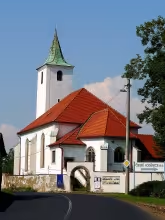
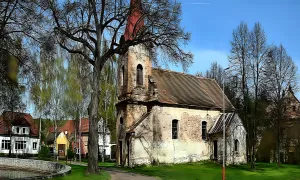
The Church of Saint Wenceslas in Valtířov is a notable Gothic-Renaissance sacred building situated on a prominent rocky outcrop above the Elbe River's right bank. Constructed between 1573 and 1574, it replaced an earlier structure first mentioned in 1352. This church has been protected as a cultural monument of the Czech Republic since its establishment. It served as a Lutheran church during the pre-White Mountain period before undergoing modifications in the late 18th century.
The original parish church, serving several villages, was documented in 1352 and likely consisted of a small wooden structure. By the mid-16th century, it had been replaced by the current building, constructed between 1573 and 1574 by architects Bedřich and Jindřich Abrahám ze Salhausenu. The church's construction reflects the religious and cultural transitions of late 16th-century Bohemia, a period marked by significant tensions between Catholic and Protestant factions leading up to the Thirty Years' War.
Architecturally, the Church of Saint Wenceslas features a simple yet robust design with single buttress supports for both the nave and presbytery. The interior is characterized by a star-vaulted cross-ribbed ceiling supported on a central column, creating a hall-like double-nave structure. The church's main altar, crafted from polychrome sandstone around 1580 by M. Jobst of Pirna, includes intricate reliefs and sculptures that highlight its Renaissance influences.
Throughout its history, the church has seen various modifications and additions. In 1780, a sacristy and oratory were added to the structure. A significant architectural modification occurred in 1783, yet these changes did not alter the original design intent of the builders. The church also houses several epitaphs from the late 16th and early 17th centuries, including a notable one for the Bock family created by David Schwenke in 1615.
Today, the Church of Saint Wenceslas stands as a testament to its historical and architectural significance. Its location on a striking rocky outcrop offers scenic views of the surrounding landscape. Visitors can appreciate its original Renaissance interior elements and the rich history encapsulated within its walls. This monument is not only a place of worship but also a cultural landmark that invites exploration and reflection on its storied past.
Historical milestones
- 1352
- The original parish church was first mentioned in the records of the Ústí nad Labem deanery for papal tithes.
- 1573
- Construction of the current Church of Saint Wenceslas began.
- 1574
- Construction of the current Church of Saint Wenceslas was completed.
- 1780
- A sacristy and oratory were added to the church.
- 1783
- The church underwent significant architectural modifications.
Architectural development
The Church of Saint Wenceslas was built on the site of an earlier structure between 1573 and 1574 by architects Bedřich and Jindřich Abrahám ze Salhausenu. It features a simple, robust design with single buttress supports for both the nave and presbytery. The church's interior is characterized by a star vaulted cross-ribbed ceiling supported on a central column, creating a hall-like double-nave structure.
Historical events
The original wooden structure, serving as a parish church for several villages, was replaced by the current building between 1573 and 1574.
In 1780, a sacristy and oratory were added to the church.
A significant architectural modification occurred in 1783.
Points of interest
- The Church of Saint Wenceslas in Valtířov was originally a Lutheran church before becoming Catholic post the Thirty Years' War, reflecting the shifting religious landscape of Bohemia during that era.
- Despite its Gothic-Renaissance architecture, the church's interior features a star-vaulted cross-ribbed ceiling, an uncommon design choice for sacred buildings from this period in Bohemia, symbolizing both artistic innovation and structural ingenuity.
Guide
Show guide text
Welcome to the stunning Church of Saint Wenceslas in Valtířov, a remarkable testament to both Gothic and Renaissance architectural styles. As you stand here on this prominent rocky outcrop above the Elbe River's right bank, take a moment to absorb your surroundings. The church towers majestically before you, its historical presence enhanced by the natural beauty of the landscape.
This sacred building has a rich history that dates back centuries. Originally mentioned in 1352 as part of the Ústí nad Labem deanery records for papal tithes, it was then a parish church. However, the structure we see today began its journey towards completion between 1573 and 1574, replacing an earlier edifice. This period marked significant architectural innovation under the guidance of architects Bedřich Abrahám ze Salhausenu and Jindřich Abrahám ze Salhausenu.
As you look around, notice how the church's exterior blends seamlessly with its surroundings, while hinting at its complex history through subtle architectural details. The transition from a Lutheran to a Catholic place of worship after the Thirty Years' War is embedded in its very walls, reflecting the shifting religious landscape of Bohemia during that era.
Inside, you'll find yourself enveloped by the church's unique interior features. A star-vaulted cross-ribbed ceiling draws your gaze upwards, inviting contemplation and admiration for the craftsmanship involved. This architectural detail exemplifies the fusion of Gothic and Renaissance influences that define this sacred space.
Throughout its history, the Church of Saint Wenceslas has been a silent witness to numerous stories and transformations. Although specific historical figures associated with it remain largely unknown, the church itself stands as a testament to resilience and adaptation over centuries.
One intriguing aspect of this site is how it encapsulates the broader narrative of religious and cultural shifts within Bohemia. The addition of a sacristy and oratory in 1780, followed by significant architectural modifications in 1783, further illustrate its evolving role in the community's spiritual life.
As we conclude our visit to this remarkable church, I encourage you to linger for a moment longer, absorbing not just the visual splendor but also the deep historical resonance of what stands before you. May your exploration inspire curiosity and appreciation for the layers of history that have shaped this extraordinary place. Thank you for joining me on this journey through time at the Church of Saint Wenceslas in Valtířov.
Tips for visitors
The best time to visit the Church of Saint Wenceslas in Valtířov is during late spring or early autumn. During these months, the weather is typically mild, making it ideal for exploring both the church and its stunning natural surroundings. The landscape offers picturesque views with vibrant foliage in the fall or blooming flowers in the spring, enhancing your experience of this historic site.
Parking and transport options are convenient for visitors to Valtířov. There is parking available near the road that leads up to the church, approximately 8 km east of Ústí nad Labem's Střekov district. For those preferring public transportation, both car and public transit can be used to reach this location; however, it is recommended to check current routes and schedules in a travel planner or online for the most accurate information.
When visiting the Church of Saint Wenceslas, it’s advisable to bring comfortable walking shoes as you’ll likely want to explore the rocky outcrop surrounding the church. Additionally, consider bringing water, sunscreen, and perhaps a hat if you plan on spending time outdoors enjoying the views. A camera is also recommended to capture the scenic landscapes and architectural beauty of the site.
For photography enthusiasts, some of the best spots around the Church of Saint Wenceslas include the rocky outcrop itself, which offers panoramic views of the Elbe River and the surrounding natural rock formations. The lighting is particularly beautiful during the golden hours—shortly after sunrise or before sunset—as it casts a warm glow over the landscape, enhancing the textures of the rocks and the church’s Gothic-Renaissance architecture.
Nearby attractions within 30 minutes include other scenic spots along the Elbe River that offer hiking opportunities and more natural beauty. These areas provide additional exploration for those interested in nature or looking to extend their visit beyond the church itself.
Businesses nearby
Do you run a restaurant, accommodation, shop, museum, rental, wellness or other visitor service near this monument? Show yourself directly to the people heading to it — this is how they will see you in the app and on the web:
Nearby
The church stands on a striking rocky outcrop above the Elbe River, near a road approximately 8 km east of Ústí nad Labem's Střekov district. The surrounding landscape includes natural rock formations and offers scenic views.
Accommodation nearby
Trips and activities nearby
Guided tours, tickets and activities nearby from GetYourGuide
Search tours and activities →Themed route
Tematická výletní trasa kolem Kostela svatého Václava (Valtířov)
1. Kostel svatého Václava (Valtířov) - *Typ:* Historická památka - *Proč stojí za návštěvu:* Tento kostel, postavený na výrazném skalním útesu nad řekou Labe, je nejen architektonickou perli, ale také nabízí jedinečné pohledy na okolní krajinu. Jeho historie a umístění činí z něj ideální výchozí bod pro prozkoumání regionu.
2. Přirozená skalní formace kolem kostela - *Typ:* Přírodní zajímavost - *Proč stojí za návštěvu:* Okolní skalní tvary poskytují fascinující pohledy a jsou svědectvím geologické historie oblasti. Jsou ideální pro krátký průchod nebo prozkoumání, což dodatečně zesiluje dojemné prostředí kostela.
3. Pohlednice nad řekou Labe - *Typ:* Místní výhled - *Proč stojí za návštěvu:* Z okolních skal lze užít panoramatického pohledu na řeku Labe a její břehy. Tento výhled je perfektní pro fotografii nebo jen pro relaxaci s nádherným zrakovým dojmem.
4. Pěší stezka podél řeky - *Typ:* Přírodní stezka - *Proč stojí za návštěvu:* Krátká pěší stezka vedoucí podél řeky nabízí příležitost prozkoumat okolní krajinu a užít si klidné chvilky v přírodě. Je to ideální způsob, jak se vrátit k kostelu nebo pokračovat ve svém výletu.
Tato trasa nabízí kombinaci historického a přírodního zážitku, což ji činí ideální pro každého, kdo chtěl by objevit krásy oblasti kolem Kostela svatého Václava v Valtířově.
Seasonal recommendations
Spring: Visiting the Church of Saint Wenceslas in Valtířov during spring offers a unique experience as nature awakens, enveloping the historic site in vibrant colors and fresh blooms. The soft morning light enhances the architectural details of the church, creating an ethereal atmosphere perfect for photography enthusiasts. As temperatures begin to rise, visitors should dress in layers to accommodate fluctuating weather conditions. This is also a time when local flora adds charm to the surroundings, though it's advisable to arrive early to enjoy the site with fewer crowds before the peak tourist season begins.
Summer: Summer brings a lively atmosphere to the Church of Saint Wenceslas, with longer daylight hours allowing for extended visits and exploration of its architectural splendor. The warm weather is ideal for enjoying outdoor activities in the surrounding areas, but visitors should be mindful of potential heatwaves by wearing light clothing and staying hydrated. While this is the peak tourist season, arriving early can help avoid larger crowds, ensuring a more peaceful experience while appreciating the church's serene ambiance.
Autumn: Autumn transforms Valtířov into a picturesque setting with its rich tapestry of reds, oranges, and yellows adorning the landscape around the Church of Saint Wenceslas. The cooler temperatures make for comfortable exploration, although visitors should bring along a light jacket as evenings can become chilly. This season is particularly magical due to the soft lighting conditions that enhance the church's features, making it an excellent time for photography. Additionally, fewer tourists during this period allow for a more intimate experience of the historic site.
Winter: Winter at the Church of Saint Wenceslas offers a mystical and serene atmosphere as snow blankets the landscape, creating a tranquil setting that contrasts with the vibrant colors seen in other seasons. The church's architecture is striking against the white backdrop, providing unique photo opportunities. Visitors should dress warmly in layers to stay comfortable during their visit, as temperatures can be quite low. It’s important to check opening hours, which may vary due to shorter daylight and potential weather-related closures, ensuring a smooth experience during this enchanting time of year.
Visualizations and artistic views

Vizualizace jsou generovány umělou inteligencí a slouží jako inspirace.

Tips from visitors
No tips yet. Be the first!
Log in and add your tip.
Location on the map


Příběhy a pověsti
Legendy, pověsti a příběhy spjaté s touto památkou
Reviews and comments