





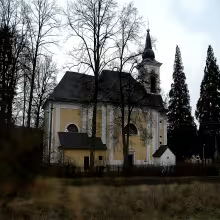
The Church of Saint Martin in Rohle is a notable early Empire-style building constructed between 1802 and 1803. Located in the village of Rohle within the Olomoucký kraj region, this church exemplifies architectural transition during its era. It replaced an older structure deemed unsuitable by Prince Lichtenstein, who commissioned its construction. The church is distinguished for its historical significance and was listed as a cultural monument in 1964.
The origins of the Church of Saint Martin trace back to the early 19th century when Bohemia was part of the Austrian Empire. During this period, architectural styles evolved from Baroque to Neoclassical and Empire influences, reflecting broader European trends that embraced classical antiquity's revival. The church replaced an earlier structure no longer meeting community needs, a decision made by Prince Lichtenstein who played a pivotal role in its establishment.
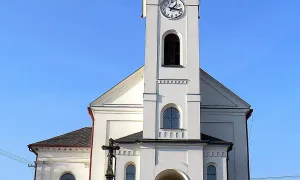
Architecturally, the Church of Saint Martin exemplifies the early Empire style with its cruciform layout and rectangular chancel. It features low annexes on both the north and south sides, enhancing its symmetrical design. The church's exterior is marked by a tower topped with a bulbous dome and cross, adding to its distinctive silhouette. A notable element includes an angel statue situated under the northern annex’s shelter. The interior boasts murals adorned with medallions and figures from 1804, contributing to its artistic richness.
Throughout its history, the Church of Saint Martin has been associated with significant personalities such as Prince Lichtenstein, who commissioned its construction, and Pater František Letfus, a notable figure in the church’s community. Pater Letfus served at Rohle from 1797 to 1862 and requested to be buried under a walkway near the church entrance, marking his lasting connection to this site.
The church houses several intriguing features that add to its historical allure. Among these are three bells, with the oldest dating back to 1540, reflecting the long-standing tradition of bell casting in the region. Additionally, the organ, crafted by the Brauner brothers from Uničov in 1896, remains unaltered and was last refurbished in 2012. The church also contains a classicist baptismal font from the early 19th century and features paintings of the Stations of the Cross created by Michal Jan z Rýmařova in 1821.
Today, the Church of Saint Martin continues to be an important cultural landmark. It remains accessible to visitors who wish to explore its architectural beauty and historical significance. The church’s listing as a cultural monument underscores its value not only as a place of worship but also as a piece of living history that offers insights into the region's past.
Visiting the Church of Saint Martin in Rohle provides an opportunity to appreciate both its architectural elegance and rich historical context. It stands as a testament to the artistic and cultural transitions of its time, inviting visitors to explore its storied past and enduring legacy.
Historical milestones
- 1802-1803
- Construction of the Church of Saint Martin in Rohle.
- 1804
- Interior murals with medallions and figures completed.
- 1821
- Paintings of the Stations of the Cross created by Michal Jan z Rýmařova.
- 1896
- Organ crafted by the Brauner brothers from Uničov installed.
- 1964
- Church listed as a cultural monument.
Architectural development
Constructed in the early Empire style from 1802 to 1803, the Church of Saint Martin features a cruciform plan with a rectangular chancel. It includes annexes on both sides and a tower topped by a bulbous dome. The church's interior is adorned with murals featuring medallions and figures from 1804.
Historical events
The church was constructed between 1802 and 1803 by Prince Lichtenstein.
In 1964, it was listed as a cultural monument.
Points of interest
- The Church of Saint Martin's oldest bell, dating back to 1540, is a testament to the enduring tradition of bell casting in the region, predating the church itself by over a century.
- Pater František Letfus, who served at Rohle from 1797 to 1862, requested his final resting place be under a walkway near the church entrance, symbolizing his deep personal connection and lasting legacy within the community.
Guide
Show guide text
Welcome to the historical monument Church of Saint Martin in Rohle. Beneath your feet lies the gently rolling landscape of the Olomouc Region, where this church stands as a testament to the past and architectural elegance. Before you is a building distinguished by the grace of early imperial style, whose clean design attracts the attention of every viewer.
Let's delve into the history of this spiritual center. In 1802 construction began on a new church in Rohle, which was completed just one year later. This project represented a significant change for the local community as it replaced an older building considered unsuitable. Prince Lichtenstein oversaw its realization, aiming to provide the parish with a modern and suitable church space.
Architecturally, the Church of Saint Martin is designed as a cross-shaped structure with a rectangular presbytery. Notice the low extensions on the northern and southern sides that give the building balance and symmetry. Look up at the prominent tower adorned with a bulbous dome decorated with a cross. This tower stands as a dominant element that captures the eye and enhances the church's aesthetic appeal.
Now, let's explore key stories associated with this monument. Father František Letfus, who served in Rohle from 1797 to 1862, is one of the historical figures linked to this place. His life and service contributed to the spiritual life of the parish for decades.
There is an interesting fact that might intrigue you—the church's oldest bell, dated to 1540. This bell is a witness to the long tradition of bell casting in the region and predates the church itself by more than a hundred years.
While exploring this site, enjoy the peaceful surroundings and breathe in the history unfolding around you. Prepare for further discoveries and let your visit be etched into memory. I hope that your tour of the Church of Saint Martin was captivating for you. Enjoy your future travels, and if you return, do not hesitate to revisit this beautiful place.
Tips for visitors
The best time to visit the Church of Saint Martin in Rohle is during late spring or early autumn, when the weather is pleasant for outdoor exploration. These seasons offer mild temperatures and beautiful natural surroundings, making it ideal for appreciating both the church's architecture and its serene environment. Additionally, visiting outside of peak tourist season can provide a more tranquil experience.
Parking and transportation options are convenient for visitors to Rohle. The area is accessible by car, with parking available nearby. For those preferring public transport, you can reach Rohle using regional bus services; however, it's advisable to check the latest schedules online or at local information centers. This ensures a smooth journey to this historical site.
When visiting the Church of Saint Martin, consider bringing comfortable walking shoes and weather-appropriate clothing, as there may be outdoor areas to explore around the church. A camera is recommended for capturing the unique Empire-style architecture and picturesque landscape. Additionally, carrying water and snacks can enhance your visit, especially if you plan to spend time exploring nearby attractions.
Photography enthusiasts will find several spots around the Church of Saint Martin ideal for capturing its beauty. The best light conditions are typically in the early morning or late afternoon when the sunlight enhances the church's features. Try taking photos from different angles, including shots that incorporate the surrounding landscape, to fully capture the essence of this historical site.
For families with children visiting Rohle, there are attractions within a 30-minute drive that can make your trip more enjoyable. The nearby area offers opportunities for outdoor activities and exploration, which can be both educational and entertaining for kids. These excursions provide a chance to learn about local history while engaging in family-friendly adventures.
Businesses nearby
Do you run a restaurant, accommodation, shop, museum, rental, wellness or other visitor service near this monument? Show yourself directly to the people heading to it — this is how they will see you in the app and on the web:
Accommodation nearby
Themed route
Tematická výletní trasa: Kostel svatého Martina (Rohle)
1. Kostel svatého Martina (Rohle) - Typ: Náboženská památka - Proč stojí za návštěvu: Tento barokní kostel je centrem duchovního života v Rohlu a přitahuje svou architekturou a historickým významem. Je ideálním místem pro pochopení kulturního dědictví obce.
2. Kaple Panny Marie - Typ: Kaple - Proč stojí za návštěvu: Nachází se v blízkosti kostela svatého Martina a nabízí klidnou atmosféru pro meditaci. Je známá svým historickým významem a krásnými detaily, které odrážejí místní náboženskou tradici.
3. Městské nádvoří - Typ: Veřejné prostranství - Proč stojí za návštěvu: Toto místo slouží jako centrum komunity, kde se konají různé místní akce a trhy. Nabízí pohled na historický vzhled obce a poskytuje příležitost pro interakci s místními obyvateli.
4. Park u kostela - Typ: Park - Proč stojí za návštěvu: Nachází se v bezprostřední blízkosti kostela svatého Martina a nabízí klidnou zelenou útulku pro relaxaci. Je ideálním místem pro procházky nebo fotografování s historickým pozadím.
Tato trasa vás provede skrze kulturní a duchovní centrum Rohlu, nabízející pohled na jeho bohatou historii a komunitu.
Seasonal recommendations
Jaro: Návštěva Kostela svatého Martina v Rohlech během jara nabízí jedinečný zážitek, kdy se rozkvétající keře a stromy obalují do živých barev. Sluneční paprsky pronikají skrze otevřené okna kostela, vytvářejí vzduch zvláštní něhy a klidu. Toto je ideální čas pro návštěvu, protože davů je méně než v letním období, což umožňuje uvolněnější procházku po historických interiérech. Navrhovaným oblečením je teplá košile a rukavice na chladnější ráno nebo večer, zatímco slunečné brýle mohou být užitečné v poledne.
Léto: Létě se Kostel svatého Martina proměňuje v místo plné života a aktivit. Dlouhé, slunečné dny umožňují dlouhé prohlídky, zatímco teplý vzduch může přilákat větší počet návštěvníků. Slunce osvětluje interiér kostela jasněji než v jakékoli jiné sezóně, což zdůrazňuje architektonické detaily a umělecké prvky. Návštěvníci by měli zvážit návštěvu raným ráno nebo pozdě odpoledne, aby se vyhnuli vrcholovému letnímu davu. Teplé oblečení a dostatek pitné vody jsou klíčové pro pohodlnou procházku.
Podzim: Podzim nabízí Kostelu svatého Martina atmosféru plnou melancholie a krásy. Listopadová listí poskytuje živý pozadí, které zvyšuje historickou náladu památky. Slunečné dny jsou teplé a přívětivé, což činí podzim ideálním obdobím pro procházku, zatímco chladnější večery vyžadují teplejší oblečení. Tato sezóna je také méně navštěvovaná než letní období, což umožňuje návštěvníkům užít si klidnější prostředí. Teplý kabát a klobouk jsou doporučeny pro chladnější večery.
Zima: Zimní návštěva Kostela svatého Martina nabízí jedinečné osvětlení, kdy slunce vstává později a zapadá brzy, což dává kostelu melancholický a tajemný vzhled. Sněhové pokrývky mohou přidat romantickou náladu, ale také způsobit omezení ve službách, protože některé části kostela mohou být uzavřeny. Návštěvníci by měli plánovat svůj návštěvu v ranních hodinách a přijít s teplým oblečením, včetně kožichu nebo peškoviče. Krátké otevírací doby znamenají, že je důležité se informovat o aktuálních časech před návštěvou.
Visualizations and artistic views

Vizualizace jsou generovány umělou inteligencí a slouží jako inspirace.


Tips from visitors
No tips yet. Be the first!
Log in and add your tip.
Reviews and comments