






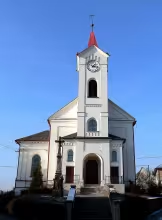
Kostel Nanebevzetí Panny Marie in Svébohov is a historicizing church that exemplifies the architectural style of Historicism from 1869. This monument is significant for serving the Catholic minority in an area predominantly following the Helvetian confession, reflecting religious diversity and tensions of the era.
The church's origins date back to the mid-19th century when Bohemia was part of the Austrian Empire—a time marked by nationalistic movements and efforts to strengthen Catholic identity. In 1862, Pater Josef Wiesner established a mission station in Svébohov for the Catholic community. Initially, services were held at the town hall, which later became a chapel dedicated to Nanebevzetí Panny Marie. The construction of a permanent church was funded through collections and completed by 1869, with its consecration on October 17.
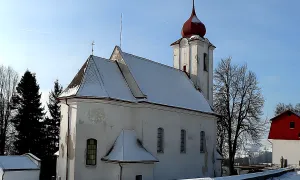
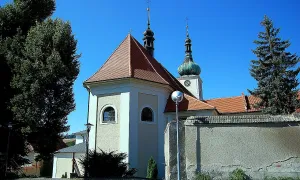
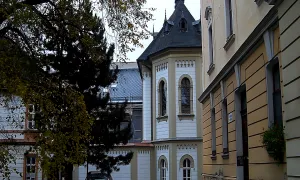
Architecturally, Kostel Nanebevzetí Panny Marie features a single nave with a flat ceiling adorned in stucco work. Its exterior boasts white-washed walls divided by pilasters and decorated with a perforated cornice. The main entrance is framed by a tower-like structure with a semi-circular arch, flanked by low projections housing narrow rectangular doors above which are semi-circular windows. In 1888, a side chapel dedicated to St. Anthony of Padua was added, facilitated by ThDr. Antonín Cyril Stojan, who served as an expozita at the church before becoming Archbishop of Olomouc.
The church's history includes several key events and curiosities. In 1888, three bells were acquired but later confiscated for war purposes in 1916. A remarkable feature is its early Gothic bell from the late 14th century, the oldest in the Olomouc archdiocese. This bell was added after World War II and is believed to have originated from a monastery.
Over the years, Kostel Nanebevzetí Panny Marie has undergone multiple restorations, with significant work carried out between 2001 and 2015, supported by the Olomouc Region. Today, it remains an active place of worship and a site of historical interest. Visitors can appreciate its architectural details, including lunettes depicting scenes from Christ's life and stained glass windows that add to the church's artistic charm.
Kostel Nanebevzetí Panny Marie is not only a religious landmark but also a cultural heritage site offering insights into the region's history and architectural evolution. Its preservation allows visitors to connect with the past while appreciating its enduring spiritual significance. This monument invites exploration, promising an enriching experience for those interested in history, architecture, and religion.
Historical milestones
- 1862
- Father Josef Wiesner founded a mission station for the Catholic community.
- 1869
- The side chapel was converted into the Church of the Assumption of the Virgin Mary.
- 1888
- A small chapel dedicated to St.
Architectural development
The church was initially built in 1869 to replace a chapel that had been adapted from a town hall for Catholic services. In 1888, it was expanded with a side chapel dedicated to St. Anthony of Padua, thanks to the intervention of ThDr. Antonín Cyril Stojan. The building underwent several restorations between 2001 and 2015, supported financially by the Olomouc Region.
Historical events
- 1869
- The church was consecrated on October 17.
- 1887
- ThDr. Antonín Cyril Stojan served as an expozita at the church, later becoming Archbishop of Olomouc.
Points of interest
- The church's early Gothic bell from the late 14th century is the oldest in the Olomouc archdiocese and was added after World War II, believed to have originated from a monastery. - In 1888, three bells were acquired for Kostel Nanebevzetí Panny Marie but were later confiscated in 1916 for war purposes, highlighting the impact of global conflicts on local communities. - ThDr. Antonín Cyril Stojan, who contributed to the church by facilitating a side chapel dedicated to St.
Guide
Show guide text
Welcome to the Church of the Assumption of the Virgin Mary in Svěbohov, a beautiful historical landmark nestled in the idyllic setting of the Olomouc Region. As you stand before this captivating church, take note of its simple yet elegant architecture that harmoniously blends with the surrounding green landscapes. This historicizing church, built in 1869, is an example of Historicism and served as a spiritual refuge for the Catholic minority in an area predominantly of Helvetic confession.
Let's delve into its rich past. In 1862, Father Josef Wiesner founded a missionary station for the Catholic community, laying the groundwork for this church. What began as a side chapel was transformed into the Church of the Assumption of the Virgin Mary in 1869. In 1888, a small chapel dedicated to Saint Anthony of Padua was added, enriching its spiritual and architectural value.
Look up at the unique gabled roof structures with flat ceilings. The interior will captivate you with its decorative wall hangings and lunettes depicting scenes from the life of Christ. These details add deep spirituality and artistic value to the church.
A key figure associated with this landmark is ThDr. Antonín Cyril Stojan, whose influence on the development of this church is immeasurable. His story and work are inseparably linked with the history of the church.
Now focus on one of its most interesting features—the early Gothic bell. This bell, which is the oldest in the Archdiocese of Olomouc, was added after World War II and likely originates from an old monastery. Its historical value and archaic sound give the church a unique atmosphere.
In 1916, during wartime turmoil, three bells were confiscated for military purposes. After a long absence, however, the church was restored and reconstructed between 2001 and 2015, ensuring its preservation for future generations.
An invitation to further explore this site is the opportunity to discover not only its architectural beauty but also its deep spiritual significance. During your visit, you can enjoy peaceful moments of reflection and contemplation on the history and traditions that this church symbolizes.
Thank you for your curiosity and desire to learn more. We hope your experience at the Church of the Assumption of the Virgin Mary was captivating and inspiring. With love for the history and spirit of this landmark, we wish you a pleasant farewell.
Tips for visitors
The best time to visit the Church of the Assumption of the Virgin Mary in Svébohov is during late spring or early autumn when the weather is mild, and the surrounding landscape is particularly beautiful. These seasons offer pleasant temperatures for exploring both inside the church and its serene surroundings. Additionally, visiting on a weekday can provide a more tranquil experience with fewer crowds compared to weekends.
Parking and transportation options are convenient for visitors. There is parking available nearby, which makes it accessible by car. For those preferring public transport, there are local bus services that connect Svébohov with surrounding areas. It's advisable to check the latest schedules in a travel or transit app before your visit to ensure smooth planning.
When visiting the church, consider bringing comfortable walking shoes as you might want to explore the area around it. A camera is recommended for capturing the stunning architecture of the church and its picturesque surroundings. Additionally, carrying a light jacket could be useful if the weather changes unexpectedly during your visit.
For photography enthusiasts, the best spots are near the entrance where the light beautifully illuminates the historicizing architectural details of the church. Early morning or late afternoon is ideal for capturing soft lighting effects. Also, consider taking photos from the side to include the landscape in the background, enhancing the visual appeal of your pictures.
In terms of nearby attractions within a 30-minute drive, visitors can explore other historical sites and natural landscapes around Svébohov. Although specific locations are not detailed here, general exploration in this region often reveals charming villages and scenic routes that offer a glimpse into local culture and history.
Businesses nearby
Do you run a restaurant, accommodation, shop, museum, rental, wellness or other visitor service near this monument? Show yourself directly to the people heading to it — this is how they will see you in the app and on the web:
Accommodation nearby
Themed route
Tematická výletní trasa - Kostel Nanebevzetí Panny Marie (Svébohov)
1. Kostel Nanebevzetí Panny Marie (Svébohov) - *Typ:* Kostel - *Proč stojí za návštěvu:* Tento barokní kostel je architektonickou perli Olomouckého kraje, vynikajícím příkladem duchovního a uměleckého bohatství regionu. Jeho interiér nabízí nádherné fresky a sochy, které zaujmou každého návštěvníka.
2. Kaple svatého Jana Nepomuckého (Svébohov) - *Typ:* Kaple - *Proč stojí za návštěvu:* Tato kaple je místo klidu a útulku, známá pro svou historickou architekturu a duchovní atmosféru. Je ideálním místem pro odpočinek po prohlídce kostela.
3. Svébohovský park - *Typ:* Park - *Proč stojí za návštěvu:* Svébohovský park nabízí krásné procházky mezi zelení, kde si můžete užít klidu a přírodní krásy okolí. Je to perfektní místo pro relaxaci a pohled na venkovní krajinu.
4. Svébohovské nádvoří - *Typ:* Nádvoří - *Proč stojí za návštěvu:* Toto historické nádvoří je centrem místního života a kultury. Je to místo, kde se setkávají tradice a modernost, nabízející pohled na architektonickou strukturu obce.
5. Svébohovské muzeum (pokud je v okolí) - *Typ:* Muzeum - *Proč stojí za návštěvu:* Pokud existuje, místní muzeum nabízí cenné poznatky o historii a kultuře obce. Je to skvělý způsob, jak se dozvědět více o minulosti Svébohova.
Tato trasa vás provede krátkou, ale plnou zkušeností cestou po Svébohovu a jeho okolí, kde můžete objevit jak duchovní, tak kulturní bohatství této oblasti.
Seasonal recommendations
Jaro: During the spring season, the Church of the Assumption of the Virgin Mary in Svébohov is a radiant place to visit due to its lighting and natural beauty. Sunlight streaming through colorful stained glass gives the church a vibrant atmosphere, while blooming shrubs and trees create subtle hues. This is an ideal time for a visit as there are fewer crowds, allowing for a peaceful view of the historic architecture. Visitors should wear clothing suitable for mild weather and bring a camera, as the spring light is excellent for photography.
Léto: Summer in Svébohov offers extended opening hours for the Church of the Assumption of the Virgin Mary, providing an opportunity to experience its beauty during warm days. The atmosphere is lively, with a higher chance of encountering more visitors due to favorable summer conditions. We recommend visiting early in the morning or late afternoon to avoid peak tourist times. Children will enjoy the outdoor spaces and everyone should wear light clothing and bring plenty of water.
Podzim: Autumn brings melancholic beauty to Svébohov as leaves turn golden and trees become lush. The church exudes a tranquil atmosphere during this period, ideal for a reflective visit. It is advisable to come at opening or early afternoon, as crowds may worsen due to the beautiful autumn days. We suggest wearing an extra layer of clothing and footwear suitable for cooler weather and bringing a camera, as the fall colors offer stunning photographic opportunities.
Zima: A winter visit to the Church of the Assumption of the Virgin Mary offers a unique atmosphere with brightly lit interiors and snow-covered landscapes outside. Opening hours are typically shorter due to winter conditions, so we recommend visiting early in the day. It is important to dress warmly and have appropriate footwear for snowy or icy conditions. The quiet winter ambiance provides a peaceful space to explore historical architectural details with minimal disturbance.
Visualizations and artistic views

Vizualizace jsou generovány umělou inteligencí a slouží jako inspirace.


Atmosphere of the place
Atmospheric visualization of the setting and era
Tips from visitors
No tips yet. Be the first!
Log in and add your tip.


Reviews and comments