





Hluboký is a medieval castle ruin located in the valley of the Bystřice River near Hrubá Voda. It lies within the municipality of Hlubočky in Olomoucký kraj. Constructed around 1340 as a private fortress by Bishop Jan Volka of Olomouc, it holds historical significance due to its strategic position on the route from Olomouc to Opava and its involvement during the Hussite Wars. Today, Hluboký stands as a cultural monument protected since 1964.
The origins of Hluboký trace back to the mid-14th century when Bishop Jan Volka of Olomouc built it. Initially serving as a private stronghold for the bishop, it soon became part of broader political dynamics within the Holy Roman Empire under Charles IV's rule—a period marked by consolidation and cultural development. After Bishop Volka’s death in 1351, Emperor Charles IV transferred ownership to his brother, Margrave John Henry. The management of Hluboký was entrusted to purkrabí appointed by the margrave, including Půta z Holštejna from 1371 to 1379 and later Lacek z Kravař in 1382. Following Lacek's death, his relatives maintained control until Dobeš z Tvorkova took over during the tumultuous Hussite Wars.
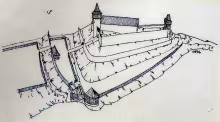
Architecturally, Hluboký featured a triangular core with a palace on its northwest side, surrounded by a parkan—a defensive wall or enclosure—on its southern and eastern sides. Notable remnants include parts of a cylindrical tower believed to have guarded the entrance, as well as traces of a moat and defensive rampart. Despite its ruinous state, archaeological finds such as iron arrows and medieval armor fragments provide insights into its past.
Ownership and administration of Hluboký saw several dramatic changes over time. Initially under Bishop Jan Volka's control, it was transferred to Emperor Charles IV and then to his brother Margrave John Henry. The fortress was managed by purkrabí appointed by the margrave, including Půta z Holštejna (1371–1379) and later Lacek z Kravař in 1382. After Lacek's death, it remained with his relatives until Dobeš z Tvorkova assumed control during the Hussite Wars. Bernard ze Žerotína became the owner in 1433.
Key events at Hluboký include its siege and destruction in 1426 by forces of Duke Albrecht of Austria to prevent it from becoming a stronghold for Hussites, reflecting broader religious conflicts across Europe. The castle was last mentioned in Olomouc chapter's land registers in 1612. A legend also tells of ghostly knights inhabiting the fortress, adding an element of folklore to its history.
Today, Hluboký stands as a testament to medieval fortification and regional history. Although there are no marked tourist paths leading directly to it, visitors can access the site via several small trails starting from the railway stop in Hrubá Voda. The journey involves navigating around a hotel and following a steep path up to the ruins, where an information board provides context about its historical significance. Despite its ruinous state, the remnants of Hluboký offer a glimpse into medieval life and architecture, making it a worthwhile visit for those interested in history and archaeology.
Hluboký's enduring legacy as a cultural monument highlights its importance not only to local heritage but also to understanding broader historical narratives. Its ruins invite exploration and reflection on the past, offering visitors an opportunity to connect with centuries of history nestled within the Bystřice River valley.
Historical milestones
- 1426
- The castle was besieged and destroyed by Duke Albrecht's forces.
- 1612
- Last recorded mention in Olomouc chapter's land registers.
Architectural development
Hluboký featured a triangular core with a palace on the northwest side and a surrounding parkan. Notable remnants include parts of a cylindrical tower, believed to have guarded the entrance, as well as traces of a moat and defensive rampart. Despite its ruinous state, archaeological finds such as iron arrows and medieval armor fragments provide insights into its past.
Historical events
In 1426, Hluboký was besieged and destroyed by forces of Duke Albrecht of Austria to prevent it from becoming a stronghold for Hussites.
The castle was last mentioned in Olomouc chapter's land registers in 1612.
Owners
Initially owned by Bishop Jan Volka of Olomouc around 1340, then transferred to Emperor Charles IV who gave it to his brother Margrave John Henry. Managed by purkrabí appointed by the margrave, including Půta z Holštejna (1371–1379) and later Lacek z Kravař in 1382. After Lacek's death, it was held by his relatives until Dobeš z Tvorkova took control during the Hussite Wars. Bernard ze Žerotína became the owner in 1433.
Points of interest
- One of the less known facts about Hluboký is that it was originally constructed as a private fortress for Bishop Jan Volka of Olomouc around 1340, highlighting its initial purpose beyond military defense.
- An intriguing aspect of Hluboký's history is its involvement in the Hussite Wars; specifically, it was besieged and destroyed in 1426 by Duke Albrecht of Austria to prevent it from becoming a stronghold for the Hussites, illustrating its strategic importance during religious conflicts.
Guide
Show guide text
Welcome to the historical site of Hluboký, where you stand amidst the serene valley of the Bystřice River near Hrubá Voda in Olomoucký kraj. As you gaze upon this medieval castle ruin, imagine the lush greenery that now cloaks its ancient stones—a testament to both time's passage and nature's embrace.
Hluboký was originally constructed around 1340 as a private fortress by Bishop Jan Volka of Olomouc. Its strategic location along the route from Olomouc to Opava made it not only a defensive stronghold but also a significant waypoint in medieval travel and trade. The castle’s history is deeply intertwined with pivotal events, such as its involvement in the Hussite Wars—a series of conflicts that shaped Bohemia's religious and political landscape.
As you explore this site, take a moment to appreciate the remnants of Hluboký's architecture. Notice how the ruins speak volumes through their silent stones; each fragment tells a story of grandeur and conflict. The strategic placement of its walls and towers once offered commanding views over the valley—a reminder of its role in regional defense.
Several historical figures are linked with this site, including Jan Volka, who initiated its construction, and later personalities like Karel IV., Jan Jindřich, Půta z Holštejna, Lacek z Kravař, Dobeš z Tvorkova, and Bernard ze Žerotína. Each played a role in the castle's storied past, contributing to its legacy as both a fortress and a witness to history.
One intriguing aspect of Hluboký is its lesser-known origin as a private fortress rather than solely a military bastion. This highlights its initial purpose beyond defense—perhaps serving as a residence or administrative center for Bishop Jan Volka. Moreover, the castle's involvement in the Hussite Wars adds layers to its historical narrative, revealing its significance during turbulent times.
As you conclude your visit here, I invite you to ponder the stories these ruins could tell if stones could speak. Take a moment to let the history and atmosphere of Hluboký envelop you before moving on to discover more about this fascinating region. Thank you for joining me in exploring this remarkable piece of our heritage.
Tips for visitors
The best time to visit the Hluboký castle ruins is during late spring or early autumn, between May and October. During these months, the weather is generally mild and pleasant, making it ideal for exploring the site. Additionally, the surrounding Bystřice River valley offers beautiful natural scenery that is particularly vibrant in these seasons. Visitors can enjoy the lush greenery and blooming flowers without the discomfort of summer heat or winter cold.
Parking and transportation to Hluboký are convenient but require some planning. The site does not have dedicated parking facilities, so visitors should look for general parking areas along the road near Hrubá Voda. Public transport options may be limited, so it is advisable to check current bus or train connections in advance using a travel planner or local transportation websites. Driving your own vehicle might offer more flexibility and ease of access.
When visiting Hluboký, it's recommended to bring comfortable walking shoes as the terrain can be uneven due to the ruins' natural state. A hat, sunscreen, and water are also advisable, especially if you plan on spending a few hours exploring the site and its surroundings. Since there are no marked tourist paths around the castle, having a map or using a GPS-enabled device will help in navigating the area safely.
For photography enthusiasts, early morning or late afternoon is the best time to capture stunning images of Hluboký. The soft light during these times enhances the textures and shadows of the ruins, creating dramatic effects. The best spots for photography are at the higher vantage points around the site where you can get a panoramic view of the Bystřice River valley. Be mindful of your surroundings to ensure safety while setting up shots.
Nearby attractions within 30 minutes include the remnants of defensive structures, which offer additional historical insights and scenic views. The information board at Hluboký provides valuable context about the site's history and significance. For families with children, these features can make for an educational outing, though it’s important to keep young ones close as there are no formal paths or barriers around the ruins.
Businesses nearby
Do you run a restaurant, accommodation, shop, museum, rental, wellness or other visitor service near this monument? Show yourself directly to the people heading to it — this is how they will see you in the app and on the web:
Nearby
The site is surrounded by the Bystřice River valley with no marked tourist paths. Nearby features include remnants of defensive structures and an information board at the location.
Accommodation nearby
Trips and activities nearby
Guided tours, tickets and activities nearby from GetYourGuide
Search tours and activities →Themed route
Thematic Walking Tour: The Ruins of Hrubá Voda and Surroundings
1. Hluboký (Zřícenina) - *Type:* Historical Site - *Why Visit:* Begin your journey at the captivating ruins of Hluboký, a testament to medieval defensive architecture nestled in the Bystřice River valley. Explore the remnants of this once formidable stronghold and immerse yourself in its historical significance.
2. Remnants of Defensive Structures - *Type:* Historical Landmarks - *Why Visit:* As you venture from Hluboký, discover nearby fragments of ancient defensive structures that echo the strategic importance of this region during medieval times. These relics provide a tangible connection to the past and highlight the area's role in historical conflicts.
3. Information Board at Hluboký - *Type:* Educational Exhibit - *Why Visit:* Conclude your tour by visiting the informative board located near the ruins. This exhibit offers valuable insights into the history of Hrubá Voda, enriching your understanding of the site's historical context and its significance in Olomoucký kraj.
This thematic route provides a focused exploration of the historical essence of Hrubá Voda, allowing visitors to delve deep into the area's rich past through its ruins and associated landmarks.
Seasonal recommendations
Jaro: Návštěva Hluboké v jarním období nabízí nezapomenutelný zážitek, kdy se historická zřícenina a její okolní příroda probouzejí ze sněhového dechu. Sluneční paprsky osvětlují starobylé stěny, které jsou oživeny kvetoucím keřem a novým listím, což vytváří živou atmosféru plnou naděje. Při návštěvě je vhodné přijít v raném odpoledni, kdy se davům snaží vyhnout a zároveň můžete užívat si teplé sluneční paprsky. Oblečte se v mírných vrstvách, protože jarní počasí může být proměnlivé, s chladnými rány a teplejšími odpoledni.
Léto: Létě je Hluboká plná života díky dlouhým slunečným dnům, které osvětlují zříceninu v nejlepším světle. Příroda kolem se stává hojně zelenou a kvetoucí, což dodává oblasti jedinečný barevný lesk. V hlavní letní sezóně je očekáván vysoký návštěvní počet, takže doporučuje se přijít brzy ráno nebo později večer, aby se vyhnul tluče, a ujistit se, že máte dostatek pitného líhu. Oblečte si lehké oblečení a nesete ochrannou kravatu proti slunci, zatímco nezapomeňte na kvalitní boty pro pohodlné procházení.
Podzim: V podzimním období nabízí Hluboká jedinečnou atmosféru s měkčím světlem a zlatými listy, které zdobí okolní krajinu. Tato sezóna přináší klidnější návštěvnost než v létě, což umožňuje podrobněji prozkoumat zříceninu bez rušení davů. Sluneční svit ráno a večer může být zvláště působivý, takže je to ideální čas na fotografii. Oblečte se v vrstvách, protože podzimní počasí může být chladné ráno a večer, i když odpoledne zůstávají teplé. Přineste si ochrannou kravatu proti slunci v raných hodinách.
Zima: Zimní návštěva Hluboké nabízí klidný a tichý zážitek, kdy se zřícenina proměňuje ve sněhovou krásu. Méně návštěvníků v tomto období umožňuje osobní prozkoumání historické památky bez rušení davů, zatímco mrazivý vzduch dodává atmosféře mystický tón. Otevírací doba je kratší kvůli nižším denním světelným podmínkám a chladnějšímu počasí, takže se ujistěte, že přijdete v čase. Teplé oblečení, včetně kožených kůží nebo bundy, je klíčové pro pohodlí, spolu s ochrannými rukavicemi a obuví vhodnou na mrazivé povrchy.
Visualizations and artistic views

Vizualizace jsou generovány umělou inteligencí a slouží jako inspirace.

Tips from visitors
No tips yet. Be the first!
Log in and add your tip.


Reviews and comments