






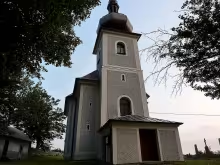
The Church of Saint George in Dětřichov nad Bystřicí is an important cultural monument in the Czech Republic. Originally built as a wooden structure in 1532, it was replaced between 1771 and 1773 with a new masonry building designed in the classical style. This church stands out for its historical significance and architectural evolution over time.
Dětřichov's origins trace back to the early 14th century, specifically between 1317 and 1318. The original wooden Church of Saint George was constructed in 1532 during a period when Bohemia was part of the Holy Roman Empire under Habsburg rule. This era saw significant religious changes across Europe due to the Protestant Reformation, which likely influenced the church's construction and subsequent developments.
Architecturally, the current structure exemplifies classical design principles. It features a single-nave layout with a semi-circular chancel and a small sacristy attached on its west side. The church is oriented northward towards the cemetery entrance, marked by a high spire. Its facades are smooth and square in plan, interrupted only by windows with semicircular arches. Originally featuring a dome-like ceiling, this was flattened during renovations between 1843 and 1846. The chancel boasts a barrel vault, while baroque organs crafted by A. Steinunger from Andělská Hora are housed on its wooden roof.
Throughout history, the Church of Saint George has undergone several transformations. After being replaced with a masonry structure in the classical style between 1771 and 1773, it experienced further architectural modifications in the latter half of the 19th century. Post-World War II, the church faced neglect and thefts. A significant event occurred on March 1, 2008, when a storm destroyed its spire. Restoration efforts culminated in 2015, ensuring the preservation of this cultural monument.
Today, the Church of Saint George stands as a testament to resilience and historical continuity. Recognized as a cultural heritage site by the Czech Republic, it reflects both architectural significance and its role within the community over centuries. Visitors can appreciate not only its classical architecture but also its storied past, which encapsulates broader European religious and cultural shifts.
The Church of Saint George in Dětřichov nad Bystřicí is a remarkable site offering insights into historical transformations and architectural evolution. Its preservation as a cultural monument underscores its importance to the region's heritage. For those interested in history and architecture, this church provides a compelling glimpse into the past and invites exploration of its enduring legacy.
Historical milestones
- 1532
- Construction of the original wooden church.
- 1771
- Replacement with a new masonry building in classical style.
Architectural development
The Church of Saint George began as a wooden edifice in 1532, later replaced by a masonry structure in the classical style between 1771 and 1773. Architectural modifications occurred in the latter half of the 19th century, including changes to its dome-like ceiling which was flattened during this period.
Historical events
The original wooden church was built in 1532 and later replaced with a masonry structure between 1771 and 1773.
In 2015, the church underwent restoration after suffering damage from a storm in March 2008 that destroyed its spire.
Points of interest
- The Church of Saint George was originally constructed as a wooden structure in 1532 during the Habsburg rule over Bohemia, reflecting the broader religious upheaval of the Protestant Reformation.
- Despite its classical design, the church's dome-like ceiling underwent significant modification between 1843 and 1846 when it was flattened, altering its original architectural intent.
- In a dramatic turn of events on March 1, 2008, a storm destroyed the church’s spire, necessitating extensive restoration efforts that culminated in 2015 to preserve this historical monument.
Guide
Show guide text
Welcome to the Church of Saint George in Dětřichov nad Bystřicí—a remarkable cultural monument nestled in the heart of Moravskoslezský kraj. As you stand here, take a moment to absorb the serene atmosphere surrounding this historic site. The church's classical architecture stands as a testament to centuries of history and transformation.
Let’s delve into its origins. Constructed initially as a wooden structure back in 1532, the Church of Saint George was born during a period marked by significant religious changes across Europe—the Protestant Reformation. This era saw many regions under Habsburg rule grappling with shifts in faith and practice, setting the stage for this church’s initial creation.
Fast forward to the late 18th century, specifically between 1771 and 1773, when the original wooden building was replaced by a new masonry structure designed in the classical style. This transformation not only reflected changing architectural tastes but also the community's evolving needs and aspirations.
Now, as you gaze upon the church, take note of its single-nave layout that leads to a semi-circular chancel—a design choice echoing the elegance and symmetry of classical architecture. On the west side, there’s a small sacristy attached—an often-overlooked detail but integral to understanding the building's functional history.
While specific architects remain unknown, the church itself tells its own story through these architectural elements. Its dome-like ceiling, although modified over time, adds an intriguing layer of depth and character to the interior space.
The Church of Saint George has witnessed countless stories unfold within and around it, though many historical figures connected to this site remain unnamed in records. This mystery invites us to imagine the lives that have passed through its doors—each person contributing to the tapestry of its history.
One fascinating aspect of this church is how it embodies the broader religious upheaval during the Protestant Reformation—a period when faith and architecture were deeply intertwined, influencing each other in profound ways.
As you continue your exploration, I invite you to ponder these layers of history and consider what stories might still lie hidden within the walls of this enduring monument. Thank you for joining me on this journey through time at the Church of Saint George. May your visit inspire a deeper appreciation for the rich cultural heritage that surrounds us. Safe travels as you discover more wonders in Dětřichov nad Bystřicí and beyond!
Tips for visitors
The best time to visit the Church of Saint George in Dětřichov nad Bystřicí is during late spring or early autumn when the weather is mild, making it ideal for exploring both the church and its surrounding natural landscapes. These seasons offer pleasant temperatures and fewer crowds, allowing you to fully appreciate the serene environment and historical significance of the site.
Parking and transport options are convenient in Dětřichov nad Bystřicí. The area is accessible by car, with parking available nearby, though it's advisable to check for any restrictions or fees on the official website. Public transportation can also be used; however, specific bus routes should be verified through a local transit search tool prior to your visit.
When planning your visit, consider bringing comfortable walking shoes and weather-appropriate clothing, as you may want to explore the church grounds and nearby areas. A camera is recommended for capturing the architectural beauty of the Church of Saint George, especially during golden hour when the light enhances the structure's features. The best photography spots are likely around the exterior where natural lighting accentuates its historical details.
For families with children, the Church of Saint George offers a quiet and educational experience. Nearby within a 30-minute walk or short drive is the picturesque landscape of the Moravian-Silesian Region, which can be enjoyable for outdoor activities like walking or picnicking. Exploring these natural surroundings provides an opportunity to engage with history while enjoying family-friendly leisure time.
In addition to visiting the Church of Saint George itself, consider exploring other historical and cultural sites within a five-kilometer radius in Dětřichov nad Bystřicí. These nearby attractions offer additional insights into the region's rich heritage and provide more context about the local culture and history.
Businesses nearby
Do you run a restaurant, accommodation, shop, museum, rental, wellness or other visitor service near this monument? Show yourself directly to the people heading to it — this is how they will see you in the app and on the web:
Nearby
The church is situated near Dětřichov nad Bystřicí, surrounded by the natural landscape of the Moravian-Silesian Region. The area includes other historical and cultural sites within a five-kilometer radius.
Accommodation nearby
Trips and activities nearby
Guided tours, tickets and activities nearby from GetYourGuide
Search tours and activities →Themed route
Thematic Walking Tour: Dětřichov nad Bystřicí
1. Kostel svatého Jiří (Dětřichov nad Bystřicí) - *Type:* Church - *Why Visit:* Begin your journey at the iconic Church of Saint George, a stunning example of Gothic architecture with Baroque influences. This church is not only a spiritual center but also a historical monument that reflects the rich cultural tapestry of the Moravian-Silesian Region. Its intricate design and serene atmosphere make it an ideal starting point for exploring Dětřichov nad Bystřicí.
2. Local Historical Sites - *Type:* Cultural Landmarks - *Why Visit:* Within a five-kilometer radius of the church, discover other historical sites that offer insights into the area's past. These locations provide context to the region’s development and heritage, showcasing traditional architecture and local history. Exploring these sites allows you to appreciate the continuity of cultural traditions in Dětřichov nad Bystřicí.
3. Natural Landscape Exploration - *Type:* Scenic Walk - *Why Visit:* Immerse yourself in the natural beauty surrounding Dětřichov nad Bystřicí. The area's landscape offers picturesque views and a tranquil environment, perfect for leisurely walks or picnics. This exploration highlights the harmonious blend of nature and history that characterizes the Moravian-Silesian Region.
This tour provides a comprehensive experience of Dětřichov nad Bystřicí, focusing on its historical and natural attractions.
Seasonal recommendations
Spring: Visiting the Church of St. George during spring offers a unique experience as nature awakens around Dětřichov nad Bystřicí. The church is often bathed in soft, golden light filtering through budding trees, creating a serene and picturesque atmosphere. This period also marks a time when local flora begins to bloom, adding vibrant colors to the landscape. Visitors should consider wearing comfortable layers as temperatures can vary, and it's wise to bring an umbrella for potential spring showers. The church may experience moderate crowds due to its appeal during this pleasant season.
Summer: Summer is an ideal time to explore the Church of St. George, with long daylight hours enhancing the beauty of both the structure and its surroundings. The lush greenery surrounding Dětřichov nad Bystřicí provides a stunning backdrop for photographs. However, it's advisable to visit early in the morning or later in the afternoon to avoid larger crowds that typically gather during midday. Light clothing is recommended due to warmer temperatures, and carrying water is essential for staying hydrated while enjoying the summer ambiance.
Autumn: Autumn brings a spectacular display of colors as leaves change around the Church of St. George, creating an enchanting atmosphere perfect for photography enthusiasts. The cooler weather makes it comfortable to explore the area without the heat of summer. Visitors should wear warm layers and consider bringing a light jacket or sweater, especially in the evenings when temperatures can drop significantly. This season is less crowded than summer, offering a more peaceful experience.
Winter: Winter transforms the Church of St. George into a picturesque scene with snow-dusted rooftops and frost-laden trees, creating a magical atmosphere that's particularly enchanting during festive periods like advent. Visitors should dress warmly in layers, including hats, gloves, and insulated footwear to stay comfortable while exploring. It’s important to note that opening hours may be shorter due to the season, so checking ahead is advisable. Despite potentially fewer visitors, winter can bring a quieter, more reflective experience of this historical site.
Visualizations and artistic views

Vizualizace jsou generovány umělou inteligencí a slouží jako inspirace.


Tips from visitors
No tips yet. Be the first!
Log in and add your tip.
Location on the map

Příběhy a pověsti
Legendy, pověsti a příběhy spjaté s touto památkou
Reviews and comments