





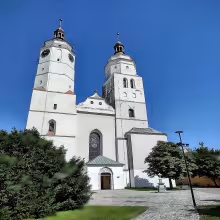
Kostel svatého Martina in Krnov stands as a testament to the rich cultural heritage of the Czech Republic. Registered as a cultural monument since 1958, this church holds significant historical and architectural value. Originally constructed in the 13th century, it has undergone various transformations reflecting evolving styles and needs.
The origins trace back before 1281 when the Order of German Knights held patronage over the site. Initially built as a wooden structure, it was reconstructed using stone and brick at the turn of the 14th and 15th centuries in Gothic style. This period marked significant architectural developments across Europe, influencing the church's design. By 1399, Krnov had already contributed financially to its maintenance and decoration, underscoring community investment.
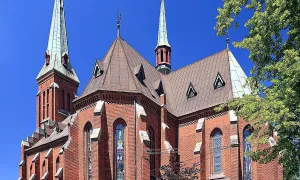
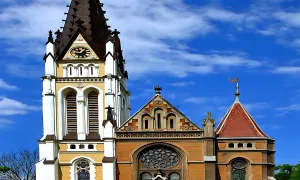
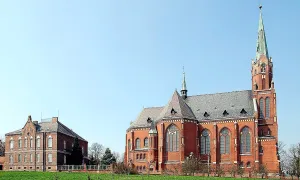
Architecturally, the church is a basilica with a two-tower facade and a polygonal presbytery. The main nave was constructed first, followed by side naves, reflecting typical Gothic practices of the era. In 1554, Thomas Stegmann and Benedikt Sorgenfrey completed the second tower, known as "městská věž," serving city watchmen. The church also features a Chapel of the Holy Cross and a sacristy with an oratory, both added in the 16th century.
The church's history is marked by significant events shaping its current form. A major fire in 1779 caused extensive damage, leading to a Baroque reconstruction led by stonemason Jindřich Haucke. This renovation introduced Baroque elements while preserving some Gothic and Renaissance features within the interior. During renovations in 1967, two crypts containing remains of notable individuals were discovered, adding another layer to its historical narrative.
Today, Kostel svatého Martina is not only a place of worship but also a site of cultural interest. Its interior showcases Baroque influences alongside original Gothic and Renaissance elements, complemented by artworks from unknown authors. The church houses the tomb of Krnov's notable physician, Kryštof Bilický z Bilic, and features stained glass windows created in 1987 by Jan Jemelka. A Marian column with an 18th-century statue of the Immaculate Mary stands nearby, enhancing its historical ambiance.
Visitors can appreciate its architectural beauty and rich history. The church's blend of Gothic, Renaissance, and Baroque styles offers a unique glimpse into the past, making it a worthwhile destination for those interested in cultural heritage. Its enduring presence in Krnov invites exploration and reflection on the layers of history embedded within its walls.
Historical milestones
- 13th century
- The Church of Saint Martin was originally built as a wooden structure.
- before 1281
- A site under the patronage of the Teutonic Order.
- late 14th to early 15th century
- The church was reconstructed in a Gothic style using stone and brick.
- 1399
- Krnov contributed financially to the maintenance and decoration of the church.
- 1554
- Completion of the second tower known as the 'town tower.
Architectural development
The original wooden structure of St. Martin's Church was replaced by a stone and brick building at the turn of the 14th and 15th centuries in Gothic style. The main nave was constructed first, followed by side naves. A second tower was added in the 16th century, along with the Chapel of the Holy Cross and a sacristy with an oratory. After a fire in 1779, the church was rebuilt in Baroque style.
Historical events
- 1399
- The city of Krnov contributed financially to the church's maintenance and decoration.
- 1554
- Construction of the second tower, known as 'městská věž', was completed by Thomas Stegmann and Benedikt Sorgenfrey.
- 1779
- A major fire caused significant damage to the church, leading to its Baroque reconstruction.
Points of interest
- The church's second tower, known as "městská věž," served a unique purpose by housing city watchmen, illustrating its role in the community beyond religious functions. - During renovations in 1967, two crypts were discovered within the church, revealing remains of historically significant individuals and adding depth to its historical narrative. - A major fire in 1779 led to a Baroque reconstruction that blended Gothic and Renaissance elements with new styles, showcasing an architectural evolution over centuries.
Guide
Show guide text
Welcome to the historic site of Kostel svatého Martina, nestled beneath the majestic Pod Bezručovým vrchem in Krnov. As you stand here, take a moment to absorb the serene atmosphere that surrounds this cultural monument of the Czech Republic. The church's presence is both humble and grand, with its two towers reaching towards the sky, inviting you to explore its storied past.
The origins of St. Martin's Church trace back to the 13th century when it was initially constructed as a wooden structure. Over time, this modest beginning evolved into something far more enduring. By the turn of the 14th and 15th centuries, the church underwent significant reconstruction in Gothic style using stone and brick—a testament to the architectural advancements of the era.
As you gaze upon its basilica layout, notice the two towers that punctuate the skyline—one known as the 'městská věž' or city tower. This particular tower has a unique history; it once housed city watchmen, highlighting the church's role in community life beyond its religious functions. The polygonal presbytery at the eastern end adds to the architectural intrigue of this sacred space.
The journey of St. Martin’s Church is intertwined with notable historical figures and events. In 1281, the site came under the patronage of the Řád německých rytířů (Order of German Knights), a significant influence in its early history. By 1399, Krnov contributed financially to the upkeep and decoration of the church, reflecting the community's investment in this spiritual landmark.
The late 14th and early 15th centuries marked another pivotal period with the reconstruction into Gothic style, further enhancing its architectural splendor. The addition of the 'městská věž' was completed by 1554, solidifying its dual role as a place of worship and civic watchtower.
A dramatic chapter in the church's history unfolded in 1779 when a devastating fire caused extensive damage. This event led to significant Baroque renovations that reshaped much of what you see today. The resilience of this structure is evident in how it has withstood the test of time, adapting and evolving through centuries.
Intrigue surrounds St. Martin’s Church even beneath its surface. During renovations in 1967, two crypts were discovered within the church, revealing remains of historically significant individuals. These findings add layers to our understanding of the site's historical narrative, inviting us to ponder the lives that once intertwined with this sacred space.
As you continue your exploration, let yourself be drawn into the stories and secrets held within these walls. Each stone and corner has a tale to tell, waiting for those who seek to uncover them. We invite you to delve deeper into the history of Kostel svatého Martina, where every visit offers new insights and reflections.
Thank you for joining us on this journey through time at St. Martin's Church. May your experience here inspire a deeper appreciation for the rich tapestry of history that surrounds us. Safe travels as you continue to explore the wonders of Moravskoslezský kraj.
Tips for visitors
The best time to visit St. Martin's Church is during late spring or early autumn when the weather is mild, and the natural surroundings are particularly beautiful. This period offers pleasant temperatures for walking around the area and enjoying the historical ambiance without the summer crowds. Additionally, the lighting conditions are ideal for photography, capturing the church’s architecture in soft, warm light.
Parking near St. Martin's Church can be limited, so it is advisable to use public transportation if possible. The church is accessible by bus from Krnov, and you can find parking spots in nearby areas, though availability may vary. Always check local resources or a map service for the most current information on parking.
When visiting St. Martin's Church, consider bringing comfortable walking shoes as there are some uneven paths around the site. A camera is recommended to capture the unique features of the church and its surroundings, such as the Renaissance tombstones incorporated into the exterior wall. Additionally, bring a light jacket or umbrella in case of sudden weather changes.
For photography enthusiasts, the best spots for capturing St. Martin's Church are from the front where you can frame it with the surrounding landscape, and near the Marian column which adds an interesting element to your shots. The soft morning or late afternoon light provides excellent conditions for highlighting the church’s architectural details.
In addition to the church itself, visitors should explore the nearby Renaissance tombstones and the remnants of historical architecture in the area. Within a 30-minute drive from St. Martin's Church is Krnov Castle, which offers further insights into the region's history and stunning views over the town.
Businesses nearby
Do you run a restaurant, accommodation, shop, museum, rental, wellness or other visitor service near this monument? Show yourself directly to the people heading to it — this is how they will see you in the app and on the web:
Nearby
The church was originally surrounded by a cemetery, now replaced by four Renaissance tombstones incorporated into its exterior wall. Nearby features include a Marian column and remnants of historical architecture.
Accommodation nearby
Themed route
Thematic Walking Tour: The Sacred Heritage of Pod Bezručovým Vrchem
1. Kostel svatého Martina (Pod Bezručovým vrchem) - Church Begin your journey at the heart of this tour, the Church of Saint Martin, a serene sanctuary nestled under Pod Bezručovým Vrchem. This church is not only an architectural gem but also a testament to the region's rich spiritual history. Its exterior wall features four Renaissance tombstones, remnants of its original cemetery, offering a unique glimpse into the past.
2. Renaissance Tombstones - Historical Markers As you explore the vicinity of the Church of Saint Martin, take time to appreciate the four Renaissance tombstones incorporated into the church's exterior wall. These markers serve as silent storytellers, connecting visitors with the lives and times of those who were once laid to rest here.
3. Marian Column - Religious Monument A short walk from the church will lead you to a nearby Marian column, an emblematic religious monument that stands as a symbol of faith and community devotion. This column adds depth to your understanding of the local spiritual landscape and offers a moment for reflection amidst the historical surroundings.
4. Remnants of Historical Architecture - Architectural Heritage Conclude your tour by exploring the remnants of historical architecture scattered around the church area. These fragments provide insight into the architectural evolution of Pod Bezručovým Vrchem, allowing you to piece together stories from different eras and appreciate the enduring legacy of this charming locale.
This thematic walking tour offers a profound connection with the spiritual and cultural heritage of Pod Bezručovým Vrchem, inviting visitors to immerse themselves in its historical narrative.
```Seasonal recommendations
Spring: Visiting the Church of St. Martin during spring offers a unique experience as nature awakens around Pod Bezručovým vrchem, with blooming wildflowers and fresh greenery enhancing the church's serene atmosphere. The soft light filtering through budding trees creates a gentle illumination that highlights the architectural details of this historical site. Spring is generally less crowded than summer, making it an ideal time for those seeking tranquility. Visitors are advised to wear comfortable layers as temperatures can vary, and carrying a light jacket might be beneficial in case of cooler mornings or evenings.
Summer: The Church of St. Martin shines brightly under the clear skies of summer, with long daylight hours providing ample opportunity to explore its historical features. This is the peak season for tourism, so expect larger crowds, especially during weekends and holidays. To make the most of your visit, arrive early in the morning when it's cooler and less crowded. Light, breathable clothing is recommended due to warmer temperatures, along with sunscreen and a hat for sun protection. Don't forget to bring water to stay hydrated as you enjoy both the church and its surrounding natural beauty.
Autumn: Autumn at the Church of St. Martin offers a picturesque setting with vibrant foliage that contrasts beautifully against the stone structure. The warm hues of reds, oranges, and yellows create a magical atmosphere, making it an excellent time for photography enthusiasts. As temperatures begin to drop, it's advisable to wear layers so you can adjust comfortably throughout your visit. While autumn is generally less crowded than summer, weekends might still see more visitors, particularly during the main leaf-peeping season.
Winter: Winter transforms the Church of St. Martin into a serene and almost mystical landmark, with snow often blanketing Pod Bezručovým vrchem in a quiet hush. The church's architecture is accentuated by the stark beauty of the snowy landscape, offering a unique perspective compared to other seasons. However, winter brings shorter days and colder temperatures, so plan your visit during daylight hours and dress warmly with thermal layers, gloves, and a hat. Keep in mind that some facilities might have reduced operating hours or be closed on certain days due to weather conditions.
Visualizations and artistic views

Vizualizace jsou generovány umělou inteligencí a slouží jako inspirace.


Atmosphere of the place
Atmospheric visualization of the setting and era
Tips from visitors
No tips yet. Be the first!
Log in and add your tip.
Reviews and comments