






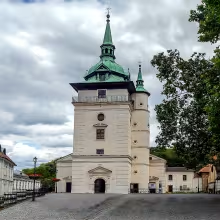
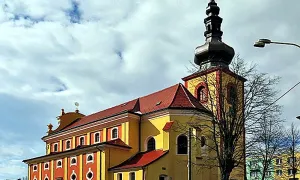
The Church of Saint John the Baptist in Teplice is a Roman Catholic deanery church located on Zamecké Square. This baroque basilica-style building, completed in 1703, stands as a testament to the architectural and cultural heritage of the region. Dedicated to Saint John the Baptist, the patron saint of healing springs and the city itself, this church serves religious purposes and offers visitors insight into Teplice's historical significance through its architecture and art.
The origins of the Church trace back to an earlier structure mentioned in Schwenkfeld’s description of Teplice baths. The current edifice was constructed between 1585 and 1594, with its bell tower completed in 1594 but later reduced in height by 1645. A significant transformation occurred in 1710 when Clary-Austrian architect Christian Lagler undertook a baroque reconstruction, transitioning it from its original Renaissance style. This period marked an era of cultural and architectural development across Europe, with Bohemia being part of the Habsburg Monarchy.
Architecturally, the Church is designed as a three-nave basilica featuring a rectangular presbytery. Its smooth facades are adorned with segmental windows, while the western façade boasts an octagonal tower that adds to its distinctive appearance. The church’s interior includes a main altar reminiscent of Bernini's Saint Peter's tabernacle, crafted around 1730 by Teplice’s master craftsman. This altar is flanked by sculptures and features various artistic elements such as flat reliefs depicting biblical scenes. Additionally, the church houses other notable artworks including baroque altars with intricate designs and sculptures of saints.
Throughout its history, the Church has undergone several modifications and restorations. After Lagler’s reconstruction in 1710, further adjustments were made in 1789, 1877, and 1890 to enhance its architectural features. In recent years, post-2000 restoration efforts have focused on repairing the façade and roof, ensuring the preservation of this historical monument.
Today, the Church remains an active place of worship where regular services are held, along with concerts of sacred music that draw visitors from near and far. The church’s lookout tower offers panoramic views over Teplice's city center, adding to its appeal as a cultural landmark. Its rich history and architectural beauty make it a must-visit site for anyone interested in exploring the historical and religious heritage of Teplice.
Visiting this monument provides an opportunity to appreciate not only its spiritual significance but also its role in the broader narrative of European baroque architecture. The Church of Saint John the Baptist stands as a symbol of resilience and artistic achievement, inviting visitors to explore its storied past and enjoy its serene atmosphere.
Historical milestones
- 1585
- Začátek stavby současného kostela.
- 1594
- Dokončení věže kostela.
- 1645
- Snížení výšky věže kostela.
- 1703
- Dokončení barokního bazilikálního kostela.
- 1710
- Barokní rekonstrukce provedena architektem Christianem Laglerem.
- 1730
- Vytvoření hlavního oltáře podobného Berniniově tabernáklu sv. Petra.
Architectural development
The church's architectural development began with its construction between 1585 and 1594. It underwent significant baroque transformation in 1710 by Christian Lagler, transitioning from its initial Renaissance style. Further modifications occurred in the years 1789, 1877, and 1890, with post-2000 restoration efforts focusing on the façade and roof.
Historical events
The church was built between 1585–1594 on the foundations of an earlier structure mentioned in Schwenkfeld's description of Teplice baths. The bell tower was completed in 1594 but reduced in height in 1645.
In 1710, Clary-Austrian architect Christian Lagler completed its baroque reconstruction from a Renaissance original.
Points of interest
- The Church of Saint John the Baptist underwent a significant transformation in 1710 when Clary-Austrian architect Christian Lagler converted it from Renaissance to Baroque style, reflecting broader European cultural shifts during the Habsburg Monarchy's influence.
- Originally mentioned by Schwenkfeld as part of Teplice baths, the church's earliest structure dates back to before its current form was built between 1585 and 1594, highlighting its longstanding connection to local healing traditions.
Guide
Show guide text
Welcome to the Church of Saint John the Baptist in Teplice, a remarkable testament to both history and architectural evolution. As you stand here on Zamecké Square, take a moment to absorb the grandeur of this Roman Catholic deanery church. Its baroque basilica-style structure towers before you, completed in 1703, dedicated to Saint John the Baptist—the patron saint of healing springs and Teplice itself.
Let's delve into its origins. The journey of this sacred site began in 1585 with the construction of what would become today’s church. By 1594, a prominent feature was already in place: the tower, which would later undergo modifications to suit changing times. In 1645, the height of the tower was reduced, perhaps reflecting shifts in architectural or practical needs. The transformation reached its zenith in 1703 when the baroque basilica we see today was completed.
Now, shift your gaze to the church’s architecture and notice how it speaks volumes about its history. Christian Lagler, a Clary-Austrian architect, played a pivotal role in reshaping this edifice. In 1710, he masterfully reimagined the structure from Renaissance to Baroque style, infusing it with the grandeur characteristic of that era under Habsburg influence. As you look around, take note of the church's elegant lines and harmonious proportions—a true reflection of Lagler’s vision.
One of the most striking aspects is the main altar, created in 1730, reminiscent of Bernini’s tabernacle at St. Peter’s Basilica. This detail not only highlights the artistic ambition but also connects this local sanctuary to broader European artistry and devotion.
Now, let's explore some fascinating stories linked to this place. Though specific historical figures tied to its early days remain unnamed, it is known that the church was mentioned by Schwen in his accounts, hinting at its longstanding significance. This site has witnessed centuries of history unfold, serving as a spiritual beacon for the community.
Here’s an intriguing tidbit: the transformation led by Christian Lagler wasn't just about aesthetics; it marked a cultural shift during a time when Baroque art was flourishing across Europe under Habsburg patronage. Imagine how this church became part of that larger narrative, echoing the artistic and religious fervor of its age.
Before you leave, don’t miss the opportunity to climb up to the lookout tower. From there, enjoy breathtaking views over Teplice’s city center—a perspective that connects past and present in a single glance.
As we conclude our tour, I invite you to continue exploring this historical gem. Wander through its halls, attend one of its sacred music concerts, or simply bask in the atmosphere it exudes. Thank you for joining me today, and may your visit here inspire a deeper appreciation for Teplice’s rich cultural tapestry. Safe travels as you continue discovering more wonders!
Tips for visitors
The best time to visit the Church of Saint John the Baptist in Teplice is during late spring or early fall, ideally on a weekday morning. This timing allows you to experience the church with fewer crowds and enjoy pleasant weather conditions. The natural light entering through the baroque windows enhances the interior's beauty, making it an ideal setting for appreciating the architectural details.
Parking near Zamecké Square can be limited, so consider using public transportation or parking in a nearby lot outside the immediate vicinity of the church. Teplice has several bus lines that connect to major areas, and you can verify current routes through a local transit app or website. Walking from these points is usually straightforward and adds an enjoyable aspect to your visit.
When visiting the Church of Saint John the Baptist, it's advisable to bring comfortable walking shoes as exploring the church and its surroundings involves some walking. A camera with good low-light capabilities can be beneficial for capturing the interior details, especially in areas where natural light is limited. Additionally, carrying a small umbrella or raincoat might be wise if visiting during unpredictable weather seasons.
For photography enthusiasts, the best spots to capture the Church of Saint John the Baptist are from outside on Zamecké Square, which provides a clear view of its baroque architecture against the city skyline. Inside, photographing near the altar and along the side chapels can highlight intricate details. The morning light is particularly flattering for interior shots, as it softly illuminates the church’s features.
Within a 30-minute drive from Teplice, visitors can explore several interesting sites such as the Chodová Planá Spa or the historic town of Děčín. These locations offer additional cultural and recreational activities, making them perfect for extending your trip. Families with children might particularly enjoy the natural landscapes around these areas for a leisurely day out.
Businesses nearby
Do you run a restaurant, accommodation, shop, museum, rental, wellness or other visitor service near this monument? Show yourself directly to the people heading to it — this is how they will see you in the app and on the web:
Accommodation nearby
Trips and activities nearby
Guided tours, tickets and activities nearby from GetYourGuide
Search tours and activities →Themed route
Tematická výletní trasa: Kostel svatého Jana Křtitele v Teplicích
1. Kostel svatého Jana Křtitele - *Typ:* Historická památka, kostel - *Proč stojí za návštěvu:* Tento barokní kostel je nejstarším sakrálním stavbou v Teplicích a sloužil jako duchovní centrum od 13. století. Jeho bohaté historie, architektonická krása a umělecké prvky zasluhují pozornost každého návštěvníka.
2. Kurzovna Teplice - *Typ:* Historický objekt - *Proč stojí za návštěvu:* Nachází se v blízkosti kostela a je jedním z nejstarších budov v Teplicích. Původně sloužila jako městská kurzovna, dnes hostí různé kulturní akce a výstavy, které nabízejí vhled do historie a kultury oblasti.
3. Památník Vítězoslavu Nezvalovi - *Typ:* Umělecká památka - *Proč stojí za návštěvu:* Tento památník, umístěný nedaleko kostela, je věnován slavnému českému básníku Vítězslavu Nezvalovi. Je to místo pro reflektování a ocenění kulturního dědictví Teplic.
4. Park u Kostela svatého Jana Křtitele - *Typ:* Městský park - *Proč stojí za návštěvu:* Park, který obklopuje kostel, je ideálním místem pro klidné chvíle a procházky. Poskytuje krásnou zelenou oázu v centru města s pohodlnými sedacími místy a přírodními prvky, které dodávají místo klidné atmosféry.
Tato trasa nabízí kombinaci historie, kultury a přírody v centru Teplic, což umožňuje návštěvníkům prozkoumat bohaté dědictví této oblasti.
Seasonal recommendations
Spring: As the snow melts and nature awakens, Teplice's Church of St. John the Baptist is enveloped in a vibrant display of spring blossoms, creating an enchanting atmosphere that complements its historic architecture. The soft morning light filters through stained glass windows, casting colorful patterns on the stone floors. This season offers a quieter visit compared to summer, with fewer crowds allowing for a more intimate experience. Visitors are advised to wear layers as temperatures can be unpredictable; mornings might require a jacket while afternoons could become pleasantly warm.
Summer: During the peak of summer, the Church of St. John the Baptist basks in long daylight hours and warm sunshine, ideal for exploring its architectural details and serene surroundings. The lush greenery surrounding Teplice adds to the picturesque setting, making it perfect for a leisurely stroll after visiting the church. However, this is also the busiest season, so arriving early in the morning can help avoid larger crowds. Light clothing is recommended due to the heat, along with comfortable walking shoes if you plan on exploring the nearby areas.
Autumn: Autumn transforms Teplice into a tapestry of reds, oranges, and yellows as the leaves change color around the Church of St. John the Baptist. The crisp air enhances the experience of visiting this historical site, providing stunning photo opportunities against a backdrop of fall foliage. This season is less crowded than summer but still offers pleasant weather for outdoor exploration. Visitors should dress in layers to accommodate the cooler temperatures and consider bringing an umbrella or raincoat as autumn rains can be frequent.
Winter: In winter, Teplice's Church of St. John the Baptist takes on a serene and mystical quality under a blanket of snow, with its gothic spires standing tall against the gray skies. The shorter days mean the church is often illuminated by soft artificial lighting, adding to its ethereal charm. This season typically sees fewer visitors, allowing for a peaceful exploration of the site. It's essential to dress warmly in layers and wear waterproof boots due to snow or rain; also, check opening hours as they may be reduced during this time of year.
Visualizations and artistic views

Vizualizace jsou generovány umělou inteligencí a slouží jako inspirace.


Tips from visitors
No tips yet. Be the first!
Log in and add your tip.


Reviews and comments