





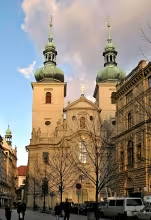
St. Wenceslas Church is located on Havelská Street within Prague's Old Town. It showcases architectural evolution from Romanesque origins through Gothic transformation and later Baroque embellishments. Constructed between 1232 and 1263, this three-nave church features two towers at the façade and has been a key part of Prague’s historical landscape since its inception.
The church began as a Romanesque parish church during King Wenceslaus I's reign, who played a crucial role in urban development and establishing Prague as an important center. By the early 14th century, it transformed into a Gothic basilica, reflecting contemporary architectural trends. The current Baroque façade, completed between 1723 and 1738, replaced the original frontage, illustrating artistic transitions over centuries.
Architecturally, St. Wenceslas Church is distinguished by its three-nave structure with two towers at the façade. The baroque façade, characterized by a wave-like design, was constructed when Giovanni Domenico Orsi led renovations for the Carmelite order, possibly under plans by Carlo Lurago. Inside, the church retains much of its Gothic foundation, including 17th-century cross-vaulted ceilings and preserved Gothic piers covered with Baroque pilasters. The interior is adorned with valuable Baroque furnishings, such as altarpieces by M. V. Jäckel and sculptures by Ferdinand Maxmilián Brokoff.
Ownership of the church has shifted over time, reflecting broader historical changes in Prague. Initially serving as a parish church from 1232 to 1263, it later became associated with the Consistory of Utraquists between 1358 and 1627. In 1627, Emperor Ferdinand II transferred ownership to the Order of Discalced Carmelites, who maintained it until their dissolution in 1786. Since then, it has functioned as a parish church.
Key events at St. Wenceslas Church include the donation of St. Wenceslas' skull by Emperor Charles IV in 1353 and sermons delivered by notable figures such as Jan Hus in 1412. These events underscore its historical significance as a center for religious and cultural activity. The church also houses several valuable epitaphs from the 16th and 17th centuries, adding to its historical allure.
Today, St. Wenceslas Church remains an accessible site within Prague's Old Town, inviting visitors to explore its rich history and architectural beauty. Its nearly complete Baroque interior, coupled with significant historical artifacts, makes it a compelling destination for those interested in the cultural heritage of Prague. Visitors are encouraged to experience this remarkable monument, which continues to be a symbol of the city’s enduring legacy.
Historical milestones
- 1232
- Začátek stavby kostela svatého Václava.
- 1263
- Dokončení stavby kostela v románském stylu.
- 1353
- Darování lebky svatého Václava císařem Karel IV.
- 1412
- V kostele se konaly kazatele Jana Husa.
- 1358
- Převzetí kostela konsistorem utrakvistů.
- 1627
- Převod vlastnictví na řád nešporových Karmelitánů.
Architectural development
The church began as a Romanesque structure and was later transformed into a Gothic basilica in the early 14th century. The baroque façade, completed between 1723 and 1738, replaced the original frontage. Giovanni Domenico Orsi led renovations for the Carmelite order, with possible plans by Carlo Lurago. Baroque interior elements include altarpieces and sculptures from the late 17th to early 18th centuries.
Historical events
1353: Emperor Charles IV donated the skull of St. Wenceslas to the church.
1412: Jan Hus preached at the church.
Owners
Farní kostel (1232–1263)
Konsistoř podobojí (1358–1627)
Řád obutých karmelitánů (1627–1786)
Farní kostel (1786–present)
Points of interest
- The church's façade was redesigned with a wave-like Baroque style under the leadership of Giovanni Domenico Orsi, who may have followed plans by Carlo Lurago. This transformation highlights the artistic shifts from Gothic to Baroque aesthetics over time.
- In 1353, Emperor Charles IV made a significant donation by transferring St. Wenceslas' skull to the church, enhancing its religious and historical importance as a site of veneration for one of Bohemia's patron saints.
Guide
Show guide text
Welcome to the historic St. Wenceslas Church, nestled in Havelská Street within Prague's Old Town. As you stand here, take a moment to absorb your surroundings. The church presents itself with an elegant three-nave structure and two prominent towers adorning its façade. This site has been a silent witness to centuries of history, evolving through architectural styles that tell tales of the past.
The origins of this sacred place trace back to between 1232 and 1263 when it was initially constructed as a Romanesque parish church. Over time, it underwent significant transformations, most notably in the early 14th century when it embraced the Gothic style, becoming a basilica that echoed the grandeur of its era. The façade you see today is a testament to Baroque artistry, redesigned between 1723 and 1738 under the guidance of Giovanni Domenico Orsi, possibly following plans by Carlo Lurago.
As you gaze upon the church's façade, notice how it gracefully transitions from its Gothic roots into the wave-like elegance characteristic of Baroque design. This transformation is a visual narrative of artistic evolution that has shaped this iconic structure over centuries.
St. Wenceslas Church holds deep historical significance, intertwined with notable figures and events. In 1353, Emperor Charles IV made a poignant gesture by donating St. Wenceslas's skull to the church, an act symbolizing both reverence and political influence. The church also played host to pivotal moments in religious history; in 1412, Jan Hus delivered his sermons here, igniting discussions that would resonate through time.
Throughout its existence, the church has seen various custodians, including a transfer of ownership to the Order of Neuss Karmelitans in 1627. Figures like Konrád Waldhauser and Jan Milíč z Kroměříže have also been associated with this sacred site, each leaving an indelible mark on its storied past.
One intriguing aspect of St. Wenceslas Church is the blend of architectural styles it embodies, a reflection of its rich history and cultural significance. This church not only stands as a monument to religious devotion but also as a canvas displaying the artistic shifts from Gothic to Baroque aesthetics over time.
As you continue your journey through Prague's Old Town, let St. Wenceslas Church be a reminder of the layers of history that have shaped this city. Explore further and immerse yourself in the stories etched into its walls. Thank you for joining us on this auditory exploration, and we hope it inspires you to delve deeper into the fascinating tapestry of Prague's heritage.
Tips for visitors
The best time to visit St. Wenceslas Church is during the late morning or early afternoon, ideally from late spring through early autumn. This timing allows you to enjoy pleasant weather while avoiding the peak tourist crowds that often gather in Prague's Old Town. The soft natural light enhances the church’s architectural details and interior artwork, making it an ideal time for photography enthusiasts.
Transportation options are plentiful when visiting St. Wenceslas Church. It is accessible by both car and public transport. If you choose to drive, there are parking facilities available in the vicinity of Prague's Old Town, though spaces can be limited during peak tourist seasons. Public transportation is convenient with several tram lines stopping nearby; however, it’s advisable to check current routes and schedules using a local transit app or website.
When visiting St. Wenceslas Church, consider bringing comfortable walking shoes as you’ll likely explore the surrounding cobblestone streets of Prague's Old Town. A camera is recommended to capture the stunning architecture and vibrant atmosphere. Additionally, carrying a light jacket can be useful due to variable weather conditions in Prague.
Photography enthusiasts will find several spots around St. Wenceslas Church ideal for capturing its beauty. The best lighting occurs during the golden hours of early morning or late afternoon. For exterior shots, consider positioning yourself at Havelská Street to capture both towers and the church’s façade against a backdrop of historic buildings. Inside, the stained glass windows are particularly striking under natural light.
Nearby attractions within 30 minutes include Charles Bridge and Prague Castle, offering more historical exploration opportunities. For families with children, these sites provide engaging history lessons complemented by picturesque views of the Vltava River. Additionally, the Old Town Square is a short walk away, where kids can enjoy exploring the Astronomical Clock.
Businesses nearby
Nearby
Located in Prague's Old Town, St. Wenceslas Church is surrounded by historic buildings and cobblestone streets typical of this UNESCO World Heritage site.
Accommodation nearby
Trips and activities nearby
Guided tours, tickets and activities nearby from GetYourGuide
Search tours and activities →Themed route
Tematická výletní trasa: Historické srdce Starého Města Prahy
1. Kostel svatého Havla (St. Nicholas Church) *Typ:* Kostel *Proč stojí za návštěvu:* Tento gotický kostel je známý pro svou vysokou věž, která nabízí jedinečný pohled na Staré Město a jeho charakteristické čtvercové uličky. Kostel také hostil důležité historické události a je domovem pro slavnou zvonici, která přitahuje milovníky hudby.
2. Staroměstské náměstí *Typ:* Náměstí *Proč stojí za návštěvu:* Toto centrální náměstí je srdcem Starého Města, známé svými historickými budovami a starobylou atmosférou. Je domovem monumentálního sochařského díla Jan Hus a každodenních trhů, které oživují jeho ulice.
3. Staroměstská radnice *Typ:* Historický památník *Proč stojí za návštěvu:* Tato významná budova je známá svou gotickou architekturou a historií. Je domovem slavného astronomického hodinového kroužku, který přitahuje pozornost svými detaily a symbolikou.
4. Křižovatka u Mostecké brány *Typ:* Historická křižovatka *Proč stojí za návštěvu:* Tato místa, známá jako "U prázdných krabic" a "U zlatého prasete", jsou plné historie a legend. Odrážejí bohatou minulost Starého Města a nabízejí pohled na jeho architektonickou rozmanitost.
5. Kostel svatého Havla (St. Nicholas Church) *Typ:* Kostel *Proč stojí za návštěvu:* Navrácení k hlavnímu cíli, výlet může končit prohlídkou interiérů kostela a jeho zvonice. Zde lze také užít pohledy na okolní Staré Město a pochopit duchovní i historický význam tohoto místa.
Tato trasa nabízí návštěvníkům hluboký vhled do historie a kultury Starého Města, s jeho bohatou architekturou a legendami.
Seasonal recommendations
Spring: The arrival of spring transforms the Church of St. Vitus into a serene retreat, with soft sunlight filtering through stained glass windows and casting vibrant hues across the interior. The surrounding Prague Castle grounds burst into life, adorned with blooming flowers that add to the picturesque setting. Visitors should take advantage of the moderate weather by wearing layers, as temperatures can fluctuate. Early mornings are ideal for exploring, allowing you to enjoy the church's tranquility before larger crowds gather.
Summer: Summer brings vibrant energy and longer daylight hours to the Church of St. Vitus, making it a popular destination during Prague’s peak tourist season. The lush greenery around the castle enhances the historic site's beauty, while warm temperatures invite visitors to linger outside after their tour. To avoid long lines, consider arriving early in the morning or later in the afternoon when the crowds tend to thin out. Lightweight clothing and comfortable shoes are recommended for navigating both indoor spaces and outdoor areas.
Autumn: As autumn sets in, the Church of St. Vitus is enveloped in a warm, golden glow from the falling leaves surrounding Prague Castle. The cooler temperatures create a cozy atmosphere, perfect for enjoying the church's intricate architecture without the summer heat. Visitors should dress warmly and carry a light jacket or sweater to adapt to the changing weather throughout the day. Autumn’s milder crowds make it an excellent time to explore at your own pace.
Winter: Winter transforms the Church of St. Vitus into a magical setting, with snow-dusted rooftops and festive lights adding to its charm. The shorter days mean earlier closing times, so plan to visit in the morning for the best experience. The crisp air and quietude offer a peaceful atmosphere, ideal for appreciating the church's grandeur. Dress warmly in layers, including a hat and gloves, to stay comfortable during your visit while capturing the enchanting winter scenery of Prague Castle.
Visualizations and artistic views

Vizualizace jsou generovány umělou inteligencí a slouží jako inspirace.


Atmosphere of the place
Atmospheric visualization of the setting and era
Tips from visitors
No tips yet. Be the first!
Log in and add your tip.



Reviews and comments