




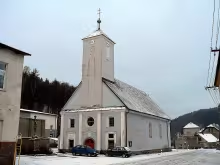
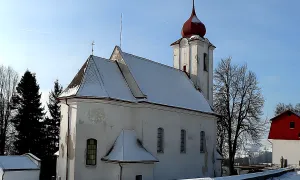
The Church of Saint Florian in Oskava is a notable architectural treasure from the late 18th century, combining Classicism and Empire styles. Situated in the village of Oskava within the Olomoucký kraj region, this church was built between 1775 and 1785 to replace an older wooden structure. It has served as the parish church since 1843. The building features a simple rectangular layout with a semi-circular presbytery and a square tower on its northern side. Its interior boasts exposed timber roofing that creates a unique visual effect, reminiscent of an inverted boat.
The origins of this church date back to 1775 when the original wooden structure was constructed for local residents who previously traveled far for Mass. As the community grew, there arose a need for a more permanent and larger church, leading to the construction of the current stone edifice under the guidance of páter Caspar Langer. His efforts were crucial in organizing the building's expansion and renovation. Financial support came from Prince Liechtenstein and local citizens who contributed through donations or craftsmanship.
Architecturally, the Church of Saint Florian reflects late 18th-century design influences. Its simple rectangular layout with a semi-circular presbytery showcases Classicism, while the square tower and other elements hint at Empire styles. The facade is characterized by smooth surfaces interrupted only by pilasters, and its windows are oblong with arches. Inside, the exposed timber roof enhances the building's unique aesthetic, adding to the sense of space.
Throughout its history, the church has experienced various changes in ownership and administration. Initially supported by Prince Liechtenstein, it became a parish church in 1843. Over time, significant renovations have been made, including steeple repairs and facade restoration. The church's bells also tell a story of resilience; during World War I, two original bells were confiscated, but the smallest survived World War II.
Key events include its solemn consecration in September 1785 and the installation of a memorial plaque in 1935 to honor páter Caspar Langer's contributions. His efforts were pivotal in transforming the wooden church into the stone structure that stands today. The church also faced challenges during the world wars, impacting its bells.
Today, the Church of Saint Florian remains an important cultural and historical site. It has been well-maintained, with recent renovations including steeple repairs and facade restoration. Visitors can appreciate its architectural beauty and historical significance, making it a worthwhile destination for those interested in late 18th-century architecture and local history.
The Church of Saint Florian stands as a testament to the community's resilience and dedication to preserving their cultural heritage. Its unique blend of architectural styles and rich history make it an intriguing site worth exploring. Visitors are invited to experience this remarkable monument, which continues to serve as a spiritual and historical beacon in Oskava.
Historical milestones
- 1775
- Construction of the original wooden church began.
- 1785
- The new stone church was solemnly consecrated.
- 1935
- A memorial plaque for páter Caspar Langer was installed.
Architectural development
The Church of Saint Florian underwent significant development from its initial wooden structure to a more permanent stone edifice. The original church, built in 1775, was expanded and renovated by páter Caspar Langer, who played a crucial role in organizing the construction of the new building. Financial contributions came not only from Prince Liechtenstein but also from local citizens through monetary donations or craftsmanship. Over time, the church has seen various renovations, including steeple repairs and facade restoration.
Historical events
In 1775, the original wooden church was built to serve local residents who previously traveled far for Mass.
The church was solemnly consecrated in September 1785 after being expanded and renovated under the guidance of páter Caspar Langer.
A memorial plaque commemorating páter Langer's contributions was installed on the church wall in 1935, marking 150 years since its construction.
Points of interest
- The Church of Saint Florian's exposed timber roofing creates a unique visual effect that resembles an inverted boat, adding to its architectural intrigue.
- During World War I, two of the church's original bells were confiscated by occupying forces, but the smallest bell survived both world wars, symbolizing resilience through turbulent times.
- Páter Caspar Langer not only played a crucial role in the church’s construction but also organized efforts that led to its expansion and renovation; his contributions are commemorated with a memorial plaque installed in 1935.
Guide
Show guide text
Welcome to the Church of Saint Florian in Oskava, a remarkable testament to late 18th-century architecture nestled within this serene locale. As you stand before it, take a moment to absorb its presence—an embodiment of history and artistry that has stood the test of time.
The origins of this church trace back to a period of transformation, between 1775 and 1785, when the need for a more enduring structure replaced an older wooden predecessor. This decision marked not just architectural evolution but also a significant moment in Oskava's religious history. The Church of Saint Florian was consecrated in 1785, symbolizing both spiritual continuity and renewal for its community.
Architecturally, this church is a fascinating blend of Classicism and Empire styles, evident even at first glance. Its simple rectangular layout is complemented by a semi-circular presbytery, inviting you to explore further. To the north, a square tower stands as a silent sentinel over the landscape, hinting at stories untold. While the architects remain unnamed, their vision has left an indelible mark on Oskava's skyline.
As we delve deeper into the church's history, one cannot overlook the legacy of páter Caspar Langer. In 1935, a memorial plaque was installed in his honor, serving as a reminder of his contributions to this sacred space and its community.
Now, allow yourself to be captivated by an architectural curiosity—the church's exposed timber roofing. This design choice creates a unique visual effect that resembles an inverted boat, adding a layer of intrigue and beauty to the structure. It's details like these that invite you to look closer, to appreciate the craftsmanship and thoughtfulness embedded in every element.
The Church of Saint Florian has also witnessed moments of adversity. During World War I, two of its original bells were taken by occupying forces. Yet, resilience is part of this church's story, embodied by the smallest bell which survived both world wars, continuing to call across the years with its enduring chime.
As we conclude our exploration, remember that this visit is just a glimpse into the rich tapestry of history and architecture that the Church of Saint Florian offers. We invite you to linger in the presence of its walls, to explore every nook and cranny at your leisure, and to let its stories inspire you long after you've moved on.
Thank you for joining us today. May your journey through Oskava be filled with discovery and wonder. Farewell, until we meet again in another chapter of history's unfolding story.
Businesses nearby
Do you run a restaurant, accommodation, shop, museum, rental, wellness or other visitor service near this monument? Show yourself directly to the people heading to it — this is how they will see you in the app and on the web:
Accommodation nearby
Themed route
Tematická výletní trasa: Kostel svatého Floriána (Oskava)
1. Kostel svatého Floriána, Oskava - *Typ:* Religiózní památka - *Proč stojí za návštěvu:* Tento barokní kostel je jednou z nejvýznamnějších architektonických památek v Oskavě. Jeho bohaté historie a krásné interiér, včetně dřevěného oltáře a freskových maleb, přitahují návštěvníky z celého regionu.
2. Kaple svaté Anny, Oskava - *Typ:* Kaple - *Proč stojí za návštěvu:* Tato malebná kaple je umístěna nedaleko kostela svatého Floriána a nabízí klidný útočiště pro meditaci. Je známá svou historickou architekturou a krásným panoramatickým výhledem na okolní krajinu.
3. Náves Oskavy - *Typ:* Místo s historickými budovami - *Proč stojí za návštěvu:* Centrální náves je živoucím připomínkem místní kultury a historie. Zde se nachází řada starobylých domů, které svými fassádami vyprávějí o bohatém dědictví obce.
4. Památník válečných zesnulých - *Typ:* Památník - *Proč stojí za návštěvu:* Tento památník je významným místem pro vzpomínku na oběti válek. Je to místo, kde se konají roční slavnosti a setkání, která podtrhují důležitost historické paměti pro komunitu.
5. Park u kostela svatého Floriána - *Typ:* Park - *Proč stojí za návštěvu:* Park nabízí klidné chodníky a zelené prostory, ideální k odpočinku po prozkoumání historických míst. Je to také oblíbené místo pro rodinné výlety a pikniky.
Tato trasa nabízí cestovatelemu komplexní pohled na kulturní a historické bohatství Oskavy, s důrazem na její náboženskou architekturu a místní paměť.
Seasonal recommendations
Spring: Visiting the Church of Saint Florian during spring offers a unique experience as the surrounding landscape begins to awaken with vibrant colors and fresh blooms. The soft, natural light filtering through budding trees enhances the church's architectural details, creating an inviting atmosphere for exploration. Visitors should expect mild weather, though occasional rain showers can add a picturesque quality to the scenery. It's advisable to wear comfortable layers that can be adjusted as temperatures fluctuate throughout the day. Early mornings are ideal for visiting, as they tend to be quieter and allow you to enjoy the serene beauty of nature in bloom.
Summer: The summer months bring warm weather and longer days, making it an excellent time to visit the Church of Saint Florian when the surrounding countryside is lush and green. The bright sunlight accentuates the church’s intricate stonework, providing a stunning backdrop for photography enthusiasts. However, this season also attracts more visitors, so arriving early in the morning can help avoid larger crowds. Light, breathable clothing is recommended to stay comfortable during your visit, along with sunscreen and a hat to protect against the sun. The extended daylight hours offer ample time to explore not just the church but also the picturesque landscapes of Oskava.
Autumn: Autumn at the Church of Saint Florian presents a breathtaking display of fall foliage, with vibrant reds, oranges, and yellows transforming the landscape into a painterly scene. The softer light during this season casts a warm glow over the church's facade, enhancing its historical charm. Cooler temperatures make it a pleasant time for walking tours around the area. Visitors should dress in layers to accommodate changing weather conditions throughout the day. Late afternoons are particularly beautiful as the setting sun creates dramatic shadows and highlights, perfect for capturing memorable photographs.
Winter: Winter transforms the Church of Saint Florian into a serene and magical destination, with snow-covered grounds adding a sense of tranquility and isolation from the bustling world outside. The church's architecture is beautifully accentuated by the stark contrast between white snow and its stone structure. Visitors should dress warmly in insulated clothing, hats, gloves, and boots to stay comfortable during their visit. Due to shorter daylight hours and potential weather-related closures, it’s wise to check opening times in advance. Early morning visits are recommended as they tend to be quieter and allow you to appreciate the peaceful winter atmosphere before any crowds arrive.
Visualizations and artistic views

Vizualizace jsou generovány umělou inteligencí a slouží jako inspirace.

Tips from visitors
No tips yet. Be the first!
Log in and add your tip.


Reviews and comments