





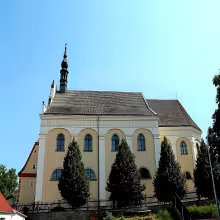
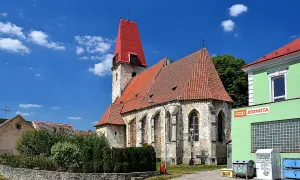
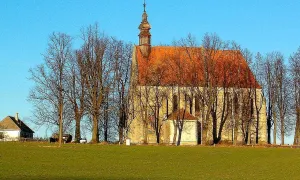
The Church of Saint Anthony of Padua in Dačice is a Roman Catholic church within the Carmelite convent's premises, originally founded by Franciscans. Constructed between 1664 and 1677, it exemplifies early Baroque architecture with its vaultless nave, four side chapels, and three-apse choir. A distinctive bell tower on the roof adds to its architectural uniqueness.
Adorned with an elaborate main altar in 1689, the church showcases the artistic richness of the period. It has been protected as Czech cultural heritage since becoming part of the convent's complex.
The origins trace back to a time when Dačice experienced significant religious and architectural developments influenced by Baroque art across Europe. Construction began in 1664 after financial support from local nobility, following Matěj Jan Kapeta's death. By 1672, contributions from figures like Hrabata z Fürstenberka, z Berchtoldu, and Berkové z Dubé enabled the foundation stone to be laid for this significant religious site.
Architecturally, it features an early Baroque style with a vaultless nave, four side chapels, and a three-apse choir. The bell tower on the roof is unusual for churches of this period. In 1689, the church received a lavish main altar, and its interior was refined until the early 18th century. Its consecration in 1729 marked it ready for regular services.
Ownership has changed over time. Initially managed by Franciscans from 1664 to 1950, the state took over post-1950. In 1997, the Discalced Carmelites assumed management and have since maintained it. A new choir was constructed perpendicular to the original presbytery after 2005.
Key events include the foundation stone laid in 1672 with local nobility's support and its consecration in 1729, marking readiness for regular services. These milestones highlight the church's historical significance within the community.
Today, it remains an integral part of Dačice’s cultural heritage, attracting visitors interested in Baroque architecture and religious history. The site is accessible to the public, offering insights into 17th-century Bohemia's artistic and spiritual life. Its unique architectural features and historical importance make it a worthwhile destination for those exploring Czech history.
The Church of Saint Anthony of Padua stands as a testament to Baroque artistry and religious devotion in Dačice. Visitors are invited to explore this remarkable site, where history and architecture converge to tell a story of faith, community, and cultural heritage.
Historical milestones
- 1664
- Začátek stavby kostela svatého Antonína Paduánského.
- 1672
- Lomenec položen s podporou místní šlechty.
- 1677
- Dokončení stavby kostela.
- 1689
- Vystavení nádherného hlavního oltáře.
- 1729
- Kostel vysvěcen pro pravidelné bohoslužby.
Architectural development
Constructed between 1664 and 1677 as a Baroque structure with a vaultless nave and four side chapels. The main altar was installed in 1689, and the church's interior was completed by the early 18th century. A new choir was added perpendicular to the original presbytery after 2005 for the needs of the Discalced Carmelites.
Historical events
- 1672
- Foundation stone laid for the new church after financial support from local nobility.
- 1729
- The church was consecrated, marking its completion and readiness for regular services.
Owners
Initially owned by Franciscans from 1664 to 1950, then taken over by the state post-1950, and currently managed by the Discalced Carmelites since 1997.
Points of interest
- The Church of Saint Anthony of Padua features a unique architectural element with its bell tower positioned on the roof, which is atypical for Baroque churches from that era. - Despite being originally founded by Franciscans, the church was managed by the Discalced Carmelites starting in 1997, illustrating a notable transition in religious stewardship over centuries. - The construction of the church's main altar in 1689 reflects the period's artistic richness and showcases elaborate design typical of Baroque artistry.
Guide
Show guide text
Welcome to the Church of Saint Anthony of Padua in Dačice III, a remarkable testament to early Baroque architecture nestled within the serene grounds of what was once a Carmelite convent. As you stand here, take a moment to absorb the tranquil ambiance and the rich history that surrounds this sacred site.
The journey of this church began in 1664, commissioned by local nobility who sought to create a place of worship dedicated to Saint Anthony of Padua. The construction spanned over thirteen years, culminating in 1677. Originally founded by Franciscans, it has since been managed by the Discalced Carmelites since 1997.
As you gaze upon this architectural gem, notice its distinctive features that set it apart from typical Baroque churches of its era. The church's layout includes a vaultless nave and four side chapels, leading to a three-apse choir—a design choice that invites contemplation on the open spaces within. Most strikingly, observe the bell tower perched atop the roof—an unusual placement for churches of this period.
The history of this church is intertwined with notable figures such as Matěj Jan Kapeta and the influential Hrabata z Fürstenberka, among others from the noble families of Berchtoldu and Berkové z Dubé. Their patronage was instrumental in both its construction and the addition of its magnificent main altar in 1689.
One intriguing aspect of this church is its unique architectural element: the bell tower on the roof. This feature not only adds to its visual appeal but also reflects a creative departure from conventional designs, showcasing the innovative spirit of its builders.
As you continue your exploration, allow yourself to be drawn into the stories and spiritual heritage that echo through these walls. Each corner holds whispers of the past, inviting you to delve deeper into its mysteries.
Thank you for joining me on this journey through history and architecture. I encourage you to explore further, perhaps uncovering more about the lives of those who walked these grounds centuries ago. Until next time, may your curiosity lead you to many more discoveries.
Tips for visitors
The best time to visit the Church of Saint Anthony of Padua in Dačice is during late spring or early autumn, when the weather is mild and pleasant for exploring both indoors and outdoors. This period offers a comfortable climate that enhances your experience as you walk through the historic town and enjoy the natural beauty surrounding the area. Additionally, visiting outside peak tourist seasons can provide a more serene atmosphere within the church and convent complex.
Parking and transportation options are convenient for visitors to Dačice. There is parking available near the historic center where the church is located, making it accessible by car. For those preferring public transport, several bus routes serve the area, providing easy access from nearby towns. It's advisable to check current schedules online or at local information centers to plan your journey efficiently.
When visiting the Church of Saint Anthony of Padua and its convent complex, consider bringing comfortable walking shoes as you'll likely explore both indoor areas and outdoor surroundings. A camera is also recommended for capturing the architectural beauty of the church and the charming streets of Dačice. Additionally, carrying a light jacket or sweater can be useful due to varying temperatures inside historical buildings.
Photography enthusiasts will find several spots within the Church of Saint Anthony of Padua that offer stunning views, especially during golden hour when natural light enhances the interior's intricate details and stained glass windows. The church’s altar area is particularly photogenic, with its rich decorations bathed in soft light. For outdoor shots, consider capturing the church from various angles around the convent complex to highlight its historical context within Dačice.
For families visiting with children, there are several attractions nearby that can make your trip more enjoyable and educational. Within a 30-minute drive, you can explore other cultural sites such as local museums or historical landmarks in the region. The natural surroundings also offer opportunities for outdoor activities like hiking or picnicking, which are great for keeping children entertained while learning about the area's history.
Businesses nearby
Do you run a restaurant, accommodation, shop, museum, rental, wellness or other visitor service near this monument? Show yourself directly to the people heading to it — this is how they will see you in the app and on the web:
Nearby
Located in Dačice, the church is part of a convent complex within a historic town setting. The surrounding area includes other cultural and natural attractions within a 5 km radius.
Accommodation nearby
Trips and activities nearby
Guided tours, tickets and activities nearby from GetYourGuide
Search tours and activities →Themed route
Thematic Walking Tour: Dačice III and its Cultural Gems
1. Church of Saint Anthony of Padua (Dačice III) - *Type:* Religious Site - *Why Visit:* This stunning church is a centerpiece in the historic town of Dačice, forming part of a convent complex that offers visitors a glimpse into the region's rich religious heritage and architectural beauty. Its serene atmosphere and intricate design make it an ideal starting point for exploring the cultural depth of Dačice.
2. Convent Complex - *Type:* Historical Site - *Why Visit:* Adjacent to the Church of Saint Anthony of Padua, this convent complex provides a fascinating insight into monastic life in historical Dačice. The architecture and layout offer a unique perspective on the community's spiritual and social history, making it an enriching experience for those interested in cultural and religious studies.
3. Historic Town Center - *Type:* Cultural Area - *Why Visit:* Just a short walk from the church and convent complex, the historic town center of Dačice is filled with charming streetscapes that reflect centuries of history. Visitors can explore traditional shops, cafes, and quaint buildings, each telling its own story of the town's development over time. This area provides an authentic taste of local life and culture.
4. Local Artisan Workshops - *Type:* Cultural Experience - *Why Visit:* Within walking distance from the historic center, these workshops showcase the craftsmanship and creativity of Dačice’s artisans. Visitors can observe traditional crafts being made, offering a hands-on appreciation for the skills passed down through generations. This experience highlights the town's commitment to preserving its cultural heritage.
This thematic tour offers an immersive journey into the heart of Dačice III, celebrating its religious, historical, and cultural treasures within a compact and accessible area.
Seasonal recommendations
Spring: Visiting the Church of Saint Anthony of Padua during spring offers a unique experience as nature awakens around Dačice III, with blooming flowers and lush greenery enhancing the church's historic beauty. The soft morning light filters through stained glass windows, creating an ethereal atmosphere perfect for photography or quiet reflection. Spring can bring unpredictable weather, so it’s wise to dress in layers that can be adjusted as temperatures fluctuate throughout the day. While crowds are generally manageable during this time, arriving early allows you to enjoy a more serene visit before visitors gather.
Summer: Summer is an ideal time to explore the Church of Saint Anthony of Padua due to its extended daylight hours and pleasant weather, making it perfect for those who wish to spend more time outdoors exploring the surrounding area. The vibrant greenery and warm sunshine create a lively atmosphere that complements the church's historic charm. However, this season also attracts larger crowds, especially during peak tourist times in July and August. To avoid long lines at popular sites, consider visiting early in the morning or later in the afternoon when it’s cooler. Don’t forget to wear comfortable shoes for walking and bring sunscreen to protect against the sun.
Autumn: Autumn brings a stunning display of colors as the leaves around Dačice III transform into shades of red, orange, and gold, providing a picturesque backdrop to the Church of Saint Anthony of Padua. The crisp air and mellow light enhance the church's architectural details, making it an excellent time for photography enthusiasts. As temperatures begin to drop, wearing warm layers is advisable, along with comfortable walking shoes for exploring nearby trails or parks. While crowds are less intense than in summer, visiting on weekdays can ensure a more peaceful experience.
Winter: Winter transforms the Church of Saint Anthony of Padua into a serene and quiet haven, often blanketed by snow that accentuates its historic architecture against the stark winter landscape. The shorter days mean fewer visitors, allowing for an intimate exploration of this historic site without the usual crowds. However, with reduced daylight hours, it's best to plan your visit during midday when there is optimal natural lighting. Dress warmly in layers and wear waterproof boots to navigate any icy paths comfortably. Keep in mind that some facilities might have limited opening hours or be closed on certain days due to the season.
Visualizations and artistic views

Vizualizace jsou generovány umělou inteligencí a slouží jako inspirace.


Tips from visitors
No tips yet. Be the first!
Log in and add your tip.
Location on the map


Příběhy a pověsti
Legendy, pověsti a příběhy spjaté s touto památkou
Reviews and comments