





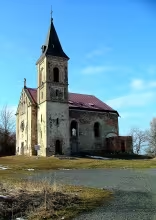
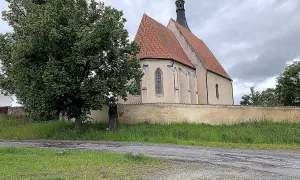
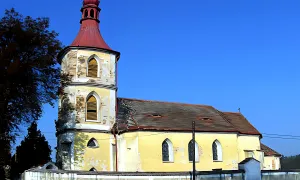
The Church of Saint Mary Magdalene stands as a testament to historical resilience and architectural evolution in the Plzeňský region near Kokašice. Perched on a hill above Krasíkov, this Roman Catholic church dates back to 1650 when Jan Bedřich ze Švamberka commissioned it following a fire at Švamberk Castle. Built upon a Gothic chapel's foundations, the church has undergone significant transformations over the centuries and remains a cultural monument alongside the ruins of Švamberk Castle.
The origins of the Church of Saint Mary Magdalene are deeply rooted in the late seventeenth century when Bohemia was part of the Habsburg Monarchy. This period followed the Thirty Years' War, marking significant political and religious changes across Europe. Construction began in 1650 under Jan Bedřich ze Švamberka to replace a lost chapel with a new structure on the same site. By around 1700, the church was completed, reflecting the Baroque architectural style prevalent during that era.
Architecturally, the Church of Saint Mary Magdalene is an intriguing blend of styles and historical influences. It features a polygonal presbytery built atop a late-Gothic artillery bastion, indicating its layered history. The southern wall includes a Renaissance window sash with the Švamberk family crest, showcasing artistic elements incorporated during its expansion between 1707 and 1710 by Jan Josef z Vrtby and Zuzana Antonie z Heisenštejna. Later renovations in the late nineteenth century by the Löwenstein family introduced neo-Renaissance stylistic changes, enriching the church's architectural narrative.
Ownership of the church has seen notable transitions over time. Initially commissioned by Jan Bedřich ze Švamberka, it later came under the stewardship of Jan Josef z Vrtby and Zuzana Antonie z Heisenštejna, who expanded its structure in the early 18th century. By the late nineteenth century, the Löwenstein family took ownership, overseeing renovations that infused neo-Renaissance elements into the church's design.
Throughout its history, the Church of Saint Mary Magdalene has been a site of significant events and curiosities. In 1787, local priest Jan Böhm removed valuable items from the family crypt within the church, an act for which he was later punished with imprisonment. The late nineteenth century saw further changes under the Löwenstein family's ownership, who renovated the church in a neo-Renaissance style. Despite these enhancements, the church faced challenges such as storm damage to its roof in 1956 and vandalism in subsequent decades.
Today, the Church of Saint Mary Magdalene stands as a cultural monument that offers visitors a glimpse into the region's rich history. While it has endured various periods of neglect and restoration, its architectural elements continue to tell stories of its past. Visitors are drawn not only by its historical significance but also by its proximity to the ruins of Švamberk Castle, making it an intriguing destination for those interested in exploring Bohemian history.
The Church of Saint Mary Magdalene remains a valuable cultural and historical site, inviting visitors to explore its storied past. Its resilience through centuries of change underscores its importance as a monument that bridges different eras and architectural styles. Whether drawn by its historical significance or simply wishing to experience the tranquility it offers amidst Krasíkov's scenic landscape, this church is well worth a visit.
Historical milestones
- 1650
- Jan Bedřich ze Švamberka commissioned the construction of the church.
- 1707
- Expansion and renovation by Jan Josef z Vrtby and Zuzana Antonie z Heisenštejna began.
- 1787
- Jan Böhm removed valuable items from the family crypt within the church.
Architectural development
The Church of Saint Mary Magdalene was built on the foundations of a Gothic chapel after a fire destroyed Švamberk Castle. It underwent significant expansion between 1707 and 1710, incorporating Renaissance elements such as window sashes with family crests. The church was later renovated in a neo-Renaissance style by the Löwenstein family in the late nineteenth century.
Historical events
In 1650, Jan Bedřich ze Švamberka commissioned the church's construction following a fire at Švamberk Castle.
Between 1707 and 1710, the church was expanded by Jan Josef z Vrtby and Zuzana Antonie z Heisenštejna.
In 1787, Jan Böhm, a local priest, removed valuable items from the family crypt within the church.
Owners
The church was initially commissioned by Jan Bedřich ze Švamberka in 1650, later expanded by Jan Josef z Vrtby and Zuzana Antonie z Heisenštejna between 1707-1710. By the late nineteenth century, it came under the ownership of the Löwenstein family, who renovated it in a neo-Renaissance style during the 1880s.
Points of interest
- The Church of Saint Mary Magdalene was constructed on the foundations of a Gothic chapel, showcasing an intriguing blend of historical architectural layers from different eras. - In 1787, local priest Jan Böhm removed valuable items from the family crypt within the church, resulting in his imprisonment for this act, highlighting a curious episode in its history. - The southern wall features a Renaissance window sash with the Švamberk family crest, reflecting the artistic elements incorporated during early 18th-century expansions by Jan Josef z Vrtby and Zuzana Antonie z Heisenštejna.
Guide
Show guide text
Welcome to the Church of Saint Mary Magdalene in Kokašice, a serene and historically rich site nestled on a hill above Krasíkov near Kokasy. As you stand here, imagine the gentle breeze sweeping across this tranquil landscape, carrying with it whispers of history that echo through time.
This church, perched gracefully atop its elevated position, was originally constructed on the foundations of an older Gothic chapel. The story begins in 1650 when Jan Bedřich ze Švamberka commissioned its construction after a devastating fire razed the nearby Švamberk castle to ashes. The project unfolded over several decades and reached completion around 1700, marking it as a symbol of resilience and renewal.
As you gaze upon this structure, take in the harmonious blend of architectural styles that have been layered through centuries. Notice how the polygonal presbytery at the rear of the church adds an intriguing element to its design, hinting at the complex history embedded within its walls. The church's architecture is a testament to its evolving story—a narrative shaped by time and human endeavor.
The tale of this church wouldn't be complete without mentioning key figures who left their mark here. Jan Bedřich ze Švamberka initiated its creation, but it was further expanded and renovated in 1707 under the guidance of Jan Josef z Vrtby and Zuzana Antonie z Heisenštejna. Their contributions added depth to this historical tapestry.
Intrigue surrounds the church from an unexpected angle as well. In 1787, local priest Jan Böhm removed valuable items from a family crypt within these hallowed walls—a decision that remains shrouded in mystery and adds a layer of enigma to its history.
As you continue to explore this remarkable site, let your imagination wander through the centuries. Reflect on the lives intertwined with this sacred space and the stories they tell. We invite you to delve deeper into its mysteries and discover more about the rich tapestry that is the Church of Saint Mary Magdalene.
Thank you for joining us on this journey through history. May your visit inspire a newfound appreciation for the past, as you carry these memories with you.
Businesses nearby
Do you run a restaurant, accommodation, shop, museum, rental, wellness or other visitor service near this monument? Show yourself directly to the people heading to it — this is how they will see you in the app and on the web:
Nearby
The church is situated on a hill above Krasíkov, near Kokasy, and is close to the ruins of Švamberk Castle. The surrounding landscape includes natural features typical of the Plzeňský region.
Accommodation nearby
Themed route
Thematic Walking Tour: Kokašice and Surroundings
1. Kostel sv. Maří Magdaleny (Church of St. Mary Magdalene) - Type: Historical Church - Why Visit: This church, perched on a hill above Krasíkov near Kokasy, offers stunning views and historical architecture that reflects the rich cultural heritage of the Plzeňský region. Its serene location makes it an ideal starting point for exploring nearby attractions.
2. Ruins of Švamberk Castle - Type: Historical Ruins - Why Visit: Just a short walk from the church, these ruins provide insight into medieval history and offer picturesque views of the surrounding landscape. The remnants of this castle are steeped in stories and legends that add depth to your exploration.
3. Krasíkov Hill - Type: Natural Feature - Why Visit: As you descend from the church, take a moment to explore Krasíkov Hill. Its natural beauty showcases typical features of the Plzeňský region and offers a peaceful retreat with panoramic vistas that are perfect for photography or quiet reflection.
4. Kokasy Village - Type: Local Village - Why Visit: Nearby Kokasy provides an authentic glimpse into local life in the Plzeňský kraj. Stroll through this charming village to experience its quaint atmosphere and perhaps interact with locals, enriching your understanding of the area's culture.
5. Return Path via Scenic Trail - Type: Walking Route - Why Visit: Conclude your tour by retracing your steps along a scenic trail that winds back towards Kokašice. This path allows you to enjoy the natural beauty and tranquility of the region one last time, providing a perfect end to your thematic journey.
This route offers a balanced mix of history, nature, and local culture, making it an enriching experience for anyone interested in exploring the Plzeňský kraj's unique offerings.
Seasonal recommendations
Spring: Visiting Church of St. Mary Magdalene in Kokašice during spring offers a unique experience as the surrounding landscape bursts into life with vibrant wildflowers and budding trees, creating a picturesque setting that enhances the historical charm of the church. The gentle warmth of the season brings out subtle details in the architecture, particularly when sunlight filters through stained glass windows, casting colorful patterns on the stone floors. Springtime is generally less crowded than summer, making it an ideal time for those seeking a peaceful visit. Visitors should wear comfortable layers to accommodate fluctuating temperatures and consider arriving early to enjoy the serene atmosphere before any potential increase in visitors as the day progresses.
Summer: The summer months at Church of St. Mary Magdalene are characterized by long daylight hours that illuminate the church's intricate details, making it a perfect time for photography enthusiasts. The lush greenery surrounding the site adds to its beauty, creating an inviting atmosphere for outdoor exploration before or after visiting the church. However, this is also the peak tourist season, so visitors should plan accordingly; arriving early in the morning can help avoid larger crowds and ensure a more intimate experience with the historic site. Comfortable walking shoes and light clothing are recommended due to warmer temperatures, along with sun protection such as hats and sunscreen.
Autumn: Autumn brings a stunning transformation to Kokašice, with vibrant foliage surrounding Church of St. Mary Magdalene providing a breathtaking backdrop for visitors. The cooler weather makes it an ideal time for leisurely walks through the area, allowing one to fully appreciate both the natural beauty and historical significance of the site without the summer crowds. This season is perfect for photography enthusiasts looking to capture the warm hues of fall leaves against the church's architecture. Visitors should dress in layers to adjust comfortably to varying temperatures throughout the day and consider taking a light jacket as evenings can be brisk.
Winter: During winter, Church of St. Mary Magdalene takes on an enchanting atmosphere with snow often blanketing the surrounding landscape, creating a serene and almost magical setting that contrasts beautifully with its historic architecture. The shorter days mean the church is illuminated differently, offering unique photographic opportunities in softer light conditions. However, visitors should be prepared for colder temperatures by dressing warmly and wearing sturdy footwear suitable for potentially icy paths. It's also advisable to check opening hours as they may vary during this season due to weather conditions, ensuring a smooth visit to this historic site.
Visualizations and artistic views

Vizualizace jsou generovány umělou inteligencí a slouží jako inspirace.


Tips from visitors
No tips yet. Be the first!
Log in and add your tip.

Reviews and comments