






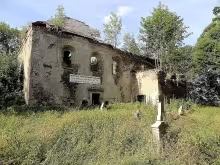
The Church of St. Anne in Žebráky is a Baroque pilgrimage church with a rich history rooted in the now-defunct village of Pořejov in the Tachov District. Constructed between 1660 and 1663 by Veronika Kateřina Alsterlová z Astfeldu, this architectural gem stands as a testament to the religious fervor and artistic style of its era. Despite being declared a cultural monument in 1993, the church currently faces significant challenges due to its deteriorating condition. Its historical significance is further underscored by its inclusion on the list of endangered cultural monuments.
The origins of the Church of St. Anne trace back to a wooden chapel first mentioned in 1658. The transformation into a Baroque structure occurred between 1660 and 1663, initiated by Veronika Kateřina Alsterlová z Astfeldu as an expression of gratitude for her recovery. This period was marked by the Counter-Reformation's influence on Bohemia, which spurred the construction of many Baroque churches as part of a broader European trend towards Catholic architectural resurgence.
Architecturally, the church is characterized by its early Baroque style. Initially replacing a wooden chapel, it underwent significant enhancements between 1719 and 1728 when František Ignác von Wunschwitz added chapels on either side of the presbytery. Despite suffering destruction by fire in 1883, the church experienced several restorations over time. Notably, in 1933, 14 bronze sculptures depicting the Stations of the Cross were installed along the former cemetery wall, crafted by Josef Dobner, a local sculptor whose work gained recognition at an exhibition in Vienna.
Ownership and administration of the Church of St. Anne have seen several transitions. Initially built by Veronika Kateřina Alsterlová z Astfeldu, it later came under the stewardship of František Ignác von Wunschwitz. Following its abolition by Joseph II in 1786, community efforts led to its restoration in 1808. In more recent history, after deteriorating post-1948 and experiencing thefts, the church was owned by Purwos until 2025, when it became the property of Blond breeding Žebráky.
Key events in the church's history include its abolition by Joseph II in 1786, followed by a community-led restoration in 1808. A significant fire in 1883 led to further deterioration over time. The installation of bronze sculptures in 1933 added artistic value, while the Sanctus bell served as an observation post for the Border Guard until the 1980s.
Today, the Church of St. Anne stands as a cultural monument in need of preservation efforts. Despite its current state of disrepair, it remains a site of historical and architectural interest. Visitors are drawn to its storied past and the artistic elements that have survived through centuries. The church's inclusion on the list of endangered cultural monuments highlights the urgent need for conservation to ensure its legacy endures.
The Church of St. Anne in Žebráky offers a unique glimpse into the religious and architectural history of Bohemia. Its preservation is crucial not only for historical reasons but also as a testament to the enduring spirit of community efforts that have sustained it through centuries. Visitors are invited to explore this remarkable site, appreciating its historical significance while supporting ongoing conservation initiatives.
Historical milestones
- 1658
- First written mention of a wooden chapel on the site.
- 1660-1663
- Construction of the Baroque church by Veronika Kateřina Alsterlová z Astfeldu.
- 1719-1728
- Addition of chapels on either side of the presbytery by František Ignác von Wunschwitz.
- 1786
- Abolishment of the church by Joseph II.
- 1808
- Restoration of the church through community efforts.
- 1883
- The church was destroyed by fire.
Architectural development
Originally a wooden chapel mentioned in 1658, the Church of St. Anne was rebuilt as a Baroque structure between 1660 and 1663. Additional chapels were added on either side of the presbytery between 1719 and 1728 by František Ignác von Wunschwitz. Despite its destruction by fire in 1883, it underwent several restorations, including the installation of bronze sculptures in 1933.
Historical events
The church was initially built between 1660 and 1663 by Veronika Kateřina Alsterlová z Astfeldu.
In 1786, the church was abolished by Joseph II but later restored in 1808 through community efforts.
A fire destroyed the church in 1883, leading to further deterioration over time.
Owners
Veronika Kateřina Alsterlová z Astfeldu (1660–1663)
František Ignác von Wunschwitz (1719–1728)
Purwos (post-1948 until 2025)
Blond breeding Žebráky (since 2025)
Points of interest
- The Church of St. Anne was originally built as a wooden chapel in 1658 before being transformed into the Baroque structure we see today between 1660 and 1663.
- Veronika Kateřina Alsterlová z Astfeldu commissioned the church's construction to express gratitude for her recovery, reflecting the personal motivations behind many historical religious buildings.
- The church was enhanced with side chapels by František Ignác von Wunschwitz between 1719 and 1728, showcasing how architectural modifications often reflect evolving artistic trends and patron influences over time.
Guide
Show guide text
Welcome to the Church of St. Anne in Žebráky, a remarkable testament to Baroque architecture and history nestled within this picturesque locale. As you stand before it, take a moment to absorb its serene presence against the backdrop of the Plzeňský kraj landscape.
The story of this church begins with a wooden chapel first mentioned in 1658 on what is now the site of Žebráky. The transformation from humble beginnings into the Baroque masterpiece you see today took place between 1660 and 1663, commissioned by Veronika Kateřina Alsterlová z Astfeldu. Her motivation was deeply personal; she sought to express her gratitude for a recovery that had restored her health and hope.
As you look around, notice how the church's architecture speaks of its era—a time when Baroque style flourished across Europe, characterized by dramatic expressions and grandeur. Although specific architects remain unknown, the influence of this period is evident in the structure's design. The addition of chapels on either side of the presbytery between 1719 and 1728 by František Ignác von Wunschwitz further enriched its architectural narrative.
This church has witnessed significant historical events, from its construction to periods of decline and restoration. In 1786, it faced abolishment under Joseph II's reforms but was revived in 1808 thanks to the resilience and efforts of the local community. However, a devastating fire in 1883 led to its destruction, yet the spirit of this site endures.
A fascinating aspect of St. Anne’s Church is its connection to Veronika Kateřina Alsterlová z Astfeldu. Her story adds a layer of human emotion and gratitude to the church's history, reminding us of the personal stories interwoven with architectural marvels.
As you conclude your visit here, take a moment to reflect on the layers of history encapsulated within these walls. Each stone tells a tale of faith, resilience, and community spirit. We invite you to explore further, perhaps by walking around its grounds or imagining the lives that have passed through this sacred space. Thank you for joining us in experiencing the enduring legacy of the Church of St. Anne in Žebráky. Safe travels on your journey of discovery!
Tips for visitors
The best time to visit the Church of St. Anne in Žebráky is during late spring or early autumn, when the weather is mild and pleasant for exploring outdoor sites. This period offers optimal lighting conditions for photography and a comfortable experience while walking around the church grounds. Additionally, these seasons are less crowded compared to summer, allowing for a more serene visit.
Parking near the Church of St. Anne can be limited due to its rural setting in Žebráky. Visitors are advised to check for any available parking spaces upon arrival or consider using public transportation as an alternative. The church is accessible by bus and train from nearby towns, with specific routes available that can be verified through a local transport search engine.
When visiting the Church of St. Anne, it's recommended to bring comfortable walking shoes, especially if you plan on exploring the surrounding area or taking longer walks. A camera or smartphone for photography is also advisable, as there are several picturesque spots around the church where natural light enhances the Baroque architecture beautifully. Don't forget a hat and sunscreen during sunny days.
Photography enthusiasts will find that early morning or late afternoon provides the best lighting conditions to capture the Church of St. Anne's intricate details and surrounding landscape. The soft, angled sunlight accentuates the textures and colors of the building, making it ideal for photography. Additionally, the church’s interior offers unique perspectives with its richly decorated altars and frescoes.
For families with children visiting the Church of St. Anne, consider planning a small picnic in the nearby open spaces after your visit to the church. The area around Žebráky provides a tranquil setting for relaxation and play. While there are no specific attractions within 30 minutes that cater exclusively to children, the natural surroundings offer opportunities for exploration and outdoor activities.
Businesses nearby
Do you run a restaurant, accommodation, shop, museum, rental, wellness or other visitor service near this monument? Show yourself directly to the people heading to it — this is how they will see you in the app and on the web:
Accommodation nearby
Themed route
Tematická výletní trasa: Kostel svaté Anny (Žebráky)
1. Kostel svaté Anny (Žebráky) - Kostel Začněte svou cestu u samotného kostela svaté Anny, který je ikonickým středem obce Žebráky. Tento barokní kostel vyniká nádhernými interiéry a historickou architekturou. Je to ideální místo pro ty, kteří mají zájem o duchovní stavby a jejich uměleckou hodnotu.
2. Obecní úřad Žebráky - Historické budovy Přibližně 5 minut chůze od kostela se nachází obecní úřad, který je postaven v historickém stavebním stylu. Navštívte ho pro poznání místní správy a kultury, protože často hostí různé kulturní akce a informační centrum o obci.
3. Žebrácký park - Park Krátce od obecního úřadu se nachází Žebrácký park, místo ideální pro relaxaci a procházku v přírodě. Park nabízí krásné zelené plochy a klidnou atmosféru, což je skvělý způsob, jak si užít místní krajinu.
4. Žebrácká škola - Vzdělávací zařízení Několik minut chůze od parku se nachází Žebrácká škola, která je důležitým místem pro vzdělání mladých obyvatel. Navštívte ji pro pochopení role vzdělávacích institucí ve společnosti a jejich historického významu.
5. Žebrácká kaple - Kaple Konečnou zastávkou vaší trasy je Žebrácká kaple, která se nachází blízko kostela svaté Anny. Je to místo klidu a úvahy, kde můžete si užít pokojný moment v malebném prostředí.
Tato trasa nabízí komplexní pohled na kulturní a historickou hodnotu obce Žebráky, s důrazem na její klíčové místa.
Seasonal recommendations
Jaro: In the spring season, Church of Saint Anne in Žebrák transforms into a beautiful refuge where blooming shrubs and trees color the surroundings with vibrant hues. Sunny days offer ideal conditions for visiting, while mild temperatures allow for comfortable strolls around the church's ruin site. Despite its historical significance, interest in this heritage site can be relatively low during this season, allowing for a calm and intimate tour. We recommend wearing comfortable shoes due to potentially wet surfaces and bringing a protective mask or sunhat, as spring sunshine can be strong.
Léto: In summer, the Church of Saint Anne in Žebrák is especially lively thanks to warm days and long evenings. During this period, the church may see more tourists, making an early arrival advisable to minimize crowds and ensure a better experience. The natural light of bright summer days highlights the architectural beauty of the church, even though it remains in ruin. Visitors should be prepared for hot weather with lightweight clothing and plenty of water, while a sunhat or protective mask will help shield against strong rays.
Podzim: Autumn in Žebrák offers a unique atmosphere as tree leaves turn to golden and red hues. This season is ideal for those seeking a quieter visit, as the number of tourists typically decreases with the approach of winter. Sunny autumn days are still perfect for touring the church, but an increased likelihood of rainy days requires appropriate attire, such as a hat and umbrella. Shorter evenings also mean shorter opening hours for the monument, increasing the need to plan your visit in advance.
Zima: The winter season offers fewer tourists and a more tranquil environment at Church of Saint Anne in Žebrák, allowing for a more intense experience. The chilly air and possibility of snow cover bring a magical atmosphere that highlights the historical architecture of the church in a new light. Visitors should dress warmly with insulated clothing and protective boots due to cold conditions, while shorter daylight hours necessitate planning your visit ahead of time. Although opening hours may be limited, the serene winter ambiance offers a unique perspective on the monument.
Visualizations and artistic views

Vizualizace jsou generovány umělou inteligencí a slouží jako inspirace.


Tips from visitors
No tips yet. Be the first!
Log in and add your tip.



Reviews and comments