






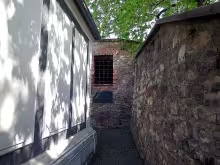
Kostel Stětí svatého Jana Křtitele in Vyšehrad, Prague, is a historically significant church preserved as a cultural monument of the Czech Republic. Constructed before 1380, it survived the Hussite Wars and was modified during the mid-17th century baroque fortifications. The interior features three naves divided by four pillars supporting cross vaults, with a shallow apse and niches for altars. Although not accessible to the public, its historical importance is highlighted by archaeological findings from 1974–1975.
The earliest record of Kostel Stětí svatého Jana Křtitele dates back to 1380, marking it as a significant medieval structure in Prague's history. It withstood the destruction of Vyšehrad fortress during the Hussite Wars in November 1420, when much of the surrounding area was devastated. Despite these challenges, the church was restored in the 15th century and continued to serve its community until further transformation due to baroque fortification efforts starting in 1654.
Architecturally, Kostel Stětí svatého Jana Křtitele originally stood as a two-nave parish church on a rocky outcrop near the town hall and butchers' stalls. The construction of baroque fortifications beginning in 1654 led to significant alterations; it was partially buried by a curtain wall, resulting in shortened dimensions and a lower, vaulted ceiling. By 1764, an extension added a sacristy on its northern side and provided access to the newly built chapel of Panna Marie Šancovské.
Throughout its history, Kostel Stětí svatého Jana Křtitele has seen various phases of use and preservation. The church's interior spaces were uncovered during archaeological excavations between 1974 and 1975, revealing insights into its past structure and significance. In the mid-1990s, these spaces served as an exhibition hall and lapidarium, highlighting their cultural value before undergoing restoration in 2013.
Today, Kostel Stětí svatého Jana Křtitele remains a protected monument within the Vyšehrad fortress area, near the chapel of Panna Marie Šancovské. Although it is not open to the public, its historical and architectural significance makes it an intriguing site for those interested in Prague's rich past. Visitors can appreciate its storied history from nearby vantage points, gaining insight into a period when Bohemia was a pivotal cultural and political center in Europe.
Kostel Stětí svatého Jana Křtitele stands as a testament to the resilience of historical architecture amidst centuries of change. Its preservation allows us to reflect on the layers of history that have shaped Prague, offering an invitation to explore the broader Vyšehrad area and its scenic views over the city.
Historical milestones
- 1380
- Earliest record of the church's existence.
- 1420
- Survived the destruction of Vyšehrad fortress during the Hussite Wars.
Architectural development
The original two-nave parish church was located on a rocky outcrop near the town hall and butchers' stalls. During the construction of baroque fortifications starting in 1654, it was partially buried and shortened by a curtain wall, resulting in a lower, vaulted ceiling. In 1764, an extension added a sacristy and access to a newly built chapel of Panna Marie Šancovské.
Historical events
1380: Earliest record of the church's existence.
1420: Survived the destruction of Vyšehrad fortress during the Hussite Wars.
1654-1764: Underwent modifications due to baroque fortification construction.
Points of interest
- Despite being partially buried by baroque fortifications starting in 1654, Kostel Stětí svatého Jana Křtitele remarkably maintained its structural integrity and continued to serve the local community for centuries.
- The church's interior was transformed into an exhibition hall and lapidarium in the mid-1990s, showcasing artifacts and architectural elements that highlight its historical significance before undergoing restoration in 2013.
Guide
Show guide text
Welcome to the historic site of Kostel Stětí svatého Jana Křtitele in Vyšehrad, Prague—a place where history and architecture intertwine to tell a compelling story. As you stand here, take a moment to absorb your first impression: imagine the serene atmosphere surrounding this enduring church, its presence a testament to centuries of resilience.
The origins of this remarkable structure trace back before 1380, making it one of Vyšehrad's oldest ecclesiastical buildings. Over time, it has witnessed significant historical events, including surviving the tumultuous Hussite Wars in 1420 when many other structures fell victim to destruction. Despite these challenges, Kostel Stětí svatého Jana Křtitele remained steadfast, continuing its role as a spiritual haven for generations.
As you explore the architecture of this church, notice how it has gracefully endured through various modifications. The mid-17th century brought significant changes when baroque fortifications began to envelop parts of the structure starting in 1654. Yet, despite being partially buried by these additions, the church maintained its structural integrity and continued to serve as a beacon for the local community.
While specific architects remain unknown, their work has left an indelible mark on this site. The interior of Kostel Stětí svatého Jana Křtitele now serves a new purpose—it has been transformed into an exhibition hall and lapidarium. This adaptation allows visitors like you to delve deeper into its storied past, offering insights into the cultural heritage preserved within these walls.
One fascinating aspect of this church is how it symbolizes resilience and adaptability. Despite being partially buried by the baroque fortifications, Kostel Stětí svatého Jana Křtitele remarkably maintained its structural integrity over centuries. This persistence speaks volumes about the dedication to preserving cultural heritage through changing times.
As you conclude your visit here at Kostel Stětí svatého Jana Křtitele, I invite you to reflect on the layers of history and stories encapsulated in this site. Each stone tells a tale of survival and transformation. May your exploration inspire curiosity and appreciation for the rich tapestry of Prague's past. Thank you for joining me on this journey through time; I hope it has been as enlightening for you as it is for me to share these tales.
Tips for visitors
The best time to visit the Church of St. John the Baptist on Vyšehrad is during late spring or early autumn. During these months, you can enjoy pleasant weather that enhances the experience of exploring the historical site and its scenic surroundings. Additionally, visiting in the morning allows for softer light ideal for photography and fewer crowds, providing a more serene atmosphere to appreciate the church's architecture and history.
Parking near Vyšehrad is limited due to its location within a historic area, so it is recommended to use public transportation or park outside the fortress perimeter. The nearest metro station is Vyšehrad on Line A, which provides easy access to the site. If you prefer driving, consider parking at designated areas outside the fortress and walking in for a more enjoyable experience.
When visiting the Church of St. John the Baptist, it's advisable to bring comfortable walking shoes as there are several steps leading up to Vyšehrad and around its grounds. A camera or smartphone is recommended for capturing the stunning views over Prague from the fortress walls and the picturesque setting of the church itself. Additionally, carrying a water bottle and some snacks can enhance your visit, especially if you plan to explore the surrounding area.
Photography enthusiasts will find several spots within Vyšehrad ideal for capturing the Church of St. John the Baptist. The best light is usually in the early morning or late afternoon when the sun casts long shadows across the fortress walls and church façade. Try taking photos from the steps leading up to the church, which offer a dramatic perspective against the skyline of Prague.
Nearby attractions within 30 minutes include the Vyšehrad Cemetery, where many notable Czech figures are buried, offering a peaceful walk with historical significance. The Chapel of Our Lady of Victory is also close by and provides an intimate setting for reflection or prayer. Both sites complement your visit to the church with their cultural and spiritual importance.
For families with children, Vyšehrad offers a variety of activities that make it a family-friendly destination. Children will enjoy exploring the fortress walls and imagining life in medieval times. The surrounding area is perfect for a leisurely walk or picnic, allowing kids to run around safely while parents relax. Additionally, the nearby playgrounds provide an opportunity for children to expend energy before continuing their cultural exploration.
Businesses nearby
Nearby
Located within the Vyšehrad fortress area, near the chapel of Panna Marie Šancovské. The surrounding landscape includes historical fortifications and scenic views over Prague.
Accommodation nearby
Trips and activities nearby
Guided tours, tickets and activities nearby from GetYourGuide
Search tours and activities →Themed route
Thematic Walking Tour: Vyšehrad Fortress and its Historical Gems
1. Kostel Stětí svatého Jana Křtitele, Vyšehrad (Church) Begin your journey at the heart of this historic site with a visit to the Kostel Stětí svatého Jana Křtitele. This church is renowned for its stunning architecture and rich history dating back to the 10th century. Its unique blend of Romanesque, Gothic, and Baroque styles offers a captivating glimpse into Prague's architectural evolution.
2. Chapel of Panna Marie Šancovské (Chapel) A short walk from the church will lead you to the Chapel of Panna Marie Šancovské. This chapel is an integral part of the Vyšehrad fortress complex, offering a serene and spiritual atmosphere. It's particularly famous for its beautiful frescoes and as a site of pilgrimage, reflecting deep cultural and religious significance.
3. Vyšehrad Fortress Walls (Historical Fortifications) Explore the ancient walls surrounding the Vyšehrad fortress area. These fortifications not only served defensive purposes but also provide visitors with breathtaking panoramic views over Prague. Walking along these walls allows you to appreciate the strategic importance of Vyšehrad throughout history and enjoy a scenic perspective of the city.
4. Vyšehrad Necropolis (Historical Cemetery) Conclude your tour at the Vyšehrad Necropolis, where many notable Czech figures are buried, including composers Smetana and Dvořák. This cemetery is not only a resting place for some of the nation's most distinguished individuals but also an artistic treasure trove with its elaborate tombstones and sculptures.
This thematic walking tour offers a deep dive into the historical and cultural richness of Vyšehrad, providing insights into Prague’s past while showcasing its architectural beauty.
Seasonal recommendations
Jaro: Kostel Stětí svatého Jana Křtitele na Vyšehradě nabízí v jarním období nezapomenutelný zážitek s jasným slunečním osvětlením, které zdůrazňuje historickou architekturu a zelenou přírodu kolem. Kostel se proměňuje v pozadí pro kvetoucí keře a stromy, což vytváří mírnou a živou atmosféru. Navštěvníci by měli zvolit oblečení vhodné pro mírné teploty a přinést sluneční brýle na ochranu proti jarním paprskům. Nejlepší čas pro návštěvu je ráno nebo později večer, aby se předešlo možným davům, které mohou vznikat během slunečních dní.
Léto: Léto na Vyšehradě nabízí dlouhá dny a teplé večery, což umožňuje navštěvníkům plně si užít kostela Stětí svatého Jana Křtitele v klidné atmosféře. Sluneční osvětlení zdobí historickou stavbu, zatímco možnost procházky po okolním návrší nabízí pohledy na Prahu a její okolí. Navštěvníci by měli být připraveni na teplé dni s lehkým oblečením, ochranou proti slunci a dostatkem pitné vody. Doporučuje se navštěvovat kostel dřívějšího odpoledne nebo večer, aby bylo možné vyhnout se vrcholům letní návštěvnosti.
Podzim: Podzim přináší na Vyšehrad atmosféru plnou měkčích barev a mírných teplot. Kostel Stětí svatého Jana Křtitele vypadá v těchto dnech ještě poutavěji, když se jeho střechy a okolní zelená příroda proměňují do zlatých a rudých odstínů. Navštěvníci by měli být oblečeni v teplém oblečení, protože teploty se mohou rychle snižovat, zejména večerem. Nejlepší čas pro návštěvu je ráno nebo později večer, kdy jsou mírnější davové zátěže a atmosféra je klidnější.
Zima: Zimní období na Vyšehradu nabízí jedinečné pohledy na kostel Stětí svatého Jana Křtitele, kdy se jeho architektonická krása promítá v chladném osvětlení. Sněhové pokrývky mohou přidat romantický rozměr, zatímco studené vzduchy vyžadují teplé oblečení a ochranu proti větru. Kostel je během této sezóny často navštěvován méně lidí, což umožňuje klidnější prohlídku. Navštěvníci by měli plánovat svou návštěvu v poledne, kdy je osvětlení nejlépe a přesto se vyhnout vrcholům zimního turismu.
Visualizations and artistic views

Vizualizace jsou generovány umělou inteligencí a slouží jako inspirace.


Tips from visitors
No tips yet. Be the first!
Log in and add your tip.




Reviews and comments