





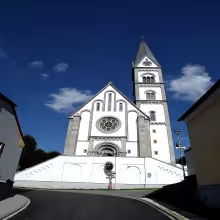
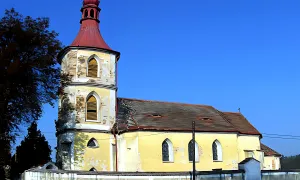
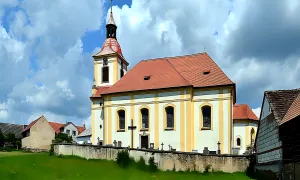
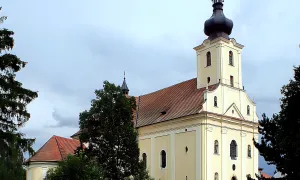
The Church of the Transfiguration of Our Lord in Žihobce is a prominent cultural monument located at the heart of the village on a hill. Built between 1872 and 1876 in the Neo-Romanesque style, it replaced an older structure that no longer served its parishioners. Declared a cultural monument by the Ministry of Culture of the Czech Republic on March 26, 2003, this church is notable for its impressive size, grand entrance staircase, and towering three-story spire dominating the landscape.
The origins of the Church are deeply intertwined with Žihobce's history. The village's spiritual journey dates back to at least 1045 when it was mentioned in a donation charter by Břetislav I., linking it to the Břevnov Monastery. By the late 14th century, records indicate that Žihobce had its own parish, although the exact timeline is unclear due to conflicting sources. The original Gothic chapel dedicated to St. Matthew was deemed inadequate by the mid-19th century and demolished in 1872 for a new church.
Architecturally, the Church stands as a testament to the Neo-Romanesque style of its time. Engineered by G. Jurges, it features a cruciform plan with a long presbytery ending in a semicircle and an imposing two-winged staircase at the western facade. The slender three-story tower on the southern side measures 45 meters high, adding to the church's grandeur. Its exterior is characterized by pseudoromanesque elements, including a prominent rose window and an entrance portal set back from the façade.
Throughout its history, the Church has undergone significant changes in administration and fortune. After the Thirty Years' War, spiritual governance returned when Žihobce was attached to the parish of Strašín in 1683. It gained its own independent parish only in 1856. The church required extensive restoration due to water damage and structural wear. In 2010, a comprehensive renovation funded by various entities, including the European Union and local stakeholders, restored its former splendor.
The Church has witnessed several key events throughout its history. The cornerstone laid on August 11, 1872, marks the beginning of its construction, while its designation as a cultural monument in 2003 underscores its historical significance. Over time, it has served not only as a place of worship but also as a venue for various cultural activities.
Today, the Church remains accessible to visitors during services and cultural events, with details available on parish or municipal websites. Its architectural beauty and historical importance make it a worthwhile destination for those interested in exploring Žihobce's rich cultural heritage. Visitors are invited to experience this remarkable monument, which continues to be an integral part of the village's identity and history.
Historical milestones
- 1872
- The foundation stone of the new church was laid on August 11, 1872.
- 2003
- The church was declared a cultural monument by the Ministry of Culture of the Czech Republic.
Architectural development
The original Gothic chapel dedicated to St. Matthew was deemed inadequate and dilapidated, leading to its demolition in 1872. The new church, designed by engineer G. Jurges in a Neo-Romanesque style, was constructed on the same site. The building features a cruciform plan with a long presbytery ending in a semicircle and an imposing two-winged staircase at the western facade. A slender three-story tower stands to the south.
Historical events
The church was built between 1872 and 1876, replacing an older Gothic chapel that no longer met the needs of the parish.
In 2010, a comprehensive restoration funded by the European Union, the Roman Catholic Church, Plzeňský kraj, the municipality, and its citizens took place.
Points of interest
- The Church of the Transfiguration of Our Lord in Žihobce is linked to a donation charter from 1045 by Břetislav I., connecting it historically to the Břevnov Monastery, which highlights its longstanding spiritual significance.
- Despite being built in the Neo-Romanesque style during the late 19th century, the church's architectural plans were crafted by G. Jurges, whose work is less commonly recognized outside of Czech historical circles, adding a layer of intrigue to the building’s design history.
Guide
Show guide text
Welcome to the Church of the Transfiguration of Our Lord in Žihobce, a remarkable cultural monument nestled at the heart of this charming village atop a gentle hill. As you stand here, take a moment to absorb the grandeur that unfolds before your eyes: an impressive Neo-Romanesque structure with its commanding three-story tower reaching towards the sky, and a grand entrance staircase inviting you closer.
Let's delve into the story behind this magnificent church. The foundation stone was laid on August 11, 1872, marking the beginning of a new chapter in Žihobce’s spiritual life. Constructed between 1872 and 1876 by architect G. Jurges, this church replaced an older sacred building, emerging as a symbol of faith and community resilience during that era. In recognition of its cultural significance, it was declared a protected monument by the Ministry of Culture of the Czech Republic in 2003.
Now, let's explore some architectural highlights. Notice the impressive size of the church, which dominates the surrounding landscape with its towering presence. The grand entrance staircase adds to the majestic approach, inviting you into this sacred space. Although built in the late 19th century, the Neo-Romanesque style gives it a timeless elegance that continues to captivate visitors.
This church holds deep historical connections, particularly through a donation charter from 1045 by Břetislav I., linking it to the esteemed Břevnov Monastery. This connection underscores its longstanding spiritual significance and roots in Czech history.
As you stand here, let your imagination wander to the stories of those who have walked these grounds over centuries, their hopes and prayers echoing through time. The church not only stands as a testament to architectural beauty but also as a witness to the enduring faith of generations.
Before we conclude our journey, take a moment to soak in the atmosphere around you—the way the light dances across the façade or how the gentle breeze seems to whisper tales from the past. This place invites exploration and reflection, offering peace and inspiration to all who visit.
Thank you for joining me on this audio tour of the Church of the Transfiguration of Our Lord in Žihobce. I hope it has enriched your experience and sparked a desire to explore more of what this beautiful region has to offer. Safe travels as you continue your journey through history!
Tips for visitors
The best time to visit the Church of the Transfiguration of Our Lord in Žihobce is during late spring or early autumn. During these seasons, the surrounding Pošumaví landscape is particularly beautiful with vibrant foliage and pleasant weather, enhancing your experience as you explore the church's Neo-Romanesque architecture. Additionally, visiting outside peak tourist months can offer a quieter atmosphere for appreciating this cultural monument.
Parking and transportation options are convenient in Žihobce. The village center, where the church is located, is accessible by car with parking available nearby. For those preferring public transport, you can reach Žihobce via regional bus services; however, it's advisable to check current schedules online for accurate information. Walking around the village is also an enjoyable option due to its compact size.
When planning your visit, consider bringing comfortable walking shoes and weather-appropriate clothing, especially if exploring the surrounding area. A camera or smartphone with a good camera will be essential for capturing the church's intricate details and the picturesque landscape. Don't forget to bring water and snacks if you plan on spending several hours in the village.
For photography enthusiasts, some of the best spots include the hilltop where the church stands, offering panoramic views of Žihobce and its surroundings. Early morning or late afternoon light provides a soft glow that beautifully accentuates the Neo-Romanesque features of the church. Additionally, capturing the village streets leading up to the church can create charming compositions.
In terms of nearby attractions within a 30-minute drive, visitors can explore other parts of the Pošumaví region known for its natural beauty and outdoor activities. While no specific monuments are mentioned in close proximity, the area offers opportunities for hiking and enjoying nature trails. These excursions make for a perfect complement to your cultural visit.
For families with children, Žihobce provides a pleasant environment for a day out. The village's small size makes it easy to navigate on foot, allowing kids to explore safely. While the church itself is an architectural highlight, the surrounding landscape offers space for outdoor play and exploration. Consider packing a picnic to enjoy in one of the scenic spots nearby.
Businesses nearby
Do you run a restaurant, accommodation, shop, museum, rental, wellness or other visitor service near this monument? Show yourself directly to the people heading to it — this is how they will see you in the app and on the web:
Nearby
The church stands prominently in the center of Žihobce village, surrounded by a landscape typical of the Pošumaví region. There are no other specific monuments mentioned within a 5 km radius.
Accommodation nearby
Themed route
Tematická výletní trasa: Kostel Proměnění Páně (Žihobce)
1. Kostel Proměnění Páně - *Typ:* Historická památka, kostel - *Proč stojí za návštěvu:* Tento barokní kostel je centrem duchovního a historického života v Žihobcích. Jeho architektura a interiér nabízejí pohled na bohatou minulost obce, což jej činí nezbytným pro každého navštěvujícího region Pošumaví.
2. Nádvoří kostela - *Typ:* Historické nádvoří - *Proč stojí za návštěvu:* Nádvoří před Kostelem Proměnění Páně je klidným místem, kde si můžete užít panoramatického pohledu na obec a okolní krajinu. Je to ideální místo pro odpočinek nebo fotografii s pozadím kostela.
3. Věž kostela - *Typ:* Historická věž - *Proč stojí za návštěvu:* Výhled z věže nabízí jedinečnou perspektivu na Žihobce a okolní oblast. Navíc je to příležitost prozkoumat architektonické detaily, které jsou viditelné pouze z vyšších úrovní.
4. Interiér kostela - *Typ:* Historická expozice - *Proč stojí za návštěvu:* Interiér Kostela Proměnění Páně je bohatý na umělecké prvky a historické artefakty. Jeho fresky, sochy a oltáře představují důležité kapitoly náboženského i kulturního vývoje oblasti.
5. Parková zóna kolem kostela - *Typ:* Místní park - *Proč stojí za návštěvu:* Parková zóna kolem kostela nabízí klidné chodníky a pohledy na přirozené prvky Pošumavského regionu. Je to ideální místo pro relaxaci nebo krátkou procházku po návštěvě samotného kostela.
Tato trasa vám umožní hluboce se ponořit do historie a kultury Žihobec, s Kostelem Proměnění Páně jako centrem pozornosti.
Seasonal recommendations
Spring: The arrival of spring at the Church of the Transfiguration of Our Lord in Žihobce is marked by a vibrant transformation as nature awakens around this historical site. The surrounding landscape bursts into life with blooming flowers and lush greenery, creating an enchanting backdrop that enhances the church's architectural beauty. During this season, the soft morning light casts a gentle glow on the church’s façade, making it an ideal time for photography enthusiasts. Visitors should consider bringing comfortable walking shoes to explore nearby trails and enjoy the fresh air. While crowds are generally manageable in spring, arriving early can provide a more peaceful experience before the day fully warms up.
Summer: Summer at the Church of the Transfiguration offers long days filled with sunshine that beautifully illuminates the church’s intricate details. The warm weather invites visitors to spend extended periods outdoors, enjoying picnics or leisurely strolls in the surrounding green spaces. This is also a popular time for families and tourists, so planning your visit early in the morning can help avoid larger crowds. Dressing in light, breathable clothing is advisable, along with bringing sun protection such as hats and sunscreen. The church's open doors during this season provide an opportunity to explore its interior comfortably.
Autumn: Autumn brings a magical atmosphere to Žihobce with its warm hues of reds, oranges, and yellows adorning the landscape around the Church of the Transfiguration. This seasonal palette creates a picturesque setting that is perfect for photography or simply enjoying a tranquil walk. The cooler temperatures make it an ideal time to explore without the summer heat, though visitors should be prepared with layers as evenings can become chilly. While autumn sees fewer tourists compared to summer, it's still wise to check opening times in advance as they may vary during this transitional season.
Winter: Winter at the Church of the Transfiguration transforms the area into a serene and picturesque scene, often blanketed in snow that highlights the church’s architectural elegance against a crisp, white backdrop. The shorter days mean visiting earlier is recommended to make the most of daylight hours for exploring both indoors and outdoors. Visitors should dress warmly with layers, hats, gloves, and sturdy boots to comfortably navigate potentially icy paths. Although winter may see fewer visitors due to colder weather, it offers a unique and peaceful experience for those who appreciate the quiet beauty of the season.
Visualizations and artistic views

Vizualizace jsou generovány umělou inteligencí a slouží jako inspirace.


Tips from visitors
No tips yet. Be the first!
Log in and add your tip.

Reviews and comments