






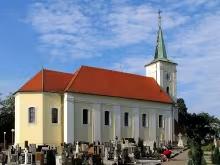
The Church of the Visitation of the Virgin Mary in Mistřín is a Roman Catholic parish church located in Svatobořice-Mistřín within the Hodonín District. It belongs to the Kyjov deanery and Olomouc archdiocese. Recognized as a protected cultural monument of the Czech Republic, this Baroque structure stands on a site with deep historical roots dating back to the 13th century. Originally built in 1743 on the location of an older wooden bell tower, it was consecrated to the Visitation of the Virgin Mary and has undergone several architectural modifications over the centuries.
The origins trace back to a Romanesque structure from the 13th century, confirmed under Cistercian ownership by King Přemysl Otakar I in 1228. This earlier church was dedicated to the Assumption of the Virgin Mary and served as both a parish church and school. Mistřín experienced several relocations due to invasions, being plundered thrice throughout history. The Thirty Years' War marked a significant turning point when the old church was secularized and desecrated on July 8, 1626. By 1784, during Josephine reforms, it was completely demolished, with remnants like a sandstone baptismal font preserved as historical artifacts.
Architecturally, the current Baroque church replaced its Romanesque predecessor in 1743, featuring a single nave and consecrated on July 2 of that year. The tower construction began in 1767, culminating in its consecration along with a newly established cemetery on August 10, 1770. Further enhancements were made between 1936 and 1937, leading to another consecration on November 17, 1940. In 1964, original organ pipes from Těšín were relocated to Skorotice, replaced by new ones from the Krnov firm Rieger-Kloss.
Throughout its history, the church has seen various changes in ownership and administration. Initially under Cistercian control, it later became part of the parish community following secularization efforts during the Thirty Years' War. The transition to a Baroque structure in 1743 marked a new era for the site, reflecting broader architectural trends influenced by Habsburg rule over Bohemia.
Key events include its initial consecration in 1228 and subsequent desecration in 1626. In 1949, two new bells were acquired, enhancing its auditory presence within the community. These milestones underscore the church's resilience and adaptability through centuries of change.
Today, the Church of the Visitation of the Virgin Mary stands as a testament to Mistřín’s rich cultural heritage. It remains accessible to visitors who wish to explore its historical significance and architectural beauty. The preserved baptismal font and linden cross marking the site of the old church serve as poignant reminders of its storied past. This monument is not only an important religious site but also a valuable piece of Czech history, inviting those interested in architecture, religion, and cultural heritage to experience its enduring legacy firsthand.
Historical milestones
- 1228
- King Přemysl Otakar I confirmed Cistercian ownership of the site.
- 1626
- The old church was secularized and desecrated.
- 1743
- A new church was built and consecrated on July 2.
- 1949
- Two new bells were acquired for the church.
Architectural development
The original Romanesque church from the 13th century was replaced by a Baroque structure built in 1743. The tower construction began in 1767 and was completed with its consecration on August 10, 1770. Further additions were made between 1936 and 1937, followed by another consecration on November 17, 1940. In 1964, the original organ from Těšín was moved to Skorotice, and a new one was installed.
Historical events
In 1228, King Přemysl Otakar I confirmed Cistercian ownership of the original site where an earlier Romanesque church stood.
The old church was secularized and desecrated on July 8, 1626, during the Thirty Years' War.
A new church was constructed in 1743, with its consecration taking place on July 2 of that year.
In 1949, two new bells were acquired for the church.
Points of interest
- The Church of the Visitation of the Virgin Mary in Mistřín has a mysterious history tied to its original Romanesque structure from the 13th century, which was consecrated by King Přemysl Otakar I. Despite being plundered three times throughout history, it remarkably survived invasions and significant historical upheavals.
Guide
Show guide text
Welcome to the Church of the Visitation of the Virgin Mary in Mistřín, a cherished historical monument nestled in Svatobořice-Mistřín within the Hodonín District. As you stand here, take a moment to absorb the serene presence of this Roman Catholic parish church, which is part of the Kyjov deanery and Olomouc archdiocese. Notice how it stands as a testament to resilience and faith, protected as a cultural monument of the Czech Republic.
Let's delve into its rich history. The origins of this sacred site stretch back to 1228 when King Přemysl Otakar I confirmed Cistercian ownership, marking the beginning of its spiritual journey. Fast forward to 1626, and we find the old church secularized and desecrated—a tumultuous period that tested its endurance. Yet, by 1743, a new chapter began with the construction of this very structure you see today, consecrated on July 2nd to honor the Visitation of the Virgin Mary.
As you take in your surroundings, notice how the church's architecture speaks volumes despite the anonymity of its architects. The design reflects a blend of historical influences that have stood the test of time. Imagine walking through this space where echoes of the past resonate with every step. Though specific architectural details aren't explicitly documented here, feel free to explore and appreciate the craftsmanship evident in its construction.
The church's history is woven with intriguing narratives. Despite being plundered three times throughout its existence, it remarkably survived invasions and significant upheavals. This resilience adds a layer of mystique to your visit, inviting you to ponder the stories that these walls could tell if they had voices.
Now, let me draw your attention to one of its fascinating mysteries: the original Romanesque structure from the 13th century. Consecrated by King Přemysl Otakar I himself, this earlier church laid the spiritual foundation for what stands here today. Its survival through centuries of change is a testament to its enduring significance.
As you continue your exploration, consider the bells that resonate with history—two new ones acquired in 1949, adding their voices to the legacy of this sacred site. Each peal carries echoes from generations past, inviting reflection and reverence.
Before we conclude our journey here, I encourage you to take a moment to soak in the atmosphere. Feel the weight of centuries of devotion that surrounds you, and let your imagination wander through time as you explore every corner of this remarkable place.
Thank you for joining me on this auditory tour of the Church of the Visitation of the Virgin Mary in Mistřín. I hope it has inspired you to delve deeper into its history and perhaps return one day to discover more hidden stories within its walls. Safe travels, and may your journey be filled with discovery and wonder.
Businesses nearby
Do you run a restaurant, accommodation, shop, museum, rental, wellness or other visitor service near this monument? Show yourself directly to the people heading to it — this is how they will see you in the app and on the web:
Accommodation nearby
Themed route
Thematic Tour: Mistřín and the Visitation of the Virgin Mary Church
1. Visitation of the Virgin Mary Church *Type:* Religious Site *Why Visit:* This stunning Baroque church, located in the heart of Mistřín, is renowned for its intricate architectural details and historical significance. It serves as a spiritual centerpiece for visitors interested in religious art and history.
2. Mistřín Village Square *Type:* Urban Space *Why Visit:* Just a short walk from the church, the village square offers a charming glimpse into local life with its traditional architecture and peaceful atmosphere. It's an ideal spot to relax and appreciate the quaint beauty of Mistřín.
3. Mistřín Local Museum *Type:* Cultural Site *Why Visit:* Situated nearby, this museum provides insights into the rich cultural heritage and history of Mistřín. Exhibits showcase local traditions, crafts, and historical artifacts that highlight the region's past.
4. Church Surrounding Parkland *Type:* Natural Area *Why Visit:* The serene parkland surrounding the church offers a perfect setting for reflection or a leisurely stroll. Its natural beauty complements the architectural splendor of the church, making it an essential part of any visit to Mistřín.
This tour provides a comprehensive exploration of Mistřín's cultural and historical offerings, centered around its iconic church.
Seasonal recommendations
Spring: The spring season at Navštívení Panny Marie Church in Mistřín is marked by a vibrant transformation of the surrounding landscape, with blooming flowers and lush greenery creating an enchanting atmosphere. This time of year offers soft, natural lighting that beautifully illuminates the church's architectural details, making it ideal for photography enthusiasts. Visitors should consider wearing comfortable layers as temperatures can vary, and bringing along a light jacket might be wise due to occasional spring showers. With fewer tourists compared to summer, this is an excellent opportunity to explore the site at a leisurely pace.
Summer: Summer in Mistřín brings long daylight hours that enhance the experience of visiting Navštívení Panny Marie Church with its warm, golden light highlighting the intricate stonework and stained glass windows. The surrounding countryside offers picturesque landscapes perfect for outdoor activities like hiking or picnicking nearby. Due to increased visitor numbers during this peak season, it's advisable to arrive early in the morning to avoid crowds. Light, breathable clothing is recommended, along with a hat and sunscreen to stay comfortable under the sun.
Autumn: The autumn months at Navštívení Panny Marie Church are characterized by a rich tapestry of warm colors as the leaves change, creating a serene and picturesque setting. This season offers a more tranquil atmosphere with fewer visitors compared to summer, allowing for a peaceful exploration of the church's historical features. As temperatures begin to cool, wearing layers is recommended, along with comfortable walking shoes for exploring the autumnal scenery. The softer light during this time provides a unique ambiance that enhances the architectural beauty of the site.
Winter: Winter at Navštívení Panny Marie Church in Mistřín offers a quiet and mystical experience, as snow blankets the landscape, transforming it into a serene winter wonderland. The church itself takes on a magical quality under the soft glow of low winter sun or during early evening visits when artificial lighting is used to highlight its features. Visitors should dress warmly with layers, including hats, gloves, and insulated footwear, due to colder temperatures. It's also important to check opening hours as they may be reduced in winter; arriving earlier can ensure you make the most of your visit before any closures.
Visualizations and artistic views

Vizualizace jsou generovány umělou inteligencí a slouží jako inspirace.


Tips from visitors
No tips yet. Be the first!
Log in and add your tip.



Reviews and comments