




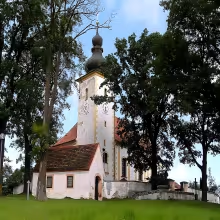
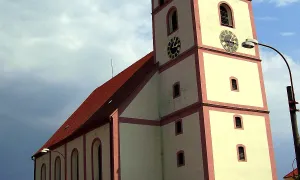
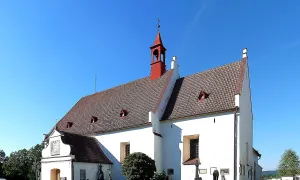
Kostel Narození Panny Marie in Chroboly is a cultural monument of the Czech Republic. Originally serving as the parish church for the local community, it became a filial church under Prachatice in 2020. This Baroque-style church, surrounded by a walled cemetery and featuring a belfry, blends Gothic origins with mid-18th-century Baroque renovations. Notably, it houses a late-Gothic statue of Madonna on its main altar, along with other significant religious artifacts.
The first documented mention of the parish church in Chroboly dates back to 1360. During the mid-18th century, when the Baroque renovations occurred, Bohemia was part of the Habsburg Monarchy and experienced cultural and architectural developments influenced by the broader European Baroque movement. The church underwent significant transformations between 1754 and 1758 under architect J. F. Fortin. These changes included redesigning the roof to a bulbous shape, expanding windows, and removing the wooden choir. Originally Gothic in style, these renovations transformed it into its current Baroque form.
Architecturally, Kostel Narození Panny Marie is a single-nave oriented building with a narrower three-sided presbytery and a polygonal tower embedded in the southwest corner. The interior features barrel vaulting with lunettes; the nave measures 10.63 meters wide and 15.65 meters long, featuring an organ loft supported by two masonry pillars accessible via a spiral staircase within the tower. The presbytery is 9.86 meters deep and 5.72 meters wide, adjoining a sacristy on its southern side and a passage leading to the pulpit on the north.
The church's furnishings are predominantly Rococo in style. The main altar boasts a late-Gothic statue of Madonna, while the choir houses side altars dedicated to Saint Anne and Saint John Nepomucene. In the nave, there are altars for Saints Linhart and Joseph, along with a late-Gothic stone indulgence column, a medieval stone baptismal font, and a gravestone from 1703.
Throughout its history, Kostel Narození Panny Marie has seen changes in administration, notably transitioning to a filial church under Prachatice in 2020. Despite these shifts, it retains elements from its Gothic phase, such as the enclosure wall with a grille behind the main altar and other architectural features like the stone portal leading to the pulpit passage.
Today, Kostel Narození Panny Marie stands not only as a testament to historical architectural evolution but also as a cultural touchstone within Chroboly. Its blend of Gothic and Baroque elements offers visitors a glimpse into the region's rich religious and artistic heritage. The church remains accessible for those interested in exploring its unique features, including the nearby statue of Saint John Nepomucene from the late 18th century near the cemetery entrance.
Visiting Kostel Narození Panny Marie provides an opportunity to appreciate both its historical significance and architectural beauty. Its preservation as a cultural monument ensures that future generations can continue to explore this remarkable site, reflecting on its enduring legacy within the Czech Republic's rich tapestry of history.
Historical milestones
- 1360
- First written mention of the parish church in Chroboly.
- 1754
- Begins baroque reconstruction under the direction of architect J. F. Fortin.
- 1758
- Completion of the baroque renovations of the church.
- Circa 1350
- Estimated creation of the original Gothic church.
- 2020
- Conversion to a filial church under Prachatice.
Architectural development
The church originally had Gothic architecture, which was later transformed into Baroque style during renovations from 1754 to 1758. Architect J. F. Fortin redesigned the roof to a bulbous shape, expanded windows, and removed the wooden choir. The original sacristy was demolished in 1892, with its function taken over by an old belfry.
Historical events
First documented mention in 1360 as a parish church.
Baroque renovation and expansion between 1754 and 1758.
Points of interest
- The transition of Kostel Narození Panny Marie to a filial church under Prachatice in 2020 reflects broader trends in the administrative restructuring of religious institutions within rural Czech communities. This shift highlights how local churches are adapting to changing demographics and community needs, ensuring that they continue to serve their congregations effectively.
Guide
Show guide text
Welcome to the historic site of Kostel Narození Panny Marie in Chroboly, a cultural monument that stands as a testament to the rich tapestry of Czech history and architecture. As you stand here, enveloped by the serene landscape of Jihočeský kraj, take a moment to absorb your surroundings. Before you is a church with a distinct presence, its walls enclosing a cemetery and crowned by an inviting belfry. This structure invites exploration into its storied past.
The origins of this church trace back to around 1350, when it was likely established as a Gothic edifice. Its first written record dates to 1360, marking it as a pivotal parish church for the local community. Over time, the church underwent significant transformations, most notably in the mid-18th century. In 1754, under the guidance of architect J. F. Fortin, an ambitious project commenced to reconfigure the church into its current Baroque style. By 1758, this transformation was complete, leaving behind a harmonious blend of Gothic and Baroque elements that you can still appreciate today.
As you gaze upon the structure, take note of its architectural evolution. The Baroque renovations introduced during Fortin's oversight are evident in the church’s elegant lines and stylistic flourishes. While specific interior details aren't visible from outside, the exterior speaks volumes about the craftsmanship and vision that shaped it centuries ago. Notice how the belfry adds a vertical dimension to the landscape, drawing your eyes upward.
While many historical figures associated with this site remain unknown, the church's journey through time is marked by pivotal moments. One such moment occurred in 2020 when Kostel Narození Panny Marie transitioned from an independent parish church to a filial church under Prachatice. This change reflects broader trends within rural Czech communities where administrative restructuring responds to evolving demographics and community needs.
A fascinating aspect of this site is its ability to adapt while retaining its historical essence. The church's transformation over centuries showcases resilience and continuity, inviting you to ponder the stories of those who have walked these grounds before you.
As your visit draws to a close, we encourage you to continue exploring Chroboly and beyond. Discover more about the region’s history and culture, perhaps finding new insights with each step. Thank you for joining us on this journey through time at Kostel Narození Panny Marie. Safe travels as you uncover more hidden gems in Jihočeský kraj.
Tips for visitors
The best time to visit the Church of the Nativity of the Virgin Mary in Chroboly is during late spring or early autumn. During these seasons, the weather is typically mild and pleasant, making it ideal for exploring both the church and its surrounding countryside. Additionally, visiting outside of peak tourist season can provide a more tranquil experience, allowing you to appreciate the serene atmosphere of this historical site without large crowds.
Parking and transportation options are convenient for visitors coming to Chroboly. The area is accessible by car, with parking available nearby, making it easy for those traveling independently. For those preferring public transport, there are regular bus services connecting from larger towns in the region. It's advisable to check current routes and schedules using a travel planner or local transportation website before your visit.
When visiting the Church of the Nativity of the Virgin Mary, consider bringing comfortable walking shoes as you may want to explore the surrounding area on foot. A camera is also recommended to capture the stunning architecture and natural beauty of Chroboly. For photography enthusiasts, early morning or late afternoon light provides a soft glow that enhances the church's features, making these times ideal for capturing memorable photos.
For families with children visiting the Church of the Nativity of the Virgin Mary, there are several nearby attractions within a 30-minute drive that can make your trip more enjoyable. The Prachatice area offers various family-friendly activities and sites to explore. Additionally, the natural landscapes around Chroboly provide opportunities for outdoor adventures such as hiking or picnicking, ensuring an engaging experience for all ages.
Businesses nearby
Do you run a restaurant, accommodation, shop, museum, rental, wellness or other visitor service near this monument? Show yourself directly to the people heading to it — this is how they will see you in the app and on the web:
Accommodation nearby
Trips and activities nearby
Guided tours, tickets and activities nearby from GetYourGuide
Search tours and activities →Themed route
Thematic Walking Tour: Chroboly and its Surroundings
1. Kostel Narození Panny Marie (Chroboly) - Church Begin your journey at the heart of Chroboly with the *Church of the Nativity of the Virgin Mary*. This historic church is a stunning example of architectural beauty and spiritual heritage in the region. Its serene atmosphere and intricate design make it an essential visit for those interested in religious history and architecture.
2. Chroboly Village Square - Public Space After exploring the church, take a leisurely stroll to the *Village Square* located just outside the church premises. This charming square serves as the social hub of Chroboly, where you can experience local life and perhaps catch a glimpse of traditional Czech customs or festivals. It's an ideal spot for relaxation and reflection after your visit to the church.
3. Local Historical Markers - Cultural Sites Continue your tour by visiting several *Historical Markers* scattered around the village. These markers provide insights into Chroboly’s rich history, commemorating significant events and figures associated with the area. Each marker tells a unique story that adds depth to your understanding of this quaint village.
4. Chroboly Community Center - Cultural Venue Conclude your tour at the *Community Center*, which often hosts local exhibitions and cultural events. This venue offers an opportunity to engage with contemporary community life in Chroboly, showcasing art, crafts, or performances that reflect the vibrant culture of this region. It's a perfect way to wrap up your visit by connecting with both the past and present of Chroboly.
This thematic tour provides a comprehensive exploration of Chroboly’s cultural and historical landscape, offering visitors an enriching experience within the village itself.
Seasonal recommendations
Jaro: In the spring, the Church of the Nativity of the Virgin Mary in Chroboly transforms into a vibrant natural refuge where flowering shrubs and trees offer a kaleidoscope of colors. Sunlight illuminating the western facade of the church adds a stunning shape contrast, creating a unique atmosphere for visitors. Guests should plan their visits at dawn or dusk to avoid the midday heat and enjoy milder conditions. Clothing should be moderately warm, with layers that can be added or removed depending on daily weather.
Léto: Summer brings long, sunny days ideal for visiting the Church of the Nativity of the Virgin Mary. The green park surrounding the church offers a peaceful escape from the summer crowds, making it especially attractive during peak season. Visitors should travel early in the morning or later in the evening to avoid peak times with high visitor frequency and heat. Comfortable clothing, sunglasses, and UV protection are essential for a pleasant stroll.
Podzim: In autumn, the Church of the Nativity of the Virgin Mary is enlivened by fall colors as trees in the park turn into shades of gold and red. This change brings about a tranquil atmosphere ideal for relaxation, with mild temperatures perfect for long walks around the church. Visitors should opt for medium clothing and consider visiting at dawn or dusk to enjoy the mild autumn temperatures. Despite crowds during the Advent season, the environment remains calm and welcoming.
Zima: The winter season transforms the Church of the Nativity of the Virgin Mary into a place with a peaceful, quiet atmosphere where sunset is lit by low-angle sunlight and possibly snow. Opening hours may be shorter due to winter conditions, so planning is important. Visitors should wear warm clothing, including coats and gloves, and bring light sources for later-day visits. A winter visit offers tranquil moments to enjoy the church without excessive crowds, ideal for those seeking a serene experience.
Visualizations and artistic views

Vizualizace jsou generovány umělou inteligencí a slouží jako inspirace.


Atmosphere of the place
Atmospheric visualization of the setting and era
Tips from visitors
No tips yet. Be the first!
Log in and add your tip.


Reviews and comments