






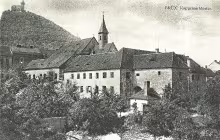
The Church of the Assumption of the Virgin Mary in Most was once a significant Roman Catholic church within a Capuchin monastery on Ruská Street. Built between 1618 and the mid-1620s, it exemplified typical Capuchin architecture with its triangular gable roof and elongated rectangular chancel. Despite being registered as a cultural monument, it was demolished in 1968 during urban redevelopment for coal mining expansion.
The arrival of the Capuchins in Most in 1616 marked an important moment in the town's religious history, reflecting broader Counter-Reformation efforts to reassert Catholic influence in Bohemia during the early 17th century. This period coincided with significant upheaval as part of the Thirty Years' War. The foundation stone for the church was laid two years later, in 1618, initiating a construction process that spanned nearly a decade.
Architecturally, the Church adhered to the Capuchin order's traditional style. It featured a single-nave design without a tower and included a characteristic triangular gable roof along with an elongated rectangular chancel. These elements emphasized simplicity and functionality typical of Capuchin architecture. The church was consecrated on May 16, 1627, by Cardinal Arnošt Vojtěch z Harrachu.
Throughout its existence, the church faced significant changes in ownership and administration. In 1950, during a period known as Action K, the convent associated with it was dissolved, and the monks were expelled. This marked the beginning of the end for the monastery complex. Despite being recognized as a cultural monument, the church could not withstand urban redevelopment pressures. On October 25, 1968, it was demolished to make way for coal mining expansion, leading to the destruction of the surrounding monastery.
Today, the site where the Church once stood is no longer accessible as a historical monument due to its complete demolition in 1968. However, its story remains significant, reflecting broader themes of religious influence, architectural heritage, and industrial development's impact on cultural sites. The church's history serves as a poignant reminder of the dynamic interplay between preservation and progress.
Visitors interested in Most's rich history may find value in exploring other preserved historical sites within the region that offer insights into its past. While the physical remnants of this monument are no longer present, its legacy continues to resonate with those who appreciate complex narratives of cultural heritage and transformation.
Historical milestones
- 1616
- Příchod kapucínů do Mostu.
- 1618
- Založení základního kamene kostela.
- 1620s
- Dokončení stavby kostela.
- 1627
- Kostel byl vysvěcen kardinálem Arnoštem Vojtěchem z Harrachu.
- 1950
- Dissoluce kláštera a vyhoštění mnichů během Akce K.
- 1968
- Demoliční kostela pro rozšíření uhelného těžení.
Architectural development
Construction of the Church of the Assumption of the Virgin Mary began in 1618 and concluded in the mid-1620s. It featured a single-nave, towerless design typical of Capuchin architecture with a distinctive triangular gable roof and an elongated rectangular chancel. The church was consecrated on May 16, 1627.
Historical events
- 1616
- The Capuchins arrived in Most.
- 1627
- The church was consecrated by Cardinal Arnošt Vojtěch z Harrachu.
- 1950
- The convent was dissolved during Action K, and the monks were expelled.
- 1968
- The church was demolished as part of the redevelopment of the original town of Most for coal mining purposes.
Points of interest
- The Church of the Assumption of the Virgin Mary was part of a broader Counter-Reformation effort during the Thirty Years' War to reassert Catholic influence in Bohemia, highlighting its role beyond just religious worship.
- Despite being registered as a cultural monument, the church's demolition in 1968 underscores the often conflicting priorities between industrial development and heritage preservation, reflecting a common theme in post-war Europe.
Guide
Show guide text
Welcome to the historic site of the Church of the Assumption of the Virgin Mary in Starý Most, Ústecký kraj. As you stand here, imagine the once-sturdy structure that graced this spot—a testament to a rich and tumultuous past. Though today only memories remain, let's embark on a journey through time to uncover the stories embedded within this sacred ground.
The story of this church begins in 1616 when the Capuchin monks arrived in Most, bringing with them their devotion and architectural vision. By 1618, they laid the foundation stone for what would become an emblematic structure of their order. The church was completed in the mid-1620s, standing as a symbol of the Counter-Reformation efforts during the Thirty Years' War—a period marked by religious upheaval across Europe.
Architecturally, this church embodied typical Capuchin style with its triangular gable roof and elongated rectangular chancel. As you stand here now, envision these features that once defined the skyline, their simplicity and elegance a reflection of the order's values. Though no longer standing, the church’s design spoke volumes about the era's architectural preferences.
One cannot discuss this site without mentioning Cardinal Arnošt Vojtěch z Harrachu, who consecrated the church in 1627. His involvement highlights the significance of this place within both religious and regional history, marking it as a beacon of Catholic influence during a time of great change.
Despite being registered as a cultural monument, the church met its demise in 1968 due to coal mining expansion—a poignant reminder of how industrial progress can overshadow historical legacy. This demolition is not just an end but also a beginning for reflection on what was lost and why it matters.
As you ponder this site, consider the layers of history that have unfolded here—from religious fervor to industrial might. I invite you to continue exploring Starý Most, where every street corner whispers tales of its past.
Thank you for joining me today. May your journey through history be as enlightening as it is inspiring.
Tips for visitors
The best time to visit the site of the Church of the Assumption of the Virgin Mary is during late spring or early autumn. During these months, the weather is typically mild and pleasant, making it ideal for exploring outdoor sites like this historical location. Additionally, visiting outside of peak tourist seasons can provide a more serene experience, allowing you to appreciate the history without large crowds.
Parking and transportation options are available for visitors traveling by car or public transport. The site can be accessed via both private vehicles and public transit; however, it is advisable to check current routes and schedules in advance using an online search tool. Public transport may offer convenient access to the area, especially if you plan to explore nearby attractions.
When visiting the former location of the Church of the Assumption of the Virgin Mary, consider bringing comfortable walking shoes as there might be some walking involved when exploring the site and its surroundings. Additionally, carrying a camera or smartphone for photography is recommended, as well as an umbrella or raincoat in case of unexpected weather changes.
For photography enthusiasts, capturing images at sunrise or sunset can provide the best lighting conditions to highlight the historical significance and beauty of the area. These times often offer softer light and longer shadows that enhance architectural features. Although specific photo spots are limited due to the church's destruction, exploring the surrounding landscape can still yield picturesque views.
In terms of nearby attractions within a 30-minute drive or transit ride, visitors might explore other historical sites in the Ústecký kraj region. While specific recommendations were not provided in the initial data, general exploration of local heritage and natural landscapes could offer enriching experiences for those interested in history and culture.
Businesses nearby
Do you run a restaurant, accommodation, shop, museum, rental, wellness or other visitor service near this monument? Show yourself directly to the people heading to it — this is how they will see you in the app and on the web:
Accommodation nearby
Themed route
Tematická výletní trasa: Starý Most a kostel Nanebevzetí Panny Marie
1. Kostel Nanebevzetí Panny Marie (Starý Most) - Kostel Začněte svou cestu u nejvýznamnější památky obce Starý Most, kostela Nanebevzetí Panny Marie. Tento barokní chrám je známý svou architektonickou krásou a bohatou historií. Jeho výzdoba a interiér představují důležitou součást kulturního dědictví oblasti, což činí návštěvu zvlášť hodnotnou.
2. Staromostská fara - Historický komplex Pokračujte v prozkoumání historie Starého Mostu navštívěním Staromostské fary, která se nachází nedaleko kostela. Tento komplex je příkladem barokní architektury a byl důležitým centrem pro místní obyvatele po staletí. Jeho historický význam a krásná stavba jsou neodmyslitelnou součástí kulturního prostředí obce.
3. Staromostské náměstí - Historické náměstí Prozkoumejte centrum Starého Mostu, když se pohybujete na Staromostské náměstí. Toto historické náměstí je srdcem obce a nabízí přehled o životním stylu a dějinách místních obyvatel. Jeho atmosféra a architektonická harmonie vytvářejí ideální prostor pro relaxaci a prohlídku.
4. Staromostský park - Místní zelená zóna Uvolněte si na konci svého výletu v Staromostském parku, který se nachází blízko náměstí. Tento park nabízí klidné prostory a krásné krajiny, ideální pro relaxaci po prozkoumání historických památek. Je to perfektní místo pro chvíli odpočinku a užívání si přírody v bezprostřední blízkosti centra obce.
Tato trasa nabízí komplexní pohled na kulturní dědictví a historii Starého Mostu, zatímco umožňuje návštěvníkům prozkoumat klidnou a přitažlivou atmosféru tohoto místa.
Seasonal recommendations
Jaro: Návštěva kostela Nanebevzetí Panny Marie v jarním období nabízí jedinečný pohled na zbořené struktury, které se prolínají s nově oživujícím se stromovím a kvetoucími keři. Sluneční paprsky pronikají do oblasti, osvětlující kameny a zároveň vytvářející přitažlivé stínové vzory na zemi. Atmosféra je klidná a plná naděje, s mírnými teplotami, které jsou ideální pro dlouhé procházky. Navštěvníci by měli být připraveni na náhlé dešti v tomto období, takže lehké oblečení s ochranným kapesníkem je doporučeno. Jaro má tendenci být méně navštěvováno než jiné sezóny, což znamená menší davy a příležitost pro klidnou návštěvu.
Léto: Létě je Starý Most pln života s teplým slunečním svitem, který osvětluje zbořené kostelní struktury a vytváří dramatické stínové efekty. Příroda je na vrcholu své krásy s plně vyvinutými listy a kvetoucími trávníky, což poskytuje zelený pozadí pro historické ruinách. Atmosféra je vzrušující a přitažlivá, i když může být někdy ohnivá kvůli letním teplotám. Navštěvníci by měli plánovat svou návštěvu brzy v den, aby se vyhnuli polednímu slunci a zvláštním davům během hlavní letní sezóny. Teplé oblečení s ochranou proti slunci je klíčové, stejně jako dostatek vody pro celodenní návštěvu.
Podzim: Podzim přináší melancholický pohled na zbořené kostelní struktury s barevnou paletou listů, které pokrývají zemi kolem. Slunce se méně vysoko kmitá ve vzduchu, což vytváří mírné a klidné světlo, ideální pro fotografii. Atmosféra je tichá a reflektivní, s chladnými rány, které se postupně stávají chladnějšími. Navštěvníci by měli být připraveni na klesající teploty a možnost dešťů, takže obléknutí ve více vrstvách je doporučeno. Podzimní návštěvy jsou často klidnější, což umožňuje intenzivnější zkušenost bez přítomnosti velkých davů.
Zima: V zimě se Starý Most proměňuje v úplně jinou krajinu s ledovcovými podmínkami, které pokrývají zbořené kostelní struktury. Sluneční svit je méně intenzivní a krátkodobý, což vytváří klidnou atmosféru s tichými stíny na sněhovém pozadí. Atmosféra je chladná a poklidná, s otevírací dobou přizpůsobenou kratším denním svítánkám. Navštěvníci by měli být dobře připraveni na extrémní teploty, nosit voděodolné boty a udržovat se teplé s více vrstvami odolného oblečení. Zimní návštěvy jsou obecně méně četné, což znamená menší davu a potenciál pro klidný zážitek.
Visualizations and artistic views

Vizualizace jsou generovány umělou inteligencí a slouží jako inspirace.


Tips from visitors
No tips yet. Be the first!
Log in and add your tip.

Reviews and comments