





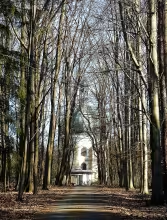
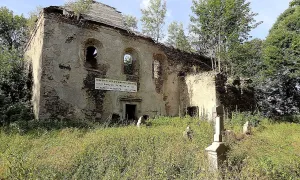
The Church of the Name of Virgin Mary in Velečín is a historical monument that once stood as a single-nave church with a prominent tower at its front. Located in the village of Velečín within northern Plzeňský kraj, this neo-Gothic structure was constructed between 1868 and 1869. It played an important role in the local community until its demolition in the early 1970s, leaving only the tower intact. Today, the site serves as a reminder of the architectural trends and historical shifts that have shaped the region.
The church's origins date back to the late 19th century when Bohemia was part of the Austro-Hungarian Empire. During this period, there was a revival of Gothic architectural styles across Europe, influencing many new constructions in the region. The Church of the Name of Virgin Mary reflected these neo-Gothic trends and was built between 1868 and 1869 with contributions from both the local community and donations from Wenzel and Rosalie Tauber.
Architecturally, the church featured a single-nave layout and a front tower, characteristic of the neo-Gothic style. This design mirrored broader architectural movements that sought to revive medieval Gothic elements with modern interpretations. Although specific details about construction materials are not documented, they were typical of the period.
Ownership and administration of the church changed significantly over its history. Initially supported by local benefactors like Wenzel and Rosalie Tauber, it fell into disuse after World War II due to the expulsion of Germans from the area. By 1971, except for its tower, the church was demolished to make way for new developments. The remaining tower later became part of a building used first as a club house for the Socialistický svaz mládeže and subsequently as the local národní výbor's headquarters.
Key events in the church’s history include its construction completion in 1869, followed by its demolition in the early 1970s. The tower survived this period of change and was integrated into a new structure that served various communal purposes over time. In 1972, a club house was added to the remaining tower, marking another phase in its transformation.
Today, the site where the Church of the Name of Virgin Mary once stood is home to an obecní úřad (municipal office). While the original church no longer exists, the historical significance of the site remains. Visitors can appreciate the legacy of neo-Gothic architecture and reflect on the social and political changes that led to its transformation.
The Church of the Name of Virgin Mary in Velečín offers a unique glimpse into the architectural and historical evolution of rural Bohemia. Its story is one of cultural revival, community involvement, and adaptation through changing times. For those interested in history and architecture, visiting this site provides an opportunity to explore these themes within the context of northern Plzeňský kraj's rich heritage.
Historical milestones
- 1868
- Construction of the Church of the Name of Virgin Mary began.
- 1972
- A club house was added to the remaining tower.
Architectural development
The church was originally built in the neo-Gothic style during the late 19th century. After World War II and the expulsion of Germans from the area, it fell into disuse and eventually deteriorated. In 1971, except for its tower, the church was demolished to make way for a new building.
Historical events
1868-1869: Construction of the Church of the Name of Virgin Mary completed.
Early 1970s: The church was demolished, except for its tower.
Points of interest
- The Church of the Name of Virgin Mary was constructed during a period when Bohemia was part of the Austro-Hungarian Empire, reflecting broader European trends in architectural revivalism.
- Despite its demolition in the 1970s, the church's tower became an integral part of a Socialistický svaz mládeže club house, illustrating how historical structures can be repurposed to meet contemporary needs.
Guide
Show guide text
Welcome to the historic site of the Church of the Name of Virgin Mary in Velečín. As you stand here, take a moment to absorb the serene environment surrounding you. What greets your eyes is the solitary tower that once formed part of this neo-Gothic architectural gem. This lone structure stands as a testament to both the past and present, inviting you to explore its story.
Let's delve into the origins of this remarkable site. Construction of the Church began in 1868, during a time when Bohemia was under the Austro-Hungarian Empire. The period was marked by an architectural revivalism that swept across Europe, bringing with it styles from different eras. This church, designed in the neo-Gothic style, mirrored these broader trends and served as a spiritual and communal hub for the people of Velečín.
The architecture itself is fascinating to observe. Although much of the original structure was lost, the tower that remains offers a glimpse into its former grandeur. Notice how it stands proudly against the sky, its design reflecting the intricate craftsmanship of the late 19th century. The neo-Gothic style can be seen in the pointed arches and ornate detailing that still adorn this enduring edifice.
This site is also intertwined with intriguing stories and notable figures from history. Wenzel Tauber and Rosalie Tauber are among those connected to its past, contributing to the rich tapestry of narratives associated with this location. Their involvement adds a personal dimension to the church's history, reminding us of the human element behind these architectural achievements.
An interesting twist in the tale comes from the tower's transformation over time. After the church was demolished in the early 1970s, the tower didn't just stand forgotten; it found new life as part of a club house for the Socialistický svaz mládeže (Youth Union). This adaptation highlights how structures can evolve and continue to serve communities even after their original purpose has faded.
As we conclude our journey here, I encourage you to take a moment to reflect on what you've learned. Feel free to explore further around this site, imagining the church as it once was and considering its impact over time. Thank you for joining me in uncovering the layers of history at the Church of the Name of Virgin Mary. Safe travels on your journey through Velečín's past!
Tips for visitors
The best time to visit the site of the former Church of the Name of Virgin Mary in Velečín is during late spring or early autumn. These seasons offer pleasant weather, making it ideal for exploring the surrounding rural landscapes and historical architecture typical of northern Bohemia. The natural light during these times also enhances photography opportunities.
Parking and transportation to Velečín are convenient, with options available both by car and public transport. For those driving, there is parking nearby where you can leave your vehicle safely. If using public transport, check the latest connections via a travel planner online to ensure smooth access to the area.
When visiting, it's advisable to bring comfortable walking shoes as exploring the rural landscapes around Velečín involves some walking. Additionally, carrying a camera or smartphone for photography is recommended, especially if you wish to capture the natural beauty and historical essence of the site.
For photography enthusiasts, the best spots are those that offer panoramic views of the surrounding countryside, ideally during the golden hours of sunrise or sunset when the light is soft and warm. These conditions will help in capturing the serene beauty of the area where the church once stood.
Nearby attractions within a 30-minute drive include other historical sites and natural landscapes characteristic of rural Bohemia. Exploring these areas can provide additional context to the history and culture surrounding Velečín, making for a well-rounded visit.
Businesses nearby
Do you run a restaurant, accommodation, shop, museum, rental, wellness or other visitor service near this monument? Show yourself directly to the people heading to it — this is how they will see you in the app and on the web:
Nearby
The church was located in Velečín, a village in northern Plzeňský kraj. The surrounding area is typical of rural Bohemia with its natural landscapes and historical architecture.
Accommodation nearby
Themed route
Thematic Vltour: Discovering the Charm of Rural Bohemia
1. Kostel Jména Panny Marie (Velečín) Type: Church Start your journey at this stunning example of rural Bohemian architecture, the Kostel Jména Panny Marie in Velečín. This church is a testament to the region's rich religious history and offers an intimate glimpse into traditional architectural styles that have stood the test of time. Its serene atmosphere provides a perfect starting point for exploring the cultural heritage of Plzeňský kraj.
2. Historical Architecture Tour in Velečín Type: Walking Tour After visiting the church, take a leisurely walk through the village of Velečín to admire its historical architecture. The quaint streets and traditional houses reflect centuries-old building techniques and styles unique to rural Bohemia. This self-guided tour allows you to appreciate the harmonious blend of nature and history that characterizes this charming village.
3. Local Farmsteads Type: Agricultural Sites Explore nearby farmsteads, which are integral to Velečín's landscape and way of life. These farms offer a glimpse into traditional Bohemian agricultural practices and rural living. Engaging with local farmers provides insights into the region’s agrarian culture and its role in sustaining the community through generations.
4. Natural Landscape Walk Type: Nature Trail Conclude your tour with a walk through the natural landscapes surrounding Velečín. The area boasts beautiful countryside views, typical of rural Bohemia, where rolling hills meet lush greenery. This peaceful setting is perfect for reflection and offers an opportunity to connect with nature while appreciating the serene beauty of Plzeňský kraj.
This thematic tour encapsulates the essence of Velečín's cultural and natural heritage, providing a well-rounded experience of rural Bohemia.
Seasonal recommendations
Jaro: Velečín nabízí nádherný pohled na obnovující se přírodu v jarním období, kdy květiny a stromy začnou kvést a zelenat. Tento čas roku je ideální pro ty, kteří si užívají klidné chvíle na procházce kolem kostela Jména Panny Marie, i když se stává mírnějšími dny a zvyšujícím se počtem návštěvníků. Vzhledem k příznivým teplotám je vhodné si vzít s sebou lehké oblečení, ale také ochranné sluneční brýle a krém, protože slunce může být náhle silnější. Navštívit toto místo v raných ranních hodinách nebo později večer může pomoci vyhnout se velkým davům, které mohou být přítomny v jarním slunci.
Léto: Létě je Velečín plný života, kdy se zelená krajinářství proměňuje do svých nejkrásnějších odstínů. Atmosféra je nabitá teplem a slunečními dny, což činí tento čas ideálním pro výlety na venkov. Nicméně lze očekávat vyšší počet turistů, zejména během hlavní letní sezóny. Vzhledem k teplým podmínkám je důležité se připravit na vysoké teploty tím, že si vezmete lehké oblečení, sluneční ochranu a dostatek pitného. Doporučuje se navštívit památku brzy ráno nebo později večer, aby bylo možné vyhnout se nejteplejším hodinám dne i davům.
Podzim: Podzim v Velečín přináší barevnou paletu zlatých a rudých listů, což činí toto místo ideálním pro fotografy. Atmosféra je klidnější ve srovnání s letním obdobím, ale stále dostatečně teplá na venkovní aktivity. Vzhledem k měnícím se počasím je vhodné si připravit oblečení podle teploty a vzít s sebou deštník, protože mohou nastat krátké deštivé období. Navštívte toto místo v raných ranních hodinách nebo později večer pro klidnější zážitek a nejlepší světlo na fotografování.
Zima: Zimní Velečín nabízí jemnou atmosféru, kdy je krajinářství pokryto sněhem, což přidává mírný romantický pocit. Nicméně zimní podmínky mohou být náročné kvůli chladu a kratšímu dennímu svitu. Je důležité se obleknout teplě, včetně deštníku nebo pláště na sníh, a připravit se na možnost zavření památky kvůli nepříznivým počasím. Navštívte toto místo brzy ráno pro klidnější zážitek a nejlepší světlo, ale buďte připraveni na kratší otevírací dobu.
Visualizations and artistic views

Vizualizace jsou generovány umělou inteligencí a slouží jako inspirace.
Atmosphere of the place
Atmospheric visualization of the setting and era
Tips from visitors
No tips yet. Be the first!
Log in and add your tip.



Reviews and comments