





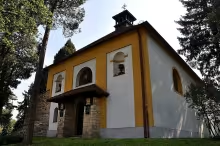
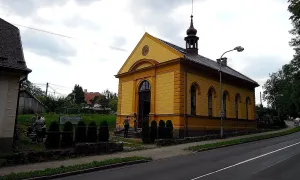
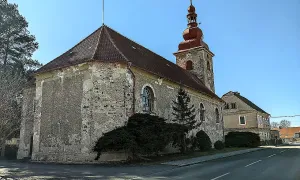
The Evangelical Church of John Amos Comenius is a historic church in Kostelec nad Orlicí, Czech Republic, built in the late 16th century. It is a rare example of a Renaissance-style church in the region and has played a significant role in the history of the Protestant movement in the Czech Republic. The church has undergone several renovations and restorations over the years, including a major restoration in 1994-1996.
Built in 1580-1586, the church was originally a Protestant church. After 1620, it was taken over by the Catholic Church and renamed in honor of Saint Wenceslas. The church was renovated in the Baroque style between 1692-1694. In the 19th century, the church was returned to the city of Kostelec nad Orlicí, which has owned it ever since.
The church features a unique blend of Gothic and Renaissance architectural styles. The building style is Renaissance, with a single-nave design and a presbytery with a semi-circular end. The presbytery has three semi-circular windows with a Gothic-style frame. The church has a sedate roof with a half-hexagonal end and is covered with shingles. The main western facade is three-part with three lisene frames. The main entrance is in the middle with two stairs and a stone portal with an arch-shaped frame. The church also has a beautiful organ and a collection of historical artifacts.
The church has been owned by the city of Kostelec nad Orlicí since the 19th century. In 1921, it was officially designated as a place of worship for the Evangelical Church of Czech Brethren. However, the church was only fully returned to the Evangelical Church in 1956. The church underwent a major restoration in 1994-1996, which included the repair of the roof, the installation of new plaster, and the addition of electric heating to the pews.
The church is surrounded by a beautiful park and a cemetery. The nearby Orlice River offers scenic views and opportunities for outdoor recreation. The church is a symbol of the town's rich history and cultural heritage. It is a place of great historical significance, and its unique blend of architectural styles makes it a fascinating sight to behold.
Today, the church is still an active place of worship and is open to visitors. It is a must-see for anyone interested in history, architecture, or the Protestant movement in the Czech Republic. Visitors can explore the church's beautiful interior, admire its unique blend of architectural styles, and learn about its rich history. The church is a testament to the town's rich cultural heritage and is a place that is sure to leave a lasting impression.
Historical milestones
- 1580
- The church was built in 1580-1586.
- 1692
- The church was renovated in 1692-1694.
- 1994
- The church was restored in 1994-1996.
Architectural development
The church was originally built in the Renaissance style, but it was later renovated in the Baroque style. The church features a unique blend of Gothic and Renaissance architectural styles. The church has undergone several renovations and restorations over the years, including a major restoration in 1994-1996.
Historical events
The church was built in 1580-1586.
The church was renovated in 1692-1694.
The church was restored in 1994-1996.
Owners
The church has been owned by the city of Kostelec nad Orlicí since the 19th century.
Points of interest
– The church is said to be haunted by the ghost of John Amos Comenius himself, who is believed to have appeared to a local priest in the 19th century.
– In the 17th century, the church was used as a hiding place for Protestant dissidents, who would gather in secret to worship and plan their resistance against the Catholic Church.
– The church's unique blend of Gothic and Renaissance architectural styles is due in part to the fact that it was built on the site of an older Gothic church, which was destroyed in a fire.
Guide
Show guide text
Welcome, and thank you for joining me at this remarkable place. You stand before the Evangelical Church of John Amos Comenius, a stone testament to centuries of faith, resilience, and quiet defiance. The building’s weathered façade greets you, its stonework catching the light of the late afternoon. Notice how the walls, though aged, still hold a sense of purpose and dignity, as if the very bricks remember the prayers whispered within them over the span of four hundred years.
Let us step back in time. The church was conceived in the late 16th century, a period when the region was a crossroads of religious and cultural change. Construction began in 1580 and was completed by 1586, a relatively swift endeavor for the era. The decision to erect a place of worship in Kostelec nad Orlicí was driven by the growing community of Protestant believers who sought a dedicated space to gather and practice their faith amidst a landscape dominated by Catholic influence. The builder, Václav Roštlapil, was a local architect whose work reflected the emerging Renaissance style that was spreading across Europe. Yet, the church also carries echoes of the earlier Gothic tradition that had long defined the region’s ecclesiastical architecture. This blend is evident in the subtle interplay of symmetry and verticality that you can see as you stand before the entrance.
Now, let’s take a closer look at the architecture itself. As you observe the façade, notice the rhythm of the stone panels. The design is simple yet purposeful, a hallmark of Renaissance elegance. The windows, though modest, allow light to filter in, creating a gentle glow that seems to illuminate the interior without the need for elaborate ornamentation. The entrance, framed by a modest arch, invites you into a space that has witnessed centuries of worship and quiet reflection. Inside, the nave stretches ahead, its walls lined with plain but sturdy stone. The absence of ornate decoration speaks to the humility of the congregation that built it, focusing on the act of communal prayer rather than on grandiose displays.
The church’s history is not only in its stone but in the stories that have unfolded within its walls. One of the most enduring figures associated with this place is Jan Amos Komenský, a towering intellectual and educator whose influence reached far beyond the borders of the Czech lands. Though he never physically entered this church, his name lives on here, and the building bears his legacy. The church is said to have been a refuge for Protestant dissidents in the 17th century, a time when religious persecution forced many to hide their beliefs. Secret gatherings took place in its quiet corners, and plans for resistance were quietly exchanged among those who dared to dream of a freer future. The very fact that this building served as a sanctuary for those who risked everything to practice their faith is a testament to its enduring spirit.
There is also a more mysterious tale that has lingered in the local lore. According to accounts, the ghost of Jan Amos Komenský himself is said to haunt these halls. In the 19th century, a local priest claimed to have seen a spectral figure in the doorway, a vision that left him both unsettled and oddly comforted. Some say the apparition appears at dusk, walking silently along the nave, a reminder of the church’s role as a beacon of hope in dark times. Whether you believe in spirits or not, the story adds a layer of intrigue that invites you to imagine what it would be like to stand in the same space where faith and courage have intersected for centuries.
As we move forward, let’s consider the church’s more recent history. After centuries of quiet endurance, it underwent a significant restoration between 1994 and 1996. This work was undertaken to preserve the structure for future generations, ensuring that the stone remains solid and the spirit of the place continues to inspire. The restoration respected the original design, carefully restoring the façade and interior while maintaining the integrity of the Renaissance and Gothic elements that define its character.
Now, I invite you to take a moment to breathe in the atmosphere. Feel the cool stone beneath your feet, the faint scent of old wood and stone, and let the quiet hush of the space remind you of the countless prayers whispered here over the centuries. The church’s walls have absorbed the voices of those who came before, and they still echo with the weight of history.
If you wish to explore further, you might walk along the nave and notice how the light shifts as the sun moves across the sky. Each corner offers a different perspective, a different way to connect with the past. Perhaps you’ll pause by the simple altar, its plain design a reminder that faith is not measured by ornamentation but by the sincerity of the heart. Or you might linger at the entrance, where the stone arch stands as a silent witness to the countless doors that have opened and closed over the years.
Thank you for sharing this moment with me. I hope this glimpse into the past has sparked your curiosity and touched your spirit. As you continue your journey through Kostelec nad Orlicí, may
Tips for visitors
{'best_time_to_visit': 'The best time to visit the Evangelical Church of John Amos Comenius is during spring and summer when the weather is pleasant and the surrounding park is in full bloom.', 'parking_transport': 'The church is accessible by car and public transportation. You can park your vehicle in the designated parking lot near the church or use the public parking lot in the town center.', 'what_to_bring': "It's recommended to bring a camera to capture the beautiful architecture and surroundings, as well as a bottle of water and a snack to enjoy in the park.", 'photography': 'The best spots for photography are around the church, in the park, and near the Orlice River. The golden hour, just before sunset, is ideal for capturing the best light.', 'what_to_see_nearby': 'Nearby attractions include the Orlice River, which offers scenic views and opportunities for outdoor recreation, and the town of Kostelec nad Orlicí, which features a charming town center and a cemetery.', 'tips_for_families': 'The church and its surroundings are suitable for families with children. You can bring a picnic to enjoy in the park, and the nearby Orlice River offers a fun spot for kids to play and explore.'}
Businesses nearby
Do you run a restaurant, accommodation, shop, museum, rental, wellness or other visitor service near this monument? Show yourself directly to the people heading to it — this is how they will see you in the app and on the web:
Nearby
The church is located in the town of Kostelec nad Orlicí, which is situated in the Hradec Králové Region of the Czech Republic. The church is surrounded by a beautiful park and a cemetery. The nearby Orlice River offers scenic views and opportunities for outdoor recreation.
Accommodation nearby
Themed route
Kostelec nad Orlicí sightseeing route:
1. Church of John Amos Comenius, a church monument, is worth visiting because it is a unique example of Baroque architecture and symbolizes the significance of the personality of Jan Amos Komenský. Visit the church and explore its interior furnishings and history.
2. Park u kostela (Church Park), public park, is worth visiting because it offers a peaceful environment and beautiful views of the church and surrounding landscape. A walk in the park is an excellent way to unwind from the city and relax.
3. Orlice River, river, is worth visiting because it offers beautiful scenery and opportunities for outdoor activities such as swimming, fishing, or walks along the bank. Visit the river and explore its natural beauty.
Seasonal recommendations
Spring brings the church’s stone façade bathed in soft, golden light as the surrounding gardens burst into color. The air feels fresh, and the morning mist often lingers just above the cobblestones, creating a quiet, almost reverent atmosphere. Visitors usually find the crowds manageable, especially on weekdays. Arrive early in the day, bring a light jacket for the cooler morning temperatures, and wear comfortable walking shoes to explore the surrounding park.
Summer turns the site into a bright, sunlit tableau, with the long daylight hours offering ample time to wander the interior and the surrounding square. The heat can make the stone feel warm underfoot, so it’s wise to schedule your visit in the early morning or late afternoon to avoid the peak sun. Pack a reusable water bottle, apply sunscreen, and opt for breathable clothing. If you prefer a more relaxed experience, choose a weekday afternoon when the influx of tourists is lower.
Autumn offers a palette of amber and crimson as the leaves turn, casting a warm glow on the church’s stained‑glass windows. The cooler temperatures and shorter days create a contemplative mood, and the site is typically less crowded than in summer. Layered clothing works best, as the temperature can shift from cool mornings to mild afternoons. Visiting in the late afternoon allows you to catch the soft, diffused light that enhances the interior’s historic details.
Winter presents a crisp, quiet setting, with the possibility of light dusting of snow on the stone and the surrounding trees. Daylight is limited, so plan to arrive early to make the most of the shorter hours. Warm, insulated layers are essential, and a hat and gloves will keep you comfortable while you explore the interior’s subtle winter light. Check the opening hours in advance, as they may be reduced during the colder months.
Visualizations and artistic views


Vizualizace jsou generovány umělou inteligencí a slouží jako inspirace.


Atmosphere of the place
Atmospheric visualization of the setting and era
Tips from visitors
No tips yet. Be the first!
Log in and add your tip.


Reviews and comments