





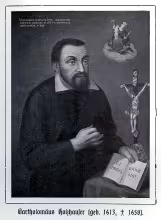
The Klášter bartolomitů in Žitenice is a historical Baroque monastery that existed from approximately 1667 until its closure in 1782. Situated in the village of Žitenice within the Litoměřice diocese, it served as a spiritual center for the Order of Saint Bartholomew and played an integral role in local religious life during its operational years. The monastery is notable not only for its architectural style but also for reflecting the broader influence of the Catholic Reformation in Bohemia.
The establishment of Klášter bartolomitů around 1667 was part of a larger movement to reinforce Catholicism in Bohemia, which had experienced significant religious and cultural changes under Habsburg rule. This period followed the Protestant Reformation and saw efforts to re-establish Catholic dominance through the construction of many Baroque churches and monasteries across the region. The monastery's founding is attributed to Ferdinand Beno Martinic, a probošt (provost) of the Vyšehrad Chapter, who acquired it for the chapter after 1667. Under his administration, the monastery became an important site for religious services held at the Church of Saints Peter and Paul.
Architecturally, Klášter bartolomitů was constructed in the Baroque style typical of the late 17th century. Although specific details about its architectural phases or materials are not documented, the Baroque style is characterized by grandeur, drama, and movement, often featuring elaborate decorations and a sense of awe-inspiring scale. This stylistic choice reflects the period's emphasis on expressing religious themes with emotional intensity.
The monastery was under the administration of the Vyšehrad Chapter, led by Ferdinand Beno Martinic after he acquired it post-1667. The chapter maintained control over Žitenice and oversaw the spiritual activities at the monastery until its dissolution in 1782. This closure followed the death of Jiří Runa, the last Bartolomite priest serving there, marking the end of an era for this religious institution.
Throughout its history, Klášter bartolomitů remained a significant site within the local community, contributing to the spiritual and cultural life of Žitenice. The monastery's operations ceased in 1782 when Jiří Runa passed away, effectively ending the presence of the Bartolomites in the area.
Today, while the physical structure may no longer exist or be accessible as it once was, the historical significance of Klášter bartolomitů remains a point of interest for those exploring the rich tapestry of Bohemian religious history. Visitors to Žitenice can appreciate the broader context of Baroque architecture and the Catholic Reformation's impact on the region. The site serves as a reminder of the dynamic religious landscape of 17th-century Bohemia, offering insights into the cultural transformations that shaped the area.
Klášter bartolomitů stands as a testament to the enduring influence of historical religious movements in shaping local communities. Its legacy invites exploration and reflection on the complex interplay between architecture, religion, and history in Bohemia. For those interested in delving deeper into this fascinating period, visiting Žitenice offers an opportunity to connect with the past and appreciate the cultural heritage that continues to resonate today.
Historical milestones
- 1667
- Založení Kláštera bartolomitů
- kolem 1667
- Ferdinand Beno Martinic získal klášter pro Vyšehradský kapitul
- 1782
- Zavření Kláštera bartolomitů po smrti Jiřího Runy
Architectural development
The monastery was constructed in the Baroque style typical of the late 17th century. Specific details about architectural phases or materials are not documented.
Historical events
- 1782
- The monastery ceased its operations when the last Bartolomite priest, Jiří Runa, passed away.
Owners
The monastery was under the administration of the Vyšehrad Chapter, led by Ferdinand Beno Martinic after he acquired it post-1667.
Points of interest
- The Klášter bartolomitů was part of a broader effort to reinforce Catholicism in Bohemia following the Protestant Reformation, reflecting the Counter-Reformation's influence on regional architecture and religious practices.
- Ferdinand Beno Martinic, who acquired the monastery for the Vyšehrad Chapter after 1667, played a pivotal role in its establishment, highlighting the interconnectedness of local ecclesiastical politics and broader Catholic initiatives during this period.
Guide
Show guide text
Welcome to the historic site of Klášter bartolomitů in Žitenice, a remarkable testament to Baroque architecture and religious history. As you stand here, imagine yourself transported back to around 1667 when this monastery was first established, serving as a spiritual beacon for the Order of Saint Bartholomew.
The story of Klášter bartolomitů begins in an era marked by significant religious transformation across Europe. Following the Protestant Reformation, there was a concerted effort to reinforce Catholicism throughout Bohemia. This monastery is a reflection of that broader influence during the Counter-Reformation, embodying both architectural and spiritual renewal.
As you take in your surroundings, notice how the Baroque style emphasizes grandeur and detail, even though specific architects remain unknown. The atmosphere here speaks volumes about its historical significance without needing explicit visual cues like towers or domes. Feel the weight of history as you stand where monks once gathered for services at the Church of Saints Peter and Paul.
A pivotal figure in this monastery's history is Ferdinand Beno Martinic, who acquired it for the Vyšehradský kapitul around 1667. His involvement underscores the strategic importance of such religious institutions during that time. The monastery thrived as a center of local religious life until its dissolution in 1782 following the death of Jiří Runa.
One intriguing aspect of Klášter bartolomitů is how it encapsulates the Counter-Reformation's impact on regional architecture and practices. This period was characterized by a resurgence of Catholic influence, which this monastery vividly represents.
As you reflect on your visit, consider exploring more about the Order of Saint Bartholomew and their role in shaping religious life here. The story of Klášter bartolomitů is just one chapter in the rich tapestry of Bohemian history.
Thank you for joining me today at this historic site. I hope this experience has deepened your appreciation for the past and inspired further exploration into the fascinating history of Žitenice and beyond. Safe travels as you continue your journey through time!
Tips for visitors
The best time to visit the Klášter bartolomitů in Žitenice is during late spring or early autumn, when the weather is pleasant for exploring the monastery's grounds and enjoying the surrounding Bohemian countryside. These seasons offer mild temperatures and beautiful natural scenery, enhancing your experience of the Baroque architecture and historical ambiance.
Parking and transportation options are available both by car and public transport. For those driving, there are parking facilities nearby, though it is advisable to check for any restrictions or specific parking areas in advance. Public transport can also be used to reach Žitenice; however, you should verify current routes and schedules using a travel planner or local transportation website.
When visiting the monastery, consider bringing comfortable walking shoes as there may be some uneven paths around the site. Additionally, carrying a light jacket is recommended due to variable weather conditions in the region. A camera or smartphone for capturing photos of the Baroque architecture and serene landscapes would also enhance your visit.
For photography enthusiasts, the best spots at Klášter bartolomitů include areas with natural lighting around midday when shadows are minimal. The Church of Saints Peter and Paul offers excellent opportunities to capture its intricate details. Early morning or late afternoon light can provide a softer glow for more dramatic shots.
Nearby attractions within 30 minutes include other historical sites such as churches and religious buildings that reflect the rich history of the region. Exploring these nearby locations allows you to gain a broader understanding of the area's cultural heritage.
Businesses nearby
Do you run a restaurant, accommodation, shop, museum, rental, wellness or other visitor service near this monument? Show yourself directly to the people heading to it — this is how they will see you in the app and on the web:
Nearby
Žitenice is located in a region rich with historical sites, including churches and other religious buildings from various periods. The surrounding landscape features typical Bohemian countryside.
Accommodation nearby
Themed route
Thematic Walking Tour: Žitenice and the Bartolomite Monastery
1. Bartolomite Monastery (Klášter bartolomitů) *Type:* Religious Site *Why Visit:* Begin your journey at this historic monastery, a testament to the rich religious heritage of the region. The serene atmosphere and architectural beauty offer a glimpse into the spiritual life that has shaped Žitenice for centuries.
2. Church in Žitenice *Type:* Religious Building *Why Visit:* Explore one of the local churches nearby, which showcases traditional Bohemian religious architecture. These structures provide insight into the community's historical devotion and artistic expression through their intricate designs and craftsmanship.
3. Bohemian Countryside Landscape *Type:* Natural Setting *Why Visit:* Stroll through the surrounding countryside to experience the quintessential Bohemian landscape. The rolling hills, lush fields, and pastoral charm offer a peaceful backdrop that complements the historical sites you've visited, allowing for reflection and appreciation of nature's beauty.
This tour offers a harmonious blend of history, architecture, and natural scenery, providing a comprehensive understanding of Žitenice's cultural and spiritual significance.
Seasonal recommendations
Spring: Visiting the Žitenice Monastery of the Order of Saint Benedict during spring offers a unique experience as nature awakens around this historic site. The monastery grounds are adorned with blooming flowers and fresh greenery, creating an enchanting atmosphere that enhances the serene beauty of the ancient architecture. Visitors can enjoy the soft, warm light filtering through the trees, which beautifully illuminates the stone structures. It's advisable to wear comfortable walking shoes as you explore the paths around the monastery, which may be slightly muddy after spring rains. The weather is generally mild, but carrying a light jacket for cooler mornings or evenings is wise. Spring tends to attract fewer tourists compared to summer, making it an ideal time for those seeking a more tranquil visit.
Summer: Summer at the Žitenice Monastery offers vibrant natural scenery with lush landscapes and long daylight hours perfect for exploring. The warm weather allows visitors to fully appreciate outdoor areas, such as gardens or picnic spots near the monastery walls. However, this is also the peak tourist season; arriving early in the morning can help avoid larger crowds and ensure a more peaceful experience. Sun protection is essential during summer visits, so wearing hats, sunglasses, and applying sunscreen are recommended. Additionally, staying hydrated by bringing water is important due to higher temperatures.
Autumn: Autumn provides a picturesque setting for visiting the Žitenice Monastery, as the surrounding landscape transforms into shades of orange, red, and gold. The cooler weather creates a cozy atmosphere that complements the historical ambiance of the monastery. This season offers fewer visitors than summer, allowing for a more intimate exploration of the site. It's advisable to wear layers to accommodate varying temperatures throughout the day, from crisp mornings to milder afternoons. Carrying an umbrella or raincoat might be wise, as autumn can bring unpredictable showers that add to the scenic beauty.
Winter: The Žitenice Monastery in winter exudes a quiet and mystical charm under a blanket of snow, offering a stark contrast to its vibrant summer landscape. The serene atmosphere is perfect for contemplation and enjoying the historic architecture against a backdrop of frosty surroundings. Winter visits require warm clothing, including coats, hats, gloves, and sturdy boots, as temperatures can be quite low. It's also important to check opening hours in advance, as they may be reduced during this season. Despite fewer visitors due to colder weather, winter provides an opportunity for those seeking a peaceful retreat from the hustle and bustle of more crowded times of year.
Tips from visitors
No tips yet. Be the first!
Log in and add your tip.
More monuments – Žitenice
Show all in the municipality
Příběhy a pověsti
Legendy, pověsti a příběhy spjaté s touto památkou
Reviews and comments