





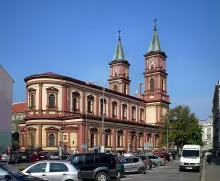
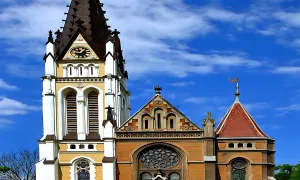
The Cathedral of the Divine Saviour, known as Katedrála Božského Spasitele in Czech, majestically stands at Moravská Ostrava's heart. Completed between 1883 and 1889, this Neo-Renaissance basilica is notable for being the second largest Roman Catholic cathedral in Moravia and Silesia after the basilica on Velehrad. Designed by Gustav Meretta with interior contributions from Max von Ferstel, it serves as a co-cathedral of the Ostrava-Opava diocese, established in 1996. Its architectural grandeur and historical significance make it an essential landmark for both pilgrims and tourists.
The cathedral's origins trace back to the late 19th century when Moravia was part of Austria-Hungary, a period marked by industrial growth and cultural development. The need for a new parish church arose due to the increasing number of worshippers and official requirements for public buildings that the old St Wenceslas Church could no longer accommodate. On May 23, 1871, the city council decided to build a new church. After a fire inspection on January 2, 1882, led by the district marshal in Místek, plans were set into motion. The foundation stone was laid on October 4, 1883, during the emperor's name day celebrations, marking the beginning of its construction.
Architecturally, the Cathedral of the Divine Saviour is a testament to the Neo-Renaissance style, characterized by its three naves and semi-circular apse. The main nave stretches 14 meters wide and 22 meters high, while the side aisles are each 7 meters wide and 10 meters high. The cathedral's length totals 68 meters, crowned by two symmetrical towers that reach a height of 67 meters. Initially designed with four columns by Max von Ferstel, the main altar was replaced after World War II, reflecting changes over time.
The construction process involved various stakeholders, including church committees established under provincial laws from 1864 and 1874, which played significant roles in overseeing projects like this cathedral. Financial contributions came from diverse sources, including Jewish entrepreneurs such as Baron Rotschild and the Gutmann brothers. Despite financial challenges and criticism of Mayor Anton Lux's management, construction proceeded with these contributions.
Key events during its history include the solemn consecration by Archbishop Theodor Kohn on July 16, 1897. In 1996, Pope John Paul II established the Diocese of Ostrava-Opava, elevating the basilica to cathedral status. A new neo-Baroque organ was installed in 1998, adding to its liturgical richness.
Today, the Cathedral of the Divine Saviour remains a vibrant center for worship and tourism. Visitors can easily access it by train or bus from Ostrava, followed by local transportation to reach this downtown landmark. Its impressive architecture, historical significance, and role as a co-cathedral make it a must-visit site. The cathedral not only offers spiritual solace but also provides insight into the cultural and architectural heritage of Moravia. Visitors are invited to explore its grandeur and experience the rich history that continues to resonate within its walls.
Historical milestones
- 1883
- Groundbreaking for the cathedral took place.
- 1897
- The cathedral was solemnly consecrated by Archbishop Theodor Kohn.
Architectural development
Constructed in a Neo-Renaissance style, the Cathedral of the Divine Savior features an unoriented basilica with three naves and a semi-circular apse. Its main nave is 14 meters wide and 22 meters high, while side naves are 7 meters wide and 10 meters high. The building's length totals 68 meters, topped by two symmetrical towers reaching 67 meters in height. Initially designed with four columns by Max von Ferstel, the main altar was replaced post-World War II.
Historical events
The city council decided on May 23, 1871, to build a new parish church due to increasing numbers of worshippers and official requirements for public buildings.
Groundbreaking took place on October 4, 1883, during the emperor's name day celebrations.
The cathedral was solemnly consecrated by Archbishop Theodor Kohn on July 16, 1897.
Points of interest
- The Cathedral of the Divine Saviour was initially designed with four columns by Max von Ferstel, but these were replaced after World War II, reflecting changes in its architectural elements over time. - Financial contributions for its construction included support from Jewish entrepreneurs such as Baron Rotschild and the Gutmann brothers, highlighting a diverse array of stakeholders involved in its creation.
Guide
Show guide text
Welcome to the Cathedral of the Divine Savior in Moravská Ostrava, a beacon of spiritual and architectural grandeur that has stood proudly since the late 19th century. As you stand here, take a moment to soak in the majestic presence of this Neo-Renaissance masterpiece, its imposing structure reaching towards the sky with an air of solemn grace.
The story of this cathedral begins in 1883 when groundbreaking marked the start of what would become one of Moravia's most significant religious edifices. Designed by Gustav Meretta and brought to life under the watchful eye of Clemens Hladisch, its construction spanned six years, culminating in a solemn consecration in 1897 by Archbishop Theodor Kohn. This was no ordinary building project; it represented the aspirations of a community seeking spiritual solace and architectural beauty.
As you gaze upon this cathedral, notice how its Neo-Renaissance style is expressed through elegant lines and harmonious proportions. While specific interior details are beyond our current view, imagine stepping inside to find yourself enveloped in an atmosphere that combines reverence with artistic splendor—a testament to the vision of Max von Ferstel, who originally planned for four columns within.
This cathedral's history is interwoven with stories of collaboration and resilience. Notably, financial support from Jewish entrepreneurs played a crucial role in its construction, highlighting a spirit of unity and shared purpose that transcended religious boundaries. However, the passage of time brought changes; after World War II, some architectural elements were altered, such as the replacement of the original columns designed by Max von Ferstel.
Now, let your curiosity be piqued by this cathedral's ability to adapt and endure through changing eras. As you stand here, consider how each stone tells a story of faith, artistry, and community—a narrative that continues to unfold with every visitor who walks these grounds.
As we conclude our brief journey around the Cathedral of the Divine Savior, I invite you to continue exploring this remarkable site. There is much more to discover within its walls and beyond, where history and spirituality intertwine in a dance as timeless as the structure itself. Thank you for joining me on this exploration, and may your visit be both enlightening and inspiring.
Businesses nearby
Accommodation nearby
Themed route
Tematická výletní trasa: Katedrála Božského Spasitele a okolí
1. Katedrála Božského Spasitele (Katedrála) - Typ: Náboženská památka - Proč stojí za návštěvu: Katedrála Božského Spasitele je ikonickým symbolem Moravské Ostravy, známá svou imponující goticko-románskou architekturou. Je to nejen duchovní centrum města, ale také historická památka s bohatou historií a uměleckými detaily, které přitahují návštěvníky z celého světa.
2. Náměstí Republiky (Veřejné prostranstvo) - Typ: Veřejná plocha - Proč stojí za návštěvu: Nachází se přímo vedle katedrály a nabízí krásný pohled na její fasádu. Náměstí je centrem místního života, kde lze prozkoumat moderní architekturu a relaxovat v klidné atmosféře. Je to ideální místo pro krátký odpočinek po návštěvě katedrály.
3. Kostel svatého Jana Nepomuckého (Kostel) - Typ: Náboženská památka - Proč stojí za návštěvu: Tento kostel je dalším důležitým náboženským a historickým místem v Moravské Ostravě. Jeho barokní architektura a bohaté interiéry představují zajímavou kontrast k gotickému stylu katedrály, což nabízí cestovatelům širší pohled na místní dědictví.
4. Park u Kostela svatého Jana Nepomuckého (Veřejný park) - Typ: Zelená zóna - Proč stojí za návštěvu: Park nabízí klidné prostory k odpočinku a relaxaci. Je to ideální místo pro krátkou procházku nebo jen sedění na lavičce, aby se užili přírodního prostředí v blízkosti historických památek.
Tato trasa nabízí kombinaci náboženské a kulturní zábavy s možnostmi relaxace ve středu Moravské Ostravy, což umožňuje cestovatelům prozkoumat hlavní historické památky obce.
Seasonal recommendations
Jaro: Návštěva Katedrály Božského Spasitele v jarním období nabízí jedinečný zážitek s oslnivými světelnými efekty, kdy sluneční paprsky pronikají skrze okenice a stvoří barevné vzory na vnitřních stěnách. Zatímco příroda kolem se probouzí z zimy, je atmosféra klidná a plná naděje, což poskytuje ideální prostředí pro poznání historického architektonického umění katedrály. Jaro je obvykle méně náročné na davu než letní měsíce, takže je to skvělý čas na klidnou prohlídku. Doporučuje se nosit pohodlné oblečení a možná parapluie kvůli náhlejším deštivým počasím, které jsou typická pro tuto sezónu.
Léto: Létě je Katedrála Božského Spasitele nejvíce navštěvována díky ideálnímu počasí a dlouhým dnům. Oslnivé sluneční světlo zesiluje barevnost interiérů, což vytváří nádherné vizuální dojmy. Atmosféra je plná životnosti a katedrála se stává centrem místních aktivit. Kvůli velkým davům je doporučeno navštěvovat brzy ráno nebo pozdě odpoledne, aby se vyhnuli vrcholem letní návštěvnosti. Nosíte si lehké oblečení a slunečnice, abyste se chránili před sluncem, a zvažte pití dostatek vody během své prohlídky.
Podzim: V podzimu nabývá Katedrála Božského Spasitele melancholické krásy s měnícím se barevným spektrem stromů a teplejším, ale přesto klidným počasím. Atmosféra je mírnější než v jarních měsících a poskytuje odlišné pohledy na její architekturu, kdy se stín a světlo kombinují, aby zdůraznily detaily. Toto období je často méně navštěvováno než v letní sezóně, což znamená kratší čekací doby při vstupu a klidnější prohlídky. Nosíte si vrchní oblečení s možností odhození, protože počasí může být proměnlivé, a zvažte nosit obuv bez přilbice kvůli potenciálním dešťovým podmínkám.
Zima: Zimní návštěva Katedrály Božského Spasitele nabízí jedinečnou atmosféru s chladnými, měkkými světelnými efekty a možností prohlédnout se v klidu bez velkých davů. Zimní světlo vytváří pocit úlevy a klidu uvnitř katedrály, což je ideální pro zamyšlení nad jejím historickým významem. Kvůli chladnějšímu počasí může být otevírací doba katedrály kratší, takže se ujistěte, že si před návštěvou zkontrolujete aktuální časy. Nosíte si teplé oblečení, včetně kožichů nebo deky a kvalitní obuv, abyste se chránili před chladem a možným sněhem, což zajišťuje pohodlnou prohlídku.
Visualizations and artistic views

Vizualizace jsou generovány umělou inteligencí a slouží jako inspirace.


Tips from visitors
No tips yet. Be the first!
Log in and add your tip.


Reviews and comments