





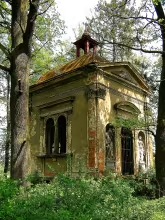
The Hrobka rodu Baillou is a neorenaissance chapel located in Hustopeče nad Bečvou, serving as the mausoleum for the Baillou family. Constructed between 1885 and 1887 by Czech architect Zachariáš Herrmann, it stands as a cultural monument of the Czech Republic. This site is notable not only for its architectural style but also for marking significant historical transitions within the Baillou family, who originally hailed from France.
The chapel's origins are deeply rooted in the history of the Baillou family, which settled in Austrian territories in 1748 and were recognized as barons by 1766. The mausoleum was built during a period when Czech lands were part of the Austro-Hungarian Empire, experiencing cultural and architectural influences from across Europe. This era saw a revival of interest in Renaissance styles, reflected in the chapel's design.
Architecturally, the Hrobka rodu Baillou exemplifies neorenaissance style, characterized by its symmetrical form and classical details. Designed by Zachariáš Herrmann, the chapel was initially surrounded by a cemetery, emphasizing its role as a family burial site. The choice of this architectural style during its construction period highlights the cultural influences prevalent in the region at that time.
Ownership of the chapel has been closely tied to the fortunes of the Baillou family. Jan Ludvík Baillou, a notable member, acquired the Hustopeče estate in 1799 through marriage and held it until his death in 1802. The lineage continued with baron Karel Heinrich z Baillou as the last known owner before his passing in 1945. These transitions reflect both personal and broader historical changes within the family.
Key events associated with the chapel include its construction between 1885 and 1887, marking a significant architectural addition to the region. In 1966, conservation efforts were initiated for the chapel's crypt due to vandalism concerns, leading to the sealing of windows and doors. Later, in the late 1970s, the remains within the chapel faced threats from vandals, prompting their relocation to a local cemetery for security.
Today, the Hrobka rodu Baillou is under the care of the town of Hustopeče nad Bečvou, which began restoration efforts in 2019 with funding from the Ministry of Culture of the Czech Republic. This ongoing preservation work ensures that the chapel remains accessible to visitors and continues to serve as a testament to both architectural heritage and family history.
Visiting the Hrobka rodu Baillou offers a unique glimpse into the cultural and historical tapestry of the region, making it a worthwhile destination for those interested in architecture, history, or genealogy. Its preservation not only honors the legacy of the Baillou family but also enriches our understanding of the broader historical context of Czech lands during the Austro-Hungarian era.
Historical milestones
- 1748
- Baillou family settles in Austrian territories.
- 1766
- Baillou family recognized as barons.
- 1799
- Jan Ludvík Baillou acquires Hustopeče estate.
- 1802
- Death of Jan Ludvík Baillou, end of his ownership.
- 1885
- Construction begins on Hrobka rodu Baillou chapel.
- 1887
- Completion of Hrobka rodu Baillou chapel construction.
- 1945
- Death of baron Karel Heinrich z Baillou, last
Architectural development
The Hrobka rodu Baillou was designed in a neorenaissance style by Zachariáš Herrmann. Initially surrounded by a cemetery, it faced issues of vandalism in the late 1970s, prompting the relocation of remains to a local cemetery for security.
Historical events
- 1885–1887
- Construction of the chapel by Zachariáš Herrmann.
- 1966
- Decision to conserve the crypt, leading to sealing windows and doors due to vandalism concerns.
Owners
The Baillou family acquired the Hustopeče estate in 1799 through marriage to Kolešovice, with Jan Ludvík Baillou being a notable owner until his death in 1802. The last known owner was baron Karel Heinrich z Baillou, who passed away in 1945.
Points of interest
- The Baillou family, originally from France, were granted baronial status in 1766, a significant honor that reflects their integration and influence within Austrian territories during the Austro-Hungarian Empire.
- Jan Ludvík Baillou's acquisition of the Hustopeče estate through marriage in 1799 highlights how matrimonial alliances played a crucial role in expanding family wealth and landholdings during this era.
Guide
Show guide text
Welcome to the Hrobka rodu Baillou, a historical gem nestled in Hustopeče nad Bečvou. As you stand here, take a moment to appreciate the serene presence of this neorenaissance chapel. Its elegant lines and tranquil atmosphere invite you into a story rich with history and heritage.
The origins of this site are deeply intertwined with the Baillou family, who settled in Austrian territories back in 1748. Their journey from France led them to be recognized as barons by 1766, marking their significant influence within the Austro-Hungarian Empire. A pivotal moment came in 1799 when Jan Ludvík Baillou acquired the Hustopeče estate through marriage, a union that would leave a lasting legacy on this land.
The construction of this chapel between 1885 and 1887 was commissioned by Czech architect Zachariáš Herrmann. As you gaze upon its structure, notice the neorenaissance style that defines its character—a testament to the era's architectural elegance. The chapel stands not just as a family mausoleum but also as a cultural monument of the Czech Republic.
Key figures associated with this place include Jan Ludvík Baillou and Karel Heinrich z Baillou, whose lives and legacies are etched into its history. Their stories add depth to the walls that surround you, inviting reflection on their contributions and the era they shaped.
An intriguing aspect of this site is how it encapsulates the Baillou family's journey from nobility in France to influential barons in Austria. This transition speaks volumes about their integration and impact during a time when cultural and political landscapes were rapidly evolving.
As you continue your exploration, let yourself be drawn into the layers of history that surround you. Each stone tells a story, each corner holds a memory. We invite you to delve deeper into this narrative, discovering more about the lives and times that have shaped this remarkable place.
Thank you for visiting Hrobka rodu Baillou. May your journey here inspire curiosity and appreciation for the rich tapestry of history woven through these lands.
Tips for visitors
The best time to visit the Hrobka rodu Baillou is during late spring or early autumn, when the weather is pleasant and the surrounding landscapes are particularly beautiful. During these seasons, you can enjoy a comfortable walk around the area without the discomfort of summer heat or winter cold. Additionally, visiting in these months often means fewer crowds, allowing for a more serene experience.
Parking and transportation options are available to make your visit convenient. The chapel is accessible by both car and public transport. If driving, there are parking facilities nearby where you can leave your vehicle. For those preferring public transport, it's advisable to check the latest connections using an online search tool or local travel app to ensure a smooth journey.
When planning your visit, consider bringing comfortable walking shoes as you may want to explore the surrounding landscapes and possibly other historical sites within a 5 km radius. A camera is also recommended to capture the chapel’s architectural beauty, especially during the golden hours of early morning or late afternoon when natural light enhances its neorenaissance features.
For photography enthusiasts, the best spots for capturing the chapel are from the front entrance where you can appreciate its symmetry and details in good lighting conditions. The soft light of dawn or dusk provides a warm glow that accentuates the chapel’s intricate design. Additionally, exploring the surrounding area might offer unique angles and natural backdrops.
In terms of nearby attractions within a 30-minute drive, consider visiting other historical sites around Hustopeče nad Bečvou to enrich your cultural experience. The local landscapes provide scenic views perfect for leisurely walks or picnics, making it an ideal outing for families with children. Exploring these areas can offer educational insights and enjoyable activities suitable for all ages.
Businesses nearby
Do you run a restaurant, accommodation, shop, museum, rental, wellness or other visitor service near this monument? Show yourself directly to the people heading to it — this is how they will see you in the app and on the web:
Nearby
The chapel is situated in Hustopeče nad Bečvou, a town on Přerovsko. The surrounding area includes local landscapes and possibly other historical sites within a 5 km radius.
Accommodation nearby
Themed route
Thematic Walking Tour: The Baillou Family Mausoleum and Surroundings
Welcome to this curated walking tour designed for history enthusiasts exploring the rich heritage of Hustopeče nad Bečvou, located in the picturesque region of Přerovsko. This journey will take you through a series of historically significant sites within close proximity to each other, offering insights into local landscapes and historical narratives.
1. Baillou Family Mausoleum (Chapel) - Type: Historical Chapel - Why Visit: Begin your exploration at the heart of this tour—the Baillou Family Mausoleum. This chapel is a remarkable example of regional architecture, reflecting the historical significance and legacy of the Baillou family in Hustopeče nad Bečvou. Its serene ambiance and intricate design provide a perfect starting point for understanding the local history.
2. Local Historical Landscapes - Type: Scenic Walk - Why Visit: Just a short walk from the chapel, immerse yourself in the surrounding landscapes that have witnessed centuries of change. These areas offer not only breathtaking views but also an opportunity to reflect on how the natural environment has shaped and been shaped by human history over time.
3. Nearby Historical Sites - Type: Cultural Exploration - Why Visit: Within a 5 km radius, discover other historical sites that complement your visit to the Baillou Family Mausoleum. These locations provide additional context about the region's past and its cultural evolution, allowing you to piece together stories from different eras.
This tour is designed to offer a comprehensive experience of Hustopeče nad Bečvou’s heritage, focusing on the interplay between historical sites and local landscapes. Enjoy your journey through time in this charming part of Olomoucký kraj!
Seasonal recommendations
Spring: Visiting the Baillou Family Mausoleum during spring offers a serene experience as nature awakens around the historic site in Hustopeče nad Bečvou. The soft, gentle light of early morning or late afternoon enhances the intricate details of the mausoleum's architecture, providing an ideal time for photography and reflection. During this season, the surrounding landscape begins to bloom with wildflowers, adding a colorful backdrop that complements the historic atmosphere. Visitors should be prepared for occasional rain showers, so wearing waterproof footwear is advisable. While spring tends to attract fewer tourists compared to summer, it’s still wise to arrive early to enjoy the site in relative solitude and avoid any potential crowds.
Summer: The summer months bring vibrant life to the Baillou Family Mausoleum with lush greenery surrounding the historic site. The long daylight hours allow for extended visiting times, making it perfect for those who wish to explore at a leisurely pace. However, this is also the peak tourist season, so arriving early in the morning can help avoid larger crowds and ensure a more personal experience. Light, breathable clothing is recommended due to the warmer temperatures, along with sunscreen and a hat to protect against the sun. The bright summer light accentuates the mausoleum's details beautifully, making it an excellent time for photography enthusiasts.
Autumn: Autumn presents a picturesque setting at the Baillou Family Mausoleum, with vibrant fall foliage creating a stunning contrast against the historic architecture. The cooler temperatures and softer lighting of late afternoon or early morning are ideal for capturing the site's beauty in its full glory. This season is less crowded than summer, offering a more peaceful visit while still providing ample opportunities to explore. Visitors should dress warmly, as temperatures can drop significantly, especially later in the day. Carrying a light jacket and wearing sturdy shoes will make your exploration of the grounds more comfortable.
Winter: The Baillou Family Mausoleum takes on an ethereal quality during winter, with snow often blanketing the landscape and casting a quiet, reflective atmosphere over the historic site. The shorter days mean visiting hours are reduced, so planning ahead is essential to make the most of your visit. Winter attire should include warm layers, including thermal clothing and waterproof boots, as conditions can be quite cold and wet. While winter tends to draw fewer visitors due to the harsh weather, those who do brave the elements often find a tranquil setting that offers a unique perspective on the mausoleum's architectural beauty.
Visualizations and artistic views

Vizualizace jsou generovány umělou inteligencí a slouží jako inspirace.


Tips from visitors
No tips yet. Be the first!
Log in and add your tip.


Reviews and comments