




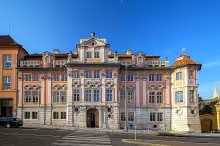
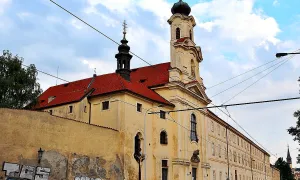
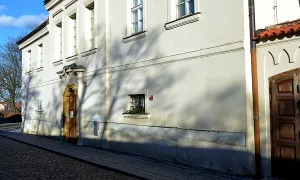
Faustův dům, also known as Mladotovský palác, is a baroque palace located in Prague's New Town at Karlovo náměstí. Built in 1726 by Ferdinand Antonín Mladota ze Solopisk, this architectural gem exemplifies the elegance of its era and has been recognized as a cultural monument since 1964. The building reflects Prague's rich history through its various owners and transformations over centuries.
The origins of Faustův dům date back to medieval times when it was first constructed. Over the years, it changed hands multiple times before being rebuilt into its current baroque form by Ferdinand Antonín Mladota ze Solopisk in 1726. This transformation marked a significant architectural shift from earlier versions. During the early 18th century, Bohemia was part of the Habsburg Monarchy, an era known for cultural flourishing and political consolidation under the Habsburgs, which influenced the baroque style embodied by Faustův dům.
Architecturally, Faustův dům is a prime example of baroque design. The 1726 transformation introduced elements typical of the period, such as elaborate ornamentation and grandeur. While specific architectural details are not extensively documented, its designation as a cultural monument highlights its significance within Prague’s historical landscape.
The ownership history of Faustův dům is marked by notable figures and dramatic changes. Initially owned by Ferdinand Antonín Mladota ze Solopisk, the palace later came under František Mladota and Václav Mladota's possession. In 1768, it was acquired by the Prague Archdiocese, which adapted part of the building for ecclesiastical use. Earlier in its history, in 1543, Jan Kopp became an owner after purchasing the property from Piram Kapoun. Edward Kelley, an English alchemist and mystic, also resided here around 1587, adding to the mansion's enigmatic allure.
Faustův dům is shrouded in mystery and legend, contributing significantly to its fame. The most famous tale involves Dr. Faust, a wandering alchemist, astrologer, and magician who allegedly lived there despite never having visited Prague. This myth intertwines with the story of an impoverished student who found wealth through nightly visits from a mysterious benefactor, only to disappear after attempting to control his fate. These legends have cemented the house's reputation as a place of intrigue and supernatural occurrences.
Today, Faustův dům remains closed to the public, preserving its enigmatic charm and historical significance. Despite being inaccessible for tours, it continues to captivate those interested in Prague’s rich history and architectural heritage. Its mysterious past and baroque elegance make it an intriguing site worth exploring through literature and imagination.
Faustův dům stands as a testament to the cultural and historical richness of Prague. Its blend of architectural beauty and legendary tales invites curiosity and exploration, offering a unique glimpse into the city's storied past. While visitors may not step inside its walls, the stories and history surrounding Faustův dům continue to inspire and intrigue those who wander through Prague’s historic streets.
Historical milestones
- circa 1300
- The first building on the site of Faust's House was constructed.
- 1543
- Jan Kopp became the owner after purchasing from the existing owner, Piramus Kapoun.
- 1587
- Edward Kelley, an English alchemist and mystic, stayed here.
- 1726
- Faust's House was rebuilt in Baroque style by Ferdinand Antonín Mladota ze Solopisku.
- 1768
- The house was purchased by the Prachatice Archdiocese for ecclesiastical purposes.
- 1964
Architectural development
Originally a medieval structure with various owners over centuries, Faustův dům underwent significant transformation in 1726 when it was rebuilt into its current baroque form by Ferdinand Antonín Mladota ze Solopisk. The western part of the building was later acquired and adapted for ecclesiastical use by the Prague Archdiocese.
Historical events
In 1543, the property was sold to Jan Kopp by Piram Kapoun.
Edward Kelley, an English alchemist and mystic, acquired the house around 1587.
Owners
Ferdinand Antonín Mladota ze Solopisk (1721-1726)
František Mladota and Václav Mladota (post-1726)
Prague Archdiocese (1768 onwards)
Points of interest
- Despite its name, Dr. Faust never actually lived in Faustův dům; the legend is more myth than reality, adding a layer of intrigue to the palace's history.
- Edward Kelley, an English alchemist and mystic known for his work with John Dee, resided at Faustův dům around 1587, contributing to its mystical reputation through tales of occult practices.
- The building was once owned by Jan Kopp in 1543 after purchasing it from Piram Kapoun, reflecting the frequent changes in ownership that characterize its storied past.
Guide
Show guide text
Welcome to Faustův dům, a remarkable baroque palace nestled in the heart of Prague's New Town at Karlovo náměstí. As you stand here, take a moment to absorb the grandeur and elegance that surrounds you. This stately building, known also as Mladotovský palác, captivates with its architectural beauty—a testament to the vision of Ferdinand Antonín Mladota ze Solopisku who transformed it in 1726.
Let's delve into the rich tapestry of history woven over centuries at this site. Imagine around 1300 when the first structure was erected here; a place that has since witnessed significant transformations and stories unfold. By 1543, Jan Kopp had acquired ownership from Piram Kapoun, marking the beginning of an intriguing lineage of proprietors. Fast forward to 1587, when Edward Kelley, the renowned English alchemist and mystic, resided within these walls alongside his work with John Dee—a period that adds a layer of mystical allure to this place.
As you gaze upon Faustův dům today, notice its baroque elegance, characterized by ornate details that speak volumes about the era it was constructed in. The craftsmanship and artistry are evident even from a distance, inviting you to explore further. Though the name suggests otherwise, Dr. Faust never lived here; this intriguing myth adds an enigmatic charm to the palace's narrative.
In 1768, the building found new purpose when purchased by Prachatickým arcibiskupstvím for ecclesiastical use, reflecting its adaptability and significance through time. Recognized as a cultural monument since 1964, Faustův dům stands not just as an architectural marvel but also as a witness to Prague's evolving history.
As you continue your journey around this historic site, let the stories of those who once walked these halls inspire you. From its baroque transformation by Mladota ze Solopisku to its association with figures like Edward Kelley, each corner holds whispers of the past waiting to be discovered.
Before we part ways, consider this: Faustův dům is more than just a building; it's a portal into history, inviting you to uncover its secrets and stories. We invite you to explore further, immerse yourself in its atmosphere, and perhaps even imagine the lives that have intersected with this magnificent palace.
Thank you for joining us on this journey through time at Faustův dům. May your exploration be as enriching as it is enlightening. Safe travels as you continue discovering the wonders of Prague's historic heart.
Businesses nearby
Nearby
Faustův dům is situated in the heart of Prague's New Town, near Karlovo náměstí. The area is rich with historical sites and architectural landmarks, including the Church of St. John of Nepomuk on the Rock.
Accommodation nearby
Trips and activities nearby
Guided tours, tickets and activities nearby from GetYourGuide
Search tours and activities →Themed route
Thematic Walking Tour: Faustův dům and Its Historical Surroundings
1. Faustův dům (Palác) - Type: Historic Building - Why Visit: Located in the heart of Prague's New Town, Faustův dům is a stunning example of Renaissance architecture with Baroque elements. Originally built for the wealthy merchant family of the Fausts, it now houses the Czech Museum of Music and offers visitors a glimpse into Prague’s rich musical heritage.
2. Karlovo náměstí (Charles Square) - Type: Historical Square - Why Visit: Just a short walk from Faustův dům, Karlovo náměstí is one of the largest squares in Europe and serves as a central hub for Prague's New Town. It’s famous for its blend of architectural styles, including Gothic, Renaissance, Baroque, and Art Nouveau, reflecting centuries of Prague's history.
3. Church of St. John of Nepomuk on the Rock - Type: Church - Why Visit: Situated near Karlovo náměstí, this church is renowned for its unique location atop a rock outcrop and offers stunning views over the Vltava River. Dedicated to Saint John of Nepomuk, it embodies Baroque architecture with an intriguing history linked to legends of martyrdom.
4. Karlova Street - Type: Historic Street - Why Visit: Running from Karlovo náměstí towards the river, Karlova Street is lined with beautiful Renaissance and Baroque facades that showcase Prague’s architectural evolution. This street offers a charming walk through history, connecting visitors to the city's vibrant past.
5. Křižovnické Nádvoří (Cruciform Garden) - Type: Courtyard - Why Visit: Located near Faustův dům, this courtyard offers a peaceful retreat within the bustling city center. It features an ornate Baroque fountain and provides insight into the historical urban planning of Prague's New Town.
This tour encapsulates the architectural beauty and historical significance surrounding Faustův dům, providing a comprehensive experience of Prague’s cultural heritage in its immediate vicinity.
Seasonal recommendations
Spring: Visiting Faustův Dům during spring offers a unique experience as nature begins to awaken. The surrounding gardens and parks are adorned with blooming flowers, creating a picturesque setting that enhances the historical charm of the palace. The mild weather allows for comfortable exploration, but it's wise to bring layers as temperatures can fluctuate. Spring mornings often have fewer visitors, making it an ideal time to enjoy the serene atmosphere without the crowds.
Summer: Summer is the peak season for visiting Faustův Dům, characterized by long daylight hours that illuminate the palace in a warm glow, enhancing its architectural details. The lush greenery surrounding the site provides a refreshing backdrop for visitors. However, this is also when visitor numbers are at their highest, so it's advisable to arrive early to avoid crowds and ensure ample time to explore. Wearing comfortable footwear and light clothing will help you enjoy your visit in the warmer weather.
Autumn: Autumn brings a tranquil atmosphere to Faustův Dům as the leaves change colors, offering stunning views of the palace against a backdrop of reds, oranges, and yellows. The cooler temperatures make it an ideal time for leisurely strolls around the site without the summer heat. While visitor numbers begin to decrease, it's still advisable to check opening hours as they may be reduced in preparation for winter. A light jacket is recommended to stay comfortable during your visit.
Winter: Winter transforms Faustův Dům into a magical scene with its historic architecture often highlighted by festive lighting, creating an enchanting atmosphere. The colder months mean fewer visitors and shorter opening hours, so planning ahead is crucial. Dress warmly in layers to enjoy the site comfortably, and consider bringing gloves and a hat for added protection against the cold. Despite the chill, winter offers a unique charm that makes visiting Faustův Dům a memorable experience.
Visualizations and artistic views


Vizualizace jsou generovány umělou inteligencí a slouží jako inspirace.


Tips from visitors
No tips yet. Be the first!
Log in and add your tip.
Reviews and comments