





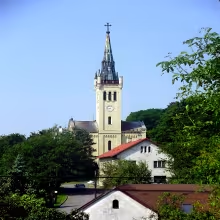
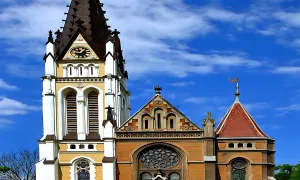
The Evangelický kostel in Suchdol nad Odrou is a historically significant church built between 1852 and 1858. Originally constructed as a Lutheran church, it now belongs to the Českobratrská církev evangelická (Czech Brethren Church). Designed by Viennese architect Ludwig Förster in an arcaded style, this structure reflects the architectural trends of its time. The church is notable for housing Eckert's Library since 2014, which documents the history of German-speaking Evangelicals in Czech lands.
Construction began in 1852 and concluded in 1858, during a period marked by significant political and social changes across Europe, including movements towards national unification and religious reform. In Bohemia, there was an increasing emphasis on cultural identity and architectural expression reflective of historical styles. The church's design by Ludwig Förster, who revised plans initially created by Appelt z Bilska, exemplifies the historicalism prevalent during this era.
Architecturally, the Evangelický kostel is distinguished by its arcaded style, a characteristic feature of the historicalism movement. This style was chosen to reflect the cultural and religious identity of the time, emphasizing a return to classical forms and structures. The church's design elements, including its arcades, contribute to its architectural significance.
Ownership of the Evangelický kostel has changed over time. Initially belonging to the Lutheran community, it was confiscated by the state after World War II. In 2008, the church was transferred to the ownership of the Českobratrská církev evangelická (Czech Brethren Church). This transition marked a significant change in its administration and use.
A key event in the church's history is the establishment of Eckert's Library in 2014. Located in the church's attic space, this library focuses on the history of German-speaking Evangelicals in Czech lands. It houses the book collection of Dr. Alfred Eckert (1934–2012), a significant figure in documenting this community. This addition has enriched the cultural and historical value of the site.
Today, the Evangelický kostel remains an important monument for both its architectural beauty and its role in preserving the history of German-speaking Evangelicals in Czech lands. Adjacent to the church is a cemetery, adding further historical context to the site. Visitors can explore the church's architecture and learn about its rich history through Eckert's Library.
The Evangelický kostel in Suchdol nad Odrou offers a unique glimpse into 19th-century architectural trends and religious history. Its significance as a cultural and historical monument makes it a worthwhile visit for those interested in exploring the diverse heritage of the Czech lands.
Historical milestones
- 1858
- Completion of the Evangelický kostel construction.
- 2008
- Transfer of ownership to Českobratrská církev evangelická (Czech Brethren Church).
Architectural development
The Evangelický kostel in Suchdol nad Odrou was constructed between 1852 and 1858. Initially designed by Appelt z Bilska, the plans were revised by Ludwig Förster, resulting in an arcaded style that reflects the historicalism of the period. The church has undergone ownership changes but remains architecturally significant for its design.
Historical events
- 1852
- Construction of the church began.
- 2008
- The church was transferred to the ownership of the Českobratrská církev evangelická (Czech Brethren Church).
Points of interest
- The Evangelický kostel's design was initially drafted by Appelt z Bilska before Ludwig Förster revised it, showcasing a collaborative architectural effort during its construction. - After World War II, the church underwent state confiscation and only returned to religious ownership in 2008 when it was transferred to the Českobratrská církev evangelická (Czech Brethren Church). - Eckert's Library, established in 2014, is named after Dr. Alfred Eckert, who played a crucial role in documenting the German-speaking Evangelical community in Czech lands.
Guide
Show guide text
Welcome to the historic Evangelický kostel in Suchdol nad Odrou, a remarkable testament to architectural ingenuity and cultural heritage. As you stand here, take a moment to absorb the serene beauty of this structure that has witnessed centuries unfold.
Constructed between 1852 and 1858, this church initially served as a Lutheran place of worship. Its journey through time is fascinating: originally designed by Appelt z Bilska and later refined by Viennese architect Ludwig Förster, it stands today under the auspices of the Českobratrská církev evangelická (Czech Brethren Church). The year 2008 marked a significant moment when ownership was transferred back to religious hands after years of state confiscation post-World War II.
As you gaze upon its façade, notice the arcaded style that characterizes this church. This design choice by Förster adds an elegant rhythm and grace to the building's exterior, inviting both admiration and contemplation. While specific architectural features aren't detailed here, immerse yourself in the atmosphere of history that envelops every corner.
The story behind its creation is one of collaboration and adaptation. Initially drafted plans by Appelt z Bilska were revised by Förster, showcasing a blend of creative minds coming together to shape what stands before you today. This collaborative effort during its construction adds another layer to its historical significance.
Though specific historical figures associated with this site remain unnamed, the church's narrative is rich with stories of faith, resilience, and community. It has served as a beacon for many over the years, adapting through changing times while maintaining its spiritual essence.
One intriguing aspect of the Evangelický kostel is its journey through ownership changes, reflecting broader historical shifts in the region. The transition back to religious stewardship in 2008 after state confiscation highlights its enduring significance and resilience as a place of worship and community gathering.
As you continue your exploration, let curiosity guide you. Each step around this church offers an opportunity to connect with history and appreciate the architectural beauty that has stood the test of time.
Thank you for joining us on this journey through history at the Evangelický kostel in Suchdol nad Odrou. We invite you to delve deeper into its stories, explore further, and carry with you the memories of a place where past and present beautifully intertwine. Safe travels as you continue your adventure!
Tips for visitors
The best time to visit the Evangelický kostel in Suchdol nad Odrou is during late spring or early autumn. During these seasons, you can enjoy pleasant weather that enhances the experience of exploring both the church and its adjacent cemetery. The natural beauty of the surrounding Moravian landscapes with rolling hills and agricultural fields is particularly striking at this time of year, making it ideal for a leisurely visit.
Parking and transportation to Suchdol nad Odrou are convenient. There are parking options available near the site that can accommodate visitors who choose to drive. For those preferring public transport, there are accessible routes by bus or train from nearby towns. It is advisable to check current schedules and availability on local transport websites or apps prior to your visit.
When visiting the Evangelický kostel, it's a good idea to bring comfortable walking shoes as you may want to explore the church grounds and its cemetery. A camera is also recommended, especially if you're interested in capturing the architectural details of the church and the serene landscapes around it. The best light for photography is usually during the golden hours—shortly after sunrise or before sunset—when the soft lighting can enhance the textures and colors of your photos.
For families with children visiting the Evangelický kostel, there are several enjoyable activities to consider. Exploring the church grounds provides a quiet space for reflection and learning about local history. The adjacent cemetery offers an interesting glimpse into historical burial practices. Additionally, the surrounding area is perfect for a family walk or picnic amidst the picturesque Moravian countryside.
In addition to the Evangelický kostel itself, visitors can explore nearby attractions within a 30-minute drive. These include other historical sites and natural landscapes that offer further insight into the region's cultural heritage. The proximity of agricultural fields and rolling hills provides opportunities for outdoor activities such as hiking or cycling.
Businesses nearby
Do you run a restaurant, accommodation, shop, museum, rental, wellness or other visitor service near this monument? Show yourself directly to the people heading to it — this is how they will see you in the app and on the web:
Nearby
Adjacent to the church is a cemetery, adding historical and cultural context to the site. The surrounding area includes typical Moravian landscapes with rolling hills and agricultural fields.
Accommodation nearby
Themed route
Thematic Walking Tour: Historical and Cultural Exploration of Suchdol nad Odrou
1. Evangelický kostel (Suchdol nad Odrou) *Type:* Church *Why Visit:* Begin your journey at the Evangelical Church, a stunning example of architectural history in Suchdol nad Odrou. This church stands as a testament to the region's religious heritage and offers visitors a glimpse into its past through its unique design and historical significance.
2. Adjacent Cemetery *Type:* Historical Site *Why Visit:* Just outside the Evangelical Church, explore the adjacent cemetery that adds depth to your understanding of the area's history. The gravestones and memorials provide insights into the lives of those who lived in Suchdol nad Odrou over the centuries, offering a poignant connection to the past.
3. Moravian Landscape Walk *Type:* Scenic Route *Why Visit:* Embark on a leisurely walk through the surrounding Moravian landscapes characterized by rolling hills and agricultural fields. This route offers breathtaking views of the countryside, allowing you to appreciate the natural beauty and tranquility that define this part of Moravia.
4. Local Agricultural Fields *Type:* Cultural Experience *Why Visit:* As you continue your walk, take a moment to explore the local agricultural fields. These areas not only highlight the region's rural charm but also offer insights into traditional farming practices and the importance of agriculture in the local economy and culture.
5. Return to Evangelical Church *Type:* Reflection Point *Why Visit:* Conclude your tour by returning to the Evangelical Church, reflecting on the historical and cultural journey you've experienced. This return visit allows for a deeper appreciation of the church's place within the community and its enduring legacy in Suchdol nad Odrou.
This thematic walking tour offers an enriching exploration of Suchdol nad Odrou’s historical and cultural landscape, providing visitors with a comprehensive understanding of this charming Moravian locale.
Seasonal recommendations
Spring: The arrival of spring at Evangelický kostel in Suchdol nad Odrou is marked by the gentle awakening of nature, with blossoming flowers and fresh greenery surrounding the historic site. The soft light filtering through the trees creates a serene atmosphere perfect for contemplation and photography. Visitors should anticipate mild temperatures but be prepared for occasional rain showers; thus, wearing layers and carrying an umbrella is advisable. This season offers fewer crowds compared to summer, making it ideal for those seeking a more tranquil experience.
Summer: During the summer months, Evangelický kostel becomes a vibrant backdrop for visitors enjoying the peak of Moravian nature's beauty. The lush landscapes are bathed in warm sunlight, enhancing the architectural details of the church and creating an inviting atmosphere for exploration. However, this is also when visitor numbers increase significantly, so arriving early in the day can help avoid larger crowds. Comfortable walking shoes and light clothing suitable for warmer weather will enhance your visit.
Autumn: Autumn transforms Evangelický kostel with a stunning display of fiery foliage that adds to its historic charm. The cooler temperatures and softer light provide an enchanting setting, ideal for leisurely strolls around the church grounds. This season is also less crowded than summer, offering a more peaceful experience. Visitors should wear layers to accommodate fluctuating weather conditions and consider bringing a jacket as evenings can get quite chilly.
Winter: In winter, Evangelický kostel presents a picturesque scene with snow often blanketing its surroundings, creating a magical atmosphere that's particularly enchanting in the morning light. The church may have shorter opening hours due to the colder climate, so planning your visit accordingly is important. Visitors should dress warmly in layers and wear sturdy footwear for any icy paths. Despite the potential for fewer visitors during this time, the serene beauty of the church amidst a winter landscape makes it a unique experience.
Visualizations and artistic views

Vizualizace jsou generovány umělou inteligencí a slouží jako inspirace.


Tips from visitors
No tips yet. Be the first!
Log in and add your tip.

Reviews and comments