





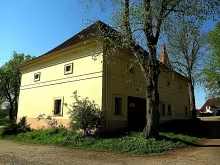
The Chudobinec in Heřmaničky is a cultural monument of the Czech Republic, serving as a social institution for elderly and impoverished individuals who could no longer care for themselves. Located in the district of Heřmaničky within Středočeský kraj, this historical site dates back to the Enlightenment era reforms initiated by Joseph II in the late 18th century. The Chudobinec played a key role in centralizing and regulating care for the poor, providing shelter and food to reduce begging.
The establishment of chudobinců was part of broader efforts during the late 18th century under Joseph II's reforms, aimed at modernizing and centralizing state functions across his empire. Influenced by Enlightenment ideals, these reforms promoted rational governance and humanitarian efforts to improve societal conditions. In the 1780s, decrees issued by Joseph II mandated the creation of chudobinců in the Czech lands to standardize care for the poor, transitioning from the more sporadic support provided by medieval hospitals and hospices.
Chudobince were designed as social institutions where elderly and impoverished individuals could receive shelter and sustenance. They evolved from medieval hospitals and hospices, often being associated with orphanages or infirmaries. Their primary purpose was to provide a structured environment for those who could no longer support themselves, reflecting the era's shift towards organized welfare systems.
The administration and funding of chudobince involved multiple stakeholders. Municipal revenues, church contributions, state support, and public donations collectively financed these institutions. Initially, care for the poor was overseen by religious organizations under state supervision, aligning with Joseph II’s vision of a more centralized approach to social welfare.
In the 1860s, significant changes occurred in the administration of chudobince when local governments were mandated to take responsibility for their own impoverished citizens based on domicile rights. This shift meant that admissions were restricted to those who had local ties, excluding non-residents from receiving aid within these institutions.
Today, the Chudobinec in Heřmaničky stands as a testament to historical social welfare practices and offers visitors insight into the evolution of care for the impoverished during the Enlightenment period. While it no longer functions as an active institution, its preservation as a cultural monument highlights its significance in Czech history. Visitors are invited to explore this site to appreciate its historical context and understand the societal changes that shaped modern approaches to social welfare.
Historical milestones
- 1780s
- Decrees by Joseph II mandated creation of chudobinců in Czech lands.
- late 18th century
- Enlightenment era reforms under Joseph II initiated modernization and centralization.
- 1860s
- Local governments mandated to take responsibility for impoverished citizens based on domicile rights.
Historical events
In the late 18th century, Joseph II issued decrees mandating the establishment of chudobinců in the Czech lands to standardize care for the poor and reduce begging.
In the 1860s, local governments were made responsible for caring for their own impoverished citizens based on domicile rights, limiting admissions to those with local ties.
Points of interest
- The Chudobinec in Heřmaničky was part of a broader European Enlightenment movement that sought to replace ad hoc charitable efforts with systematic welfare programs, reflecting the era's emphasis on rationality and humanitarianism.
- Interestingly, while chudobince were initially managed by religious organizations under state supervision, this model shifted significantly in the 1860s when local governments took over responsibility for their impoverished citizens, illustrating a move towards more localized governance of social services.
Guide
Show guide text
Welcome to the Chudobinec in Heřmaničky, a significant cultural monument nestled within the Středočeský kraj of the Czech Republic. As you stand here today, take a moment to absorb the surroundings: imagine the quiet dignity that this place embodies—a testament to centuries of history dedicated to social care and community support.
The Chudobinec has its roots in the late 18th century, during an era marked by profound change across Europe. It was under the reign of Joseph II, a ruler known for his enlightened reforms, that chudobince were established throughout the Czech lands. His decrees in the 1780s mandated their creation as part of a broader movement to systematize welfare and replace ad hoc charitable efforts with organized social institutions. This initiative reflected the Enlightenment's emphasis on rationality and humanitarianism.
As you look around, notice how this structure stands as a physical reminder of those transformative times. While specific architectural details aren't documented here, take in the overall atmosphere—the solidity of its construction speaks to an era when these buildings were conceived with purpose and care for their future inhabitants.
The Chudobinec was part of a larger European Enlightenment movement that sought to bring order and compassion into society's approach to poverty. Initially managed by religious organizations, these institutions evolved over time as local governments began taking responsibility for impoverished citizens in the 1860s, based on domicile rights.
While specific stories or personalities tied directly to this site may not be recorded, it's fascinating to consider the countless lives that have been touched here—lives of elderly and impoverished individuals who found refuge within these walls. Each person who passed through its doors contributed to the rich tapestry of history woven into its very fabric.
As you continue your visit, let yourself ponder this: how did such establishments influence modern social welfare systems? What stories might the stones whisper if they could speak?
I invite you now to explore further, perhaps wandering around to appreciate the site's layout and imagining the daily routines that once unfolded here. As we conclude our audio journey, I hope you leave with a deeper appreciation for this remarkable piece of history.
Thank you for joining us at the Chudobinec in Heřmaničky. May your curiosity continue to lead you to new discoveries. Safe travels on the rest of your journey!
Tips for visitors
The best time to visit the Chudobinec in Heřmaničky is during late spring or early autumn when the weather is mild, making it pleasant for a leisurely stroll around the site. These seasons offer beautiful natural scenery and fewer crowds, allowing you to appreciate the historical ambiance of the chudobinec more fully.
Parking and transport options are convenient for visitors. The area can be accessed by car, with parking available nearby. For those preferring public transportation, there are bus services that connect to Heřmaničky; however, it's advisable to check current routes and schedules via a local transit search tool before your visit.
When planning your visit, consider bringing comfortable walking shoes as you may want to explore the site at length. Also, carrying a camera or smartphone for photography is recommended, especially if you wish to capture the serene landscapes and architectural details of the chudobinec.
For photography enthusiasts, early morning light provides soft illumination that enhances the textures and colors of the chudobinec's architecture. The surrounding gardens also offer picturesque spots ideal for capturing the essence of this historical site.
Within a 30-minute drive from Heřmaničky, visitors can explore nearby attractions such as the historic town center of Kladno or take a scenic route to the nearby countryside, offering opportunities for nature walks and enjoying local cuisine in small villages.
Businesses nearby
Do you run a restaurant, accommodation, shop, museum, rental, wellness or other visitor service near this monument? Show yourself directly to the people heading to it — this is how they will see you in the app and on the web:
Accommodation nearby
Themed route
Tematická výletní trasa: Chudobinec v okrese Heřmaničky
1. Chudobinec (Heřmaničky) *Typ:* Historická budova *Proč stojí za návštěvu:* Tento chudobinec je jedním z mála zachovaných příkladů svého druhu v České republice. Nabízí cenný vhled do historie a života lidí, kteří byli v minulosti na pomoc spoléhaví. Je to ideální místo pro ty, kdo se zajímají o kulturní dědictví a historii místního regionu.
2. Kostel svatého Václava (Heřmaničky) *Typ:* Náboženský objekt *Proč stojí za návštěvu:* Tento kostel je centrem duchovního života v Heřmaničkách. Jeho architektura a interiér odrážejí bohatou historii obce. Navštívte ho pro pohled na krásné umělecké prvky a pro klidný okamžik úvahy v jeho klidné atmosféře.
3. Místní tradiční hospoda *Typ:* Kulturní místo *Proč stojí za návštěvu:* Tato hospoda nabízí autentické zkušenosti s místními jídly a pohostinností. Je to skvělý příležitost pro setkání se zvyky a tradicemi oblasti, kde si můžete užít tradičního českého jídla v přátelském prostředí.
4. Kulturní centrum (Heřmaničky) *Typ:* Kulturní a komunitní místo *Proč stojí za návštěvu:* Toto centrum je srdcem místního kulturního života, kde se konají různé události, výstavy a workshop. Je to skvělý způsob, jak poznat současné umělecké a společenské aktivity v oblasti.
Tato trasa nabízí komplexní pohled na historii, kulturu a dnešní život v Heřmaničkách. Navrhovaná pořadí zajišťuje logický postup od historických památek přes náboženské a kulturní centra až po současné komunitní aktivity.
Seasonal recommendations
Spring: Visiting the Chudobinec historical site during spring offers a unique experience as nature awakens around you. The blooming flowers and fresh greenery create a vibrant atmosphere, enhancing the historical charm of the site. Morning visits are recommended to enjoy gentle sunlight and avoid larger crowds that gather later in the day. Light layers are advisable due to fluctuating temperatures, allowing visitors to adapt to both sunny spells and cooler breezes.
Summer: Summer at Chudobinec is characterized by long daylight hours, which provide ample time for exploration. The lush landscapes are particularly striking during this season, with well-maintained gardens offering a picturesque backdrop. To avoid peak heat and crowds, consider visiting in the early morning or late afternoon. Comfortable walking shoes and light clothing are recommended to navigate the site comfortably under the summer sun.
Autumn: Autumn brings a serene beauty to Chudobinec, as the foliage transforms into warm hues of red, orange, and gold. This season offers a peaceful atmosphere with fewer visitors, making it an ideal time for those seeking tranquility amidst historical surroundings. The cooler temperatures mean that layers are necessary, and bringing a light jacket can ensure comfort during your visit. Early morning visits allow for capturing the site in soft, golden light.
Winter: Winter at Chudobinec is marked by a quiet, almost mystical atmosphere as snow blankets the landscape, adding a unique charm to the historical setting. The shorter daylight hours mean that visits should be planned earlier in the day to make the most of available light. Warm clothing and sturdy footwear are essential due to cold temperatures and potential ice or snow on pathways. Despite reduced opening hours, winter offers a distinct experience for those appreciating history amidst a snowy backdrop.
Visualizations and artistic views

Vizualizace jsou generovány umělou inteligencí a slouží jako inspirace.


Tips from visitors
No tips yet. Be the first!
Log in and add your tip.
Location on the map


Příběhy a pověsti
Legendy, pověsti a příběhy spjaté s touto památkou
Reviews and comments