





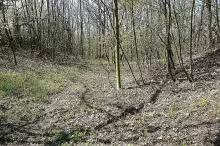
Chlum is a vanished castle in Nepřevázka's cadastral area within Mladá Boleslav District. It holds historical significance as a medieval stronghold that evolved into a castle during the high Middle Ages. Located on an inconspicuous plateau spur with steep southern and western slopes at 340 meters elevation, Chlum has been protected as a cultural monument since 1967. Its strategic location near Chloumek village makes it accessible via a red-marked tourist trail from Mladá Boleslav to Dobrovice.
Chlum's origins trace back to the early Middle Ages when it likely served as a stronghold, reflecting Europe's trend towards fortification construction during that era. This period saw political consolidation under Bohemia's Přemyslid dynasty, with local lords securing their territories amidst regional conflicts and power struggles. Mstidruh is believed to have founded Chlum in the first half of the 13th century, transforming it into a significant medieval castle.
Architecturally, Chlum had a triangular layout with a substantial bailey separated from the main area by a large rampart and moat. The arc-shaped rampart measured approximately 140 meters long, five meters high, and twelve to twenty-two meters wide. A second moat further delineated the bailey from the castle's core. No traces of medieval buildings were found at the site, suggesting that structures were primarily wooden.
Ownership of Chlum changed over time, reflecting its regional historical importance. By the end of the 14th century, it was owned by the Vartenberks, a prominent noble family. In 1431, Rameš z Hrádku acquired the castle, but by 1459, records indicate that Chlum had been demolished.
Today, Chlum stands as a testament to medieval fortification practices and regional history. Although no physical structures remain, its designation as a cultural monument underscores its significance. Visitors can explore the site via the red-marked tourist trail, gaining insight into its strategic past and architectural layout. The steep slopes surrounding the area add to the historical ambiance, inviting those interested in medieval history to discover this intriguing piece of Czech heritage.
Chlum offers a unique glimpse into medieval fortification strategies and regional power dynamics. Its preservation as a cultural monument ensures that future generations can appreciate its historical value. Visitors are encouraged to explore this site, where echoes of its past continue to resonate amidst the natural landscape.
Historical milestones
- c. 1300
- Establishment of Chlum as a fortress
- first half of the 13th century
- Mstidruh founded Chlum and transformed it into a castle
- end of the 14th century
- Chlum belonged to the Vartenberk family
- 1431
- Rameš z Hrádku acquired Chlum
- 1459
- Chlum was demolished
- 1967
- Chlum was declared a cultural monument
Architectural development
The castle occupied a triangular layout with a significant bailey separated from the main area by a large rampart and moat. The rampart is arc-shaped, measuring about 140 meters in length, five meters high, and twelve to twenty-two meters wide. A second moat separated the bailey from the core of the castle. No traces of medieval buildings were found; it is believed that the structures were primarily wooden.
Historical events
The site was likely occupied in the early Middle Ages, possibly serving as a stronghold.
Mstidruh founded the castle in the first half of the 13th century.
By the end of the 14th century, it came under the ownership of the Vartenberks.
In 1431, Rameš z Hrádku became its owner; by 1459, the castle was reported as demolished.
Owners
Mstidruh is believed to have founded the castle in the first half of the 13th century. By the end of the 14th century, it was owned by the Vartenberks. In 1431, Rameš z Hrádku became its owner. The castle was reported as demolished by 1459.
Points of interest
- Chlum's transformation from a stronghold to a castle in the 13th century reflects broader European trends of fortification during the Middle Ages, highlighting its role in regional defense strategies.
- Despite no surviving medieval buildings, archaeological studies suggest that wooden structures once dominated Chlum, illustrating common construction practices of the era before stone became prevalent.
Guide
Show guide text
Welcome to Chlum, a site that whispers tales of medieval times and vanished grandeur. As you stand here on this serene plateau in the cadastral area of Nepřevázka within Mladá Boleslav District, imagine the landscape as it once was—a stronghold perched strategically at an elevation of 340 meters with steep southern and western slopes.
The story of Chlum begins around 1300 when it was established as a fortress. But its roots stretch back to the early Middle Ages. It was Mstidruh who laid the foundation for what would become a castle, transforming this strategic point in the first half of the 13th century. This transformation reflects broader European trends during that era, where fortifications were crucial for defense.
Although no medieval buildings survive today, archaeological studies suggest wooden structures once stood here. As you look around, envision these ancient edifices that have long since returned to the earth—structures that would have been integral to its role as a regional stronghold.
Chlum's history is rich with notable figures and pivotal moments. By the end of the 14th century, it was under the ownership of the Vartenberk family, who were prominent in the region. In 1431, Rameš z Hrádku acquired Chlum, adding another chapter to its storied past. However, by 1459, this castle met a dramatic end as it was razed.
Despite its absence today, Chlum's legacy is preserved and protected as a cultural monument since 1967. This recognition ensures that the site continues to captivate those who visit, offering a glimpse into a time long past.
As you explore further, consider the intriguing transformation of Chlum from a stronghold to a castle—a reflection of its strategic importance in regional defense strategies during the Middle Ages. Let your imagination wander through the ages as you ponder what life was like here centuries ago.
We invite you now to delve deeper into this historical landscape and uncover more about the stories that have shaped it. As you continue your journey, take a moment to appreciate the enduring legacy of Chlum—a site where history is eternally preserved in the very ground beneath your feet.
Thank you for joining us on this exploration of Chlum. May your curiosity lead you to discover even more about the rich tapestry of our shared past.
Tips for visitors
The best time to visit the site of Chlum castle is during late spring or early autumn. During these seasons, the weather is typically mild, making it pleasant for hiking along the red-marked tourist trail from Mladá Boleslav to Dobrovice. The surrounding nature is lush and vibrant in spring, while autumn offers a picturesque landscape with colorful foliage. Additionally, visiting outside of peak summer months helps avoid crowds, providing a more serene experience.
Parking and transportation options are convenient for those wishing to explore Chlum. There are parking areas available near the village of Chloumek, from where you can start your hike on the red-marked trail leading to the site. Public transport is also accessible; however, it's advisable to check current routes and schedules in advance using a transportation search tool. The area is well-connected by trails that make it easy for visitors to reach the castle ruins.
When planning your visit, consider bringing comfortable walking shoes as the trail involves some steep slopes. A map or GPS device can be helpful for navigation along the red-marked path. Since there are no facilities at the site itself, packing water and snacks is recommended. For those interested in photography, carrying a camera with a zoom lens will allow you to capture detailed shots of the ruins and surrounding landscape.
For photography enthusiasts, the best spots around Chlum offer stunning views, especially during golden hours—early morning or late afternoon—when the light enhances the dramatic scenery of steep slopes. The castle's location on a plateau provides expansive vistas that are particularly striking in soft lighting conditions. Exploring different angles and perspectives can yield captivating images of both the ruins and the natural environment.
In terms of nearby attractions within 30 minutes, visitors can explore the village of Chloumek itself for its charming local atmosphere. Additionally, those interested in history might want to visit other historical sites or museums in Mladá Boleslav District. For families with children, the surrounding nature trails offer a great opportunity for outdoor activities and exploration. While there are no specific family-oriented attractions at Chlum, the area's natural beauty makes it suitable for picnics and leisurely walks.
Businesses nearby
Do you run a restaurant, accommodation, shop, museum, rental, wellness or other visitor service near this monument? Show yourself directly to the people heading to it — this is how they will see you in the app and on the web:
Nearby
Chlum is located near the village of Chloumek and can be accessed via a red-marked tourist trail from Mladá Boleslav to Dobrovice. The area features steep slopes and was historically significant due to its strategic location.
Accommodation nearby
Themed route
Tematická výletní trasa kolem Chlumu (hradu)
1. Chlum (hrad) - Typ: Historická památka - Proč stojí za návštěvu: Hrad Chlum, nacházející se poblíž vesnice Chloumek, je fascinujícím příkladem historické architektury s bohatým minulostním pozadím. Jeho umístění na strmých svazích mu dalo strategický význam a poskytuje návštěvníkům pohledy na okolní krajinu, které jsou stejně dramatické jako samotná historie hradu.
2. Chloumek - Typ: Vesnice - Proč stojí za návštěvu: Chloumek je malá vesnice s pitoreskním prostředím, která nabízí klid a příležitost prozkoumat venkovský život v Středočeském kraji. Je to ideální místo k odpočinku po návštěvě hradu Chlum a poskytuje vhled do historie a kultury regionu.
3. Červeně značená turistická trasa Mladá Boleslav - Dobrovice - Typ: Turistická trasa - Proč stojí za návštěvu: Tato trasa je oblíbenou cestou pro milovníky přírody a historie. Nabízí krásný pohled na krajinné prvky regionu, včetně strmých svahů kolem Chlumu. Je to ideální způsob, jak se ponořit do přírodního a kulturního dědictví oblasti, s možností prozkoumat další zajímavosti na cestě.
Tato trasa nabízí kombinaci historického poznání a přírodní krásy, což ji činí ideální volbou pro lidi hledající hluboký kontakt s regionem okresu Nepřevázka.
Seasonal recommendations
Spring: Visiting Chlum Castle ruins during spring offers a unique experience as the landscape awakens with vibrant colors and new life. The blooming wildflowers, such as daisies and poppies, create a picturesque backdrop that enhances the historical allure of the site. As daylight extends into the evening, the soft natural light accentuates the castle's remnants, casting long shadows that add to the mystical atmosphere. Visitors should be prepared for variable weather conditions; layers are advisable to adapt to fluctuating temperatures. While there may still be some residual winter chill in the mornings, afternoons can become pleasantly warm. Early spring is ideal as it avoids the larger crowds that arrive later in the season.
Summer: Summer at Chlum Castle ruins is perfect for those who appreciate lush greenery and clear skies. The sun-drenched landscape highlights the architectural details of the castle's remnants, offering a stunning visual experience. This time of year is characterized by long daylight hours, allowing ample time to explore the site thoroughly. However, visitors should be mindful of the potential for large crowds during peak tourist season. Arriving early in the morning can help avoid the midday heat and ensure a more tranquil visit. Comfortable walking shoes, sunscreen, and light clothing are essential due to the warm weather.
Autumn: The autumn months at Chlum Castle ruins present a serene and enchanting atmosphere as the foliage transforms into rich shades of orange, red, and gold. This seasonal change creates a stunning contrast against the historic stones, offering photographers and nature enthusiasts alike an ideal setting for capturing beautiful images. Cooler temperatures make it comfortable to explore without the summer heat, though visitors should still bring layers in case of chilly winds. The site tends to be quieter as school holidays end, providing a more peaceful experience. Wearing sturdy footwear is recommended due to potentially slippery paths.
Winter: Winter at Chlum Castle ruins offers a stark yet captivating beauty, with snow-covered landscapes and bare trees creating a dramatic scene that enhances the historical ambiance of the site. The shorter days mean visitors should plan their visit during daylight hours for optimal lighting conditions. While the cold weather may deter some, those who venture out will find the tranquility of the site in winter particularly appealing. Visitors should dress warmly, with thermal layers and waterproof clothing to stay comfortable. Due to potential snow or ice, caution is advised when walking on uneven surfaces. The reduced number of visitors during this season allows for a more intimate experience of the castle's history.
Visualizations and artistic views

Vizualizace jsou generovány umělou inteligencí a slouží jako inspirace.

Tips from visitors
No tips yet. Be the first!
Log in and add your tip.


Reviews and comments