




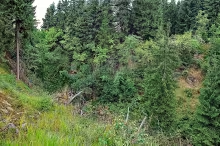
Červená jáma is a significant historical mining site located in Hřebečná near Abertamy, in the Karlovarský kraj region of the Czech Republic. This remarkable mining pit stands as a testament to early modern mining activities from the 16th to 18th centuries. It primarily served for extracting tin and iron, crucial industries during this period in Bohemia. The site is notable not only for its historical significance but also because it was declared a cultural monument by the Czech Ministry of Culture in 2013 as part of the Cínový důl Hřebečná complex.
The origins of Červená jáma are deeply rooted in the mining boom that swept through Central Europe during the early modern period. From the 16th to the 18th centuries, Bohemia experienced significant economic growth driven by its rich deposits of tin and iron. These minerals were essential for various technological advancements in metallurgy, contributing to regional prosperity. The site is situated near the former mining settlement of Bludná in the Ore Mountains, an area renowned for its extensive mining history.
Architecturally, Červená jáma comprises remnants from both surface and deep mining operations rather than constructed architecture. These structures reflect the technological methods used during that era to extract minerals. The site is approximately 230 meters long, 30 meters wide, and around 20 meters deep, showcasing the scale of early modern mining efforts.
Throughout its history, Červená jáma has seen various phases of activity and abandonment, typical of many mining sites from this period. However, specific details about ownership or dramatic changes in administration are not well-documented. What is clear is that by 2013, it had gained recognition as a cultural monument, highlighting its importance within the broader context of Czech mining heritage.
Key events associated with Červená jáma include its active use for tin and iron extraction during the early modern period. The site's declaration as a cultural monument in 2013 marks a significant acknowledgment of its historical value. This recognition underscores the importance of preserving such sites to understand the technological and economic history of the region.
Today, Červená jáma stands as an accessible testament to the rich mining heritage of the Ore Mountains. Visitors can explore this expansive site, gaining insight into the early modern mining techniques that once thrived here. Its status as a cultural monument ensures its preservation for future generations, making it a worthwhile destination for those interested in history and industrial archaeology.
Červená jáma offers more than just historical intrigue; it provides a tangible connection to the past, illustrating the ingenuity and labor of miners who contributed significantly to regional development. Its recognition as a cultural monument underscores its value not only as a site of historical interest but also as an educational resource that enriches our understanding of early modern mining practices. Visitors are invited to explore this remarkable site, where history is etched into every layer of the earth.
Historical milestones
- 16th century
- Mining boom in Bohemia for tin and iron extraction.
- 17th century
- Continued mining activities at Červená jáma.
- 18th century
- Ongoing mining operations in the Ore Mountains region.
- 2013
- Declared a cultural monument by Czech Ministry of Culture.
Architectural development
Červená jáma is primarily composed of mining remnants rather than constructed architecture. It includes both surface and deep mining structures from early modern times, reflecting the technological methods used in that era for extracting minerals.
Historical events
Mining activities for tin and iron took place from the 16th to 18th centuries.
In 2013, Červená jáma was declared a cultural monument by the Czech Ministry of Culture.
Points of interest
- Despite its name, Červená jáma's reddish hue is not due to the color of the rocks but rather from rust and oxidation caused by iron deposits within the mine. - The mining techniques used at Červená jáma were so advanced for their time that they influenced mining practices across Central Europe, showcasing Bohemia as a leader in early modern metallurgy. - Legend has it that miners believed spirits inhabited the deeper parts of Červená jáma, leading to various superstitious rituals and offerings being made before entering the pit.
Guide
Show guide text
Welcome to the Red Pit, an important historical monument in the village of Hřebečná near Abertamy in the Karlovy Vary Region. You are standing before the remains of a mining shaft that stretches approximately 230 meters long, 30 meters wide, and 20 meters deep. The Red Pit is a remnant of early modern mining activities that took place here from the 16th to the 18th century, primarily for tin and iron ore extraction.
Let's delve into history to discover who discovered the Red Pit and why. In the 16th century, there was a mining boom in Bohemia focused on tin and iron ore extraction. Mining in this area continued into the 17th century, although by the 18th century, mining activities in the Ore Mountains gradually diminished. In 2013, the Red Pit was declared a cultural monument by the Ministry of Culture.
Notice that the Red Pit does not have its name from the color of the rocks but due to the corrosion and oxidation of iron found here. The mining techniques used at the Red Pit were quite advanced for their time and influenced mining practices throughout central Europe.
Now, pay attention to the architecture of the Red Pit. Its construction is characteristic of early modern times, although specific architects are unknown. Given that it's a mine shaft, there are many interesting details you can observe here. Take a look at the facade, absorb the atmosphere, and consider how people moved around here in the past.
Although there aren't many intriguing stories or personalities associated with this place, the Red Pit is fascinating due to its historical value and significance in mining activities. An interesting aspect is that the Red Pit is one of the few places where you can see how iron and tin were mined in the past.
Allow me to invite you to further explore this historic monument. I bid you farewell at the Red Pit, but I hope you will stop by again to discover more details and interesting features awaiting here.
Businesses nearby
Do you run a restaurant, accommodation, shop, museum, rental, wellness or other visitor service near this monument? Show yourself directly to the people heading to it — this is how they will see you in the app and on the web:
Nearby
Červená jáma is situated in the Ore Mountains near the former mining settlement of Bludná. The area is known for its rich mining history and natural beauty, with other historical mining sites nearby.
Accommodation nearby
Trips and activities nearby
Guided tours, tickets and activities nearby from GetYourGuide
Search tours and activities →Themed route
Trasa: Červená jáma a okolí
1. Červená jáma (hlavní cíl) - důlní propadlina Stojí za návštěvu díky své jedinečné historii a výjimečnému přírodnímu prostředí. Je to bývalá důlní propadlina, která nabízí pohled do historie těžby v Orechách.
2. Bludná (0,5 km) - bývalá hornická osada Je to bývalá hornická osada, která byla založena kvůli těžbě rud v okolí. Můžete se zde dozvědět více o historii hornictví v oblasti.
3. Klášter sv. Anny (1,5 km) - bývalý klášter Je to bývalý klášter, který byl založen v 18. století. Můžete se zde dozvědět více o historii a architektuře kláštera.
4. Svatý Petr (2 km) - bývalá hornická osada Je to bývalá hornická osada, která byla založena kvůli těžbě rud v okolí. Můžete se zde dozvědět více o historii hornictví v oblasti.
Seasonal recommendations
Jaro
In the spring season, Červená jáma is surrounded by green nature awakening from its winter slumber. The forests are covered with blooming trees and flowers, creating a pleasant atmosphere. Lighting is natural; sunlight penetrates into the cave and refreshes the air.
For a visit in the spring season, it's best to come in late morning or early afternoon to avoid crowds. The ideal time is between 9 and 11 AM when the sun shines and it's warmer. We recommend bringing an umbrella and comfortable shoes for walking through the forests.
Léto
The main summer season brings warm weather and increased visitor numbers. Červená jáma is full of tourists eager to see this historical landmark. Lighting is natural; sunlight illuminates the cave and surrounding forests.
For a visit in the summer season, it's best to come early morning or late afternoon to avoid crowds. We recommend bringing sunglasses, an umbrella, and comfortable shoes for walking through the forests. Don't forget to bring water and snacks to keep your energy up during the tour.
Podzim
The autumn season brings beautiful foliage colors in the forests and pleasant temperatures. Červená jáma is surrounded by green nature preparing to sleep. Lighting is natural; sunlight refreshes the air and creates a pleasant atmosphere.
For a visit in the autumn season, it's best to come in late morning or early afternoon to avoid crowds. We recommend bringing an umbrella and comfortable shoes for walking through the forests. Don't forget to bring water and snacks to keep your energy up during the tour.
Zima
The winter season brings cold weather and shorter opening hours. Červená jáma is surrounded by snow and ice, creating a calm and quiet atmosphere. Lighting is artificial as sunlight is weak.
For a visit in the winter season, it's best to come in late morning or early afternoon to avoid crowds. We recommend bringing warm clothing, a walking stick, and comfortable shoes for walking through the snow. Don't forget to bring water and snacks to keep your energy up during the tour.
Visualizations and artistic views

Vizualizace jsou generovány umělou inteligencí a slouží jako inspirace.


Tips from visitors
No tips yet. Be the first!
Log in and add your tip.
Location on the map



Příběhy a pověsti
Legendy, pověsti a příběhy spjaté s touto památkou
Reviews and comments