





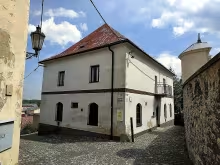
Armanka is a culturally significant monument in Příbor, Moravskoslezský kraj, Czech Republic. This baroque chapel reflects the region's rich history, originating from a school built in the late 16th century and transformed into its current form by 1732. The site is notable for its architectural evolution and association with figures like Jan Sarkander and Jiří Janáček, father of composer Leoš Janáček.
The origins of Armanka date back to 1541 when nobleman Jiří Krašovský z Krašovic founded the first school in Příbor. Initially a wooden structure, its core dates from the second half of the 16th century, specifically marked by 1568. By 1603, it had been rebuilt using stone materials. The site gained historical significance when Jan Sarkander attended the school between 1587 and 1590.
In 1732, Dean Melichar Toull transformed the building into a chapel dedicated to Saint John of Nepomuk and Blessed Jan Sarkander. While some accounts suggest its founding as early as 1670 with financial backing from a school fund, documented evidence supports 1732 as pivotal for its establishment.
Architecturally, Armanka exemplifies baroque elements typical of the period, transitioning from wood to stone. The chapel's adaptation reflects broader cultural and religious shifts within Bohemia during the Habsburg Monarchy era, marked by conflict and artistic flourishing in the 17th century.
Ownership changes further shaped Armanka’s history. In 1787, following a decree by Joseph II, the chapel was closed and purchased by Příbor municipality for 91 zlatých. It then became a girls' school where Jiří Janáček taught from 1835 to 1848. The building's name, "Armanka," derives from "normálka," short for "Normalschule," indicating its educational function.
Today, Armanka stands as a monument of historical and cultural importance in Příbor. While it no longer serves its original religious or educational purposes, the site remains accessible to visitors interested in exploring its storied past. Its architectural evolution and association with notable figures make it an intriguing destination for those keen on Czech history.
Visiting Armanka offers a unique opportunity to connect with the region's rich heritage, providing insights into cultural and religious transformations that have shaped Příbor over centuries. It stands as a testament to the enduring legacy of its past occupants and their contributions to the area’s historical narrative.
Historical milestones
- 1541
- Establishment of the first school in Příbor.
- 1587
- Jan Sarkander attended the school.
- 1732
- Transformation into a chapel dedicated to Saint John of Nepomuk and Blessed Jan Sarkander.
- 1787
- Closure of the chapel by decree of Joseph II.
Architectural development
The original structure was wooden, with the core dating back to the second half of the 16th century. In 1603, it was rebuilt in stone. By 1732, it had been converted into a chapel by Dean Melichar Toull. The building served various purposes over time, including as a girls' school and later as a dining facility.
Historical events
1541: Establishment of the first school in Příbor by nobleman Jiří Krašovský z Krašovic.
1587-1590: Attendance of Jan Sarkander at the school.
1732: Transformation into a chapel dedicated to Saint John of Nepomuk and Blessed Jan Sarkander.
1787: Closure of the chapel by decree of Joseph II, followed by its purchase by the Příbor municipality.
Points of interest
- Although the chapel is named Armanka, its origins are linked to a school founded in 1541 by nobleman Jiří Krašovský z Krašovic, highlighting an educational rather than religious beginning.
- Jan Sarkander, who attended the school from 1587 to 1590, later became a significant figure as he was beatified and is associated with the chapel dedicated to him, reflecting his enduring influence in the region's history.
Guide
Show guide text
Welcome to the historic site of Armanka, a chapel nestled in the heart of Příbor, Moravia-Silesia Region. As you stand here, imagine yourself stepping back into time, surrounded by stories and echoes from centuries past. The air carries whispers of history, inviting you on a journey through its remarkable transformation.
The story of this place begins in 1541 when nobleman Jiří Krašovský z Krašovic established the first school in Příbor. This educational foundation marked the beginning of what would become an enduring cultural landmark. Over time, the original wooden structure gave way to a stone building in 1603, reflecting both architectural evolution and changing community needs.
By 1732, this site had undergone a profound transformation into a chapel dedicated to Saint John of Nepomuk and Blessed Jan Sarkander. Dean Melichar Toull orchestrated its conversion, imbuing the space with spiritual significance that would resonate through generations. As you look around, notice how the chapel’s architecture speaks of this transition from an educational institution to a sacred place.
Now, let's delve into some intriguing details. Although it is known as Armanka, the chapel’s origins are deeply rooted in its role as a school—a testament to the region’s historical emphasis on education and learning. This connection adds layers to its story, blending secular beginnings with religious reverence.
One cannot explore Armanka without acknowledging Jan Sarkander, an influential figure who attended this very school from 1587 to 1590. His later life as a significant spiritual leader highlights the chapel's role in nurturing individuals of profound historical impact.
As you stand here, consider the chapel’s closure in 1787 by decree of Joseph II—an event that marked the end of its religious function but not its cultural legacy. The walls may have fallen silent to prayers, yet they continue to resonate with stories from a vibrant past.
Before we conclude this visit, ponder over the mystery and charm of Armanka: how a site dedicated initially to education evolved into one of spiritual significance, bridging historical narratives across centuries. Let these stories inspire you as you explore further and uncover more about Příbor’s rich heritage.
Thank you for joining us on this journey through time at Armanka. As we part ways, carry with you the echoes of history that linger in this remarkable place. We invite you to continue exploring, discovering new tales and insights along your path. Safe travels as you delve deeper into the fascinating world of Příbor’s past.
Businesses nearby
Do you run a restaurant, accommodation, shop, museum, rental, wellness or other visitor service near this monument? Show yourself directly to the people heading to it — this is how they will see you in the app and on the web:
Accommodation nearby
Themed route
Thematic Walking Tour: The Charm of Příbor
Welcome to a delightful exploration around the historic Armanka (kaple) in the quaint village of Příbor, located within the Příbor District of the Moravskoslezský Region. This tour is designed to immerse you in the cultural and historical essence of this charming area.
1. Armanka (Kaple) - *Type*: Chapel - *Why Visit*: Begin your journey at the heart of Příbor's spiritual heritage, the Armanka chapel. Known for its serene atmosphere and intricate architecture, it offers a peaceful retreat with stunning views of the surrounding landscape. Discover local legends and stories that have been passed down through generations.
2. Příbor Village Square - *Type*: Public Space - *Why Visit*: A short walk from the chapel will take you to the vibrant village square, where history comes alive amidst cobblestone paths and traditional architecture. This central area is perfect for soaking in the local ambiance, observing daily life, and perhaps enjoying a refreshing drink at one of the nearby cafes.
3. Příbor Historical Museum - *Type*: Museum - *Why Visit*: Located just a few minutes from the village square, this museum offers an insightful glimpse into Příbor's past. Explore exhibits that showcase local history, culture, and traditions, providing context to the stories you've heard at the chapel and enriching your understanding of this picturesque region.
4. Local Artisan Workshop - *Type*: Craft Studio - *Why Visit*: Conclude your tour by visiting a nearby artisan workshop where skilled craftsmen continue traditional Moravian crafts. Engage with artisans, witness their creative process, and perhaps take home a unique piece that captures the spirit of Příbor's rich cultural heritage.
This thematic walking tour offers a comprehensive experience of Příbor’s historical charm and vibrant community life, ensuring you leave with lasting memories and a deeper appreciation for this enchanting locale.
Seasonal recommendations
Spring: The arrival of spring breathes new life into the Armanka Chapel, with blossoming flora surrounding its serene landscape. This season offers a gentle ambiance as nature awakens, providing a picturesque backdrop for visitors seeking tranquility. During this time, the chapel is less crowded compared to summer, making it ideal for those who prefer a more peaceful experience. Visitors should dress in layers, as spring weather can be unpredictable with occasional rain showers. The best time to visit is during late morning when the light beautifully illuminates the chapel's architecture.
Summer: Summer at Armanka Chapel is characterized by lush greenery and vibrant colors, creating an idyllic setting for exploration. This season sees a higher influx of visitors due to its popularity as a destination in the Moravskoslezský kraj region. To avoid crowds, it’s advisable to visit early in the morning or later in the afternoon. Comfortable walking shoes and light clothing are recommended, along with sun protection such as hats and sunscreen. The chapel's grounds offer plenty of shade, making it a pleasant retreat from the summer heat.
Autumn: Autumn transforms Armanka Chapel into a kaleidoscope of warm hues, with leaves changing colors around its historic structure. This season is particularly enchanting for photography enthusiasts who wish to capture the rustic beauty of fall. The cooler temperatures make it an excellent time for longer visits without the discomfort of summer heat. Visitors should wear layers and consider bringing a light jacket as evenings can be chilly. It's also a quieter period compared to summer, offering a more intimate experience.
Winter: Winter envelops Armanka Chapel in a serene blanket of snow, creating a magical atmosphere that is both peaceful and picturesque. The chapel’s architecture stands out against the stark winter landscape, providing unique photo opportunities. However, visitors should be prepared for shorter opening hours and potentially limited access due to weather conditions. Warm clothing, including coats, hats, gloves, and sturdy boots, is essential. Planning your visit during midday can ensure better lighting for photography and a warmer experience inside the chapel.
Visualizations and artistic views


Vizualizace jsou generovány umělou inteligencí a slouží jako inspirace.


Tips from visitors
No tips yet. Be the first!
Log in and add your tip.
Reviews and comments