





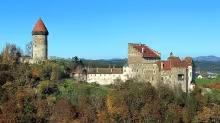
Zemská cesta is a Czech-Austrian tourist route spanning approximately 215 kilometers. It connects historical sites across Southern Bohemia in the Czech Republic and the Austrian Mühlviertel region. Initiated by King Přemysl Otakar II in the late 13th century, this trail enhances connectivity between Linz and Southern Bohemia. Notably, it links a series of castles, fortresses, and palaces on both sides of the border.
As part of the international INTERREG program, Zemská cesta promotes cross-border cultural heritage. This makes it an important project for fostering regional tourism and historical appreciation.
The origin of Zemská cesta dates back to King Přemysl Otakar II's reign. He ordered the expansion and improvement of an existing land path between Linz and Southern Bohemia. During this period, Bohemia was a significant power in Central Europe, experiencing cultural and architectural development with a focus on fortifications and castles. The enhancement of this route reflects its strategic importance for connectivity and defense during his rule.
Architecturally, Zemská cesta is not defined by a single style or material but serves as a cultural corridor linking various historical sites. These include notable castles such as Velešín, Pořešín, Sokolčí, Louzek, Tichá in the Czech Republic, and Freistadt, Dornach, Weinberg, Tannbach, Prandegg, Ruttenstein, Klingenberg, Kreuzen, Clam, Greinburg, Reichenstein, Zellhof, Windhaag, and Saxenegg in Austria. Each site contributes to the rich tapestry of medieval architecture and history that characterizes this region.
Ownership and administration of these sites have evolved over centuries, reflecting broader historical changes in both regions. While specific details about individual owners are not documented here, it is evident that these castles and fortresses have witnessed numerous transitions in control and purpose throughout their histories. The route itself has transformed from a medieval land path into a modern cultural tourism project.
Key events associated with Zemská cesta include its initiation by King Přemysl Otakar II to strengthen regional connectivity and defense. Today, the route is celebrated for promoting cross-border cultural heritage through the INTERREG program. This initiative underscores the importance of preserving and showcasing historical sites significant to both Czech and Austrian identities.
Today, Zemská cesta offers a unique opportunity for visitors to explore a rich array of historical monuments set against picturesque landscapes of Southern Bohemia and the Austrian Mühlviertel region. The route is accessible to tourists interested in medieval history, architecture, and cultural heritage. Its significance lies not only in its historical origins but also in its contemporary role as a bridge between cultures and nations.
Zemská cesta stands as a testament to King Přemysl Otakar II's vision for connectivity and cultural exchange. It invites visitors to embark on a journey through time, exploring the architectural marvels and historical narratives that have shaped this region. Whether you are a history enthusiast or simply seeking an enriching travel experience, Zemská cesta offers a compelling reason to explore the shared heritage of the Czech Republic and Austria.
Historical milestones
- konec 13. století
- King Přemysl Otakar II initiated Zemská cesta to improve connectivity between Linz and Southern Bohemia.
- středověk
- Bohemia experienced cultural and architectural development, focusing on fortifications and castles.
- neznámý
- Ownership and administration of sites along Zemská cesta evolved over centuries.
- moderní doba
- Zemská cesta became part of the INTERREG program to promote cross-border cultural heritage.
Architectural development
The Zemská cesta route was originally established as a land path during the reign of Přemysl Otakar II, who ordered its expansion and improvement. Over time, it has evolved into a cultural tourism project connecting historical sites across Czech Republic and Austria.
Historical events
Initiated by King Přemysl Otakar II in the late 13th century to enhance connectivity between Linz and Southern Bohemia.
Points of interest
- The Zemská cesta route includes the castle of Velešín, which is one of the largest castles in Southern Bohemia and served as a strategic military stronghold during medieval times.
- Freistadt Castle, located on the Austrian side of the route, was originally built by King Přemysl Otakar II himself and later became known for its role in various historical conflicts, including the Thirty Years' War.
Guide
Show guide text
Welcome to the Zemská cesta, a remarkable journey through history that connects Southern Bohemia with the Austrian Mühlviertel region. As you stand here today, imagine yourself stepping back in time along this storied route designed not only for travel but as a bridge between cultures and eras.
The inception of Zemská cesta dates back to the late 13th century when King Přemysl Otakar II initiated its development. This visionary ruler sought to enhance connectivity between Linz and Southern Bohemia, recognizing the strategic importance of this route for both trade and defense. During the medieval period, Bohemia was a hub of cultural and architectural innovation, with fortifications and castles dotting the landscape as symbols of power and protection.
As you walk along Zemská cesta today, take a moment to appreciate the enduring legacy of its architecture. Although specific architects remain unknown, the route showcases structures that have stood the test of time. One such marvel is the castle of Velešín, one of Southern Bohemia's largest castles. Its imposing presence served as a strategic military stronghold during medieval times—a testament to the region’s historical significance.
King Přemysl Otakar II himself left an indelible mark on this route with Freistadt Castle. Located on the Austrian side, this castle was originally constructed under his reign and stands as a personal legacy of his architectural ambition and strategic foresight.
Allow yourself to be captivated by these historical narratives that weave through Zemská cesta. Each site along the way tells a story of power struggles, cultural exchanges, and evolving ownerships that have shaped this region over centuries. The route's inclusion in the modern INTERREG program underscores its continued relevance as a cross-border cultural heritage connector.
As you continue your journey along Zemská cesta, let curiosity guide you to explore further. Each castle, each fortification holds secrets waiting to be uncovered. We invite you to delve deeper into this rich tapestry of history and discover the stories that have been etched into these ancient stones.
Thank you for joining us on this exploration. May your journey along Zemská cesta inspire a deeper appreciation for the past and its enduring influence on our present world. Safe travels as you continue to uncover the wonders of this historic route!
Tips for visitors
The best time to visit the Zemská cesta is during late spring through early autumn, from May to September. This period offers pleasant weather conditions that enhance your experience as you traverse the picturesque landscapes of Southern Bohemia and the Austrian Mühlviertel region. The blooming flora and vibrant greenery make it an ideal time for nature lovers. Additionally, visiting in these months allows you to fully appreciate historical sites without the hindrance of harsh winter weather.
Parking and transportation options are convenient along the Zemská cesta route. There are several designated parking areas near key points of interest where visitors can leave their vehicles safely. Public transport is also accessible, with various bus routes connecting major towns in Southern Bohemia to the trailhead. It's advisable to check a reliable travel planner or local transportation websites for current schedules and connections.
When planning your visit, consider bringing comfortable walking shoes, as much of the route involves hiking through forests and hills. A map of the Zemská cesta is also recommended, even if you have digital navigation tools, as it provides detailed information about historical sites along the way. Don't forget a water bottle to stay hydrated during your journey, especially in warmer months.
For photography enthusiasts, some of the best spots along the Zemská cesta include viewpoints overlooking castles and fortresses, where you can capture stunning panoramic images. Early morning or late afternoon light is ideal for taking photos as it provides softer shadows and a warm glow over the landscapes. Be sure to bring your camera with a good zoom lens to capture distant historical monuments in detail.
Nearby attractions within 30 minutes include several castles such as Český Krumlov Castle, known for its well-preserved medieval architecture, and Hluboká Castle, famous for its Renaissance design. These sites offer additional cultural insights and are perfect extensions to your Zemská cesta experience.
For families with children, the Zemská cesta offers a variety of engaging activities. Many historical sites along the route have interactive exhibits or guided tours tailored for younger audiences. Additionally, the natural surroundings provide ample opportunities for family-friendly hikes and picnics. Ensure you bring snacks and perhaps a small first-aid kit to keep everyone comfortable during your adventure.
Businesses nearby
Do you run a restaurant, accommodation, shop, museum, rental, wellness or other visitor service near this monument? Show yourself directly to the people heading to it — this is how they will see you in the app and on the web:
Nearby
The Zemská cesta traverses picturesque landscapes of Southern Bohemia and the Austrian Mühlviertel region. It passes through various natural features, including forests and hills, while connecting numerous historical monuments.
Accommodation nearby
Themed route
Zemská Cesta Výletní Trasa
1. Zemská cesta (stezka) *Typ:* Stezka *Proč stojí za návštěvu:* Zemská cesta je krásnou stezkou, která spojuje přírodní krásy Jižních Čech a rakouského Mühlviertel. Prochází lesy a kopci, nabízejíc návštěvníkům pohled na historické památky po cestě.
2. Lesní oblasti *Typ:* Přírodní oblast *Proč stojí za návštěvu:* Lesy podél stezky nabízejí klidné prostory k relaxaci a pozorování divoké flóry a fauny. Jsou ideální pro piknik nebo krátkou procházku v přírodě.
3. Kopcovité oblasti *Typ:* Přírodní útvar *Proč stojí za návštěvu:* Kopce nabízejí panoramatické výhledy na okolní krajinu, což je perfektní místo pro fotografování a užívání si kouzla venkovského prostředí.
4. Historické památky *Typ:* Historické monumenty *Proč stojí za návštěvu:* Stezka spojuje různé historické památky, které jsou svědectvím bohaté minulosti regionu. Návštěvníci mohou zde prozkoumat architektonické a kulturní dědictví oblasti.
Tato trasa nabízí kombinaci přírody a historie, což ji činí ideální volbou pro každého, kdo hledá odpočinek v krásném prostředí s možností objevování kulturních památek.
Seasonal recommendations
Spring: Springtime on the Zemská cesta offers a breathtaking display of nature as the landscape bursts into life with vibrant wildflowers and budding trees, creating an enchanting atmosphere perfect for leisurely strolls. The soft, diffused light of spring enhances the natural beauty of the trail, making it ideal for photography enthusiasts. Visitors should be prepared for occasional showers, so waterproof shoes and a lightweight rain jacket are recommended. Early mornings or late afternoons tend to be less crowded, providing a serene experience while enjoying the fresh scent of blooming flora.
Summer: Summer on Zemská cesta is characterized by long daylight hours and warm weather, making it an excellent time for extended hikes and exploration. The lush greenery and full bloom of summer flowers create a picturesque setting that draws many nature lovers to the trail. However, this popularity can lead to larger crowds, especially during weekends and holidays, so arriving early in the morning is advisable to avoid congestion. Wearing breathable clothing, hats, and sunscreen are essential for comfort, as well as carrying plenty of water to stay hydrated under the summer sun.
Autumn: Autumn transforms Zemská cesta into a fiery tapestry of reds, oranges, and yellows as deciduous trees shed their leaves in a spectacular display. The cooler temperatures and crisp air make it an ideal time for hiking without the discomfort of summer heat. This season is particularly popular with photographers seeking to capture the changing colors, so weekends may see increased visitor numbers. Dressing in layers is recommended to adapt to varying temperatures throughout the day, and sturdy walking boots will help navigate any fallen leaves on the trail.
Winter: Winter brings a serene and quiet atmosphere to Zemská cesta, as snow blankets the landscape and transforms it into a tranquil wonderland. The reduced number of visitors during this time allows for an intimate experience with nature, perfect for those seeking solitude or engaging in winter sports like cross-country skiing if conditions permit. However, shorter daylight hours mean that planning your visit is crucial; starting early will maximize your time on the trail. Warm clothing, including thermal layers and insulated boots, along with a hat and gloves, are essential to stay comfortable during the colder months.
Tips from visitors
No tips yet. Be the first!
Log in and add your tip.
Příběhy a pověsti
Legendy, pověsti a příběhy spjaté s touto památkou
Reviews and comments