




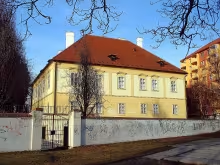
The Hodonín Castle is a former noble residence situated in Hodonín, Czech Republic, near the Morava River. Originally a fortress, it was converted into a castle in the 16th century. The castle has undergone numerous transformations and renovations over the centuries, making it a unique and fascinating piece of Czech history.
The castle's origins date back to the 16th century, when it was built on the site of a former fortress. The original fortress likely served to protect the city of Hodonín, a significant trade and commerce center in the region. Unfortunately, little is known about its earliest history, including who built the original fortress and when it was constructed.
The castle's architecture reflects its rich history. It has undergone several transformations and renovations, including a baroque reconstruction after a fire in 1746. The castle's current form is a result of these renovations, blending Renaissance and baroque styles. The facade features a central entrance, flanked by two smaller wings, and a distinctive baroque-style roof.
Throughout its history, the castle has had several owners, including the Páni z Lipé, Jindřich Burian Žampach ze Žampachu, and the Habsburg-Lorraine dynasty. The castle was also the site of significant events, such as the construction of a Unity of the Brethren church on the castle's north island in 1559 and the expulsion of the Unity of the Brethren from the city in 1622. The castle was rebuilt in the baroque style after a fire in 1746 and later renovated in the 20th century.
Today, the castle houses the Masaryk Museum in Hodonín, dedicated to Tomáš Garrigue Masaryk, the first president of Czechoslovakia. The museum features an exhibition on Masaryk's life and work, as well as a collection of artifacts and exhibits related to Hodonín's history and the surrounding region. The castle is a popular tourist destination, attracting visitors worldwide who come to learn about its rich history and architecture.
The Hodonín Castle is a unique and fascinating piece of Czech history, offering a glimpse into the country's complex and often tumultuous past. Its rich history, stunning architecture, and cultural significance make it a must-visit destination for anyone interested in history, architecture, or culture.
Historical milestones
- 1559
- Čeněk z Lipé becomes the owner of Hodonín and builds a Unity of the Brethren church on the castle's north island.
- 1619
- The castle is abandoned after the Battle of White Mountain and the start of the Counter-Reformation.
- 1622
- The Unity of the Brethren are expelled from the city, and the church is demolished.
- 1643
- Jindřich Burian Žampach ze Žampachu builds a Renaissance-style hunting lodge on the site of the former church.
- 1746
Architectural development
The castle has undergone several transformations and renovations over the centuries. It was originally a fortress, but was converted into a castle in the 16th century. The castle was rebuilt in the Renaissance style in the 17th century, and then in the baroque style after a fire in 1746. The castle was renovated in the 20th century and is now a museum.
Historical events
1559: Čeněk z Lipé, a supporter of the Unity of the Brethren, becomes the owner of Hodonín and builds a Unity of the Brethren church on the castle's north island.
1619: The castle is abandoned after the Battle of White Mountain and the start of the Counter-Reformation.
1622: The Unity of the Brethren are expelled from the city, and the church is demolished.
1643-1644: Jindřich Burian Žampach ze Žampachu builds a Renaissance-style hunting lodge on the site of the former church.
1746: A fire destroys part of the castle, and it is rebuilt in the baroque style.
Owners
Páni z Lipé, Jindřich Burian Žampach ze Žampachu, Marie Antonie z Lichtenštejna, Habsbursko-lotrinský rod
Points of interest
– The castle's original fortress was likely built on the site of a pre-existing settlement, which was an important trading center along the Morava River.
– The castle's current form is a result of its baroque reconstruction after a fire in 1746, which destroyed a significant portion of the castle.
– The castle was the site of the construction of a Unity of the Brethren church on the castle's north island in 1559, which was later expelled from the city in 1622.
Guide
Show guide text
Welcome to the historic Hodonín Castle. You stand before one of the most significant landmarks in Hodonín, offering a fascinating glimpse into the history of the city and its inhabitants.
Let's step back into the past and explore the history of this castle. The name Hodonín originates from the name of the river Hodoninka that flows through the town. The first written mention of the castle dates back to 1059. In the 16th century, the castle became the property of Čeněk z Lipé, who had a church for the Unity of the Brethren built on its northern side.
Come and take a look at the castle's façade and notice its baroque architecture. The castle has undergone many transformations and renovations, including a baroque reconstruction after a fire in 1746. Today, the castle is home to the Masaryk Museum in Hodonín.
Now pay attention to the details on the façade. Notice that it is adorned with ornamental elements typical of baroque architecture.
An interesting fact is that the original castle likely stood on the site of an older settlement, which was an important trading center along the Morava River.
Hodonín Castle is a cultural monument and its history is rich and intriguing. Finally, we invite you to explore other parts of the castle and discover more secrets of its history.
Businesses nearby
Do you run a restaurant, accommodation, shop, museum, rental, wellness or other visitor service near this monument? Show yourself directly to the people heading to it — this is how they will see you in the app and on the web:
Nearby
The castle is located in the city of Hodonín, near the Morava River. The surrounding landscape is flat and agricultural.
Accommodation nearby
Themed route
The Hodonín Castle is a must-visit destination in the city of Hodonín, located near the Morava River. The castle's rich history and architecture make it a fascinating place to explore.
1. Hodonín Castle (zámek Hodonín) - This is the main attraction of the day. The castle's stunning architecture, beautiful gardens, and rich history make it a must-visit destination. 2. Morava River (Morava) - Take a short walk along the riverbank and enjoy the scenic views of the surrounding landscape. The river is a great place to relax and unwind. 3. Hodonín City Centre (město Hodonín) - After visiting the castle, take a stroll through the charming city centre and explore its historic streets and buildings. You can find plenty of shops, cafes, and restaurants to enjoy. 4. Hodonín Market Square (Hodonínské náměstí) - The market square is a great place to experience the local culture and try some traditional Czech cuisine. You can find a variety of food stalls and shops selling local products.
Seasonal recommendations
Jaro:
In the spring, Hodonín Castle is surrounded by flowers and greenery, creating a pleasant atmosphere. We recommend visiting the castle before noon to avoid large crowds of tourists. The best time for a visit is in May or June when the weather is warmest and nature is in full bloom.
Léto:
In the main summer season, Hodonín Castle is very popular, so it's good to come early. It's best to visit the castle in the morning hours to avoid large crowds. In the summer, it's an ideal time for strolls through the garden and admiring the flower beds.
Podzim:
In autumn, Hodonín Castle is surrounded by beautiful fall foliage, creating a pleasant atmosphere. We recommend visiting the castle in the late afternoon to avoid large crowds of tourists. This period is an ideal time for strolls through the garden and admiring the autumn nature.
Zima:
In winter, Hodonín Castle is pleasantly lit, creating a pleasant atmosphere. We recommend visiting the castle in the early morning hours to avoid large crowds of tourists. In winter, it's an ideal time for strolls through the garden and admiring the winter landscape.
Visualizations and artistic views

Vizualizace jsou generovány umělou inteligencí a slouží jako inspirace.


Tips from visitors
No tips yet. Be the first!
Log in and add your tip.
Location on the map


Příběhy a pověsti
Legendy, pověsti a příběhy spjaté s touto památkou
Reviews and comments