





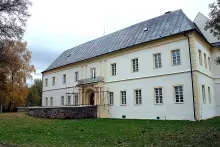
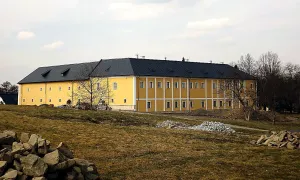
Zámek Brantice is a Renaissance manor house located in the town of Brantice near the Opava River, within the Moravskoslezský kraj region of the Czech Republic. This historical monument stands out for its cultural significance and architectural evolution from an earlier wooden fortress to its current form completed in 1604. It is notable not only as a piece of Renaissance architecture but also due to its Baroque renovations and classical modifications over time, making it a valuable site for those interested in European history and heritage.
The origins of Zámek Brantice trace back to the late medieval period when the area was part of the Krnovské knížectví. The first documented mention of Brantice dates to 1377, with an initial wooden fortress existing by 1449 under the ownership of brothers Jan and Václav Mejskové. In 1491, Mikuláš z Brantic acquired the estate, which later came into the possession of Jan z Fulštejna. The transformation from a medieval fortification to a Renaissance manor began in 1561 when Jeroným Reinwald, the chancellor of Krnovské knížectví, commissioned its construction, completing it by 1604. This period marked significant cultural and political developments across Europe, aligning with the broader Renaissance movement.
Architecturally, Zámek Brantice features three single-story wings that enclose a rectangular courtyard, characterized by gabled roofs and a central entrance distinguished by Tuscan columns. The Baroque renovations in 1711 introduced by Bohumil Trach z Březí added a northern wing and established the surrounding park. In the early 19th century, Zikmund Josef z Khuenburgu further modified the facades to reflect classical styles. These architectural changes highlight the castle's evolution through various artistic periods.
Ownership of Zámek Brantice has seen several transitions over the centuries. After its completion in 1604, it underwent Baroque renovations by Bohumil Trach z Březí in 1711. In the early 20th century, the Lichtenštejnové family utilized it as an administrative building starting from 1901. Following World War II, the castle was nationalized and used for storing pharmaceuticals before being briefly owned by the local municipality of Brantice in 1949. It returned to municipal ownership through restitution in 2008 and was later sold to a private firm in 2009.
Key events at Zámek Brantice include its architectural completion in 1604, marking the end of its Renaissance construction phase, and the Baroque renovations by Bohumil Trach z Březí in 1711. These developments reflect significant periods in the castle's history, showcasing its adaptation to changing artistic trends.
Today, Zámek Brantice is a cultural monument listed on the Ústřední seznam kulturních památek ČR. The site includes not only the castle but also an English-style park established between 1890 and 1900, featuring tennis courts and a football field. Visitors can explore the monumental baroque sculpture of Hercules from 1709 in the park and other historical elements such as a pískovcová váza with figurative scenes from antiquity. The castle's accessibility and rich history make it an attractive destination for those interested in exploring Czech cultural heritage.
Zámek Brantice offers a unique glimpse into the architectural and historical tapestry of the region, inviting visitors to appreciate its Renaissance origins, Baroque transformations, and classical influences. Its well-preserved state and surrounding park provide a serene environment for exploration and reflection on its storied past.
Historical milestones
- 1570
- Construction of the Renaissance castle began.
- 1604
- Completion of the Renaissance castle.
- 1711
- Baroque renovations by Bohumil Trach z Březí.
Architectural development
The original wooden fortress was replaced by a Renaissance manor house built between 1561 and 1604. In 1711, it underwent Baroque renovations which included the addition of a northern wing and the establishment of a park. The early 19th century saw classical modifications to its facades.
Historical events
Construction of the Renaissance castle completed in 1604.
Baroque renovation by Bohumil Trach z Březí in 1711.
Owners
Mikuláš z Brantic (1491)
Jan z Fulštejna
Krnovský kníže Jiří Braniborsko-Ansbašský (1526)
Lichtenštejnové (from 1901)
Obec Brantice (1949, restituted in 2008)
Points of interest
- One of the lesser-known aspects of Zámek Brantice is its transformation from a wooden fortress to a Renaissance manor under Jeroným Reinwald's commission in 1561, reflecting broader European cultural shifts during this period.
- An intriguing detail about the castle is that it housed an English-style park established between 1890 and 1900, which included not only traditional landscaping but also recreational facilities like tennis courts and a football field.
Guide
Show guide text
Welcome to the historic Zámek Brantice, a remarkable Renaissance manor house nestled in the charming town of Brantice near the serene Opava River. As you stand here today, imagine yourself stepping back into a time when this site was transformed from an earlier wooden fortress into the architectural gem before your eyes.
The story of Zámek Brantice begins with Jeroným Reinwald, who initiated its transformation in 1561. This period marked a significant cultural shift across Europe as the Renaissance movement began to redefine art and architecture. The construction of this manor house was completed by 1604 under Reinwald's vision, reflecting the elegance and grandeur typical of Renaissance design.
As you take in your surroundings, notice the three single-story wings that gracefully encircle a rectangular courtyard. These structures are adorned with gabled roofs, creating an inviting atmosphere that beckons exploration. The castle's layout is both functional and aesthetically pleasing, offering a glimpse into the architectural preferences of its time.
Zámek Brantice has been home to many intriguing figures throughout history. One notable personality associated with this place is Bohumil Trach z Březí, who undertook Baroque renovations in 1711, adding another layer of historical richness to the castle's story. These changes further illustrate how Zámek Brantice evolved over centuries.
One lesser-known aspect that adds a touch of mystery to this site is its connection to an English-speaking individual during its history—an intriguing detail that reflects the cultural exchanges and influences that have shaped this place.
As you continue your visit, take a moment to let the atmosphere envelop you. The castle's historical layers invite curiosity and admiration, offering stories from different eras waiting to be discovered. We encourage you to explore further, perhaps wandering through its grounds or imagining the lives of those who once walked these paths.
Thank you for joining us on this journey through time at Zámek Brantice. May your visit inspire a deeper appreciation for history and the enduring legacy of this remarkable site. Safe travels as you continue exploring the wonders that await in Moravskoslezský kraj!
Businesses nearby
Do you run a restaurant, accommodation, shop, museum, rental, wellness or other visitor service near this monument? Show yourself directly to the people heading to it — this is how they will see you in the app and on the web:
Nearby
Located near the Opava River, Brantice Castle is surrounded by a landscape that includes residential areas to the north. The area features an English-style garden with tennis courts and a football field.
Accommodation nearby
Themed route
Thematic Walking Tour: Brantice Castle and Its Surroundings
1. Brantice Castle *Type:* Historical Castle *Why Visit:* Begin your journey at the stunning Brantice Castle, a remarkable example of Renaissance architecture nestled by the Opava River. Explore its rich history, opulent interiors, and beautiful gardens that reflect centuries of cultural heritage.
2. English-Style Garden *Type:* Historical Garden *Why Visit:* Just outside the castle walls lies an exquisite English-style garden, offering a serene escape with lush greenery and meticulously maintained landscapes. It's perfect for leisurely strolls or simply enjoying nature’s beauty in this tranquil setting.
3. Tennis Courts *Type:* Recreational Facility *Why Visit:* Located within the castle grounds, these tennis courts provide an opportunity to appreciate the blend of historical charm and modern recreational facilities. Whether you're a player or just want to watch, it's a unique aspect of the castle’s vibrant community life.
4. Football Field *Type:* Sports Facility *Why Visit:* Adjacent to the tennis courts is a well-maintained football field, adding another layer to the castle's diverse recreational offerings. It highlights the active lifestyle embraced by visitors and locals alike, making it an interesting spot for those interested in sports culture.
5. Residential Areas North of Brantice Castle *Type:* Residential District *Why Visit:* Conclude your tour with a walk through the residential areas north of the castle. These charming neighborhoods offer insights into local life and architecture, providing a glimpse into how history and modernity coexist in this picturesque part of Moravskoslezský kraj.
This thematic walking tour offers a comprehensive look at Brantice Castle and its immediate surroundings, ensuring visitors experience both historical grandeur and contemporary community life.
Seasonal recommendations
Spring: Visiting Brantice Castle in spring offers a unique experience as the surrounding landscape bursts into life with vibrant wildflowers and lush greenery. The soft morning light beautifully illuminates the castle's architecture, enhancing its historical charm. As nature awakens, you might encounter blooming cherry blossoms or tulips near the grounds, adding to the picturesque atmosphere. This season is ideal for photography enthusiasts who wish to capture the castle amidst a backdrop of natural beauty. It’s advisable to dress in layers as temperatures can vary throughout the day. Since springtime often attracts nature lovers and casual visitors alike, arriving early can help you enjoy a quieter exploration before larger crowds arrive.
Summer: Summer at Brantice Castle is characterized by long days filled with warm sunshine that accentuates the castle's majestic presence. The lush gardens are in full bloom, offering a vibrant contrast to the historic stone walls. This season typically sees an influx of tourists eager to experience the castle during its peak operating hours. To avoid crowds and make the most of your visit, consider arriving early in the morning or later in the afternoon when it's cooler. Comfortable walking shoes and light clothing are recommended due to the warm weather. Don’t forget a hat and sunscreen for protection against the sun as you explore both the interior and outdoor areas.
Autumn: Autumn brings a magical transformation to Brantice Castle, with the surrounding forests donning fiery hues of orange, red, and gold. The crisp air enhances the castle's gothic architecture, creating an atmospheric setting perfect for photography or leisurely strolls through the grounds. As the leaves fall, they create a carpet that adds to the enchanting ambiance. This season is less crowded compared to summer, allowing for a more relaxed visit. Dress in warm layers and wear comfortable shoes suitable for walking on potentially uneven paths covered with fallen leaves. The cooler temperatures make it an ideal time to enjoy outdoor activities at the castle without the midday heat.
Winter: Winter at Brantice Castle offers a serene and picturesque experience as snow blankets the landscape, transforming the grounds into a winter wonderland. The castle's silhouette against the backdrop of snowy trees creates a striking visual contrast that is both majestic and peaceful. While some areas may be closed due to weather conditions, the castle itself often remains accessible for visitors eager to explore its historic halls in a quieter setting. It’s important to dress warmly in layers, as temperatures can drop significantly, and bring sturdy boots for walking on potentially icy paths. Since daylight hours are shorter, it's advisable to plan your visit during midday when there is ample light to appreciate the castle’s features fully.
Visualizations and artistic views

Vizualizace jsou generovány umělou inteligencí a slouží jako inspirace.


Tips from visitors
No tips yet. Be the first!
Log in and add your tip.

Reviews and comments